

Avoiding Tourist Traps in Cozumel Diving: 10 Pro Tips for an Authentic Experience (2026)
What if the crystal-clear Caribbean waters you've been dreaming of are hidden behind a wall of twenty other divers and a crowded "cattle boat"? It's a common nightmare for travelers, but avoiding tourist traps in cozumel diving is easier than you think when you know exactly where the locals go. You want to feel the rush of a perfect drift dive with 100 feet of visibility, not spend your morning dodging stray fins or worrying about surprise fees at the dock.
We know you're looking for that authentic connection with the ocean, and it's frustrating when hidden gear costs or massive groups get in the way of the adventure. That's why we've put together this insider guide to help you find the soul of our reefs. You'll discover how to secure a small-group experience, navigate the current $12 USD marine park fee like a pro, and ensure your safety is the top priority. We're diving into ten essential tips to help you skip the crowds and experience the vibrant, untouched beauty of Cozumel just like a local. Let's get you in the water!
Key Takeaways
- Learn how to identify high-volume operators that prioritize cruise ship schedules over your safety and the health of the Mesoamerican reef.
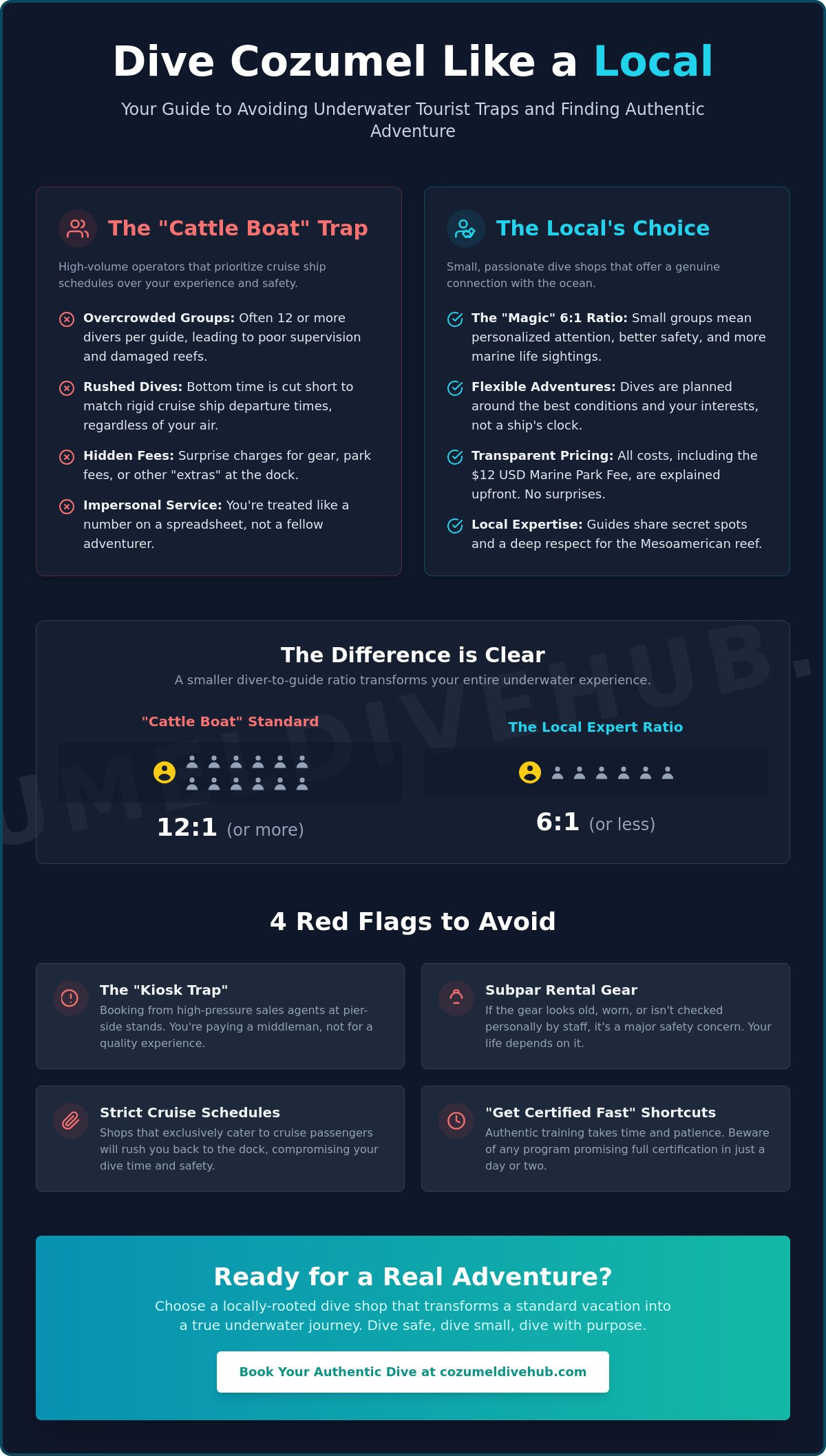
- Master the art of avoiding tourist traps in cozumel diving by seeking out the "magic" 6:1 diver-to-guide ratio for better marine life sightings.
- Discover the truth about legitimate Marine Park fees and how to spot red flags in rental gear before you ever set foot on a boat.
- Understand why rapid certification shortcuts are a danger to your skills and why authentic training requires a patient, personalized approach.
- Find out how choosing a locally-rooted dive shop with small-group trips transforms a standard vacation into a true underwater adventure.
The Reality of Cozumel Diving: Spotting Traps Before You Splash
Imagine the weightless thrill of gliding over vibrant coral gardens, only to have your mask kicked by a stray fin from a group of twenty other divers. It's a frustrating experience that happens all too often. A diving tourist trap is any operation that treats you like a line item on a spreadsheet rather than a fellow adventurer. These operators prioritize high volume and rigid cruise ship schedules over your safety, your enjoyment, and the delicate health of the reef. In a world-class destination like this, avoiding tourist traps in cozumel diving is the difference between a generic excursion and a life-changing journey into the deep.
Because Cozumel is a premier stop for massive cruise liners, the demand for quick, "one-size-fits-all" tours is staggering. This creates a perfect environment for "cattle boat" operators. They pack their decks to the limit, often sacrificing the peaceful, silent connection you crave with the ocean. This desire for uncrowded, raw nature is what drives enthusiasts to seek out remote spots, whether it's a hidden reef or a world-class offshore adventure with Los Buzos. When you're surrounded by a crowd, the shy marine life, like the endemic Splendid Toadfish, retreats into the shadows. You lose the soul of the experience when the boat feels more like a floating bus than a gateway to adventure.
One of the most common pitfalls is the "Kiosk Trap." You'll see these stands lining the piers, staffed by high-energy sales agents who have likely never spent a minute underwater. They work on heavy commissions, funneling unsuspecting travelers toward the largest boats with the lowest standards. If you're booking your dive at a pier-side stand, you're likely paying for a middleman's fee rather than quality air and expert guidance. Real adventure is found by connecting directly with passionate locals who live and breathe these waters.
The Anatomy of a Diving Tourist Trap
How do you spot these operations before you book? Look at the ratios. A "cattle boat" standard often involves 12 or more divers per guide. This makes it impossible for a divemaster to provide personalized care or ensure everyone is comfortable. These shops also run on strict cruise schedules. If the ship leaves at 4:00 PM, your bottom time is often cut short to ensure the boat is back at the dock, regardless of how much air you have left. You'll also notice a lack of thorough safety briefings; if they don't ask about your experience or check your gear personally, it's time to walk away.
Why Local Expertise Matters
True local guides treat the Cozumel Reefs National Marine Park like their own backyard because, for many of us, it is. We know the "secret" entry points at Palancar Reef that allow us to drop in just minutes before the big boats arrive, giving you the reef all to yourself. This heritage-based knowledge ensures you see the most vibrant sections of the park while practicing strict reef respect. If you're just starting out, check out our Scuba Diving Cozumel: The Complete Beginner's Guide to learn more about what makes our underwater world so special. When you dive with people who treat you like family, every descent feels like coming home.
Avoiding the 'Cattle Boat' Nightmare: Why Group Size Matters
Have you ever felt like just another number in a crowd? When you're 60 feet under, the last thing you want is to feel like you're in a submerged subway car. A cattle boat is a high-volume, low-service operation that degrades the diving experience by prioritizing quantity over quality. To truly master avoiding tourist traps in cozumel diving, you need to look at the group size before you ever look at the price tag. The soul of the reef is best found in silence, not in a cloud of bubbles from twenty other people.
In our world, the 6:1 ratio is the magic number. When a guide has only six divers, they can actually watch your buoyancy, point out that tiny nudibranch, and ensure your safety without breaking a sweat. In contrast, massive groups often lead to "silt-outs" where inexperienced fins kick up sand, ruining visibility for everyone behind them. This commotion also scares away our most iconic residents. The endemic Splendid Toadfish, known for its vibrant yellow fins and shy nature, won't stick around for a crowd. Small groups ensure the reef stays pristine and the wildlife stays put.
Keep an eye out for the "Cruise Ship Wave" to identify shops that cater primarily to one-day port visitors. These operations are often located right at the International Pier or Puerta Maya and schedule departures exactly 60 minutes after a ship docks. They are designed for speed and turnover, not for the art of diving. If you want a more authentic experience, look for shops that operate independently of the port's frantic energy. Smaller boats, like a traditional panga, offer a fast and intimate way to reach the reef, whereas large cruisers are often the primary vehicles for high-volume traps.
The Impact of Group Size on Your Dive Profile
Your dive profile changes completely in a small group. We've all been there: you have plenty of air left, but you're forced to surface because one person in a group of fifteen breathed through their tank in record time. In a smaller setting, you're more likely to be matched with divers of similar skill and consumption rates. This means longer, more relaxed dives where you can focus on your buoyancy or wait for that perfect photo of a turtle. Choosing small groups diving ensures your adventure isn't cut short by someone else's regulator. Plus, surface intervals on a small boat mean more time for snacks, stories, and genuine connection with your guide.
Timing Your Dives to Beat the Crowd
Timing is everything when you want to see the "real" Cozumel. The 8:00 AM advantage is real; being the first boat at the site often means dropping into untouched, crystal-clear water before the silt starts flying. However, don't sleep on afternoon dives. While the morning rush heads back for lunch, the reefs often become incredibly quiet and peaceful. These later trips are often the most "trap-free" because they don't align with the tight schedules of cruise excursions, giving you a private window into the underwater world.
Just as timing is crucial for diving, it's also key for seeing land-based wonders; if you're headed to the desert, you can learn more about the best time of day to visit iconic spots like Delicate Arch.
Navigating Hidden Fees and Subpar Scuba Gear
There is nothing quite like the feeling of clicking into your BCD and preparing for a giant stride into the turquoise blue. However, that excitement can quickly vanish if you realize your regulator is whistling or your wallet is being emptied by "surprise" surcharges. Successfully avoiding tourist traps in cozumel diving means looking past the initial sticker price to see what's actually under the hood. A truly authentic experience is built on trust, and that starts with transparent, all-inclusive pricing and gear that we'd trust our own family to use.
This commitment to transparency and reliability is a universal trait of quality travel services; if you're planning a trip to the Canary Islands, for example, you can check out Corralejo Transfers to secure professional airport transportation without hidden costs.
One common trap is the "Marine Park Bracelet" hustle. While there is a legitimate daily fee to enter the protected waters, some high-volume kiosks will try to inflate this cost or add "administrative taxes" on top of it. You should also watch out for fuel surcharges or "premium site" fees for popular spots like Maracaibo or Devil's Throat. A reputable shop believes that the best reefs shouldn't come with a luxury tax. Your base price should cover the adventure, the expertise, and the air; if a shop starts nickel-and-diming you before you've even reached the boat, it's a sign they value profit over the passion of the dive.
The Gear Audit: Don't Settle for Less
Your life depends on your equipment, so never feel shy about performing a quick audit. Check the Visual Inspection Program (VIP) stickers on the tanks; they should be current within the last year. Look closely at the regulator hoses for any cracking or "bubbling" in the rubber. Shops focused on Small Groups Diving often have a higher standard for maintenance because their gear isn't being cycled through hundreds of different divers every week. Avoid the danger of "one-size-fits-all" rental masks that leak or fins with dry-rotted straps. You deserve equipment that feels like an extension of your own body, not a worn-out relic from a bargain bin.
Understanding the Marine Park Fee
As of June 2026, the official Cozumel National Marine Park fee is $12 USD per diver, per day. This money goes directly toward reef conservation, patrolling protected areas, and ensuring our underwater paradise remains vibrant for generations. Reputable operators will either include this in their total price or state it clearly as a cash-only government requirement. If you're looking to balance your budget without sacrificing safety, check out Cozumel Dive Packages: How to Get the Best Deal. We love helping fellow enthusiasts find the perfect balance of value and world-class service, ensuring your focus stays where it belongs: on the incredible marine life waiting below.
Don't Sacrifice Safety for Speed: The Truth About Certification Shortcuts
Taking your first breath underwater is a moment you'll never forget. It’s an explosion of wonder and weightless freedom. Yet, the pressure to get a "quick" certification often leads travelers into dangerous territory. Safety is everything. When avoiding tourist traps in cozumel diving, you have to be wary of any shop that treats education like an assembly line. If a kiosk promises you’ll be a certified diver in a single afternoon, they are cutting corners that could cost you your safety. True mastery of the deep takes time, patience, and the guidance of a mentor who cares about your progress.
Discover Scuba programs are another prime target for high-volume traps. In these "resort" courses, one instructor might be responsible for eight or more nervous beginners. You end up feeling rushed and overwhelmed, which is the opposite of how diving should feel. Instead of a personalized introduction to the reef, you’re pushed through a checklist. Vetting your instructor is a non-negotiable step. Ask for their PADI or NAUI status and find out how many years they have spent reading the specific currents of the Mesoamerican reef. A local expert won't just teach you the skills; they'll share the secrets of the ocean they call home. They treat you like a future dive buddy, not just a customer. If you value this level of personal attention in your travels, you can also check out Kiddi's Travel for private tours in Iceland.
What a Real Open Water Course Looks Like
Take your time. A legitimate Scuba dive course is a journey of building confidence. It begins with theory and essential confined water sessions. You need time to practice mask clearing and regulator recovery in a calm environment before you ever drop into the sea. For a clear breakdown of what to expect, read our guide on how to Get Your PADI Certification in Cozumel: The Ultimate Guide. Opting for a Privat Dive Guide during your training provides that personalized touch that ensures you feel secure every step of the way. This one-on-one attention helps you perfect your buoyancy and trim, making your first real reef dive an absolute joy rather than a stressful struggle.
The Drift Diving Learning Curve
Cozumel is famous for its drift diving, but these moving waters require more than basic skills. "Trap" shops often ignore current checks to stay on their tight boat schedules, dropping students into conditions that are too advanced. Avoiding tourist traps in cozumel diving means choosing an operator who respects the power of the ocean. Shortcuts in dive training are the most dangerous tourist traps of all. A real guide will assess the water first, ensuring the site matches your comfort level. Ready to learn with a team that puts your safety first? Start your Scuba dive course with us and discover the real Cozumel!
Choosing Cozumel Dive Hub: The Secret to Authentic Underwater Adventures
Have you ever wanted to feel like a guest of honor rather than just another tank on the boat? Successfully avoiding tourist traps in cozumel diving is about more than just dodging "cattle boats"; it's about finding a team that treats the ocean with the same reverence you do. At Cozumel Dive Hub, our philosophy is simple: we prioritize small groups, long bottom times, and deep reef respect. We don't just take you diving. We invite you into our world with open arms and a passion for adventure that never fades.
This dedication to personalized, upscale service is something we admire in other high-end travel niches; for example, if you are looking for a similarly curated experience in the American Southwest, Wine Tours of Sedona offers elegant, private itineraries that prioritize quality over volume.
Our team's heritage is woven into the very fabric of this island. When we guide you through the towering coral pinnacles of Palancar or the swift currents of Santa Rosa, it’s a journey home for us. We want you to feel that same connection. Beyond the bubbles, we’re here to help you plan authentic island activities that are completely trap-free. From the best local taco spots to hidden beaches, we treat our guests like family. If you enjoy discovering these types of local gems, you'll appreciate the same commitment to quality at echophuket.com when exploring Naithon Beach. The "Dive Hub" difference starts at the shop with personalized gear fitting and a site selection process that changes every day based on what the ocean is telling us. Mastering the art of avoiding tourist traps in cozumel diving means choosing a partner who values your experience over their volume.
Small Groups, Big Memories
We are strictly committed to small ratios, typically 4:1 or 6:1 divers per guide. This ensures you never feel lost in a crowd or rushed through your air. We don't follow a fixed loop; we select our sites based on your skill level and the morning's conditions. This personalized approach is perfect for those looking to expand their skills, perhaps by diving into Advanced Open Water Cozumel: Your Epic Next Chapter Underwater. We want every minute you spend submerged to be filled with wonder, not the fins of another group.
Book Your Journey Today
The best way to skip the pier-side pressure and kiosks is to book your journey in advance online. This allows us to prepare your gear and plan your perfect itinerary before you even land. When you dive with us, you aren't just a customer; you're joining our dive family for the week. We take pride in our local roots and our ability to show you the "real" Cozumel that most tourists never get to see. Are you ready to leave the crowds behind and find the soul of the reef? Ready to see the real Cozumel? Book your small-group dive trip now!
Ready for Your Next Underwater Journey?
You've learned that the secret to a perfect Caribbean adventure lies in the details. From vetting your group size to auditing your rental gear, avoiding tourist traps in cozumel diving is all about choosing quality and passion over high-volume convenience. Remember that a true drift dive should be a peaceful glide through vibrant coral gardens, not a crowded race against a cruise ship clock. By prioritizing transparent pricing and local expertise, you ensure your time in the water is spent making memories rather than managing frustrations.
This philosophy of seeking out local expertise is valuable across all your travels; for example, if you're exploring the urban landscape of San José, Costa Rica, you can learn more about the city's vibrant nightlife through the lens of local specialists like Hotel Castillo.
We're ready to welcome you into our dive family. As small group specialists with a maximum of six divers per boat, we focus on the personalized care you deserve. Our PADI Certified Instructors bring over 20 years of local experience to every site, ensuring your safety and excitement are always the top priority. You'll never find hidden "pier fees" or surprise surcharges here; just honest, all-inclusive pricing from people who love these reefs as much as you do.
Escape the crowds and dive the authentic Cozumel with our local experts!
The ocean is calling, and your perfect dive is waiting just below the surface. We can't wait to see you at the dock and start this journey together!
Frequently Asked Questions
Is it cheaper to book diving when I arrive at the Cozumel pier?
No, booking at the pier is rarely cheaper and often leads to the "Kiosk Trap" we discussed. Pier-side stands pay high commissions to sales agents, which often inflates the price or lowers the quality of the boat you're sent to. Booking your trip online in advance is the smartest way of avoiding tourist traps in cozumel diving because it allows you to vet the shop's safety standards and read genuine reviews from the comfort of your home.
How do I know if a Cozumel dive boat is a 'cattle boat'?
You can spot a cattle boat by its size and the number of tanks lined up on the deck. If you see a large, double-decker vessel or a group of more than 12 divers preparing to jump in with a single guide, you're looking at a high-volume operation. Always ask about the diver-to-guide ratio before booking; a professional, small-group specialist will stick to a 6:1 ratio to ensure your safety and enjoyment.
Are there hidden taxes or fees for diving in Cozumel?
Some shops may add "pier fees" or credit card surcharges of 3% to 5% at the last minute. While the Marine Park fee is a legitimate government requirement, any other "port taxes" or "premium site fees" should be disclosed upfront in the base price. We believe in total transparency, so always look for an all-inclusive rate that covers your tanks, weights, and expert guidance without surprise additions at the end of the day.
What should I do if a dive shop doesn't ask for my certification card?
Walk away immediately because this is a major safety violation. Every reputable PADI or NAUI dive center is required to verify your certification level and experience before taking you into the water. If a shop skips this step, they are likely skipping other critical safety protocols, such as gear maintenance or emergency oxygen checks. Your life is worth more than a "shortcut" excursion.
Can I dive in Cozumel if I'm arriving on a cruise ship without using their excursions?
Yes, you absolutely can book with an independent local shop! Most independent operators offer higher quality gear and smaller groups than the massive excursions sold on the ship. Just make sure to check your "all aboard" time and choose a shop that understands the importance of getting you back to the pier on schedule. It's a great way to find the real soul of the reef away from the shore-excursion crowds.
Is the Marine Park fee mandatory for all divers?
Yes, the Cozumel National Marine Park fee is mandatory for everyone entering the protected waters. As of June 2026, this fee is $12 USD per person, per day. This money is vital for reef conservation and patrolling the park to prevent illegal fishing or coral damage. Reputable shops will provide you with a daily bracelet as proof of payment, so wear it with pride knowing you're helping protect our underwater home.
How can I tell if the scuba equipment is well-maintained?
Take a close look at the gear before you head to the boat. Check the Visual Inspection Program (VIP) stickers on the tanks to ensure they are current within the last year. Look for any cracks or "bubbling" in the regulator hoses and check that the BCD inflator buttons move smoothly without sticking. Well-maintained gear is a hallmark of a shop that treats its divers like family rather than just numbers.
What is the best time of day to avoid crowds at popular sites like Palancar?
Getting an early start at 8:00 AM is the best way to beat the rush of large boats that arrive later in the morning. Alternatively, afternoon dives are often much quieter because most cruise ship excursions have already headed back to the pier. By timing your journey to avoid the mid-day peak, you'll have a much better chance of seeing shy marine life like eagle rays or turtles without a dozen other divers in your view.