

Can You Learn to Dive in Cozumel if You Wear Glasses? A Clear Guide to Underwater Vision
Have you ever wondered if the vibrant colors of the Mesoamerican Barrier Reef would just be a blurry smudge without your spectacles? Many people hesitate to book their first underwater adventure because they wonder, can you learn to dive in cozumel if you wear glasses? The short answer is a resounding yes! It's completely natural to worry about being "blind" underwater or losing a contact lens during a mask clearing drill. We've helped countless divers transition from the surface to the sea, ensuring they don't miss a single sea turtle or coral formation.
We understand that the fear of specialized gear costs or blurry vision can feel like a barrier to your PADI certification. It's a common concern, but we promise that your vision won't hold you back from the magic of the Caribbean. This guide will show you how water physics actually helps your eyesight and why prescription masks or contacts make the experience crystal clear. You'll discover the best vision solutions for your needs and the specific rental options available right here in Cozumel. Get ready to see the underwater world with more clarity than you ever imagined!
Key Takeaways
- Discover how light refraction turns the Caribbean Sea into a natural magnifying glass, often making your vision sharper underwater than on land!
- Get the definitive answer to "can you learn to dive in cozumel if you wear glasses" and explore the modern gear that makes it possible for everyone.
- Learn why soft contact lenses are the gold standard for many divers and how to communicate your needs to your dive guide for a safe experience.
- Compare the benefits of off-the-shelf "step" lenses versus custom-ground prescription masks to see which fits your budget and vision needs best.
- Understand why choosing small group diving is the secret to building confidence and mastering mask skills at your own comfortable pace.
Yes, You Can Dive in Cozumel with Glasses: Breaking Down the Myths
So, you're standing on the white sands of San Miguel, looking out at the turquoise horizon, but you're worried your spectacles will keep you from the reef. Let's get the big question out of the way: can you learn to dive in cozumel if you wear glasses? The answer is a huge, enthusiastic yes! While you can't physically wear your frames inside a dive mask, that shouldn't stop you from experiencing our world-famous underwater gardens. Thousands of divers visit our island every year using some form of vision correction. Whether you prefer contact lenses, a specialized prescription mask, or relying on the natural magnifying properties of the sea, we'll make sure you don't miss a single detail of the Mesoamerican Barrier Reef. You're in good company, and your vision is definitely not a dealbreaker for your next adventure!
Why Glasses and Scuba Masks Don't Mix
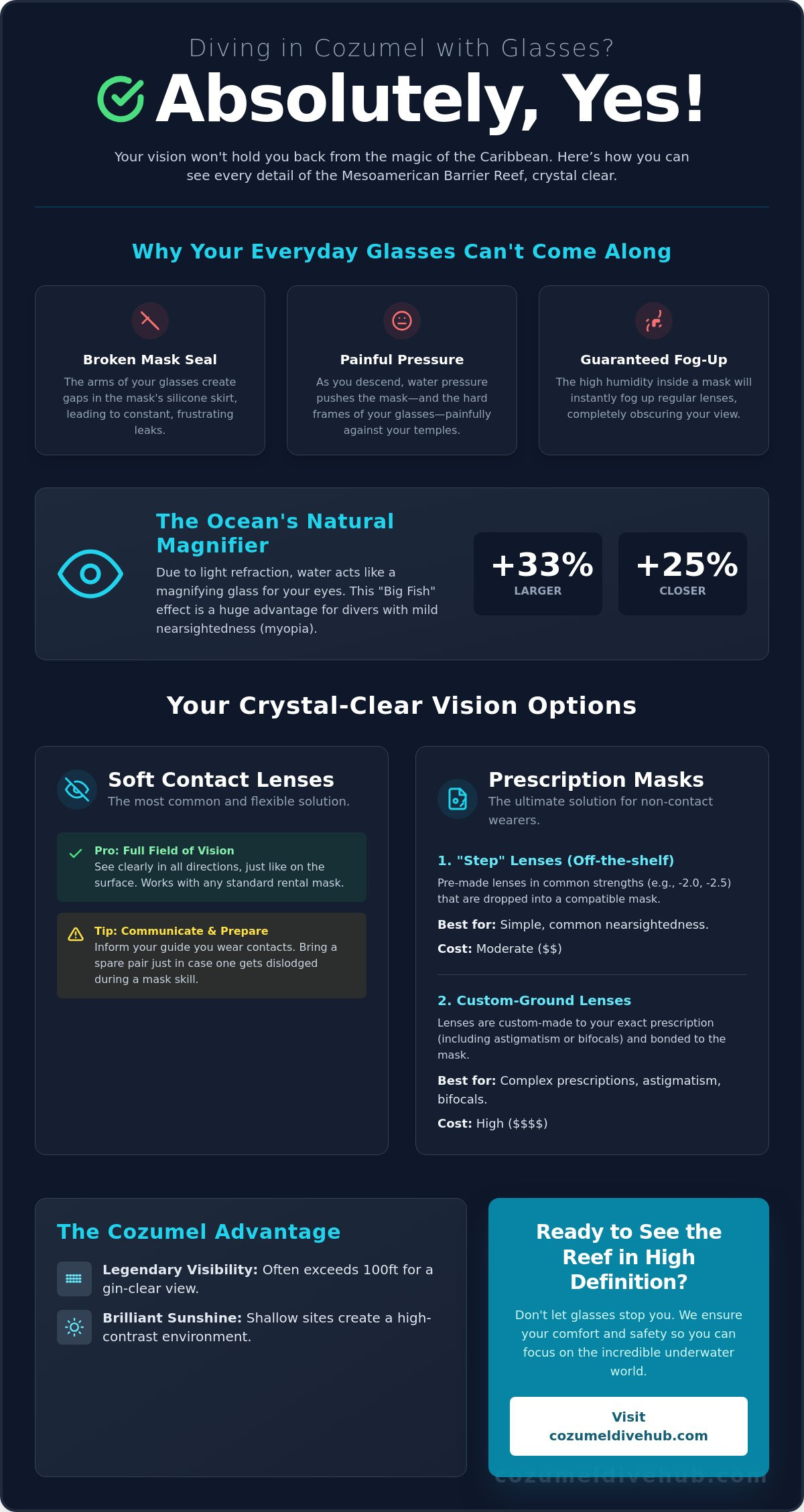
Why can't you just tuck your glasses inside your mask? It comes down to how your gear functions. A scuba mask needs a perfect, airtight seal against your face to keep water out. The arms of your glasses create tiny gaps where the mask skirt meets your skin, which leads to constant, annoying leaks. Plus, as you descend, the water pressure pushes the mask tighter against your face. Having those hard frames pressed into your temples is incredibly painful! There's also the fogging factor. Regular lenses aren't designed for the high humidity inside a mask and will cloud up the moment you submerge, leaving you in a white mist instead of a blue paradise.
The Cozumel Advantage: Clarity and Light
Cozumel is arguably the best place on Earth to start your journey if you have vision concerns. Our legendary visibility often exceeds 100 feet, which means the water is as clear as gin! This clarity, combined with the way light behaves at depth, is absolutely fascinating. The Physics of Diving: Why You Might See Better Than You Think explains how the air space in your mask actually helps your eyes focus and corrects some of the distortion water creates.
Many of our favorite scuba diving cozumel sites are shallow and bathed in brilliant Mexican sunshine. This high-contrast environment makes it much easier to spot a camouflaged octopus or a bright queen angelfish, even if your vision isn't 20/20. Don't let your glasses hold you back from your PADI certification! We've seen plenty of "four-eyed" adventurers become some of the most observant divers on our boats. If you've been asking can you learn to dive in cozumel if you wear glasses, the answer is waiting for you in our crystal-clear waters.
The Physics of Diving: Why You Might See Better Than You Think
The way light travels underwater is nothing short of magic. When light rays pass from the water, through your mask glass, and into the air space in front of your eyes, they bend. This process is called refraction. For anyone wondering, can you learn to dive in cozumel if you wear glasses, this physics lesson is your best friend because it acts like a natural magnifying glass. It's often the "secret weapon" that allows people with mild vision issues to enjoy the reef without any extra gear at all!
Objects underwater appear roughly 33% larger and 25% closer than they actually are. We call this the "Big Fish" effect. It's a massive advantage for divers with mild nearsightedness (myopia). Because the water magnifies every detail and brings it closer to your eyes, many people find they can see the vibrant textures of a brain coral or the spots on a trunkfish with startling clarity. We often hear the question, can you learn to dive in cozumel if you wear glasses, from nervous beginners who are later shocked to find they can actually see the tiny scales on a parrotfish without their specs.
Understanding Refraction and Magnification
Your brain is used to light traveling through air, so when it hits that air-to-water interface in your mask, your perception shifts. Imagine seeing a three-foot hawksbill turtle gliding through the water. Because of refraction, that turtle will look like a four-foot giant! While this magnification helps you spot marine life earlier, it does have a flip side. If you are farsighted, the magnification might make it slightly trickier to focus on things very close to your face. However, for the majority of nearsighted adventurers, the ocean does half the work for you.
Will You Need a Prescription Mask?
A great way to gauge your needs is the "dashboard test." If you can read your car's speedometer and see the road clearly without your glasses, you'll likely be just fine relying on natural refraction. However, safety is always our priority. You must be able to read your submersible pressure gauge (SPG) to monitor your air supply. If you struggle with fine print or have a very strong prescription, it's worth checking out Prescription Scuba Masks: The Ultimate Solution for Non-Contact Wearers to see if a corrective lens is right for you. If you're ready to see the difference for yourself, booking a dive trip is the perfect way to test your eyes in our crystal-clear Caribbean waters.
Diving with Contact Lenses: Pros, Cons, and Safety Tips
Ready to ditch the frames and jump in? For the vast majority of our guests, soft contact lenses are the absolute gold standard for seeing our vibrant reefs with total clarity. They offer a natural field of vision that glasses simply can't match, especially when you're trying to spot a tiny nudibranch or a camouflaged scorpionfish. When people ask us, can you learn to dive in cozumel if you wear glasses, we often suggest they chat with their optometrist about contacts before they arrive. It's the simplest way to transition from the boat to the blue without missing a single beat.
Safety is our number one priority at Cozumel Dive Hub. It is vital that you tell your instructor or divemaster if you are wearing contacts. We aren't just being nosy! Knowing you have lenses in helps us tailor your training. If we know you're wearing contacts, we'll give you extra reminders during your skills practice to keep those eyes shut tight when water is inside the mask. It’s all about making sure your cozumel beginner diving experience is as relaxed and fun as possible.
Soft vs. Hard Contact Lenses for Diving
If you have a choice, always go with soft lenses. Hard, gas-permeable lenses don't play well with the increased pressure of the deep. They can trap tiny air bubbles between the lens and your eye, a literal "lens squeeze" that can be quite uncomfortable and cause temporary blurred vision. Soft lenses are porous, allowing your eyes to breathe and equalize naturally as you descend. We highly recommend using daily disposables. Salt water and boat environments aren't always the most sterile places, so being able to toss your lenses at the end of the day and start fresh tomorrow is the best way to avoid any pesky eye infections.
Mastering Mask Drills with Contacts
The biggest worry for contact wearers is the "mask clear" drill, where you intentionally let water into your mask and then blow it out. Don't sweat it! We use the "Closed Eye" rule. Before you flood your mask, simply take a breath and close your eyes tight. Once the mask is clear of water, give your eyes a few blinks to settle the lenses before you open them again. It works like a charm!
- Stay Calm: If a lens does shift or fall out, don't panic. Signal your instructor and stay with the group. You can still see well enough with one eye to finish the dive safely.
- The Spare Kit: Always bring a spare pair of contacts and your glasses in your dry bag on the boat. Having a backup means a lost lens won't ruin your second tank of the day.
- Blink Often: The air in your tank is very dry, which can sometimes make lenses feel a bit sticky. Blinking frequently helps keep them hydrated and comfortable.
We've helped hundreds of divers navigate their first bubbles while wearing contacts. If you've been wondering can you learn to dive in cozumel if you wear glasses, just know that a simple pair of soft contacts is often all you need to unlock the wonders of the Palancar Reef!
Prescription Scuba Masks: The Ultimate Solution for Non-Contact Wearers
If the idea of putting a contact lens in your eye makes you squirm, don't worry! You aren't alone, and you certainly aren't stuck on the boat. For many of our guests, a prescription scuba mask is the absolute best way to see the vibrant life at Palancar or Columbia Reef. When people ask us, can you learn to dive in cozumel if you wear glasses, we often point them toward these specialized masks. They work exactly like your favorite pair of spectacles, but they're built right into your diving gear. It's the ultimate "set it and forget it" solution for crystal-clear underwater vision.
You generally have two choices when it comes to optical masks. The first is "step" lenses. These are off-the-shelf lenses that come in standard strengths like -2.0 or -3.5. They're fantastic for most people and very affordable. The second option is a custom-ground prescription mask. This is where a lab creates lenses that match your exact prescription, including correction for astigmatism. If you only have trouble reading your dive computer or pressure gauge, you might prefer "gauge readers" or bifocal masks. These have a small magnifying section at the bottom, leaving the top clear for looking at the big, beautiful scenery. This setup is a massive confidence booster during your padi certification cozumel journey.
Buying vs. Renting an Optical Mask
While some shops keep a few optical masks in their rental fleet, finding one that matches your specific eyes is like finding a needle in a haystack. We always recommend investing in your own. A quality pre-made optical mask can start as low as $57.99, while high-end brands with drop-in lenses might cost between $110 and $219. If you need a fully custom solution, expect to pay around $250 or more. Having your own mask means you get a perfect, leak-free seal every time. It's a small price to pay for seeing a spotted eagle ray in high definition! If you're ready to start your adventure, check out our Small Groups Diving options to see how we provide personalized care for every student.
Stick-on Magnifiers: A Budget-Friendly Hack
If you're looking for a quick fix, removable lenses like "Dive Optx" are a brilliant budget hack. These are small, flexible magnifying patches that you can stick to the inside of any standard mask using just a bit of water. They're perfect for divers who have great distance vision but struggle to read their air supply or computer settings. While they aren't as permanent as ground lenses, they're a fantastic temporary solution. They let you enjoy the reef today while you decide on a more permanent optical mask for the future. So, can you learn to dive in cozumel if you wear glasses? Absolutely, and with these tools, you'll see the Caribbean better than you ever thought possible!
Learning to Dive with Cozumel Dive Hub: We See You!
At Cozumel Dive Hub, we believe the ocean should be accessible to everyone, regardless of their prescription. If you've been asking, can you learn to dive in cozumel if you wear glasses, we're here to tell you that we've turned that dream into reality for hundreds of travelers just like you. Our team lives and breathes these waters, and we know exactly how to help you navigate your first bubbles with total confidence. We don't just teach you how to breathe underwater; we ensure you can actually see the magic happening around you!
Our instructors are famous for their patience and personalized care. Before we even leave the pier, we'll sit down with you to discuss your specific vision needs. We'll establish clear, vision-specific hand signals to ensure you're comfortable checking your air supply and dive computer. If you're nervous about mask drills with your contacts, we'll take all the time you need in shallow water until the skill feels like second nature. We aren't a high-volume "factory" shop. We're a local family of enthusiasts who want you to love the reef as much as we do.
Why Small Groups Matter for Your First Dive
We specialize in small groups because we know that your first breath underwater is a big deal. When you're managing vision correction, having an instructor who is literally inches away provides an incredible sense of security. You'll never feel rushed or overlooked. This customized pace allows us to focus on the details that matter most to you, turning what could be a stressful experience into a relaxing adventure. At Cozumel Dive Hub, you aren't just a customer on a boat; you're part of our dive family. This supportive atmosphere is exactly why so many of our students come back to us for their advanced open water cozumel certification.
Book Your Cozumel Adventure Today
Are you ready to see the world-famous Palancar Reef in high definition? Don't let a pair of glasses keep you from the wonders of the Mesoamerican Barrier Reef. If you're still wondering, can you learn to dive in cozumel if you wear glasses, the answer is a resounding yes, and we're ready to show you how! Reach out to us today to discuss your vision needs or to ask about mask recommendations. We're here to guide you every step of the way, from your first equipment fitting to your final certification dive. Your journey into the blue starts right here with a team that truly cares. Let's get you underwater and show you what you've been missing!
Start Your Underwater Journey with Total Clarity!
The underwater world is far too vibrant to miss, and your vision shouldn't be the thing that keeps you on the shore. Between the natural magnification of our crystal-clear waters and the convenience of modern prescription masks, seeing the reef in high definition is easier than you think. If you've been wondering can you learn to dive in cozumel if you wear glasses, the answer is a resounding yes! We've spent decades helping people with all types of vision needs discover the stunning life hidden beneath the surface.
Our small group specialists are here to guide you with a patient, multi-lingual approach that puts your safety and comfort first. As local experts with deep roots in the island, we know exactly how to tailor your training so you feel confident during every skill. Don't let a minor detail like a prescription hold you back from the thrill of your first breath underwater. The turtles, eagle rays, and coral gardens are waiting for you to see them clearly! Book your Cozumel PADI course with the experts at Cozumel Dive Hub!
Frequently Asked Questions about Diving with Glasses
Can I wear my glasses inside my scuba mask?
No, you cannot wear traditional glasses inside a mask because the frames prevent the silicone skirt from creating a watertight seal against your face. This causes constant leaking and significant discomfort as the water pressure pushes the hard frames into your temples. Instead of your frames, we recommend using soft contact lenses or a specialized prescription mask to ensure your underwater experience is dry, comfortable, and crystal clear.
Will my contact lenses pop out due to water pressure?
Your contact lenses will not pop out from water pressure because the pressure is distributed evenly across the lens and your eye. The only real risk of losing a lens is if your mask floods and you open your eyes while submerged. As long as you follow our safety protocols and keep your eyes closed during mask clearing drills, your lenses will stay perfectly in place throughout your entire dive.
What happens if I lose a contact lens during a dive?
If you happen to lose a lens, the most important thing is to stay calm and signal your instructor or dive buddy immediately. You can still see well enough with one eye to monitor your depth and air supply as you end the dive safely. We always suggest keeping a spare pair of contacts and your glasses in a dry bag on the boat so you can see clearly for your surface interval.
Do dive shops in Cozumel rent prescription masks?
While some shops might have a few optical masks, finding your exact prescription in a rental fleet is quite difficult and never guaranteed. Because a perfect fit is vital for preventing leaks and ensuring clear vision, we always recommend purchasing your own prescription mask before you arrive. It is a fantastic investment that ensures you see every spotted eagle ray and colorful coral head in high definition.
Can I dive if I am legally blind without my glasses?
Yes, you can absolutely dive even with a very strong prescription as long as you use a custom-ground prescription mask. When people ask can you learn to dive in cozumel if you wear glasses or have significant vision loss, the answer is yes, provided you can read your gauges and see your buddy's hand signals. We prioritize your safety and will work closely with you to ensure you feel confident and secure.
Are soft or hard contact lenses better for scuba diving?
Soft contact lenses are the superior choice for diving because they are porous and allow your eyes to equalize pressure naturally. Hard or gas-permeable lenses can trap tiny air bubbles against your eye, leading to a painful sensation known as "lens squeeze" or temporary blurred vision. We highly recommend daily disposables because they are the most hygienic option for the salty, humid environment of a dive boat.
How do I clear my mask without losing my contacts?
To clear your mask safely, simply close your eyes tightly before you start the clearing process. Look up, exhale firmly through your nose to displace the water, and keep your lids shut until the mask is completely dry. Once the water is gone, give your eyes a few quick blinks to resettle the lenses before you open them. This simple "Closed Eye" rule works like a charm for all our students!
Should I get a full prescription mask or just gauge readers?
You should choose a full prescription mask if you need help seeing the reef at a distance, but gauge readers are perfect if you only struggle to see your dive computer. If your distance vision is great and you only need help with the fine print on your air supply, stick-on magnifying lenses are a budget-friendly solution. If the entire underwater world looks like a blur, investing in full optical lenses is the way to go!