

Cenote Diving vs. Cozumel Reef Diving: Which One Is Right for You?
The most vibrant dive of your trip might not be in the ocean at all. While Cozumel is famous for its world-class drift diving, the silent, crystal-clear waters of the Mayan jungle offer a mesmerizing alternative that many divers overlook. Deciding between cenote diving vs cozumel reef diving often feels like choosing between two different planets, and the pressure to pick the "right" one can be overwhelming. You want to see the best of Mexico without the stress of ferry schedules or the anxiety of entering an unfamiliar overhead environment.
We understand that every diver has a different comfort level, and our team has helped over 1,000 enthusiasts explore these waters safely. You deserve a plan that maximizes your time underwater rather than waiting around at the pier. In this guide, we'll dive deep into the specific skills needed for both environments and provide a logistical map for your journey. By the end, you'll have the confidence to choose the perfect adventure for your skill level, whether that's soaring over 30-meter walls or floating through ancient limestone cathedrals. Your adventure starts here!
Key Takeaways
- Dive into the vibrant world of Cozumel’s reefs to experience breathtaking wall dives and encounter rare marine life like the Splendid Toadfish.
- Step into the "crystal cathedrals" of the Mayan underworld, where you’ll explore ancient geological wonders with seemingly unlimited visibility.
- Learn the essential differences in gear, water temperature, and skill requirements when comparing cenote diving vs cozumel reef diving for your itinerary.
- Discover how the local expertise and personalized touch of a family-run operation can ensure your underwater journey is both safe and unforgettable.
Cenote Diving vs. Cozumel Reefs: The Tale of Two Worlds
Ready to dive into paradise? You've landed in the heart of the Mexican Caribbean, a place where two completely different aquatic universes sit just a short ferry ride apart. On one side, you have the vibrant, sun-drenched reefs of Cozumel. On the other, the mysterious, crystal-clear freshwater systems of the mainland. This choice is easily the #1 dilemma for divers visiting our home. Whether you're a seasoned pro or a new diver, choosing between cenote diving vs cozumel reef diving feels like picking between two different planets. One is the "Galapagos of the Caribbean," and the other is the "Mayan Underworld." Your adventure starts here with the Cozumel Dive Hub family, and we're here to help you choose the path that makes your heart race!
- Cozumel: Saltwater, high-energy drift diving, massive biodiversity, and vibrant coral life.
- Cenotes: Freshwater, zero current, haunting light beams, and ancient geological formations.
What to Expect from the Cozumel Marine Park
Cozumel sits right on the Mesoamerican Barrier Reef, which stretches over 1,000 kilometers as the second largest reef system on Earth. We call it the "Galapagos of the Caribbean" because the biodiversity is simply staggering. You'll experience the thrill of drift diving here. It's why Cozumel is known as the drift capital of the world. You don't need to kick hard; just relax and let the current carry you past massive coral walls and through winding swim-throughs. Expect to see hawksbill turtles, eagle rays, and the endemic splendid toadfish. The colors are electric, with deep oranges and bright purples covering every inch of the limestone structures.
The Magic of the Mayan Cenotes
Step away from the ocean and you'll find the Riviera Maya's secret treasure. If you've never heard of them, you might wonder what a cenote is exactly. These are natural sinkholes formed by collapsing limestone, revealing a massive network of freshwater rivers that have existed for over 65 million years. For the ancient Maya, these were portals to Xibalba, the underworld. It's a spiritual experience. Most recreational divers stay in the "cavern zone," which means you're always within sight of natural daylight. It's different from cave diving, which requires specialized training. Instead of fish, you're here for the light. Lasers of sunshine pierce through the jungle canopy and dance in the water, creating a mesmerizing "cathedral effect." Deciding on cenote diving vs cozumel reef diving depends entirely on whether you crave the pulse of the ocean or the silence of the earth.
Cozumel Reef Diving: A Paradise of Color and Current
Welcome to our underwater backyard! Diving in Cozumel is an experience that stays with you forever. As part of the Mesoamerican Reef, our waters host a staggering level of biodiversity. You'll find yourself surrounded by over 500 species of fish and 65 types of stony coral. When you're deciding between cenote diving vs cozumel reef diving, the reef is where you go for a high-energy explosion of life and color.
Visibility here is legendary. On a standard day, you can expect 100 feet or more of crystal-clear water. It feels like you're flying through liquid air. This clarity makes it easy to spot our local celebrities. You'll likely see Hawksbill turtles munching on sponges or Spotted Eagle Rays gliding elegantly past the drop-offs. Don't forget to look into the small crevices for the Splendid Toadfish; this vibrant, striped beauty is endemic to Cozumel and lives nowhere else on Earth.
The "Wall Diving" experience is what truly defines Cozumel. At sites like Palancar, the reef edge drops into a deep blue abyss that reaches depths of over 3,000 feet. Floating over that ledge is a rush like no other. It’s a breathtaking perspective that makes you feel small in the best way possible. After the dive, the social vibe continues in San Miguel. The town is filled with the smell of fresh tacos and the friendly smiles of locals who have lived here for generations.
Iconic Dive Sites You Can’t Miss
- Palancar Reef: This is our "crown jewel." It features towering coral pinnacles and swim-throughs that look like a natural cathedral. It's a must-see for every diver.
- Columbia Deep: This site is perfect for those who love drama. You'll see massive coral pillars and have the best chance to spot large pelagics and Hawksbill turtles in their natural habitat.
- Cedral Wall: Ready for some speed? This is a high-speed drift dive where the current carries you past vibrant gardens filled with schools of grunts and snappers.
Is Cozumel Reef Diving for Beginners?
Cozumel is famous for its currents, which is why we call it "valet diving." The boat follows your bubbles, so you don't have to swim back to a fixed point. For beginners, managing these currents is the main challenge. Mastering your buoyancy control is your best friend here; it allows you to hover effortlessly while the ocean does the work. We always recommend diving in small groups to ensure you navigate the Marine Park safely with personalized attention. If you're just starting out, check out Scuba Diving Cozumel: The Complete Beginner’s Guide for more pro tips.
Our team was born and raised on these waters, and we love sharing the secrets of the reef with new friends. If you're ready to see these vibrant walls for yourself, come join the Cozumel Dive Hub family for an epic day on the water.
Cenote Diving: Stepping Into a Crystal Cathedral
Imagine floating in outer space. That is the exact sensation you get the moment you descend into a Mayan cenote. The visibility is effectively unlimited, often exceeding 100 meters. It feels like you are flying through liquid air rather than swimming through water. When comparing cenote diving vs cozumel reef diving, the most striking difference is this absolute clarity. You aren't just looking at fish; you are moving through a geological masterpiece frozen in time.
The walls of these caverns tell a story that is millions of years old. You will glide past massive stalactites and stalagmites that grew over 10,000 years ago when these caves were dry. Look closely at the limestone and you might spot fossilized prehistoric shells. One of the most mesmerizing sights is the halocline. This occurs where fresh water sits on top of denser salt water. As you swim through the mixing point, the water creates a shimmering, blurry visual effect that looks like a liquid mirror. In sites like Cenote Tajma Ha, the sun creates "laser beams" of light that pierce through the ceiling, creating a natural light show that will leave you breathless.
The Best Cenotes for First-Time Cavern Divers
Cenote Dos Ojos is a legendary spot for your first adventure. You can follow the famous "Barbie Line" through decorated passages or visit the Bat Cave to see resident bats hanging just above the surface. If you want a wide, open feel, Cenote Garden of Eden (Ponderosa) is perfect. It features massive moss-covered rocks and incredible light effects. For a different vibe, Cenote Casa offers a mangrove-lined experience. The light filters through the roots, creating a mystical atmosphere that feels like a submerged jungle.
Addressing the Fear: Is Cenote Diving Safe?
Safety is the heartbeat of our community. We keep things professional and secure so you can focus on the fun. Every cavern tour follows a strict 4:1 diver-to-guide ratio. This ensures your guide is always within reach. We also use the "Rule of Thirds" for air management. This means we use one third of our air to go in, one third to come out, and keep one third as a safety reserve. You don't need a full cave certification for these tours. As long as you stay within the "daylight zone" where natural light is always visible, your recreational open water certification is all you need to join the family underwater.
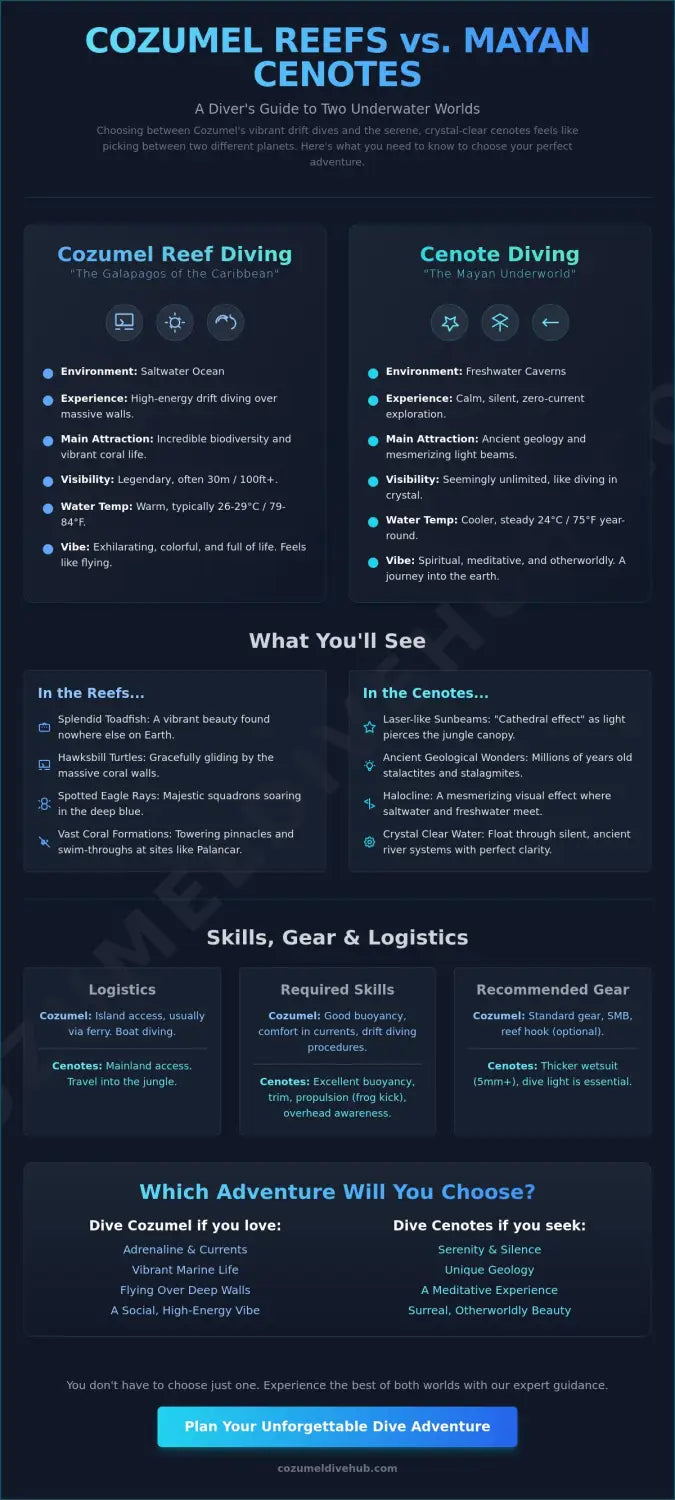
The Ultimate Comparison: Logistics, Gear, and Skills
Planning your trip requires looking at the technical details that separate these two worlds. Cozumel’s ocean waters stay a balmy 80 to 84°F (26 to 29°C) throughout the year. Most divers feel comfortable in a shorty or even just a rash guard. The cenotes are a different story. These freshwater systems stay a constant 75 to 77°F (24 to 25°C). While that sounds mild, the lack of sunlight means you'll feel the chill faster. We recommend a full 3mm or 5mm wetsuit to keep you cozy during your cavern exploration.
Mastering your weight is the biggest technical shift in the cenote diving vs cozumel reef diving debate. Saltwater is much denser than freshwater, which provides more natural lift. When you transition to a cenote, you must reduce your weight. Most divers shed about 4 to 6 pounds (2 to 3 kg) of lead to avoid sinking like a stone. Getting this right is vital for protecting the delicate environment.
The financial side also varies. Reef diving costs typically cover the boat charter and the daily Marine Park fee. Cenote trips involve land transportation in a jungle van and entrance fees paid directly to the local Mayan communities who preserve these sites. While gear rentals are similar, the overhead environment of a cenote requires specialized equipment like high-powered dive torches.
Which Experience Matches Your Skill Level?
Many of the most famous cenote caverns are open to divers with an Open Water certification. However, these sites demand excellent buoyancy control. One stray fin kick can destroy a stalactite that took 10,000 years to form. If you want to build your confidence on deeper walls before heading into the caves, check out Advanced Open Water Cozumel: Your Epic Next Chapter Underwater to refine your skills with our expert team.
Logistics: Staying in Playa vs. Staying in Cozumel
Your "home base" dictates your daily rhythm. Staying in Cozumel means you are minutes away from the world's best drift diving. To visit a cenote from the island, you'll need to factor in the "Ferry Factor." This involves a 45-minute ferry ride to Playa del Carmen followed by a van ride into the jungle. It makes for a long, thrilling day of adventure! If you stay in Playa, the jungle is your backyard, but you'll have to travel to reach the vibrant reefs. Regarding gear, we always provide the specialized torches you need for the cavern shadows. The halocline is a visual phenomenon where freshwater meets saltwater, creating a blurry, shimmering effect that looks like oil mixing with water. This is a highlight of any cenote diving vs cozumel reef diving itinerary.
Your Adventure Starts Here: Booking the Best of Both Worlds
Your underwater journey is about more than just the water. It's about the people who guide you through it. At Cozumel Dive Hub, we treat every guest like a member of our own family. Memo, our founder, was born and raised right here on the island, and that local heartbeat is in everything we do. We don't just show you the ocean; we share our home with you. When you're weighing the options of cenote diving vs cozumel reef diving, you don't have to stress about the complicated logistics. We've spent years perfecting the flow of these excursions.
We handle the ferry transfers to the mainland for the cenotes, arrange the ground transportation, and provide top-tier gear for the reefs. Our team manages the heavy lifting so you can focus on your buoyancy and the breathtaking views. If your travel schedule allows for at least four days of diving, we highly recommend doing both. There’s no better way to appreciate the biodiversity of the Yucatan than by spending two days drifting over the vibrant Palancar Reef and one day exploring the haunting light beams of a freshwater cavern. It's the ultimate diver's bucket list.
Why Small Groups Matter for Your Experience
Large "cattle boats" with 15 or 20 divers can feel chaotic and impersonal. We keep our groups small, usually capping them at 6 divers per guide. This allows us to provide a personalized site selection based on your specific interests and air consumption. If you're a photography enthusiast who wants to move slowly, or a thrill-seeker looking for the deepest walls, we can pivot to make that happen. Safety is our top priority, and smaller groups ensure we're always close by to provide support and comfort.
Ready to Dive Into Paradise?
Booking your trip is the first step toward an unforgettable experience. Our process is transparent and friendly, designed to get you in the water with zero's hassle. For your first day with the Dive Hub family, just bring your certification card, a swimsuit, and your sense of adventure. We'll have the tanks, weights, and plenty of local snacks ready for you on the boat. Let's get out there and explore the crystal-clear beauty of the Caribbean together.
Ready to Dive Into Your Next Adventure?
Choosing between the vibrant, current-swept walls of the Mesoamerican Reef and the ethereal, sun-drenched caverns of the mainland is a thrilling dilemma. Cozumel's reefs deliver a high-energy spectacle of coral and marine life. Conversely, the cenotes provide a serene, otherworldly experience through ancient limestone formations. When weighing cenote diving vs cozumel reef diving, you don't have to pick just one side of the story. Our founder, Memo, was born and raised right here on the island; he brings decades of local knowledge to every trip. We prioritize your peace of mind by following strict PADI safety standards and maintaining small group ratios to ensure personalized attention. Whether you want a customized itinerary for the deep walls or a guided tour through a crystal cathedral, we handle every detail. It's time to see why these waters are world-famous. Join the Cozumel Dive Hub family for an unforgettable journey! We can't wait to make some bubbles with you in paradise.
Frequently Asked Questions
Do I need a special certification to dive in a cenote?
You only need a standard Open Water Diver certification to enjoy a cavern dive in most cenotes. These tours follow the strict daylight rule, which means you stay within 60 meters of a visible exit at all times. If you want to explore the deeper cave systems beyond the reach of natural light, you'll need specialized Full Cave training. Our professional guides ensure you stay safe while exploring these mesmerizing freshwater wonders!
Is the water in the cenotes cold compared to the ocean?
Cenote water stays a constant 24 degrees Celsius throughout the year, which feels noticeably cooler than the Caribbean Sea. In contrast, Cozumel's ocean temperatures range from 26 degrees in winter to 29 degrees in summer. We recommend wearing a 5mm wetsuit for your cenote adventure to stay cozy during the 45 minute dive. It's a refreshing change from the tropical heat, and the crystal-clear clarity is absolutely worth the chill!
Can I see fish in the cenotes?
You'll definitely see fish in the cenotes, though the variety is smaller than the vibrant reefs of Cozumel. Look for tiny species like sailfin mollies, tetras, and the occasional freshwater catfish or blind cave fish. While you won't see 500 different species like you do in the ocean, the sight of tree roots and lily pads underwater is magical. It's a completely different kind of underwater beauty that our family loves to share with you!
How much weight should I remove for a freshwater cenote dive?
You should remove approximately 2 to 3 kilograms of weight from your belt when switching from salt to freshwater. Because freshwater is less dense than the ocean, you're naturally less buoyant and require less lead to sink. Getting your weighting right is essential for protecting the delicate stalactites that took 10,000 years to form. When comparing cenote diving vs cozumel reef diving, this buoyancy shift is one of the first things our expert guides will help you master.
Is Cozumel reef diving better than Playa del Carmen reef diving?
Cozumel reef diving offers significantly better visibility and more dramatic topography than the mainland reefs in Playa del Carmen. Divers in Cozumel regularly enjoy 30 meters of vertical visibility and stunning 90 degree walls that drop into the deep blue. While Playa del Carmen has beautiful shallow reefs, Cozumel's section of the Mesoamerican Barrier Reef is world-famous for its massive coral towers and thrilling drift dives. Your adventure starts here with the best reefs in Mexico!
What happens if I feel claustrophobic in a cenote?
You'll find that most popular cenote caverns are surprisingly spacious with high ceilings and multiple large openings. If you feel nervous, our guides maintain a strict 4 to 1 diver ratio to give you personalized attention and constant reassurance. We choose sites like Dos Ojos that feature massive chambers and plenty of natural light to keep you comfortable. If you ever feel uneasy, we simply turn the dive around; your safety and comfort are always our top priority!
Can my non-diving family join me on these trips?
Your non-diving family members can absolutely join the trip and enjoy snorkeling or swimming while you dive. Many cenote parks offer walking trails, picnic areas, and crystal-clear pools perfect for a 3 hour family hangout in the jungle. In Cozumel, our boat can often accommodate snorkelers on the same trips as divers so you can share the day. We love welcoming the whole Dive Hub family, so everyone gets to experience the magic of the Yucatan together!
Which is better for underwater photography: reef or cenote?
Both locations offer epic shots, but cenotes are world-renowned for capturing dramatic light beams and eerie haloclines. The high contrast between the dark cavern and the bright sun creates a mesmerizing effect for your lens that you won't find anywhere else. However, if you want vibrant colors and schools of 100 fish, the reef is your best bet. Choosing between cenote diving vs cozumel reef diving for photos depends on whether you want moody architecture or colorful wildlife!