

Conservation Efforts in Cozumel Marine Park: Protecting Our Underwater Paradise in 2026
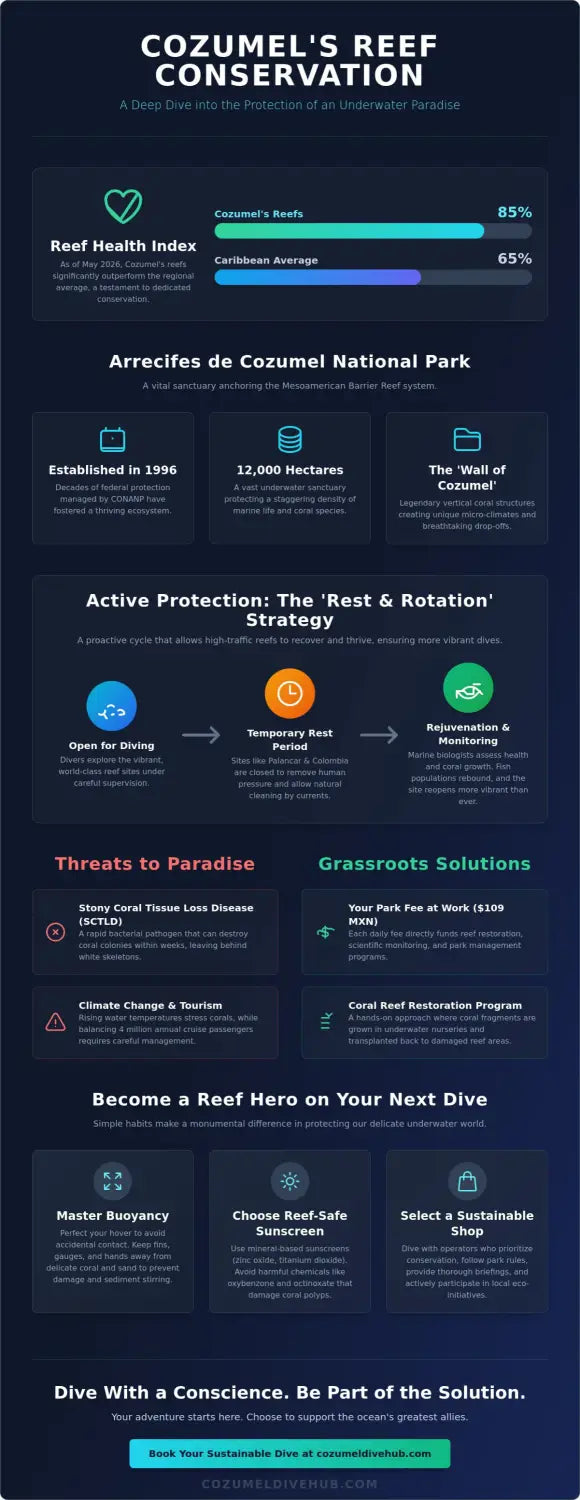
Did you know that as of May 2026, Cozumel's vibrant reefs maintain an incredible 85% health rating, soaring past the Caribbean average of 65%? It's a breathtaking achievement for our 12,000-hectare underwater sanctuary. We understand that as a diver, you might feel a pinch of guilt about tourism's impact or worry that closures will keep you from iconic sites like Palancar. You want to explore these mesmerizing walls without feeling like you're part of the problem. It is completely normal to feel confused about which reefs are open or why certain areas are resting.
The good news is that the ongoing conservation efforts in cozumel marine park aren't just about restrictions; they are the reason our dives remain world-class adventures. In this guide, you'll discover how Cozumel leads the way in reef restoration and how you can be part of the solution on your next dive journey. We'll walk you through the "rest and rotation" strategy, explain how the $109.00 MXN daily park fee funds these miracles, and help you identify the local dive shops that truly care about our blue backyard. Here at Cozumeldivehub, we believe that an informed diver is the ocean's greatest ally. Get ready to dive into paradise with a clear conscience!
Key Takeaways
- Discover the biological significance of the "Wall of Cozumel" and why this protected sanctuary is vital for the Mesoamerican Barrier Reef.
- Get the facts on the "Rest and Rotation" system and how temporary site closures actually lead to more vibrant, life-filled dive experiences.
- Explore the grassroots movement behind the conservation efforts in cozumel marine park, including how coral fragments are grown and transplanted back to the reef.
- Learn simple, high-impact habits like mastering buoyancy and choosing the right sunscreen to protect our delicate coral polyps.
- Identify the hallmarks of a sustainable dive shop so you can book your next adventure with a team that puts the ocean first.
The Arrecifes de Cozumel National Park: A Global Treasure Under Protection
Established in 1996, the Arrecifes de Cozumel National Park represents one of the most successful marine management stories in the Caribbean. This 12,000-hectare sanctuary serves as a vital anchor for the Mesoamerican Barrier Reef, the second-largest reef system on the planet. For us at Cozumeldivehub, this park isn't just a workplace; it's our backyard and our legacy. Memo and the rest of our family were born and raised surrounded by these turquoise waters. We've seen firsthand how the conservation efforts in cozumel marine park have transformed the health of our local ecosystem over the decades. By 2026, the federal protection managed by CONANP has shifted from simple monitoring to active, tech-driven restoration to combat modern climate shifts.
The legendary 'Wall of Cozumel' is a biological marvel that leaves even seasoned pros speechless. These vertical coral structures drop into the deep blue, creating unique micro-climates where deep-water nutrients meet sun-drenched surface life. This verticality allows for a staggering density of coral species that you won't find on flatter reef systems. It’s an epic sight that reminds us why we fight so hard to keep these waters pristine for the next generation of explorers. We believe every dive should be a lesson in respect for this global treasure, ensuring that the beauty we see today remains for those who follow.
Why Cozumel's Reefs are Unique
The secret to our vibrant life lies in the powerful currents that sweep along the island's western coast. These currents act like a conveyor belt, delivering fresh nutrients to massive fan corals and sponges. This constant flow is why our visibility remains crystal-clear, often exceeding 100 feet. It's also the only place on Earth where you can spot the Splendid Toadfish. This endemic creature, with its bright yellow fins and distinct croaking sound, hides in the crevices of our breathtaking walls. You won't find this experience anywhere else, making every dive a truly unique journey into a hidden world.
The Threats We Face in 2026
Protecting paradise isn't without its challenges. Stony Coral Tissue Loss Disease (SCTLD) is a rapid bacterial pathogen that destroys the soft tissue of brain corals, often killing colonies in weeks and leaving behind only white skeleton. Along with rising water temperatures, this disease tests the resilience of our reefs. We also balance the presence of 4 million annual cruise passengers with the delicate needs of the environment. This is why the conservation efforts in cozumel marine park are more critical now than ever before. We work tirelessly to ensure that tourism supports, rather than stresses, our underwater home. Your adventure starts here, and by diving with us, you're choosing to be part of the solution.
Active Protection: The 'Rest and Rotation' Strategy in 2026
Ready for a surprise? Sometimes, the best thing we can do for our favorite dive sites is to leave them alone for a while. The "Rest and Rotation" strategy is a cornerstone of the conservation efforts in cozumel marine park in 2026. Since the latest management updates, CONANP has refined this cycle to target high-traffic zones like Palancar and Colombia. By temporarily closing these sections, we give the reef a much-needed break from bubbles and fins. This proactive management is a key reason why the Isla Cozumel Biosphere Reserve remains such a vibrant, world-class sanctuary.
Why do we do it? Even the most careful divers can stir up microscopic sediment. Over time, this silt settles on delicate coral polyps, making it harder for them to feed and grow. During a rest period, natural currents wash the reef clean. This allows the polyps to thrive and fish populations to explode without human presence. When these sites reopen, the marine life is often more curious and the colors more intense. It's like visiting a brand-new world every time a section returns to the rotation. We've seen the health of these sites bounce back significantly during these quiet months.
What Happens During a Reef Closure?
While you're exploring other parts of the park, marine biologists are hard at work. They conduct health assessments and monitor coral growth rates during these quiet months. For us at Cozumeldivehub, a closure doesn't mean the adventure stops. It means we get to show you the park's incredible diversity. We've mastered the 2026 schedule to ensure your dive trip stays epic, no matter which sections are currently taking a nap. Our team stays in constant contact with park authorities to give you the most up-to-date routes available.
Alternative Dive Sites You'll Love
When the southern reefs are resting, we head to the thrilling northern sections of the park. These sites offer a different kind of magic that many visitors never get to see. Here are a few spots we love to explore during southern rotations:
- Barracuda Reef: A high-voltage drift dive for experienced adventurers, offering a chance to see large pelagics and eagle rays.
- San Juan: Known for its beautiful coral gardens and the potential for exciting, fast-paced currents.
- Hidden Gems: We love taking our family to lesser-known spots like Cantarel, where the "Wall of Cozumel" takes on a whole new personality.
If you're looking for the best spots to hit right now, check out our guide on the Top 10 Cozumel Dive Sites for All Skill Levels. Exploring these less-traveled paths with local guides like Memo ensures you see the very best of the island while respecting the future of our reefs.
Cozumel Coral Reef Restoration Program (CCRRP) and Beyond
While the "Rest and Rotation" strategy keeps our current reefs healthy, there’s an even more hands-on movement happening beneath the surface. Dr. German Mendez and the Cozumel Coral Reef Restoration Program (CCRRP) have turned local divers and enthusiasts into underwater gardeners. This grassroots movement is a vital part of the conservation efforts in cozumel marine park. Instead of just watching the reef, we’re actively helping it grow back stronger than ever before. It’s an epic mission that brings our whole community together.
In 2026, the focus has shifted toward "Resilience." We aren't just planting any coral fragments we find. Scientists and volunteers now select specific strains that have proven they can survive the warmer water temperatures we’ve seen in recent years. This isn't just about replacement; it’s about future-proofing our underwater paradise against the challenges of a changing climate. These conservation efforts in cozumel marine park rely on data from organizations like the Coral Reef Alliance, which is Strengthening Patrols in Cozumel's Marine Protected Area to ensure these delicate restoration sites remain undisturbed. Without these patrols, the hard work of replanting could be lost to accidental damage or illegal fishing.
From Nurseries to Reefs
Imagine swimming past "coral trees," which are clever underwater structures made of PVC that hold hundreds of growing coral fragments. These nurseries are where new life begins in a safe, controlled environment. Once the fragments are large and strong enough, they’re carefully transplanted to areas like Villa Blanca and Paradise Reef. Success rates in these specific zones have climbed to over 80% in 2026, showing that our dedication is paying off. Coral transplantation acts as the rainforest replanting of the sea, providing a vital jump-start to ecosystems that need a helping hand.
How Divers Can Support Restoration
You don't need a PhD to help our reefs thrive. Many divers now join the movement through "Citizen Science" by reporting sightings of healthy coral or alerting authorities to signs of stress during their fun dives. If you want to get even more involved, consider leveling up your skills with specialized training. Our Cozumel Specialty Diving: Your Guide can point you toward courses that focus on reef health and advanced buoyancy. Mastering your position in the water is the first step to becoming a true reef hero. Your adventure starts here, and every bubble you blow can contribute to a healthier, more vibrant ocean for everyone.
Conscious Diving: How to Be a Reef Hero in Cozumel
Ready to take your skills to the next level? Being a reef hero isn't just about what the authorities do; it’s about how you move through the water. While large-scale conservation efforts in cozumel marine park provide the vital framework for protection, your individual actions are what shield the coral on a daily basis. The greatest gift you can give our underwater paradise is "Perfect Buoyancy." A single misplaced fin kick can shatter a coral colony that took 50 years to grow. It’s that simple, and it's that serious. When you master your position in the water, you aren't just a better diver; you're a guardian of the reef.
Streamlining your gear is another easy win for the ocean. Before you jump in, ensure your gauges and octopus are tucked in tight so nothing drags across delicate sea fans or sponges. We also live by a strict "Look but Don't Touch" philosophy. Most marine life has a protective slime layer that acts like an immune system. When humans touch a turtle, a ray, or even a fish, we rub that layer off. This leaves them vulnerable to infections and parasites. Respecting their space ensures they stay healthy and vibrant for the next group of explorers to admire.
Mastering the Drift Responsibly
Cozumel is world-famous for its currents, but they require a specific set of skills. Mastering Cozumel drift diving means learning to glide with the water rather than fighting against it. Instead of constant kicking, which can stir up sediment and stress the polyps, use small, controlled movements to stay neutral. If you're feeling a bit rusty, the Peak Performance Buoyancy specialty is a game-changer. It helps you save air, stay relaxed, and protects the environment all at the same time. It's the ultimate win-win for any eco-conscious adventurer.
Eco-Friendly Prep on the Boat
Your impact starts long before you roll off the boat. Small changes in your routine make a massive difference for the conservation efforts in cozumel marine park. Consider these simple steps for your next outing:
- Sunscreen: Only use biodegradable, reef-safe options. Check your labels and avoid Oxybenzone and Octinoxate, which cause coral bleaching even in tiny concentrations.
- Plastics: Bring a reusable water bottle. We work hard to eliminate single-use plastics on our boats to keep our coastlines pristine.
- Small Groups: Diving with a shop like Cozumel Dive Hub means fewer people in the water at once. This reduces physical pressure on the reef and allows for a more personalized, safe experience.
We often turn our safety stops into mini "Cleanup Dives" by picking up any stray bits of fishing line or plastic we find. It’s a small gesture, but it’s part of the passion we share with our dive family. Ready to see the difference for yourself? Join us for a dive trip and see how professional, local knowledge makes every bubble count.
Join the Dive Hub Family: Your Sustainable Adventure Starts Here
Are you ready to see these vibrant reefs for yourself? At Cozumel Dive Hub, we believe that the best way to protect our underwater paradise is to fall in love with it. That’s why every single one of our briefings includes a deep dive into the conservation efforts in cozumel marine park. We don't just tell you where the fish are; we explain how to navigate the current without touching a single polyp. Our commitment to the ocean is personal. This isn't just a business for us; it’s our home. Your adventure starts here, and we can't wait to share it with you!
You’ll feel the "Memo Difference" the moment you step on the boat. Being born and raised in Cozumel, Memo and our team have a connection to these waters that you won't find with larger, impersonal operations. We’ve watched these reefs change over the last 30 years, and that history informs every route we plan. We choose sites not just for their beauty, but for their resilience and current health status. It’s about more than just a dive; it’s about respecting the legacy of our island and ensuring it thrives for another generation.
Why settle for a crowded boat? We prioritize small groups, typically limited to 6 divers per boat, because it’s safer, more personalized, and much better for the environment. When you dive in a small group, there’s less chance of accidental contact with the reef or stirring up sediment that can smother coral. Your guide can give you the individual attention you need to master your buoyancy, which is the most important skill for any eco-conscious diver. It’s a top-notch experience that truly respects the blue.
Why Local Expertise Matters for Conservation
Our local knowledge is your greatest asset. We know which corners of the park are thriving and which need a little extra space. This deep understanding of the conservation efforts in cozumel marine park allows us to guide you on mesmerizing underwater journeys that are both thrilling and responsible. Over 90% of our guests report that our eco-briefings changed the way they think about reef health. If you're just starting out, there’s no better place to begin than with people who truly care about the future of diving. You can even Get Your PADI Certification in Cozumel with our expert instructors, ensuring you learn the right way from day one.
Book Your Unforgettable Journey
Imagine gliding past pristine walls and vibrant coral gardens, knowing that your presence is supporting a sustainable future for the island. We invite you to join the Dive Hub Family for an epic, professional dive experience that you’ll never forget. Whether you're booking a single dive trip or a full scuba course, you’re choosing a team that puts the ocean first. We are ready to show you the magic of our underwater world while keeping it safe and healthy. Ready to make some bubbles together? Let’s dive into paradise and protect the blue at the same time!
Protect the Blue and Explore the Extraordinary
Cozumel’s underwater world is thriving because of the dedicated conservation efforts in cozumel marine park. By balancing smart site rotations with active coral gardening, this sanctuary remains a top-tier destination in 2026. You now know that these protections aren’t just rules; they’re the secret behind our 85% reef health rating. Whether it’s choosing reef-safe sunscreen or perfecting your buoyancy, your individual actions help us keep these breathtaking walls vibrant for years to come. It’s an epic journey that we are proud to lead every single day.
When you’re ready to see the magic for yourself, join our local family. Our born and raised expert guides, like Memo, provide the deep local knowledge needed for a safe and personalized journey. We focus on small groups to ensure top-notch service while strictly adhering to PADI safety and eco-standards. You deserve a professional experience that respects the ocean as much as you do. Ready to dive into paradise? Your adventure starts here! Let’s make some bubbles together and witness the beauty of a protected paradise!
Frequently Asked Questions
Are the reefs in Cozumel still worth diving with the closures?
Yes, Cozumel remains one of the world's premier dive destinations with an impressive 85% reef health rating in 2026. While the "Rest and Rotation" strategy temporarily closes certain sections, these conservation efforts in cozumel marine park ensure that the sites you do visit are bursting with vibrant life and crystal-clear visibility. You'll still experience the epic walls and mesmerizing coral gardens that make our island famous!
Which reefs are currently closed in Cozumel for 2026?
The specific sites under rest change throughout the year according to the schedule set by CONANP to ensure ecological recovery. Currently, southern sections like parts of Palancar or Colombia are often rotated to allow polyps to recover from sediment stress. Because these dates can shift, it's best to check with our team at Cozumel Dive Hub for the most current 2026 schedule. We always plan the most thrilling routes around these protected zones!
Do I need a special permit to dive in the Cozumel Marine Park?
You don't need to apply for a personal permit, but every diver must pay a daily entrance fee of $109.00 MXN. This fee is a federal requirement under Article 198 of the Ley Federal de Derechos. When you join our family for a dive trip, we handle the logistics of obtaining your daily wristband. This small contribution directly supports the rangers and biologists who protect our 12,000-hectare sanctuary.
Is reef-safe sunscreen actually required by law in Cozumel?
Yes, the use of biodegradable, reef-safe sunscreen is a mandatory regulation within the Arrecifes de Cozumel National Park. Federal authorities prohibit any products containing Oxybenzone or Octinoxate, as these chemicals cause coral bleaching even in tiny concentrations. We recommend applying your biodegradable protection at least 30 minutes before entering the water. Better yet, wear a UV-rated rash guard to reduce chemical impact on our pristine ecosystem!
Can beginners dive in the conservation areas of the park?
Beginners are absolutely welcome to explore many areas of the park, provided they are accompanied by a certified professional. Sites like Paradise Reef or Villa Blanca are perfect for new divers to witness the success of conservation efforts in cozumel marine park. We focus on small groups to give you personalized attention, helping you master your buoyancy so you can enjoy the vibrant marine life without accidentally touching the delicate structures.
What happens if I accidentally touch the coral while diving?
If you accidentally touch the coral, you may damage its protective mucus layer, which leaves the colony vulnerable to diseases like SCTLD. Don't panic, but immediately use your breath to adjust your buoyancy and move away from the structure. Our guides provide thorough briefings to help you avoid these mistakes. We believe in a "Look but Don't Touch" philosophy to keep our underwater home stunning for everyone.
How much of the Marine Park fee goes toward conservation?
The entire $109.00 MXN daily fee goes toward the federal management and protection of the park through the agency CONANP. These funds pay for essential boat patrols, reef health monitoring, and the ongoing "Rest and Rotation" program. By paying this fee, you're directly financing the experts who keep Cozumel’s reefs at an 85% health rating. It's a small price to pay for the preservation of a global treasure!
Can I volunteer for coral restoration while on vacation in Cozumel?
Yes, you can definitely get involved with restoration initiatives like the Cozumel Coral Reef Restoration Program (CCRRP). While these programs often require specific training or certifications, many local organizations offer educational workshops or "Citizen Science" opportunities for visiting divers. At Cozumel Dive Hub, we can help connect you with these passionate local movements. Your adventure starts here, and it can include helping us replant the ocean!