

Cozumel Diving Hurricane Season Safety: A Local Expert’s Guide for 2026
The smartest time to visit our island isn't when the crowds are thickest, but when the Caribbean reaches its most vibrant, 84 degree peak. While many travelers stay away, experienced divers know that late summer offers the clearest 100 foot visibility and the most active marine life sightings of the year. It's completely natural if you feel a knot in your stomach about booking during these months. You don't want to watch your hard earned vacation savings vanish because of a sudden weather delay or worry about cozumel diving hurricane season safety while you are 60 feet under. We understand those fears because we live and breathe these waters every single day.
At Cozumeldivehub, we believe your adventure should be thrilling, not stressful. You deserve a clear plan that protects your wallet and your well being. In this local expert’s guide for 2026, we are sharing the exact protocols our born and raised team uses to monitor every wave. You will learn how to navigate port closures like a pro, what specific insurance covers your 2026 trip, and why our personalized approach ensures you are never left guessing. Let’s get you ready for an unforgettable journey into paradise with the confidence of a local expert. Your adventure starts here.
Key Takeaways
- Discover why the June to November window offers Cozumel's warmest waters and most vibrant marine life, despite the official season dates.
- Learn how our local experts monitor real-time weather data to prioritize your cozumel diving hurricane season safety while planning epic underwater journeys.
- Get the inside scoop on port closure protocols and find out if you can still enjoy shore diving when the boats are docked.
- Master our 2026 "Weather-Proof" booking checklist to ensure your trip is protected with the right insurance and flexible planning.
- See how joining the Cozumel Dive Hub family gives you access to "born and raised" expertise for a personalized and safe diving experience.
The Reality of Hurricane Season in Cozumel: June to November
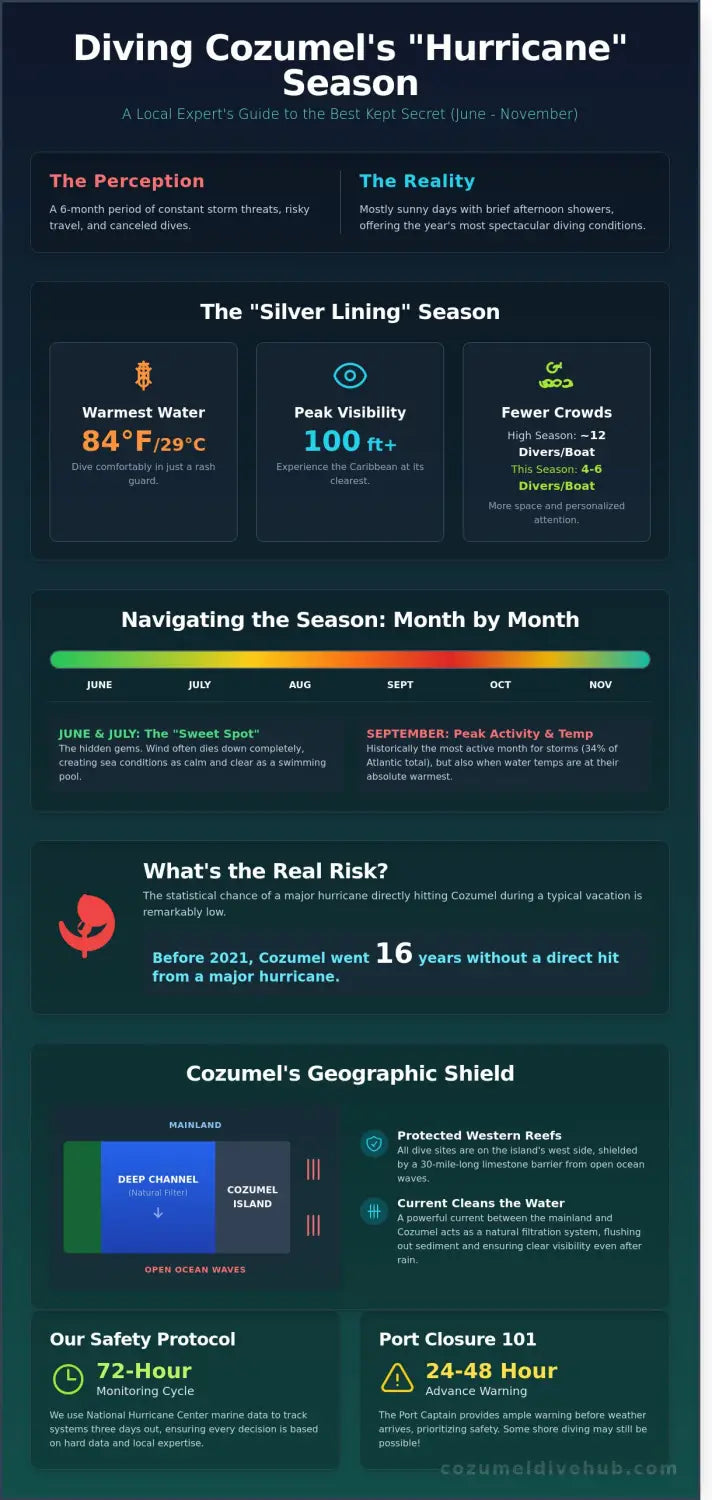
Ready to explore the Caribbean when the water is at its warmest? The official Atlantic hurricane season runs from June 1 through November 30. While that six-month window might look intimidating on a calendar, the daily reality here in Cozumel is far from a constant storm watch. Most days consist of bright sunshine, towering white clouds, and brief afternoon showers that cool the air. Our local "born and raised" team has lived through decades of these cycles, and we can tell you that the island remains a vibrant diving paradise throughout the summer and fall.
Statistically, the chance of a major hurricane hitting the island during your one-week vacation is remarkably low. Before Hurricane Grace made landfall in 2021, Cozumel had gone 16 years without a significant direct hit from a major system. We focus on cozumel diving hurricane season safety by using advanced tracking technology and local maritime knowledge to plan every trip. If a system does approach, the Port Captain provides ample warning, often closing the harbor 24 to 48 hours before any wind picks up. This proactive approach ensures that your safety is always the priority for the Dive Hub family.
Many veteran divers actually prefer visiting during these months for the "Silver Lining" benefits. The crowds of the winter high season have thinned out, meaning you get more space on the boat and more personalized attention from your guide. You might find yourself on a boat with only 4 or 6 divers instead of 12. It’s the perfect time to make some bubbles in a relaxed, intimate environment while the reefs are at their most tranquil.
It is also vital to distinguish between a tropical system and a "Norte." A Norte is a cold front from the north that typically begins appearing in late October. These fronts can bring choppy seas and wind that closes the harbor for a day or two, but they aren't tropical storms. Understanding these weather patterns is part of the expertise we bring to every excursion.
The "Sweet Spot" Months Within the Season
June and July are often considered the hidden gems of the year. During these months, the wind often dies down completely, leaving the Caribbean Sea as flat and clear as a swimming pool. September is historically the most active month for tropical activity in the region, with 34% of all recorded storms in the Atlantic basin occurring during this month. However, this is also when water temperatures peak at a glorious 29°C (84°F). You can easily dive in a thin rash guard or 1mm shorty without ever feeling a chill.
Why Cozumel’s Geography Protects the Reefs
Cozumel possesses a unique geographical shield that most other Caribbean islands lack. All our world-famous dive sites are located on the western side of the island, facing the mainland. The island itself is 30 miles long and about 10 miles wide, acting as a massive limestone barrier against the open ocean waves coming from the east. This means even if the eastern "Wild Side" is experiencing heavy surf, the western reefs often remain calm and diveable.
The deep channel between Cozumel and Playa del Carmen also plays a massive role in maintaining cozumel diving hurricane season safety and water quality. A constant, powerful current flows through this channel, acting like a natural filtration system. Even after a heavy rain, this current quickly flushes out sediment, ensuring that our breathtaking walls and pristine reefs regain their crystal-clear visibility within hours. Your adventure starts here, where nature's design works in our favor to keep the diving epic all year long!
The Science of Safety: How We Monitor Caribbean Weather
At Cozumel Dive Hub, we live for the rush of the drift and the magic of our vibrant reefs. We also hold a deep, unshakable respect for the Caribbean Sea. Ensuring cozumel diving hurricane season safety isn't just a checklist for us; it's a professional obsession that starts long before you put on your wetsuit. We don't leave anything to chance. Our team uses a multi-layered monitoring strategy to track every tropical wave and wind shift with precision. We want you to feel the thrill of the dive while knowing your safety is backed by hard data and local expertise.
Our planning cycle begins exactly 72 hours before any boat leaves the pier. We rely on the National Hurricane Center marine safety data to visualize atmospheric pressure and storm tracks across the Atlantic basin. By analyzing these models three days out, we can predict swells and current changes with high accuracy. We supplement these global reports with real-time local technology. Memo and the team monitor satellite imagery and specialized buoy data located near the Palancar and Columbia reefs. These buoys provide us with exact water temperatures and wave frequencies, allowing us to pivot our dive sites to the most protected areas of the island.
The Role of the Port Captain
The Capitanía de Puerto, or Port Captain, is the ultimate legal authority for all maritime activity in Cozumel. They monitor the channel 24 hours a day to decide when it's safe for boats to operate. They use a color-coded flag system that every local captain follows. A yellow flag means caution, while a "Puerto Cerrado" (Closed Port) signal means all small vessel traffic must stay at the dock. Typically, the Port Captain triggers a closure when sustained winds exceed 18 knots or when wave heights in the channel reach 4 feet. We follow these mandates 100% of the time. If the Port Captain says the harbor is closed, we stay on land. It's that simple. We never gamble with the ocean because your well-being is our top priority.
Communication Protocols with the Dive Hub Family
Are you worried about being the last to know about a weather change? Don't be! When you join the Dive Hub Family, you get total transparency. We distinguish between "divers weather" and "boat weather." Sometimes the sun is shining, but a 20-knot northern wind makes the boat ride too bumpy for comfort. We track these "Nortes" and tropical systems constantly. If conditions look questionable, we notify our guests via WhatsApp or email at least 12 hours before their scheduled departure. We want you to enjoy a relaxed breakfast at your hotel instead of making a wasted trip to the marina. If visibility drops below 30 feet or currents become unpredictable, we'll tell you straight away. We believe that an informed diver is a safe diver, and we'll always prioritize your security over a boat booking. Ready to experience the best of the island with a team you can trust? You can check out our daily dive schedules to see how we plan our adventures around the best conditions.
Our "Safety First" mindset is woven into every part of our operation. We've been born and raised on this island, and we know these waters better than anyone. By combining the latest meteorological technology with the strict regulations of the Port Captain, we ensure that cozumel diving hurricane season safety remains the gold standard for every guest. We're here to make sure your underwater journey is epic, unforgettable, and, above all, safe. Let's make some bubbles together with total peace of mind!
Port Closures and Diving Protocols: What Actually Happens?
Ready to see how we handle the weather? When you think about cozumel diving hurricane season safety, the Port Captain (Capitanía de Puerto) is the most important person on the island. Every morning by 7:30 AM, the authorities evaluate wind speeds and wave heights. If winds exceed 15 knots or the swell makes the piers dangerous, they issue a port closure. We get the word immediately via marine radio and official channels, and our Dive Hub family starts the "Plan B" protocol to keep you safe and happy.
A port closure day follows a very specific rhythm. First, all boat traffic stops. This means our fleet stays tied up securely at the marina. If the closure is only for "small vessels," larger ships might still move, but for most dive operators, the day on the water is paused. We don't just cancel your fun; we pivot. We check the specific flags. A red flag means the harbor is closed to all navigation. A yellow flag means caution. We always follow these rules to the letter because your safety is something we never gamble with.
Can you still get wet when the boats are docked? It depends on the type of closure. If the Port Captain closes the harbor to "all activities," shore diving is also prohibited. However, if the closure only applies to navigation, we often head to sheltered shore spots where the entry is easy and the water remains calm. Following the U.S. Department of State travel safety advice for storm zones, we stay tuned to local weather bulletins every three hours to ensure we know exactly when it is safe to return to the reefs.
Once a storm passes, we don't just jump back in blindly. Our experienced instructors perform "scout dives" to assess the aftermath. We look for three things: visibility, reef integrity, and current shifts. Major weather events can actually flip the currents. In October 2021, after a significant tropical system, we experienced a rare "reverse current" that flowed north-to-south for nearly 36 hours. We track these changes so your first dive back is as effortless as a Cozumel drift should be!
The 48-Hour Visibility Rule
Cozumel is legendary for its 100-foot visibility, but heavy rain can stir up sediment. Don't worry! Our secret weapon is the Yucatan Current. Because we are a drift diving destination, the water is constantly moving. This acts like a giant natural filtration system. Even after a heavy storm, the "crystal-clear" water usually returns within 48 hours. You might see a bit of "particulate" in the water on day one, but by day two, those vibrant blues are back in full force. It's truly a mesmerizing transformation to witness!
Alternative Adventure Options
What if the port stays closed? Your adventure doesn't stop! We often take our guests to the mainland for cenote diving. These ancient freshwater sinkholes are inland and completely unaffected by ocean swells or wind. It's a 45-minute ferry ride to a world of stunning stalactites and laser-like light beams. If you prefer to stay on the island, we can explore the "Wild Side" (the East Coast) by land. While too rough for diving during a storm, the crashing waves at Chen Rio are a breathtaking sight. There is always a way to find the magic of Cozumel!
For many travelers who blend work with pleasure, a down day is a perfect opportunity to catch up on emails. While Cozumel is for relaxing, if your travels take you to a global business hub like Dubai, having a professional space to work from is key. You can find out more about how premier coworking facilities support this "bleisure" lifestyle.
For entrepreneurs who take this global mindset a step further, the UAE is a popular place to formally incorporate. Specialized services like Fast Zone Business can guide you through the entire company setup process.
Finding other ways to unwind is also part of the vacation experience. For those curious about modern alternatives to traditional cocktails for relaxation, you can learn more about low-dose social beverages online.
How to Plan a Safe Dive Trip During Peak Season
Planning a trip during the Atlantic hurricane season, which runs from June 1 to November 30, requires a mix of excitement and smart logistics. You can absolutely enjoy world-class drift dives while prioritizing cozumel diving hurricane season safety by following a rigorous 2026 booking checklist. The goal is to maximize your time in the water while protecting your financial investment. Start by verifying that your chosen dive operator has a clear "Port Closed" policy. In Cozumel, the Harbor Master frequently closes the piers to small vessels when winds exceed 15 knots. A professional shop should offer a full refund or a flexible reschedule date if the port is closed by authorities.
This principle of relying on destination specialists for a safe and well-planned trip applies globally. For example, while our expertise is Cozumel's reefs, for travelers planning to explore the historic sites of Egypt, a dedicated operator like Sola Travel offers that same level of in-depth local knowledge for tours and excursions.
Your 2026 "Weather-Proof" checklist must include these four pillars:
- Flexible Lodging: Only book hotels or rentals with a 48-hour cancellation window.
- Verified Communication: Ensure your dive shop uses WhatsApp for real-time weather updates.
- Power Redundancy: Confirm if your accommodation has a backup generator.
- Early Scheduling: Book your "must-see" reefs for the first two days of your stay.
Choosing where to sleep is about more than just a view. Large resorts along the Southern Zone are built to strict hurricane codes and almost always feature industrial-grade generators and water filtration systems. While Airbnbs offer a local feel, they often lack these backups. During minor tropical depressions in 2024, some residential areas lost power for over 12 hours. If you go the private rental route, ask the host specifically about storm shutters and emergency water reserves before you hit the "book" button.
Specialized Dive Insurance: DAN vs. General Travel Plans
Standard travel insurance from airlines or sites like Expedia often excludes "hazardous activities" like scuba diving. It also typically only triggers if a named storm physically prevents travel. Divers Alert Network (DAN) offers specialized trip insurance that understands the nuances of our sport. You should look for "Cancel for Any Reason" (CFAR) coverage, which usually reimburses up to 75% of your costs if you decide the forecast looks too gloomy to fly. Dive-specific weather insurance provides a safety net by covering non-refundable dive packages specifically when local authorities close the harbor due to wind or surge. This ensures you don't lose hundreds of dollars just because the wind shifted North.
While specialized insurance covers medical and travel costs, it's also important to know what legal resources are available in the unfortunate event of an accident caused by negligence. For U.S. divers, firms that focus on aquatic-related incidents can provide guidance. You can learn more about this specialized area of law at drowningaccidentlawfirm.com.
Packing for the Season
Tropical weather is unpredictable. You might start a dive in brilliant sunshine and surface in a torrential downpour. High-quality rain gear is essential; look for lightweight, breathable shells rather than heavy ponchos. Protect your electronics and dry clothes on the boat using 15-liter or 20-liter dry bags with a roll-top seal. These are lifesavers when a sudden squall hits during the surface interval. Finally, use the "Backup Day" strategy. By scheduling your dives for the beginning of your trip, you leave a 48-hour buffer at the end. This allows us to move your boat days if a temporary weather system passes through. Ready to get started? You can book your 2026 adventure with our local team today and enjoy the peace of mind that comes with expert planning.
Join the Cozumel Dive Hub Family: Safety is Our Heritage
Choosing a dive operator is about more than just finding a boat; it's about finding a team you can trust with your life. At Cozumel Dive Hub, our connection to these waters isn't just professional; it's personal. Memo, our founder, was born and raised right here on the island. He has spent over 25 years studying the unique patterns of the Caribbean Sea. When you're evaluating cozumel diving hurricane season safety, that local intuition is your greatest advantage. We don't just rely on satellite maps. We understand how the wind interacts with the island's geography to create safe pockets for diving even when the open sea looks choppy.
Our small-group philosophy is the heartbeat of our operation. We strictly limit our groups to a maximum of 6 divers per guide, though we often head out with just 4. This isn't just for your comfort. It's a critical safety measure. In smaller groups, our instructors can maintain constant eye contact and provide personalized attention to every diver. If conditions shift slightly underwater, we can react instantly. You're never just a number on a crowded cattle boat; you're a member of our family.
We believe your vacation should be about bubbles, not bills. Our pricing is 100% transparent. If the Port Captain closes the harbor due to weather, we provide a full refund or immediate rescheduling at no extra cost. We've seen how stressful travel planning can be during the late summer months. By removing the financial risk, we let you focus on the excitement of exploring our pristine reefs. We live here, we raise our families here, and we protect our guests with the same fierce loyalty we show our own kin.
Our Safety Standards and Certifications
Safety isn't a buzzword for us; it's a rigorous daily practice. Every one of our vessels is equipped with emergency Dan Oxygen units, VHF marine radios, and first aid kits that exceed PADI standards. Our instructors are all fully certified professionals who undergo regular rescue training updates. The "Local Knowledge" advantage means we know exactly which dive sites offer the best protection based on the day's specific current. If the wind is coming from the north, we know the secret spots on the southern walls that remain calm and crystal-clear. We treat every guest like a VIP because your safety is our legacy.
Ready to Start Your Adventure?
Are you feeling the call of the ocean? Don't let the calendar keep you away from the world's most breathtaking walls. If you're planning a trip for late 2025 or looking ahead to your 2026 adventure, we're here to help you plan with total confidence. You can reach out to us anytime for a real-time weather update or a candid conversation about the current sea conditions. We'll give you the honest, local perspective so you can make the best choice for your trip. Let's get you back into the water where you belong!
Start Your 2026 Underwater Journey Today
Your next great adventure is waiting beneath the waves. While the period from June 1 to November 30 brings tropical activity, our born and raised local experts know exactly how to navigate these waters. We’ve spent decades monitoring Caribbean weather patterns to ensure every trip is both thrilling and secure. By keeping our groups limited to 6 divers per boat, we provide the personalized attention you deserve even if conditions shift. You can trust our transparent weather policies because we offer 100% refunds if the Port Captain closes the harbor. This commitment to cozumel diving hurricane season safety means you can focus on the vibrant reefs and crystal-clear walls without worry.
Memo and the rest of the team are ready to show you the magic of our island home. Don't let the calendar stop you from exploring the world's most mesmerizing dive sites. We treat every guest like part of our heritage. Your journey into the deep begins with a team that puts your well-being first. Join the Dive Hub Family and book your 2026 adventure today! Let's make some bubbles together in paradise!
Frequently Asked Questions
Is it safe to dive in Cozumel during hurricane season?
Yes, diving in Cozumel during hurricane season is safe because advanced satellite tracking provides at least 5 days of notice before any storm arrives. Our local team monitors the National Hurricane Center updates daily from June 1 to November 30. When planning your trip, cozumel diving hurricane season safety is our main focus. Most days offer the same crystal-clear 100-foot visibility you expect from our pristine reefs.
What happens if the port closes while I am in Cozumel?
The Port Captain closes the harbor to all navigation when wind speeds exceed 15 knots or swells reach 3 feet. This means our dive boats stay docked for the duration of the closure. We'll contact you immediately via WhatsApp or email to reschedule your adventure. Usually, these closures last only 24 to 48 hours as the weather front passes through our vibrant waters.
Does Cozumel Dive Hub offer refunds for weather-related cancellations?
Cozumel Dive Hub provides a 100% refund for any dives canceled due to official port closures by local authorities. We don't believe you should pay for bubbles you can't blow. If we can't find a new time slot that fits your vacation schedule, we'll process your return within 3 to 5 business days. Your trust is the foundation of our Dive Hub family.
Which month has the highest risk of hurricanes in Cozumel?
September and October are the months with the highest statistical risk for tropical activity in the Caribbean. Data from the last 50 years shows that 70% of major storms occur during this 60-day window. While the risk is higher, many days still feature mesmerizing conditions and calm seas. It's a great time for quiet dive sites and personalized attention from Memo and our experienced guides.
Can I still go shore diving if the port is closed to boats?
You can often still enjoy shore diving even when the port is closed to boat traffic, provided the red flag isn't flying. Shore entries at sites like Tikila or Sunset Reef remain accessible in 80% of north-wind scenarios. We'll check the current conditions at 8:00 AM to ensure the entry and exit points are safe for your skill level. It's a fantastic way to explore the macro life!
How is the visibility in Cozumel during the rainy season?
Visibility remains excellent during the rainy season, typically averaging between 80 and 100 feet. Unlike mainland sites, Cozumel doesn't have river runoff to cloud the water. Rain showers usually last less than 30 minutes before the sun returns to illuminate the reef. You'll still experience the breathtaking clarity that makes cozumel diving hurricane season safety a top priority for our professional team.
What is the best insurance for a dive trip to Cozumel during hurricane season?
We recommend Divers Alert Network (DAN) or DiveAssure, specifically plans that include Trip Cancellation and Weather Interruption coverage. Standard medical insurance often excludes scuba activities deeper than 30 feet. A comprehensive policy costs roughly $50 to $100 and covers non-refundable hotel costs if a hurricane disrupts your journey. It's the best way to ensure peace of mind while you explore our epic underwater world.
Do hurricanes affect the marine life on the Palancar Reef?
Hurricanes rarely impact the deep structures of Palancar Reef because the surge felt at 60 feet is minimal compared to the surface. After a storm, you might see 15% more sand movement or shifted coral rubble in the shallows. However, the vibrant fish populations usually return to their usual spots within 24 hours. The resilience of our local ecosystem is truly stunning to witness firsthand.