

Cozumel Diving Regulations for Tourists: The 2026 Essential Guide
What if your dream trip to the Mesoamerican Reef was cut short because you didn't know which section was off-limits this month? It's a common fear for divers visiting our island, and we know how stressful it feels to worry about accidentally breaking a federal law while you're supposed to be on vacation. You've worked hard for this journey. You deserve to focus on the vibrant coral and mesmerizing eagle rays rather than stressing over paperwork. This guide is your ultimate roadmap to mastering the 2026 cozumel diving regulations for tourists so you can dive with total confidence.
At Cozumeldivehub, we've lived and breathed these waters for decades, and we're here to make sure you're part of our family. We'll walk you through the exact CONANP reef rotation schedule for 2026 and explain why that $5.80 USD daily Marine Park fee is your ticket to protecting paradise. You'll learn which specific gear items are banned as of January 1 and how to navigate the wristband requirements without any hidden surprises. Your adventure starts here, so let's get you ready for the most breathtaking dives of your life.
Key Takeaways
- Understand the history and importance of the Arrecifes de Cozumel National Marine Park to ensure your underwater journey respects this protected federal legacy.
- Master the "10 Golden Rules" of reef etiquette, including why specific gear like gloves and knives are restricted to keep our crystal-clear waters pristine.
- Navigate the 2026 reef rotation and closure schedule with ease, a key component of the cozumel diving regulations for tourists designed to give our vibrant corals a well-deserved break.
- Get the latest 2026 updates on the "Brazalete" wristband system and daily park fees so you can focus entirely on the excitement of your next big adventure.
- Learn how joining the Cozumel Dive Hub family ensures you receive expert briefings and personalized site selections that align perfectly with Marine Park standards.
The Arrecifes de Cozumel National Marine Park: A Protected Legacy
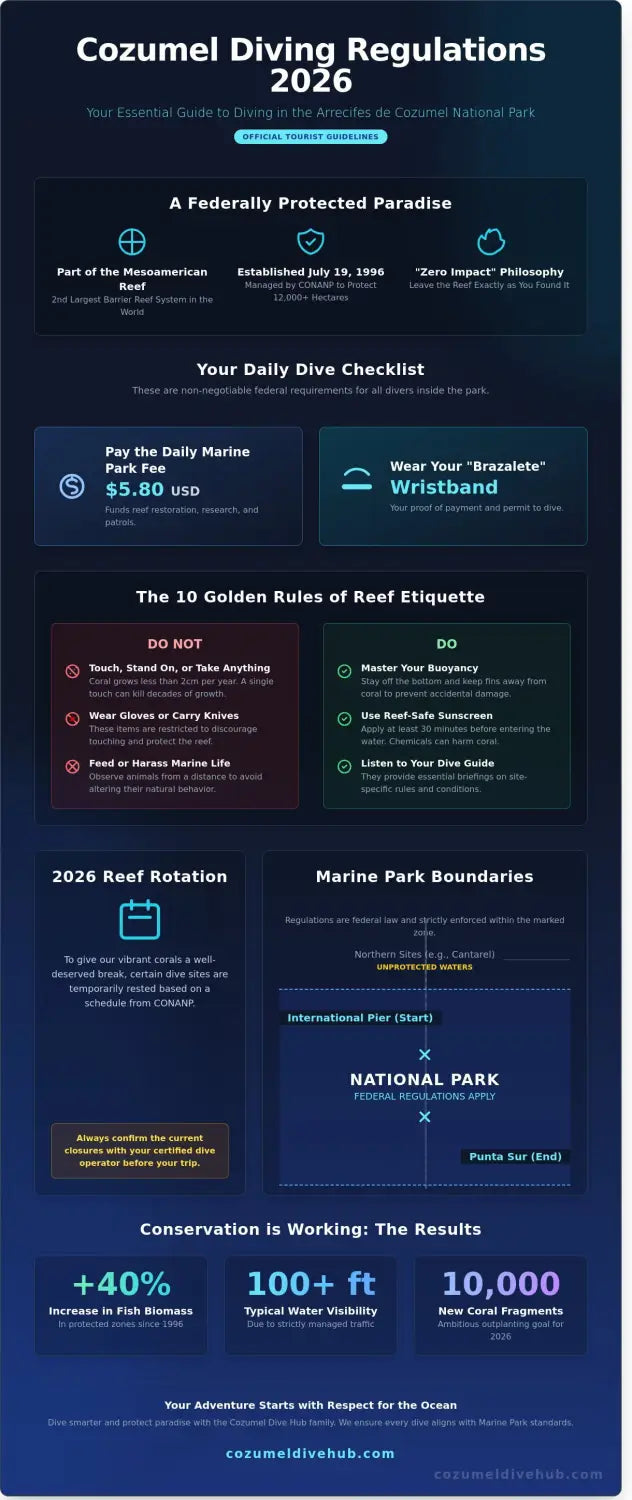
Get ready for an unforgettable underwater journey! Cozumel is not just another dive spot; it is a vibrant, living sanctuary that belongs to the Mesoamerican Barrier Reef, the second-largest reef system on the planet. To keep our crystal-clear waters pristine, the Mexican government established the Arrecifes de Cozumel National Park on July 19, 1996. This federal protection covers over 12,000 hectares of sea and coastline. It is managed by CONANP, the National Commission of Protected Natural Areas. Their job is to ensure that the breathtaking walls and mesmerizing coral gardens we love stay healthy for your children and grandchildren to explore.
Our island welcomes over 1.8 million visitors every year. While we love sharing our paradise, that many people can put a lot of pressure on the environment. This is exactly why cozumel diving regulations for tourists are so vital. These rules act as a shield for our local ecosystem. We are currently working toward an ambitious 2026 vision. This plan focuses on balancing our thriving tourism industry with intensive reef restoration programs. We want to ensure that every diver who joins the Dive Hub Family becomes a part of this conservation success story. Your adventure starts here, and it starts with respect for the ocean.
What falls under Marine Park jurisdiction?
The Marine Park boundaries are very specific. They begin at the International Pier (near downtown) and stretch all the way south to Punta Sur. If you are diving at northern sites like Puerto de Abrigo or Cantarel, you are technically in "unprotected" waters. However, inside the park, cozumel diving regulations for tourists are federal laws. They are not just friendly suggestions. Breaking these rules can result in immediate removal from the water or heavy fines. These laws apply to everyone, from first-time discover divers to seasoned pros. Because Memo and our team were born and raised here, we take these boundaries seriously to protect our home.
The 'Zero Impact' philosophy for 2026
Our "Zero Impact" goal for 2026 is all about leaving the reef exactly as you found it. This philosophy has already shown epic results. Since the park's creation in 1996, we have seen a 40 percent increase in fish biomass in certain protected zones. Visibility regularly exceeds 100 feet because we strictly manage boat traffic and sediment disturbance. To maintain these standards, the Dive Hub Family follows a strict "no touch, no take" policy. We use specialized buoyancy control techniques to ensure nobody accidentally kicks the coral. We believe that professional diving is synonymous with conservation. When you dive with us, you are choosing a team that prioritizes the health of the reef above everything else. It is this dedication that keeps our vibrant corals and stunning marine life thriving year after year.
- Federal Law: Park rules are enforced by the Mexican Navy and CONANP rangers.
- Daily Bracelets: Every diver must pay a daily park fee, which funds reef restoration and patrol boats.
- Restoration Hub: By 2026, we aim to have 10,000 new coral fragments outplanted across the southern reefs.
Ready to dive into paradise? We cannot wait to show you the magic of our protected waters. Let's make some bubbles together while keeping our reefs beautiful!
The 10 Golden Rules: Prohibitions and Requirements
Ready to plunge into the most breathtaking underwater world you've ever seen? Cozumel's reefs are a vibrant, living masterpiece, and we want to keep them that way for generations. To protect this delicate ecosystem, the Mexican government enforces strict cozumel diving regulations for tourists that every visitor must follow. These aren't just suggestions; they are the laws of the land and sea. When you enter the water, you're stepping into the Arrecifes de Cozumel National Park, a protected area spanning over 11,987 hectares. You can find the full list of legal requirements in the official Cozumel National Park regulations, but we've broken down the essentials for you here.
The most important rule is simple: don't touch anything. This includes coral, fans, sponges, and even the sandy bottom. A single touch can transfer oils from your skin that kill coral polyps instantly. These polyps grow at an incredibly slow rate, often less than two centimeters per year. Standing on a reef structure can destroy decades of growth in a split second. We also maintain a strict policy against disturbing wildlife. Feeding fish or chasing sea turtles isn't just bad practice; it's a federal offense under the General Law of Wildlife. If you're caught harassing marine life, you face heavy fines and an immediate ban from the park.
Gear restrictions you need to know
You might be used to diving with a full kit elsewhere, but Cozumel has a "No Gloves, No Knives" policy for tourists. Why the ban on gloves? It's all about psychology. Data from local conservation groups shows that divers wearing gloves are 40% more likely to touch the reef because they feel protected. Without gloves, you're naturally more cautious about where your hands go. Knives are restricted to prevent the "souvenir hunting" of coral or shells. Only certified dive professionals who are registered with CONANP are permitted to carry these tools for safety and maintenance tasks. Additionally, all forms of spear fishing, harpoons, or chemical substances used to flush out creatures from crevices are strictly prohibited. If you book your trip with us, we'll ensure your gear configuration matches these local laws perfectly before we hit the water.
The sunscreen ban: What 'biodegradable' actually means in 2026
The rules for skin protection have evolved significantly. By the start of 2026, local authorities and 95% of dive operators have moved away from even "reef-safe" liquid sunscreens. Research has shown that even biodegradable formulas containing zinc oxide or titanium dioxide can settle on the reef and interfere with coral respiration. The new standard for 2026 is a total shift toward physical barriers. Instead of slathering on lotions that wash off in the current, divers are required to use UPF 50+ rash guards and full-length leggings. This approach provides 100% protection from the sun without introducing a single chemical into the water column. It's the best way to keep your skin safe while ensuring the 26 species of coral in our park stay healthy and vibrant. Your adventure starts here, and being a responsible diver is the first step toward an epic experience!
Understanding the 2026 Reef Rotation and Closure Schedule
Ready to see how we keep our underwater paradise so vibrant? It's all about the "Metas" strategy, a brilliant conservation plan that gives our coral families the quiet time they deserve. Cozumel isn't just a world-class dive destination; it's a recognized UNESCO Biosphere Reserve. This global status means we follow strict scientific protocols to ensure our breathtaking walls and gardens stay healthy for your next visit. By rotating which reefs are open, we reduce the physical stress caused by bubbles, noise, and accidental contact.
The science is simple but powerful. When a reef "rests," the absence of thousands of daily divers allows the local ecosystem to reset. Since the program began in 2019, biologists have observed that resting periods help reduce sediment stress on coral polyps. This quiet time is vital for the marine life you love to see, from the endemic Splendid Toadfish to our majestic Green Sea Turtles. Following these cozumel diving regulations for tourists is the best way you can show your love for the ocean while enjoying an epic adventure.
Why reefs close: The battle against Stony Coral Tissue Loss Disease (SCTLD)
Our reefs face a tough opponent in SCTLD, a fast-moving condition that affects over 20 species of hard coral. By closing specific zones, we create "sanctuary windows" where human presence is zero. This allows teams from CONANP to perform delicate coral outplanting without interference. In 2024, these resting cycles contributed to a 12% increase in juvenile coral survival rates in the Palancar Horseshoe area. It’s a massive win for our "Dive Hub Family" and every visitor who cares about reef health.
The 2026 Rotation Framework
The 2026 schedule follows a strategic north-to-south rotation. We split the National Park into sectors to ensure there's always a stunning, pristine site waiting for you. Don't worry about missing out! When one site rests, another "hidden gem" that’s been untouched for months opens up, offering incredibly clear water and high fish density. Here is what we expect for the 2026 calendar:
- January 1 to February 28: The Southern Sector, including the iconic Palancar Caves and Colombia Deep, will be closed to all activities.
- May 1 to June 30: The Central Sector, featuring Paso del Cedral and San Francisco reef, will take its turn to rest.
- September 1 to October 31: Selected sections of the northern park boundaries often enter a monitoring phase during these months.
What happens if your favorite reef is "resting" during your trip? This is where our local expertise shines! Your adventure doesn't stop; it just moves to a site that has recently reopened and is teeming with life. Sites like Yucab or Punta Tunich often show explosive colors after their rest periods. Before your boat leaves the pier, our team checks the official CONANP daily briefings to ensure we are 100% compliant with the latest cozumel diving regulations for tourists. We'll always guide you to the most vibrant, active spots available. Ready to dive into paradise? Your journey starts here, and we can't wait to show you the magic of a healthy, protected reef!
Logistics of Compliance: Wristbands, Fees, and Guides
Diving into the crystal-clear waters of the Arrecifes de Cozumel National Park is a privilege that comes with specific responsibilities. To keep our vibrant coral ecosystems healthy for the next generation, the Mexican government enforces strict cozumel diving regulations for tourists. These aren't just suggestions; they are the legal framework that allows us to enjoy these breathtaking walls and mesmerising marine life day after day. Compliance starts before you even step onto the boat.
The system relies on a mix of financial contributions and professional oversight. Every diver must contribute to the park's upkeep through a daily fee. This money stays local. It funds 24/7 park ranger patrols, coral restoration projects, and the maintenance of the mooring buoys that prevent anchors from crushing the reef. When you follow these rules, you're directly participating in the conservation of the world's second largest barrier reef system.
Navigating local rules is key to any successful international endeavor. Just as divers need expert guides to comply with Cozumel's marine park laws, entrepreneurs often need specialized help to navigate business regulations in global hubs. For instance, services like Fast Zone Business offer professional guidance for those looking to establish a company in the United Arab Emirates, ensuring a smooth and compliant setup.
The Brazalete: Your ticket to paradise
The "Brazalete" is your official proof of payment to the National Commission of Protected Natural Areas (CONANP). For the 2026 season, the daily park fee is set at $140 MXN per person. If you're a frequent visitor planning to dive more than 12 days in a calendar year, the annual pass is a fantastic investment at $1,600 MXN. This annual option comes as a plastic card that you should keep in your dive bag or wallet.
By 2026, the park system has fully integrated a digital brazalete option. While many boats still issue the traditional colored paper wristbands, you can now show a digital QR code on your phone before boarding. If you use a physical band, it must be visible. Most divers loop it through a D-ring on their BCD. This allows park rangers to verify your compliance from their patrol boats without interrupting your surface interval. It's a simple system that ensures everyone contributes their fair share to protect our underwater home.
The Divemaster's authority
In Cozumel, your guide is much more than a fish finder. Under federal law, every dive group within the National Park boundaries must be led by a certified professional who is registered with the park authorities. These guides carry the legal responsibility for their group's behavior. If a diver intentionally touches the reef or harasses wildlife, the guide is required by law to report the incident. Failure to do so can result in the guide losing their individual permit or the boat captain losing their commercial license for 30 days or more.
At Cozumel Dive Hub, we believe that smaller groups lead to better compliance and a much more intimate adventure. While the legal limit allows for a ratio of 8 divers per guide, we prefer a maximum of 6 divers per professional. This ensures Memo and the rest of the team can keep a close eye on everyone's buoyancy and safety. Our "Local Knowledge" advantage means we know exactly where the currents are strongest. We help you navigate the "Devil's Throat" or "Palancar Caves" without ever having to touch the limestone or coral. We want you to feel like part of the family while staying 100% within the cozumel diving regulations for tourists.
Breaking these rules carries heavy weight. Tourists caught without a brazalete or violating park zones can face immediate removal from the water and fines starting at $5,000 MXN. For serious environmental damage, legal action can involve the federal prosecutor's office. We want your trip to be filled with joy and bubbles, not legal paperwork. Following the lead of your professional guide is the best way to ensure a smooth, epic journey.
Dive Smarter with Cozumel Dive Hub: Your Adventure Starts Here
Ready to dive into paradise? At Cozumel Dive Hub, we don't just show you the fish; we invite you into our home. Memo and the team grew up on these shores, and we've seen the reefs change over the last 30 years. That's why we take cozumel diving regulations for tourists so seriously. It's not just about following a list of rules. It's about protecting the Arrecifes de Cozumel National Marine Park, which was established in 1996, for the next generation of explorers. We want you to feel that same connection to the water that we do every single day.
Every morning on our boat starts with a briefing that goes way beyond depth limits and air checks. We integrate Marine Park education into every session because we believe a knowledgeable diver is a better diver. You'll learn exactly why the "no touch" rule exists and how to maintain perfect buoyancy to avoid kicking the delicate fan corals. Our guides hold official CONANP certifications. This means 100% of our operations align with federal environmental standards, giving you peace of mind that your trip is as ethical as it is exciting.
Safety is our heartbeat. We never toss a beginner into the high-speed currents of Barracuda or Maracaibo without preparation. We carefully assess your logs and comfort levels during the first descent. If you're a newly certified diver, we'll start at Palancar Gardens where the depths stay around 60 feet and the water is calm. For the veterans, we'll take you to the breathtaking walls of Santa Rosa. This personalized approach makes certain your skills match the site's difficulty perfectly, keeping you safe and the reef pristine.
Our commitment to the ocean goes beyond the dive clock. We're active participants in reef restoration and sustainable tourism. Since 2021, we've supported local initiatives that have successfully outplanted over 2,000 coral fragments back onto the reef structures. When you dive with us, you're supporting a business that puts the environment first. Ready to make some bubbles? Booking your eco-friendly dive trip is the first step toward the most vibrant underwater experience of your life.
The Cozumel Dive Hub difference
We keep things intimate because big crowds don't belong on a reef. Our boat groups never exceed 6 divers per guide. This small ratio means minimal reef impact and maximum personal attention for you. Our local guides treat these reefs like their own backyards because they are. You get a safety-first approach combined with high-energy adventure. It feels less like a corporate tour and more like diving with a group of passionate friends who know all the secret hiding spots of the endemic Splendid Toadfish.
Join the Dive Hub Family
Understanding the complex cozumel diving regulations for tourists can feel overwhelming, but we handle the heavy lifting for you. We manage all the logistics, from securing your mandatory daily Marine Park wristband to ensuring your gear meets current eco-friendly standards. Booking with a registered, professional operator is the only way to guarantee your fees actually support island conservation. Ready for an unforgettable underwater journey? Book your trip today! We can't wait to welcome you to the family and show you the magic of our crystal-clear waters.
Plan Your 2026 Underwater Escape Today
Navigating the cozumel diving regulations for tourists doesn't have to be complicated when you're prepared. Remember that the 2026 reef rotation schedule is designed to protect our 12,000 hectares of marine park; checking which specific sections are closed before you arrive is essential for a smooth trip. You'll always need your daily CONANP wristband and a certified guide to explore these vibrant walls legally and safely. Our team at Cozumel Dive Hub brings born and raised local expertise to every single excursion, ensuring you follow the 10 Golden Rules while enjoying a truly personalized experience. We strictly limit our boats to small groups of 6 divers or fewer so you get the top-notch attention you deserve. With our CONANP-certified professional guides leading the way, you can focus entirely on the breathtaking beauty of the Mesoamerican Reef. We've spent over 30 years exploring these crystal-clear waters and can't wait to show you the hidden gems of our island home. Let's make some bubbles together!
Ready to dive into paradise? Your adventure starts here!
Frequently Asked Questions
Do I really need to wear a life vest while snorkeling in the Marine Park in 2026?
Yes, wearing a life vest is a mandatory requirement for every snorkeler entering the Cozumel Reefs National Marine Park in 2026. This regulation is strictly enforced by CONANP officers to ensure visitor safety and prevent accidental contact with our delicate coral formations. Even if you're a professional swimmer, the vest keeps you buoyant and horizontal, which protects the 26 named reef systems from fin damage. Following these cozumel diving regulations for tourists helps us keep our crystal-clear waters pristine for everyone!
Can I bring my own dive knife if it's for safety purposes?
You cannot bring a dive knife into the Marine Park because they're strictly prohibited under the park's current management plan. This rule exists to prevent any intentional or accidental damage to the marine life that calls our reefs home. Don't worry about safety entanglements during your drift dive. Our professional Dive Hub guides always carry specialized safety shears that are approved by park authorities. We'll keep you safe while ensuring your underwater journey remains completely compliant with local conservation laws.
How much is the Marine Park fee in Cozumel for 2026?
The Marine Park fee for 2026 is $120 MXN per person for a daily entrance pass. If you're planning an extended stay with the Dive Hub family, you might consider the "Pasaporte de la Conservación" which costs $1,950 MXN and grants access for the entire year. These funds go directly to CONANP for the protection and surveillance of our vibrant ecosystems. We'll help you secure your official wristband before we head out, so your epic adventure starts smoothly and legally!
What happens if I accidentally touch the coral during a drift dive?
If you accidentally touch the coral, you should immediately notify your guide so they can assess the area and provide feedback on your buoyancy. Touching any marine life is a violation of the "Zero Touch" policy established in the 1996 park decree. We focus on personalized coaching to help you master the 5-knot currents without needing to reach out. Our team's goal is to protect these breathtaking walls, so we'll work with you to ensure your fins stay up and away from the reef.
Are there any reefs in Cozumel that are permanently closed to tourists?
No reefs are permanently closed to the public, but specific "core zones" are restricted to scientific research to allow for ecological monitoring. Sites like the deep sections of Maracaibo often face temporary closures based on the 2026 zoning maps to protect spawning fish. We always check the latest updates from the park office before we leave the dock. This ensures we take you to the most stunning, healthy locations while respecting the natural cycles of our mesmerizing underwater world.
Can I dive in Cozumel without a guide if I'm a Master Scuba Diver?
You cannot dive within the National Marine Park boundaries without a certified local guide, regardless of your personal certification level. The 1996 Management Plan mandates that all visitors must be accompanied by a guide registered with the park authorities. This rule is a key part of the cozumel diving regulations for tourists because it ensures everyone navigates the complex currents safely. Join our local experts at the Dive Hub, and we'll show you the hidden gems of the reef that only a "born and raised" guide can find!
Why is the use of gloves prohibited even for cold-sensitive divers?
Gloves are prohibited because they often give divers a false sense of security, which encourages them to touch the reef or grab onto coral heads. This ban has been a fundamental conservation rule in Cozumel for over 25 years. If you're sensitive to the 78-degree winter water, we recommend wearing a full 3mm or 5mm wetsuit to stay warm. Keeping your hands free is a small sacrifice that helps protect our vibrant coral colonies from oils and physical damage. Your adventure starts here with a commitment to ocean health!
How do I know which reefs are currently in the 'resting' phase of the rotation?
You can identify which reefs are resting by checking the official CONANP monthly rotation calendar or by asking us at the dive shop. The "Plan de Manejo" uses a strategic rotation system where specific sub-regions, like the Palancar or Colombia sections, close for 60-day periods to recover from human impact. We track these dates daily to ensure your itinerary includes the most lively and open sites. It's all part of our professional service to provide you with a top-notch, sustainable diving experience!