

Cozumel Diving Visibility by Month: A Local’s Guide to Crystal Clear Water
What if the "rainy season" in the Caribbean actually delivered the flattest, clearest water you have ever seen? It is a common worry among our Cozumeldivehub family that booking a trip during the summer months means murky water or lost dive days. You might even fear that cozumel diving visibility by month shifts so drastically that the winter winds will ruin those breathtaking wall dives you have been dreaming about for months. We understand that concern because nobody wants to travel 1,000 miles just to see 30 feet in front of them.
The good news is that these visibility patterns follow a very specific rhythm that we have tracked for over 25 years. We are going to show you exactly what to expect from our underwater world, from the 100-foot clarity of a calm July day to the shifting conditions during the winter "Nortes" season. You will gain the local knowledge needed to book your adventure with total confidence. This guide explains how seasonal weather patterns impact our vibrant reefs and why the "rainy season" is often a local favorite for spotting eagle rays in crystal-clear blue.
Key Takeaways
- Understand why Cozumel’s unique position behind the Mesoamerican Barrier Reef guarantees a 30-meter visibility baseline nearly every day of the year.
- Master the seasonal shifts by using our expert guide to cozumel diving visibility by month, ensuring you pick the perfect window for your dream dive conditions.
- Learn how to navigate the winter 'Nortes' and why these northern winds are the only real factor that can temporarily shift the island’s legendary clarity.
- Discover the best months for underwater photography, whether you’re hunting for wide-angle blue vistas in spring or macro treasures in the calm summer heat.
- Find out how Memo and the Cozumel Dive Hub family use local knowledge to pick the clearest reef for your small group every single morning.
The Cozumel Standard: Why Visibility is Legendary Year-Round
Welcome to our backyard. If you ask Memo or any of our local guides, they'll tell you the same thing: diving here feels like floating through liquid air. We don't just have "good" days; we have a standard of clarity that most other destinations only dream of reaching. For our team at the Dive Hub, jumping into the water isn't just work. It's a daily thrill to see the reef structures from the surface before we even let the air out of our BCDs. This consistency is why understanding cozumel diving visibility by month is less about avoiding "murky" seasons and more about picking your favorite time to experience the blue.
The secret lies in our unique geography. Cozumel is essentially a massive limestone platform sitting right in the path of the ocean's most powerful cleaners. The Arrecifes de Cozumel National Park protects the southern and western leeward sides of the island. Because the Mesoamerican Barrier Reef hugs this protected side, the island itself acts as a massive shield against the open sea's waves and sediment. While the "Wild Side" on the east might be churning with surf, our dive sites stay calm, clear, and breathtakingly blue.
In most parts of the world, 20 meters of visibility is a cause for celebration. In Cozumel, 30 meters (100 feet) is our baseline. It's the floor, not the ceiling. On many days, that number easily stretches to 45 meters or more. This isn't just a lucky break; it's a result of the deep-water currents that wash our reefs daily. These currents act like a giant reset button, sweeping away organic particles and replacing them with fresh, filtered Caribbean water every few hours. This is why cozumel diving visibility by month remains so remarkably high throughout the entire calendar year.
Visibility vs. Clarity: What’s the Difference?
Divers often use these terms to mean the same thing, but they are different experiences underwater. Horizontal visibility is about how far away you can spot your buddy or a hawksbill turtle. Vertical clarity is about how much sunlight penetrates the water column to hit the reef. Cozumel excels at both. Our white sand bottoms act like a giant reflector. When you're inside the Palancar Caves at 25 meters deep, the sunlight bounces off the sandy floors and illuminates the coral ceilings. This creates a natural "glow" that makes the colors of the sponges and sea fans pop with incredible intensity.
The Science of the Current
The Yucatan Current is the hero of our story. It flows from south to north along the coast at speeds typically ranging from 1 to 2 knots. This constant movement prevents silt and sediment from settling on the delicate coral polyps. Without this flow, the reefs would eventually be smothered by sand or algae. Drift diving isn't just a fun way to cover ground without kicking; it's the very reason the water stays so transparent. The Yucatan Current is the primary engine of Cozumel's 2026 water quality. Because this current originates from the deep, nutrient-rich Caribbean basin, it brings in water that hasn't been clouded by coastal runoff or river systems. You aren't just looking through water; you're looking through a perfectly maintained ecosystem that stays pristine because it never stands still.
Cozumel Diving Visibility: The Month-by-Month Breakdown
Ready to dive into paradise? Understanding the cozumel diving visibility by month is the secret to scoring those "infinite blue" shots you see on Instagram. While our island is famous for 30 meter visibility year-round, subtle shifts in wind and temperature change the underwater vibe. Our team relies on Cozumel Reefs National Park official data to monitor the health of the 11,987 hectares of protected marine environment we call home. This local knowledge ensures you're always in the right spot at the right time.
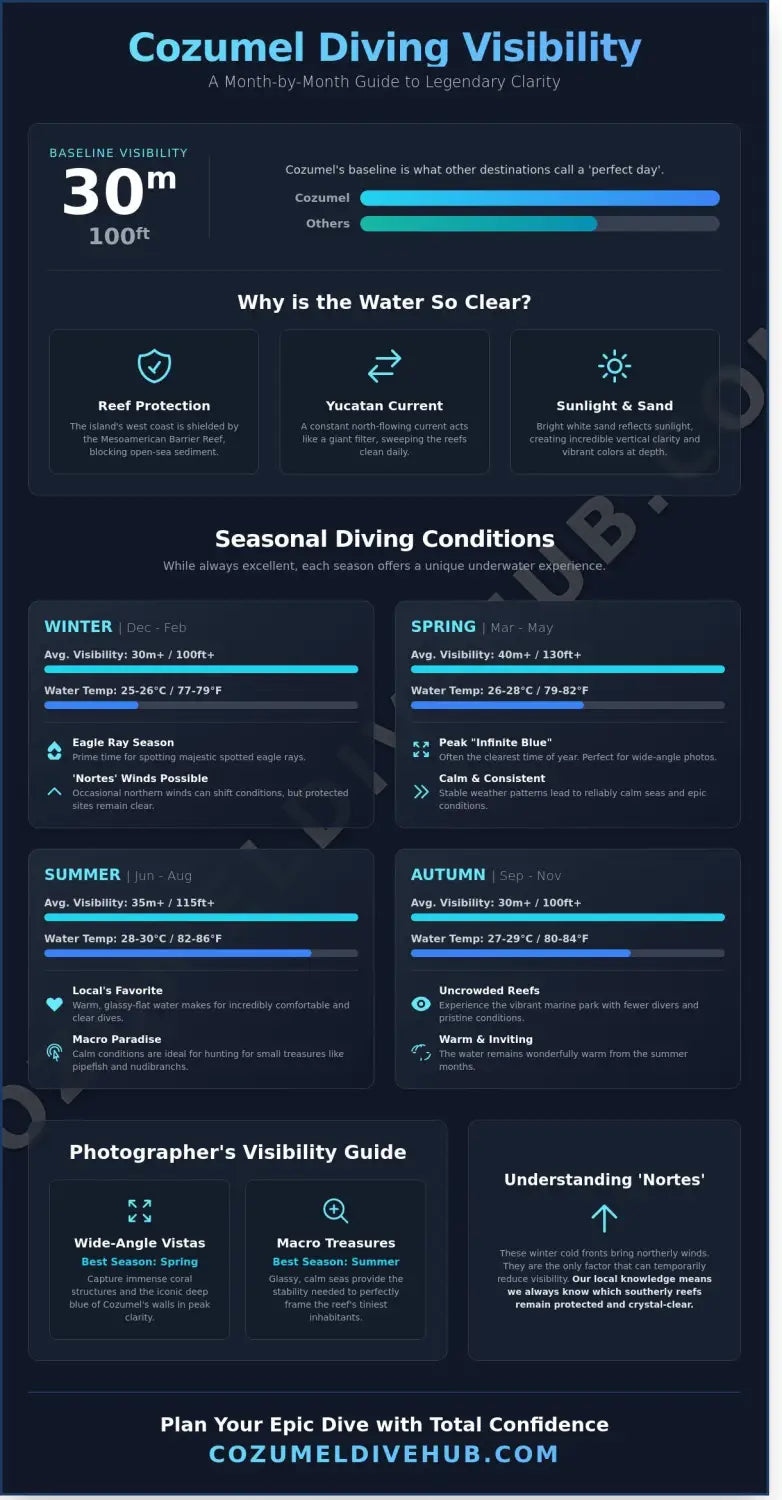
| Month | Avg Visibility | Water Temp | Key Condition |
|---|---|---|---|
| Dec - Feb | 30m+ | 25-26°C | High contrast, Eagle Rays |
| Mar - May | 40m+ | 26-27°C | Glass-calm "Sweet Spot" |
| Jun - Aug | 30-35m | 28-29°C | Vertical sunbeams, warm |
| Sep - Nov | 25-40m | 28°C | Variable but top-down clear |
Winter months from December to February offer stunning, high-contrast blues. The water is slightly cooler, hovering around 25°C, which brings out the Spotted Eagle Rays. You'll often experience 30 meters of clarity, though occasional "Nortes" (north winds) can create surface surge. When these winds blow, we simply head to the more sheltered southern sites where the reef remains pristine. It's a thrilling time to explore the deeper walls where the visibility makes the drop-offs feel like you're flying over a mountain range.
As we move into spring, the water warms and the wind dies down. This is the gold standard for cozumel diving visibility by month. By April, the surface often looks like a sheet of glass. You can see the reef 40 meters below directly from the boat deck. If you're a fan of warm water, the summer months deliver 29°C temperatures. While a slight increase in plankton can happen in August, the high sun angle creates mesmerizing vertical light beams that pierce through the water like lasers. Even in the rainy autumn season, the visibility remains world-class because our rain comes in short, 20 minute bursts that don't stir up the sandy bottom.
The Peak Months: March to June
This window is the absolute "Sweet Spot" for divers seeking infinite horizons. The lack of wind transforms the Caribbean into a giant swimming pool. These lake-like surface conditions allow our captains to safely reach the far southern reefs like Maracaibo. Usually, these sites are reserved for the most experienced divers due to currents, but the incredible 45 meter visibility in May makes the deep swim-throughs look absolutely epic. You'll feel like you're diving in air.
The Transitional Months: July to October
Don't let the "Rainy Season" label scare you away. Rain here is fast and intense, often followed by brilliant sunshine. Photographers actually prefer July and September for the lighting. Since the sun is directly overhead, it illuminates the inside of reef tunnels and caves that are usually dark. The lack of wind creates "mirror" surfaces, making for stunning over-under shots. If you want to experience these unique lighting conditions, you can book your spot with our family and we'll show you the best hidden swim-throughs. Your adventure starts here!
Understanding the 'Nortes' and Seasonal Wind Patterns
Ever wondered why the water looks like liquid glass one day and a bit milky the next? The secret lies in the wind. In Cozumel, our weather is generally predictable, but the "Norte" is the one guest we can't always invite to the party. These are cold fronts that sweep down from the north, typically between October and March. Because most of our famous reefs sit on the western side of the island, a north wind blows directly into the channel. This is the primary factor that fluctuates the cozumel diving visibility by month, as it stirs up sediment and creates surface surge.
A Norte is the only real "clarity killer" we encounter. While an easterly wind is blocked by the island's landmass, a north wind has nothing to stop it. When these winds exceed 15 knots, the Port Captain often closes the harbor to small vessels for safety. You can find detailed technical breakdowns of these Cozumel diving conditions and how they affect underwater safety through the Divers Alert Network. If the port closes, don't worry! It's just nature taking a breather. The most incredible part is what we call the "Day After" effect. Because the Yucatan Current is so powerful, it acts like a massive underwater vacuum. Within 24 hours of the wind dying down, the murky water is swept away, and that legendary 100 foot clarity returns almost instantly.
On these rare "no-dive" days, visitors often catch up on rest or find other entertainment. For those who enjoy some online gaming while waiting for the port to reopen, spinow.com offers a popular selection of games.
At Cozumel Dive Hub, we're your eyes on the ground. Memo and our team monitor the port status and wind apps like Windguru every single morning at 6:00 AM. We don't just look at the waves; we analyze the direction to ensure your adventure is both safe and stunning. If one site is a bit stirred up, our local knowledge allows us to pivot to a protected "inner" reef where the visibility remains pristine. We treat every guest like part of our family, and that means being honest about the conditions before we ever leave the pier.
Diving During Hurricane Season (June - November)
Don't let the "hurricane" label scare you away from the 2026 season. Statistically, the chance of a major storm hitting during your one week vacation is less than 3%. In fact, some of our best cozumel diving visibility by month occurs in August and September. The low pressure systems often result in eerie, mirror-like surface conditions. If a distant storm creates a shift in current, we simply move our boat to the southern tip or tucked-away spots like Palancar Gardens. We use our 20 years of local experience to find the clearest pockets of water even when the sky looks moody.
Managing Expectations in the Winter
Winter diving from December to February is a favorite for many because of the Spotted Eagle Rays. You might face a bit of a "choppy" boat ride on the way to the reefs, but don't let the whitecaps fool you. Once you drop below 30 feet, the water is often as still and clear as a swimming pool. Our professional crew is trained to assist you with water entries and exits in these swells, making sure you feel secure. The trade-off for a little surface movement is the chance to see dozens of rays gliding through the blue, a sight that makes every bit of spray on the boat totally worth it!
Visibility Tips for Underwater Photographers in 2026
Capturing the perfect shot in Cozumel requires more than just a high-end housing and a steady hand. It demands a deep understanding of how the light interacts with our unique reef structures throughout the year. Your strategy for 2026 should revolve around the specific cozumel diving visibility by month to ensure you bring home those magazine-quality frames. Whether you are hunting for wide-angle seascapes or tiny, vibrant macro life, the timing of your visit dictates your success.
For those chasing the "endless blue" look, plan your expedition between March and May. During these 90 days, horizontal visibility often exceeds 30 meters; that is nearly 100 feet of crystal-clear water. This clarity creates a perfect canvas for wide-angle photography, allowing the deep indigo of the drop-offs to contrast sharply against the vibrant oranges of our giant elephant ear sponges. In contrast, the summer months of June through August are the prime window for macro enthusiasts. The water hits a balmy 29°C (84°F), and while the visibility might dip slightly due to nutrient-rich currents, this brings out the smallest residents. You will find it much easier to hover and focus on a tiny peppermint shrimp when you aren't fighting a chill.
Mastering your strobe positioning is vital here. Cozumel water is famous for being particulate-free, but that doesn't mean you can get sloppy. Position your strobes wide and slightly behind the focal plane of your lens. This technique prevents the light from hitting any stray particles directly in front of the glass. Use the island's famous white sand to your advantage. These sandy patches act as a massive natural reflector, bouncing sunlight back up into the shadows of the reef. This can provide a 10% to 15% boost in natural exposure, helping you fill in those dark crevices without over-relying on artificial light.
The Best Time for Light Beams and Cathedral Lighting
The dramatic topography of Palancar and Columbia reefs creates stunning "cathedral" effects that every photographer dreams of capturing. To nail these shots, you must hit the water during the magic window between 10:00 AM and 2:00 PM. This is when the sun sits directly overhead, piercing the deep swim-throughs with sharp "god rays." When you join us on our private charters, we can tailor the boat departure to ensure you are exactly where you need to be when that light hits the reef. A 16-35mm lens is usually the best choice for these massive spaces, allowing you to capture the scale of the limestone arches and the divers silhouetted against the beams.
Dealing with Backscatter (Even in Clear Water)
Even when cozumel diving visibility by month stays high, you might encounter "sea snow." This typically happens during seasonal plankton blooms in late April. To keep your images clean, avoid pointing your strobes directly at the subject; use the edge of the light beam instead. Shooting in high-flow drift dives also presents a challenge. Don't fight the current. Instead, use a "hover and shoot" method where you anticipate the frame and let the water carry you into position. Check out our Palancar Reef guide for site-specific photo tips that help you navigate these currents like a pro.
Plan Your Epic Dive Adventure with Cozumel Dive Hub
You have studied the charts and tracked the seasonal averages. Now it's time to get into the water and see those vibrant colors for yourself. Understanding cozumel diving visibility by month gives you a fantastic head start, but the real magic happens when you're actually submerged in our turquoise world. At Cozumel Dive Hub, we specialize in making those crystal clear dreams a reality. We keep our groups small, typically capping our boats at just 6 divers. This isn't just about comfort; it's about the quality of your view. In a small group, you won't have a wall of fins in front of your mask or a dozen people accidentally kicking up silt and sand. You get an unobstructed, high-definition look at the 100-foot drop-offs and towering coral pinnacles that make this island world-famous.
Memo was born and raised on these very shores. He has spent over 15,000 hours exploring the Cozumel Marine Park. While a generic guide might tell you that visibility is usually great in July, Memo knows exactly which specific reef is peaking at 10:00 AM today. He watches the shifting currents and the "Norte" winds with a local's intuition that an app simply can't replicate. If a southern current is pushing a bit of sediment toward Palancar Gardens, we'll pivot our plan and head to Columbia Deep or Santa Rosa Wall to ensure you get that 120-foot clarity you traveled for. We don't stick to a rigid, pre-set schedule. We follow the best water conditions because we want you to see the reef at its absolute best.
Your skill level is just as important as the water quality. We carefully match the dive site to both the day's visibility and your specific experience. If you are a newly certified diver, we won't drop you into a high-speed drift at Punta Sur just because the visibility hit 150 feet there this morning. We find the sweet spot where you feel completely safe and the reef looks spectacular. This personalized approach is why so many of our guests return year after year. When you step onto our boat, you aren't just a customer. You're joining the Dive Hub Family for an unforgettable journey through the heart of the Caribbean.
Ready to See the Blue for Yourself?
Whether you want to level up with a PADI Advanced Open Water course or simply enjoy a relaxing two-tank morning trip, we're ready for you. If you're nervous about the cozumel diving visibility by month during your specific travel dates, just reach out. Send us a message 48 hours before you arrive and we'll give you a real-time "boots on the ground" visibility report. We'll tell you exactly what the water looks like so you can get excited before you even pack your bags. Your adventure starts here.
Why Local Roots Matter for Your Dive Trip
Being 100% locally owned and operated gives us a massive advantage in reading the water. We can spot a change in the weather 20 minutes before it hits, ensuring your safety is always the priority. Our "Born and Raised" perspective also means we have a deep, personal stake in preserving these pristine reefs for the next generation. We follow strict marine park regulations and PADI safety standards on every single excursion. We don't just dive here; we live here, and we treat the ocean like our backyard. Book Your Cozumel Dive Adventure With Us Today! and experience the difference that local passion and expertise make for your underwater journey.
Start Your Underwater Journey Today
Cozumel isn't just another dive destination; it's a world-class aquarium where 100-foot visibility is the standard, not the exception. Whether you're visiting during the mirror-flat seas of July or navigating the seasonal winds between December and March, there's always a pristine reef waiting for you. Understanding cozumel diving visibility by month helps you time your trip perfectly, but the truth is that our 25-plus dive sites offer breathtaking views every single day of the year. Photographers should aim for the high-sun months of June and August to capture those piercing 2026 light beams that make the Mesoamerican Reef glow. Our born and raised local guides know exactly which walls are clearest today, ensuring you avoid the crowds and find the best conditions. Our safety-first professional crew keeps our groups small to provide a personalized and exhilarating experience for every diver who joins our family.
Ready to dive into paradise? Join the Cozumel Dive Hub family today!
Your adventure is waiting below the surface and we can't wait to share it with you!
Frequently Asked Questions
What is the average visibility for diving in Cozumel?
Cozumel offers a staggering average visibility of 100 feet throughout the entire year. You'll often experience spectacular days where the clarity stretches beyond 150 feet. This incredible transparency is why our island is consistently ranked in the top 5 dive destinations globally. Whether you're a pro or a beginner, these conditions make every underwater journey feel like you're flying through liquid air!
Does rain affect diving visibility in Cozumel?
Rain rarely impacts your dive because Cozumel is a limestone island with zero rivers to wash silt into the sea. Even after a heavy tropical downpour, the water remains crystal-clear within 30 minutes of the clouds clearing. The porous rock acts as a natural filter for the island. You can trust that the vibrant reefs will stay sharp and stunning even during the wet season from June to October.
When is the best month for the clearest water in Cozumel?
May and June are the absolute best months for the clearest water in Cozumel, with visibility frequently reaching 200 feet. During this specific window, the Caribbean Sea is calm and the sun hits the reef at a 90 degree angle. It's the ultimate time to join the Dive Hub family for an epic adventure. Checking the cozumel diving visibility by month reveals that these late spring months offer the most consistent, breathtaking conditions.
Can I dive in Cozumel during hurricane season?
You can definitely dive during hurricane season, which runs from June 1 to November 30. While storms are a possibility, they only affect diving operations for about 3 to 5 days per year on average. Most days during this period feature flat seas and warm 84 degree water temperatures. We monitor the weather 24/7 to ensure your safety and keep the fun going during your trip!
What are the 'Nortes' and do they stop diving?
Nortes are cold fronts from the north that bring strong winds and can close the harbor for 1 to 3 days. These weather patterns usually occur between December and March. When the port authority issues a red flag, all boats must stay docked for safety. Don't worry; these fronts pass quickly and the visibility often improves by 20 percent right after the wind dies down.
Is visibility better on deep dives or shallow dives in Cozumel?
Visibility is remarkably consistent across all depths, though deep wall sites like Palancar often feel clearer because there's 50 percent less sand to stir up. On a 90 foot dive, you'll see the massive coral structures with perfect clarity. Shallow sites at 30 feet are just as vibrant, but surge from waves can occasionally reduce clarity by 10 percent. Your cozumel diving visibility by month will stay high regardless of the depth.
Why is Cozumel water so much clearer than other places in the Caribbean?
Cozumel's water is exceptionally clear because the Yucatan Current constantly flushes the reefs with fresh, oceanic water. This current moves at a steady 2 to 4 knots, acting like a giant cleaning system for the coastline. Since we don't have runoff from rivers or industrial ports, the sediment levels stay near zero. It's why our local guides, like Memo, are so proud to show you these pristine reefs!
Most visitors fly into Cozumel International Airport (CZM) or nearby Cancún International Airport (CUN). Once you've used this guide to pick the best month for your trip, the next step is securing your flights. Specialized travel agencies can be a huge help here; for example, E-Tours d.o.o. is a service that helps travelers find and book airline tickets, letting you focus on the fun parts of planning your dive.