

Currency to Use for Diving in Cozumel: The Ultimate Diver’s Money Guide
What if the secret to a stress-free dive trip started at the ATM instead of the boat dock? We all know that pre-trip excitement when you're dreaming of Cozumel’s crystal-clear water and vibrant coral walls. However, that excitement can quickly turn into a headache when you’re standing at a local shop wondering if you’re getting a fair deal. Finding the right currency to use for diving in cozumel shouldn't be more complicated than your pre-dive safety check!
It's completely normal to feel a bit anxious about exchange rates, ATM safety, or how to handle the $225 MXN marine park fee. You want your focus on the eagle rays and the stunning Palancar Gardens, not the exchange rate. In this guide, we'll show you exactly how to navigate the island’s money landscape like a local. You will learn when to reach for Pesos, when USD is actually okay, and how to avoid those pesky bank fees. We've lived and breathed these waters for years, and we're here to ensure your journey is as smooth as a drift dive. Let's make sure your only worry is how long you can stay submerged in our beautiful turquoise waters!
Key Takeaways
- Discover the smartest currency to use for diving in cozumel to save up to 15% on your trip by paying like a local.
- Learn why dive shops often quote prices in USD while island restaurants prefer Pesos, and how to navigate common credit card surcharges.
- Master the details of the mandatory CONANP Marine Park Fee so you're always prepared before you step onto the boat.
- Identify the safest, bank-affiliated ATMs on the island to keep your travel funds secure and avoid predatory exchange rates.
- Get the inside scoop on tipping etiquette for your divemasters to show your appreciation for their expert guidance and local knowledge.
Pesos vs. USD: Choosing the Best Currency for Diving in Cozumel
Cozumel is a vibrant island where the rhythm of the ocean meets a unique financial landscape. When you arrive, you'll immediately notice that prices are often listed in both US Dollars (USD) and Mexican Pesos (MXN). It's a dual-currency reality that makes life easy for travelers, but it also presents a few puzzles. If you're wondering about the best currency to use for diving in cozumel, the answer isn't just one or the other; it's about being strategic. Most dive shops maintain their pricing in USD to stay consistent for international guests, while the heart of the island, the local restaurants and shops, beats in Pesos.
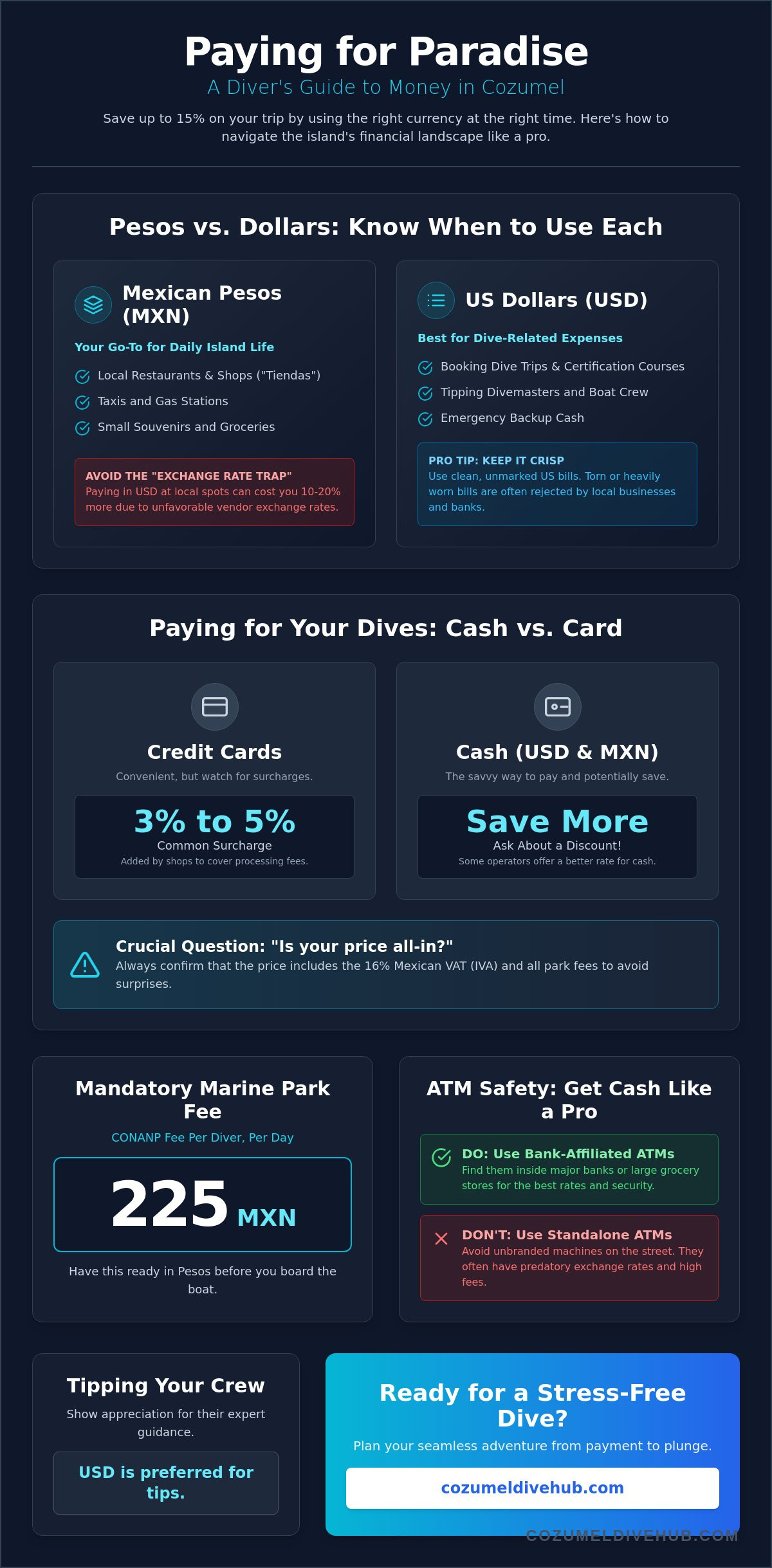
Falling into the "Exchange Rate Trap" is the easiest way to accidentally overspend. Local businesses often set their own internal exchange rates which can be significantly lower than the official bank rate. If the bank offers 18 pesos to the dollar, a small shop might only give you 15. This discrepancy can cost you 10% to 20% more on every purchase! By carrying local cash, you ensure you're paying the true price of that delicious post-dive taco or souvenir. It's a simple way to make your travel budget stretch much further.
The Case for Mexican Pesos (MXN)
For the most authentic experience, Pesos are your best friend. When you head into town to visit local "tiendas" or family-run restaurants, having MXN is non-negotiable if you want the best value. This is especially true for gas stations and taxis, where paying in USD often triggers a "tourist tax" through a poor exchange rate. Using Pesos also helps you support the local economy directly without forcing small business owners to deal with bank conversion fees. It's a great way to give back to the community that cares for Cozumel's protected reefs. We love seeing our guests engage with the local culture while getting the most for their money.
The Case for US Dollars (USD)
While Pesos rule the streets, USD still has a vital place in your dive bag. Most operators prefer USD for high-value transactions, such as booking your initial scuba diving cozumel experience or advanced certification courses. It's also the standard currency for tipping your hardworking divemasters and boat crew. They appreciate the consistency of USD, and it's easy for them to manage. We always recommend keeping a small "stash" of crisp, clean US bills as an emergency backup. Just remember that torn or marked bills are often rejected by local banks, so keep your cash in top condition for a seamless trip!
Paying for Your Dive Trips: Shop Rates and Payment Methods
Ready to jump into the water? Booking your adventure is the first step toward those legendary Cozumel walls! When you're looking at shop rates, you might see prices listed in US Dollars. This is standard for the island's dive industry. However, it's vital to ask if the quote is "all-in." Many shops advertise a base price that doesn't include the 16% Mexican VAT (IVA) or the official park fees. Understanding the total currency to use for diving in cozumel before you arrive prevents any surprises at the end of your trip. We always recommend asking for a transparent breakdown so you can plan your budget with confidence.
The "plastic vs. paper" debate is a big one here. While most shops accept Visa and Mastercard, many add a 3% to 5% surcharge to cover their own processing costs. This isn't a "gringo tax"; it's a common practice across Mexico to keep base prices lower. If you want to save that extra bit for an extra tank or a celebratory post-dive margarita, paying in cash is often the way to go. Some shops even offer a small discount for cash payments! If you are aiming for a padi certification cozumel, pre-paying online can often lock in the best rate and save you from carrying large amounts of cash on the island.
Credit Cards and Digital Payments in 2026
Acceptance of digital payments has grown significantly. Most established dive hubs now feature modern terminals. We suggest using a travel-friendly card with zero foreign transaction fees to get the best possible bank rate. What about Apple Pay? While it's becoming more common in high-end boutiques and some restaurants, don't rely on it for your diving expenses. Smaller operators and boat captains still operate on a cash or physical card basis. It's always smart to have a backup plan!
Tipping Your Divemaster and Boat Crew
Tipping is where your gratitude meets the crew's hard work. A standard tip in the industry is about $5 to $10 USD per tank, per person. For a typical two-tank morning, $15 to $20 USD is a generous way to say thank you for a safe and exciting day. Cash is absolutely king here. Even if you paid for your trip with a card, the crew prefers their tips in cash so they can take it home that day. While Pesos are great, USD is also widely welcomed by the local crew. If you want a stress-free experience with clear, upfront pricing, you might consider booking with Cozumeldivehub for your next underwater journey.
The "Hidden" Costs: Marine Park Fees and Gear Rentals
Diving in Cozumel is an absolute dream! You're about to explore some of the most vibrant reefs on the planet. To keep these underwater gardens healthy, there are a few small costs that sit outside your main boat fee. Understanding the right currency to use for diving in cozumel for these extras ensures you won't be scrambling for cash while the boat is warming up its engines. These aren't just fees; they're your contribution to the conservation of this paradise.
The most common daily cost is the CONANP Marine Park Fee. As of 2026, the official daily rate is $225 MXN per person. This fee is mandatory for anyone entering the protected waters. It goes directly toward reef protection, monitoring, and research. Most dive shops don't include this in their advertised price because it's a government fee that goes straight to the park authorities.
The Marine Park Fee (Daily Requirement)
Think of the marine park wristband as your golden ticket to the reef. Every morning, your boat captain or guide will distribute these colorful bands. While some shops might allow you to put this on a tab, most prefer you pay in cash daily. Having the exact change in Pesos is the smartest move. It keeps things moving quickly so you can get to the dive site faster. Plus, paying in local currency avoids those unfavorable exchange rates we discussed earlier.
Rental Gear and Add-ons
If you aren't bringing your own kit, you'll need to budget for gear. A full set of equipment usually runs between $25 and $40 USD per day. If you're planning several cozumel dive trips, ask about weekly rental rates. This can often save you a significant amount over a five-day package.
Don't forget the small but vital add-ons. A dive computer is a safety necessity, typically renting for $7 to $12 USD per day. If you want to stay down longer and feel less tired, Nitrox is a fantastic option. Most shops charge a surcharge for Nitrox tanks to cover the specialized blending process. These costs are usually quoted in USD, but paying the equivalent in Pesos at the shop can often save you a few dollars over the course of your vacation.
Safe Cash Management: ATMs and Exchange Houses in Cozumel
Securing your cash on the island is just as important as securing your regulator before a giant stride! Once you land, you'll want a steady supply of Pesos to handle those daily marine park fees and post-dive street tacos. While carrying some USD is smart for tips, having the local currency to use for diving in cozumel allows you to move through the island with total ease. The best way to get Pesos is through an ATM, but not all machines are created equal. Stick to the big names to keep your data and your dollars safe.
Using a bank-affiliated ATM ensures you get a fair exchange rate and reduces the risk of card skimming. We recommend using machines located inside bank branches or major supermarkets like Chedraui or Mega. These are monitored and frequently serviced. If you have physical US bills that are crisp and untorn, a "Casa de Cambio" (exchange house) is a great alternative. Just look for the posted rates outside to ensure you're getting a competitive deal before you step inside. This is a reliable way to swap cash without the high fees of airport kiosks.
Top Bank ATMs in Cozumel
- Santander and BBVA: These are reliable options with multiple locations near the town square.
- Banamex and HSBC: Known for being secure and user-friendly for international travelers.
- Avoid Standalone "Blue" ATMs: You'll see these in convenience stores or on street corners. They often have sky-high fees and are much more vulnerable to tampering.
Always give the card slot a quick tug before inserting your card to check for skimmers. Cover your hand while entering your PIN; it's a simple habit that goes a long way in protecting your adventure fund!
The "Decline Conversion" Hack
This is the single most important tip for saving money at the ATM. During your transaction, the machine will likely show you a screen with a "guaranteed" exchange rate and ask if you want to "Accept Conversion" or "Continue with Conversion." Declining the conversion lets your home bank set the rate, which is always better. The ATM is trying to sell you a convenience that actually costs you more. Look for the button that says "Decline Conversion" or in Spanish, "Continuar sin conversión." It might feel counterintuitive to hit "Decline," but your wallet will thank you!
Ready to put your local Pesos to good use on a world-class reef? Book your Cozumel dive trip today and let our expert team show you the very best of our underwater home.
Plan Your Seamless Adventure with Cozumeldivehub
You've mastered the exchange rates and found the safest ATMs. Now, it's time to put that knowledge into action! When you decide on the right currency to use for diving in cozumel, you're doing more than just saving a few pesos; you're ensuring your focus stays where it belongs, on the breathtaking walls and vibrant sea life. At Cozumeldivehub, we believe the logistics of your trip should be as clear as the Caribbean water. We're here to make sure your transition from the airport to the ocean floor is as smooth as a drift dive.
We stand apart by offering a level of transparency that's rare in the industry. When you book a private dive charter cozumel, our pricing is straightforward and honest. We don't believe in hidden surprises or late-session fees that cloud your experience. Our small group focus ensures that you aren't just another face on a crowded boat; you're a guest in our home waters. Our local expertise runs deep. This island isn't just where we work; it's where our families have lived for generations. We know every current and coral head, and we're eager to share that heritage with you.
Why Choose Cozumeldivehub?
We're committed to a hassle-free experience that lets you breathe easy. From the top-tier quality of our rental gear to the professional expertise of our guides, safety and comfort are our North Stars. We love helping divers reach their next milestone. Whether you're taking your first breaths in a discovery session or leveling up with an advanced open water cozumel course, we provide a supportive and exhilarating environment. You'll feel the difference that true Cozumel hospitality makes from the first "hola" to the final safety stop.
Book Your Next Journey
Don't let another season pass by without experiencing the magic of our reefs. Once you've sorted out the best currency to use for diving in cozumel, the rest is easy! Securing your spot is the start of a larger journey into the blue. Contact us today to discuss personalized dive planning or group rates for your next getaway. We're more than just a dive center; we're your local guides to the adventure of a lifetime. Join the Cozumeldivehub family and let's dive into something extraordinary together!
Your Cozumel Adventure Starts Now
You're now equipped with the local secrets to navigating the island's economy! By choosing the right currency to use for diving in cozumel, you've saved yourself from unnecessary fees and exchange rate traps. Remember to keep those Pesos handy for your post-dive tacos and the daily marine park wristbands while using USD for your crew's tips. Most importantly, you can now focus entirely on the breathtaking beauty of our underwater world without any financial headaches.
We're passionate about making your experience seamless and unforgettable. Our team provides small group diving for a personalized experience and transparent pricing with no hidden fees. You'll be in the hands of experienced local guides with deep reef knowledge who treat you like family. Are you ready to witness the magic of the reef with total peace of mind? Book Your Cozumel Dive Adventure With Our Expert Local Team! We can't wait to welcome you to our beautiful island home and share the thrill of the dive!
Frequently Asked Questions
Is it better to pay for diving in Cozumel with Pesos or USD?
You should generally pay for your dive trips in USD and use Mexican Pesos for your daily island expenses. Most dive operators maintain their price lists in US Dollars to stay consistent for international travelers. However, for everything else like street tacos, taxis, and souvenirs, using Pesos will protect you from the unfavorable exchange rates often found at local registers.
Do dive shops in Cozumel accept credit cards?
Most established dive shops on the island accept major credit cards like Visa and Mastercard. You should expect a 3% to 5% surcharge, which is a standard practice across many Mexican businesses to cover their processing costs. If you want to keep your budget tight, paying in cash is a brilliant way to avoid these extra fees while still enjoying world-class service.
How much should I tip my divemaster in Cozumel?
A standard tip for your divemaster is typically between $5 and $10 USD per tank. For a classic two-tank morning trip, a tip of $15 to $20 USD is widely appreciated for the expert guidance and safety they provide. The boat crew works incredibly hard to ensure your gear is ready and the boat is secure, so your generosity directly supports our local families.
What is the daily Marine Park fee in Cozumel for 2026?
The official daily Marine Park fee for 2026 is $225 MXN per person. This mandatory government fee is used directly for the conservation and monitoring of our stunning coral reefs. Since this is a government-regulated cost, most shops collect it separately from your dive price. We recommend having this exact amount ready in Pesos each morning to make your boarding process smooth and fast.
Are there safe ATMs in Cozumel for withdrawing Pesos?
Yes, you can safely withdraw Pesos by using bank-affiliated ATMs located at branches like Santander, BBVA, or Banamex. These machines are much more secure and offer better rates than the standalone ATMs found in shops or on street corners. When planning the best currency to use for diving in cozumel, a quick trip to a bank ATM ensures you have the cash you need without hidden risks.
Should I exchange money at the airport or wait until I get to Cozumel?
It is much better to wait until you reach the island rather than using the exchange kiosks at the airport. Airport exchange rates are notoriously poor and can take a big bite out of your vacation fund before you even arrive. Once you're in town, using a reputable bank ATM or a local "Casa de Cambio" will give you a much fairer deal for your Pesos.
Can I use US coins in Cozumel?
No, US coins are not accepted by any businesses or banks in Cozumel. While US paper bills are widely welcomed in tourist areas, local shops cannot process or exchange American change. If you choose to use US currency, make sure your paper bills are crisp and free of any marks or tears, as many local businesses will decline even slightly damaged paper money.
What happens if I don’t have Pesos for the Marine Park wristband?
If you don't have Pesos, some operators might allow you to pay in USD, but you'll likely receive a very poor exchange rate. Since the wristband is a legal requirement for entering the water, you must have one before the boat leaves the dock. To keep your morning stress-free, double-check your currency to use for diving in cozumel the night before so you can focus entirely on the adventure ahead.