

Eco-Friendly Diving in Cozumel: The 2026 Sustainable Diver’s Guide
What if you could explore the second largest coral reef system in the world while ensuring your presence helps it thrive rather than fade? We know the frustration of seeing crowded "cattle boats" and the deep worry that your bucket list trip might contribute to coral bleaching or reef damage. You want to experience the 500 species of fish that call these waters home without feeling like just another tourist in a crowd. That's why eco-friendly diving cozumel has become a vital partnership between local guides and conscious travelers like you.
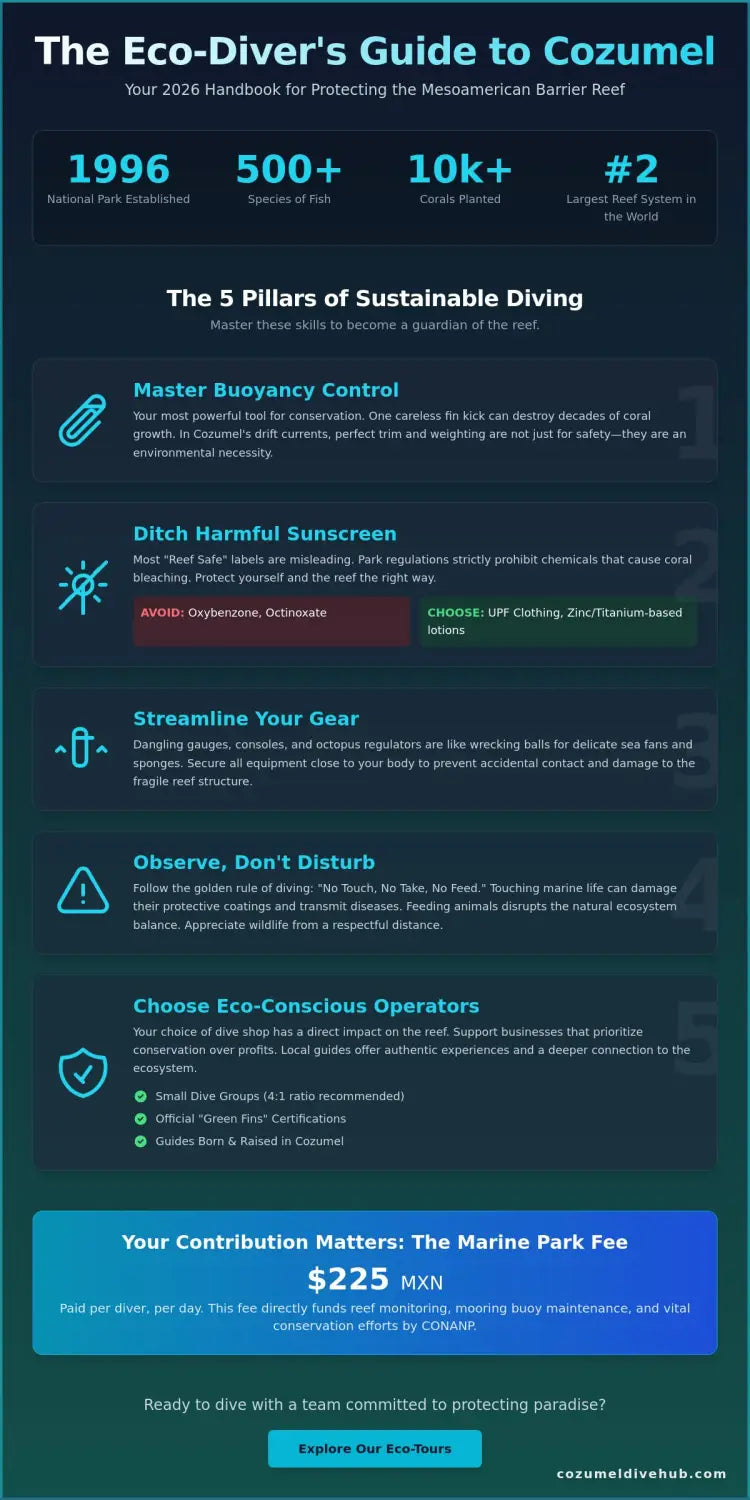
You deserve to feel like a responsible explorer who supports the community that was born and raised on these shores. We promise to show you how to discover Cozumel’s breathtaking reefs while actively protecting the Mesoamerican Barrier Reef for future generations. In this 2026 guide, we will preview the latest Arrecifes de Cozumel National Park regulations, explain the official $225 MXN daily entrance fee, and highlight how the Cozumel Coral Reef Restoration Program has already planted over 10,000 coral fragments to keep our underwater world vibrant and alive. Your adventure starts here, and it's one you can feel truly proud of.
Key Takeaways
- Learn why the Arrecifes de Cozumel National Park was established in 1996 and how its "No Touch, No Take" policy keeps our underwater paradise thriving.
- Master the 5 pillars of eco-friendly diving cozumel, including why perfect buoyancy control is your most powerful tool for reef conservation.
- Uncover the truth about "reef-safe" sunscreen labels and discover which local practices truly protect our delicate sea fans and sponges.
- Find out how to identify authentic sustainable operators by looking for small group ratios and official "Green Fins" certifications.
- Explore top 2026 dive sites like Palancar Garden and see how a 4-to-1 diver-to-guide ratio creates a safer, more intimate experience for you and the reef.
Understanding the Arrecifes de Cozumel National Park: More Than Just Rules
Cozumel isn't just another dive destination; it's a carefully guarded sanctuary. The Arrecifes de Cozumel National Park was officially established on July 19, 1996, to protect the southern portion of the island's spectacular reefs. This wasn't just a bureaucratic move. It was a local mission to save our home. The Mesoamerican Barrier Reef serves as the vital foundation for Cozumel's incredible biodiversity, providing a home for hundreds of species that depend on its health. When you choose eco-friendly diving cozumel, you aren't just following rules; you're joining a legacy of conservation that has kept these waters pristine for decades.
The "No Touch, No Take" policy is the absolute backbone of our underwater ecosystem. It’s simple: we leave everything exactly as we found it. This protection allows over 500 species of fish and delicate coral structures to thrive without human interference. To manage the impact of thousands of visitors, Cozumel uses a "Reef Resting" initiative. This means certain sections of the park are closed to all activity on a rotating basis. It gives the coral a much-needed break from bubbles and fins, ensuring the reef can regenerate naturally without being overwhelmed by constant traffic.
The Legalities of Diving in a Protected Area
Every time you head out on a boat, you'll see a colorful wristband. This isn't just a souvenir. It proves you've paid the mandatory Marine Park fee, which as of May 2026 is $225 MXN per person per day. This money goes directly toward the conservation efforts managed by CONANP, the National Commission of Protected Natural Areas. These funds support reef monitoring, the maintenance of mooring buoys to prevent anchor damage, and the enforcement of park regulations. Wearing that wristband means you're a direct contributor to the survival of the 11,987 hectares of reef and seagrass beds we all love.
Why Local Knowledge Trumps Corporate Guides
There's a massive difference between a "tourist ride" and a guided ecological journey. When your guides are born and raised right here in Cozumel, the reef isn't just a workplace; it's our backyard and our family heritage. We don't just point at fish. We share the stories of the reef and explain the delicate balance of the environment. We want you to feel that same connection. If you're just starting your journey, check out our Scuba Diving Cozumel: The Complete Beginner’s Guide to see how we prioritize the ocean from your very first breath underwater. Our commitment to eco-friendly diving cozumel means we keep groups small and the education high, ensuring every dive leaves the reef better than we found it.
5 Pillars of Sustainable Scuba Diving in Cozumel
Becoming a sustainable diver is about more than just having good intentions. It's about the active skills you bring to the water every time you giant stride off the boat. In Cozumel, our legendary currents demand precision. When you practice eco-friendly diving cozumel, you're making a conscious choice to protect the vibrant life that makes this island a world-class destination. Let's break down the five pillars that will help you dive like a pro while keeping our reefs pristine.
The first and most vital pillar is buoyancy control. Think of your buoyancy as your primary tool for reef protection. One heavy fin kick or an accidental scrape can destroy decades of coral growth in a single second. Next, we have to debunk the "biodegradable" sunscreen myth. Many "Reef Safe" labels are simply marketing tactics. The official park regulations are clear: chemicals like oxybenzone and octinoxate are strictly prohibited because they contribute to coral bleaching. Third, you must streamline your gear. Dangling gauges or loose octopus regulators act like wrecking balls on fragile sea fans. Finally, we maintain a strict "no touch, no feed" policy. Feeding fish disrupts the natural food chain, and touching marine life can transmit harmful bacteria or damage their protective slime coats.
Mastering Your Buoyancy in Drift Currents
Cozumel is the capital of drift diving, where the current does the work and you enjoy the ride. However, these currents can easily push a diver into the reef wall if their trim is off. Proper weighting is an environmental necessity. If you feel like you're constantly fighting to stay level, it's time to level up. You can refine these essential skills through our Advanced Open Water Cozumel course, where we focus on the precision needed for our unique environment.
The Sustainable Diver’s Packing List
Your impact starts before you even reach the airport. When packing, choose mineral-based sunscreens that use Zinc Oxide or Titanium Dioxide as their active ingredients. These stay on your skin and don't dissolve into the water column. We also urge you to pack a reusable water bottle. Cozumel is an island with limited waste management, so every plastic bottle we keep out of the system is a win for the local environment. Better yet, wear a high-quality rash guard. It provides total UV protection with zero chemical runoff. Ready to dive with a team that cares as much as you do? Come join the Cozumeldivehub family and let's explore these breathtaking walls together!
How to Spot a Truly Eco-Friendly Cozumel Dive Center
Ready to find your perfect dive partner? Not every shop that puts a green leaf on its website actually practices eco-friendly diving cozumel once the boat leaves the dock. Choosing the right operator is the most important decision you'll make for the reef's health. A truly sustainable center doesn't just show you the fish; they act as the reef's primary bodyguards. By following established sustainable diving practices, top-tier operators ensure that their presence doesn't disrupt the delicate balance of the underwater world.
The first thing to look for is the diver-to-guide ratio. Small groups are non-negotiable for reef protection. When a single guide is responsible for ten or twelve divers, it's impossible to monitor everyone's buoyancy or prevent accidental coral contact. You should also look for "Green Fins" icons or similar conservation credentials. These programs require operators to undergo rigorous assessments of their environmental impact. Beyond certifications, listen closely to the pre-dive briefing. Does the Divemaster spend time explaining how to avoid the reef, or are they only focused on where to find the best photo op? A briefing that prioritizes the environment is a hallmark of a professional, caring team.
Don't forget the "hidden" side of eco-diving: boat maintenance. Old, smoky engines leak oil and fuel directly into the crystal-clear water you're about to dive into. Responsible shops invest in well-maintained, fuel-efficient engines and use mooring buoys instead of dropping anchors. This attention to detail shows a deep respect for the island we call home.
The "Cattle Boat" vs. Small Group Experience
Large "cattle boats" often prioritize volume over value, leading to crowded dive sites and "silt-outs." When fifteen divers kick up sand at once, it smothers the coral and ruins visibility for everyone. In contrast, small groups offer a much gentler footprint. If you’re just starting out, our approach to Cozumel Beginner Diving ensures you get the personalized attention you need to feel safe and responsible. We maintain a strict 4-to-1 diver-to-guide ratio because we believe your first underwater adventure should be as kind to the reef as it is thrilling for you.
Questions to Ask Before You Book
Before you hand over your deposit, a few quick questions can reveal a shop’s true colors. A reputable operator will be happy to answer these:
- "Do you provide reef-safe soap for masks?" Dish soap and spit can actually harm the water quality; we prefer eco-friendly alternatives.
- "What is your policy on divers who repeatedly touch the reef?" A good shop will prioritize the coral over a tip and will correct or even end a dive for a destructive diver.
- "How do you handle trash on the boat?" Look for shops that provide bulk water and reusable containers rather than single-use plastic bottles.
The Best Eco-Friendly Dive Sites in Cozumel for 2026
Are you ready to see where the magic happens? Cozumel’s underwater landscape is a vibrant tapestry of life, but some areas require an extra level of care to stay pristine. When you choose eco-friendly diving cozumel, you aren't just picking a boat; you're picking a path through some of the most delicate ecosystems in the Caribbean. From towering coral cathedrals to shallow nurseries, these sites represent the very best of our protected waters. We’ve selected these locations because they showcase the incredible biodiversity that our local community works so hard to preserve.
Palancar Garden is a breathtaking masterpiece of fragile sea fans and towering sponges that have stood the test of time. It’s a favorite for its stunning colors and gentle currents. For those who love a shallower experience, Columbia Shallows acts as a vital nursery for the entire park. With an average depth of just 15 to 30 feet, it requires the precise buoyancy control we discussed earlier to avoid touching the young coral colonies. At Punta Tunich, you can observe "cleaning stations" where large groupers wait for small shrimp to clean them. To spot the endemic Splendid Toadfish sustainably, your guide will look for their vibrating croak and yellow fins peeking from under coral ledges, ensuring we never use sticks to poke or prod them out of their rocky homes.
Palancar Reef: A Delicate Giant
The Palancar structure is legendary, but its complexity makes it vulnerable. Because we use permanent mooring buoys instead of anchors, we prevent heavy chains from crushing the very coral you’ve come to see. When diving here, we always emphasize staying "in the blue." This means keeping a safe distance from the reef wall to ensure your fins don't accidentally strike a sea fan. If you want to dive deeper into specialized techniques for these environments, check out our guide on Cozumel Specialty Diving. Mastering your trim here makes you a true guardian of the reef.
Columbia Deep: The Cathedral of the Sea
Columbia Deep is often called the cathedral of the sea because of its massive coral pinnacles that rise from the depths. These deep water sites play a crucial role in the overall health of the Marine Park by providing cooler water and varied habitats for larger species. It’s a prime spot for seeing hawksbill sea turtles and spotted eagle rays gliding effortlessly through the current. By maintaining a respectful distance from these ancient structures, we ensure that the thousands of species living within them remain undisturbed. Ready to experience these wonders for yourself? Book your next eco-friendly dive trip with us and join the Cozumeldivehub family underwater!
Joining the Cozumeldivehub Family: Our Commitment to the Reef
Protecting the ocean isn't just a policy for us; it's a way of life that spans generations. While we've explored the history of the park and the technical skills required for eco-friendly diving cozumel, the final piece of the puzzle is the community you choose to join. We believe that every diver who steps onto our boat becomes a partner in our mission. Our local roots make us the fiercest protectors of these waters because we don't just work here. We live here. We've watched these reefs change over the decades, and we're committed to ensuring they remain a vibrant, breathing legacy for our children.
When you dive with us, you're learning the "Cozumel Way." This goes beyond just staying off the bottom. It's about a mindset of total awareness and respect for the currents that feed our coral. We don't just point out a Splendid Toadfish and move on; we teach you why that fish depends on a healthy, untouched reef structure to survive. By choosing a team that treats the ocean as their home, you're ensuring that your presence adds to the protection of the island rather than its decline.
Meet Memo and the Cozumeldivehub Team
Our story is one of passion and local pride. Memo founded this operation with a simple but powerful vision: to provide professional, top-notch service while maintaining the heart of a local family business. Every member of our team is a local expert who understands the unique personality of each dive site. We treat every diver like family and every reef like our own backyard. We don't settle for the bare minimum of environmental standards. Instead, we continuously update our knowledge of reef ecology to ensure we're providing the most up-to-date conservation briefings in the park.
Ready to Dive into Paradise?
Your 2026 adventure is about more than just checking off a bucket list. It's about making bubbles while making a real difference. Because we maintain a strict 4-to-1 diver-to-guide ratio, you'll never be lost in a crowd or feel rushed through a site. This personalized attention is exactly what allows us to maintain such a high standard of reef protection. On your first day with us, you'll notice the difference immediately, from our well-maintained equipment to our deep focus on your comfort and safety. Ready to see the Mesoamerican Barrier Reef through the eyes of those who love it most? Book your eco-friendly Cozumel adventure today! Your journey starts here, and we can't wait to welcome you to the family!
Ready to Protect the Reef on Your Next Adventure?
Your next giant stride into the crystal-clear waters of the Caribbean can be more than just a vacation. It's a chance to become a guardian of the Mesoamerican Barrier Reef. By mastering your buoyancy, respecting the rotation of reef resting zones, and choosing local experts who truly care, you're ensuring these breathtaking walls remain vibrant for years to come. Eco-friendly diving cozumel isn't just a trend; it's the only way to dive if we want to protect our island home for future generations.
We’re ready to welcome you into our community. With our born and raised Cozumel local guides and a PADI Certified Eco-Conscious Team, we provide the expertise you need to dive with confidence and conscience. Our strict small-group ratios of 4 divers per guide ensure you get personalized attention while minimizing our footprint on the delicate coral structures. Are you ready to make some bubbles with a team that treats the reef like family? Join the Dive Hub Family and explore Cozumel sustainably! Your adventure starts here, and the reef is waiting for you.
Frequently Asked Questions
Is it mandatory to use reef-safe sunscreen in Cozumel?
Yes, using reef-safe sunscreen is a legal requirement within the Arrecifes de Cozumel National Park. Standard chemical sunscreens often contain oxybenzone or octinoxate, which are known to cause coral bleaching even in tiny amounts. We recommend applying mineral-based protection at least 30 minutes before your boat departs or wearing a high-quality rash guard to avoid chemical runoff entirely.
What happens if a diver accidentally touches the coral?
If you accidentally touch the reef, you should stop moving immediately and use your breath to regain neutral buoyancy. Our guides are trained to help you stabilize without causing further damage to the delicate polyps. While we treat every accidental bump as a learning moment, repeated or intentional contact is a serious violation of park rules and may result in the dive being ended early to protect the ecosystem.
How does the "Reef Resting" program affect my dive trip?
The "Reef Resting" program rotates the closure of specific dive sites to reduce human impact and allow the coral to recover. This initiative doesn't limit your adventure; it simply means we'll take you to one of the dozens of other spectacular sites that are currently open. This management strategy is vital for the long-term health of the 11,987 hectares that make up our protected marine park.
Can I dive in Cozumel if I am a beginner and want to be eco-friendly?
Absolutely, because beginners have the perfect opportunity to build sustainable habits from their very first breath. We offer a Scuba dive course that prioritizes buoyancy and trim as the foundation of your training. By learning in a small group, you get the personalized coaching needed to enjoy eco-friendly diving cozumel without worrying about accidental reef contact.
What is the most sustainable way to get to Cozumel?
Flying directly into the Cozumel International Airport (CZM) is generally the most sustainable choice for travelers. This route avoids the extra fuel consumption of ground transfers from Cancun and the large diesel engines of the cross-channel ferries. Once you arrive, choosing a centrally located hotel allows you to walk or bike to our shop, which significantly reduces your local carbon footprint during your stay.
Are there any reef restoration projects I can join in Cozumel?
Yes, you can support the Cozumel Coral Reef Restoration Program (CCRRP), which is a leader in local regenerative tourism. This organization has built 29 coral restoration platforms and planted over 10,000 coral fragments since 2013. They often offer educational courses and volunteer opportunities for divers who want to contribute directly to the health of the Mesoamerican Barrier Reef.
Why are gloves prohibited in the Cozumel Marine Park?
Gloves are prohibited to prevent divers from feeling a false sense of security that might lead them to touch or grab the reef. Without gloves, divers are much more aware of their surroundings and less likely to disturb the delicate slime coats of marine life or the fragile coral structures. Registered dive professionals are the only ones permitted to wear them for specific maintenance or lionfish removal tasks.
How much is the daily Marine Park fee in 2026?
As of May 2026, the official daily entrance fee for the Arrecifes de Cozumel National Park is $225 MXN per person. This fee is a direct contribution to conservation and is typically collected by your dive operator to provide you with the mandatory daily wristband. For frequent visitors, an annual park pass is available for $25 USD, which is a great value if you plan to dive for more than 12 days in a year.