

Full Moon Night Dive in Cozumel: A Celestial Underwater Adventure
What if the most vibrant show in the Caribbean doesn't actually start until the sun goes down and the moon takes center stage? We know that many of our fellow ocean lovers feel a mix of excitement and a little bit of nerves when thinking about the abyss, but a full moon night dive in Cozumel is unlike any other experience on the planet. The lunar glow acts as a biological trigger, waking up creatures you'll never see during the day and painting the Mesoamerican Barrier Reef in ethereal, silvery light.
We understand that timing the lunar window can feel tricky and choosing the right guide is essential for feeling safe and relaxed. This guide will show you exactly how to witness unique nocturnal behaviors, like the hunting dance of the endemic Splendid Toadfish, and where to find the most breathtaking bioluminescence. We'll cover everything from planning your trip around the June 29, 2026 full moon to mastering the thrill of the dark so you can dive into the magic with total confidence.
Key Takeaways
- Witness the reef’s "Lunar Trigger" in action as increased light levels spark intense predator-prey dynamics you won't see during a standard day dive.
- Master the art of timing your trip by identifying the precise three-day window needed for a true full moon night dive cozumel experience.
- Compare the silvery, ambient visibility of a moonlit descent against the pitch-black conditions of regular night dives to choose your perfect adventure.
- Prepare for success with a specialized gear checklist, focusing on the vital role of tank markers and backup lighting for navigating the shadows.
- Learn how joining a small, expert-led group ensures a quiet and intimate encounter with Cozumel’s most secretive nocturnal residents.
The Magic of a Full Moon Night Dive in Cozumel
Have you ever wondered what happens when the sun sets and the Caribbean moon takes over the spotlight? A full moon night dive in Cozumel isn't just another trip; it's a specialized adventure timed perfectly with the lunar peak. While most night dives wrap you in a velvet blackness, this celestial event creates a glowing, high-definition world. Cozumel is arguably the best place on Earth for this because our visibility often exceeds 100 feet. This legendary clarity allows the moonlight to pierce deep into the water, transforming the familiar reef into a shimmering, alien landscape that feels both haunting and beautiful.
The emotional shift is the best part. Many divers feel a little pinch of anxiety when they think about the dark, but that quickly melts away into pure wonder. You aren't just descending into shadows; you're entering a high-energy nocturnal theater. The transition from the "scary dark" to a state of total underwater awe happens the moment you see the reef bathed in that soft, natural glow. It's a thrill that stays with you long after you've climbed back onto the boat.
Why the Lunar Cycle Matters to Divers
The moon does more than just look pretty in our island sky. It acts as a massive natural spotlight. In the crystal-clear waters of the Cozumel Marine Park, this light penetrates much deeper than you might expect. When you reach your safety stop at the end of the dive, look up. The surface looks like a sheet of liquid silver, rippling with the lunar glow. This cycle is also a vital heartbeat for coral reef ecosystems, as the lunar phase often dictates the timing of life-sustaining events like coral spawning. Beyond the visuals, the full moon influences the tides in the Cozumel channel. This can lead to slightly stronger currents, which we use to our advantage for a truly effortless, moonlit drift along the reef walls.
A Different Kind of Night Vision
Most divers rely heavily on their torches at night, but a full moon night dive in Cozumel offers a rare chance to experience ambient vision. As you descend, your eyes begin to adjust to the soft, blue-hued world. It's a surreal transition. You move from the piercing beam of your primary light to a state where you can actually see the silhouettes of massive coral heads and fans without any artificial help. We love to encourage a "blackout" moment during these trips. With your guide's signal, you'll briefly turn off your torch. In that silence, you'll witness the reef coming alive in the shadows, surrounded by a faint, natural luminescence. You aren't just looking at the reef; you're finally part of its secret nocturnal rhythm.
Lunar Rhythms: How the Full Moon Changes Cozumel’s Reef Life
The extra light from a full moon does much more than just help us see; it acts as a high-energy biological starting gun for the entire reef. While the silver glow we mentioned earlier is stunning for divers, for the creatures of the deep, it's a signal that the rules of the game have changed. This "Lunar Trigger" creates a shift in predator-prey dynamics. With more ambient light available, the usual hiding spots aren't quite as safe, and the reef’s most famous residents take full advantage of the visibility to hunt, mate, and explore.
One of the most incredible sights you might witness is the reef’s biological clock in action. Many species, from polyps to crustaceans, rely on cues from the lunar cycle to time their most vital life events. While mass coral spawning typically happens a few nights after the peak, the energy leading up to it is palpable. You'll notice a distinct buzz in the water that you just won't find on a standard Tuesday night dive. If you want to see the reef at its most "awake," a full moon night dive in Cozumel is the only way to go.
Nocturnal Hunters on High Alert
During these lunar peaks, the "usual suspects" of the night become far more bold. Octopus, which are normally shy, can be seen working the reef face with intense focus, their skin flashing through colors as they search for a meal. Moray eels are often found swimming completely out in the open, snaking through the water with surprising grace. We also keep a close ear out for the endemic Splendid Toadfish. These local legends are much more vocal and active during the full moon, and their deep "croaking" sound echoes through the coral heads. Don't be surprised if you see dozens of lobsters and crabs "marching" across the sandy bottoms; they use the extra light to navigate between feeding grounds in larger numbers than usual.
The Bioluminescence Phenomenon
Even with the moon shining above, the water holds its own secret light show. Bioluminescence is caused by tiny organisms like ostracods and dinoflagellates that emit a blue-green sparkle when disturbed. We love to show our guests the "hand wave" method. By moving your hand through the water in a dark pocket of the reef, you'll create a trail of "underwater stars" that dance around your fingertips. The full moon provides a perfect high-contrast backdrop for this, making the sparkles look even more brilliant against the deep blue shadows. If you're ready to see this high-energy theater for yourself, our passionate team at Cozumel Dive Hub loves guiding small groups through these active lunar nights.
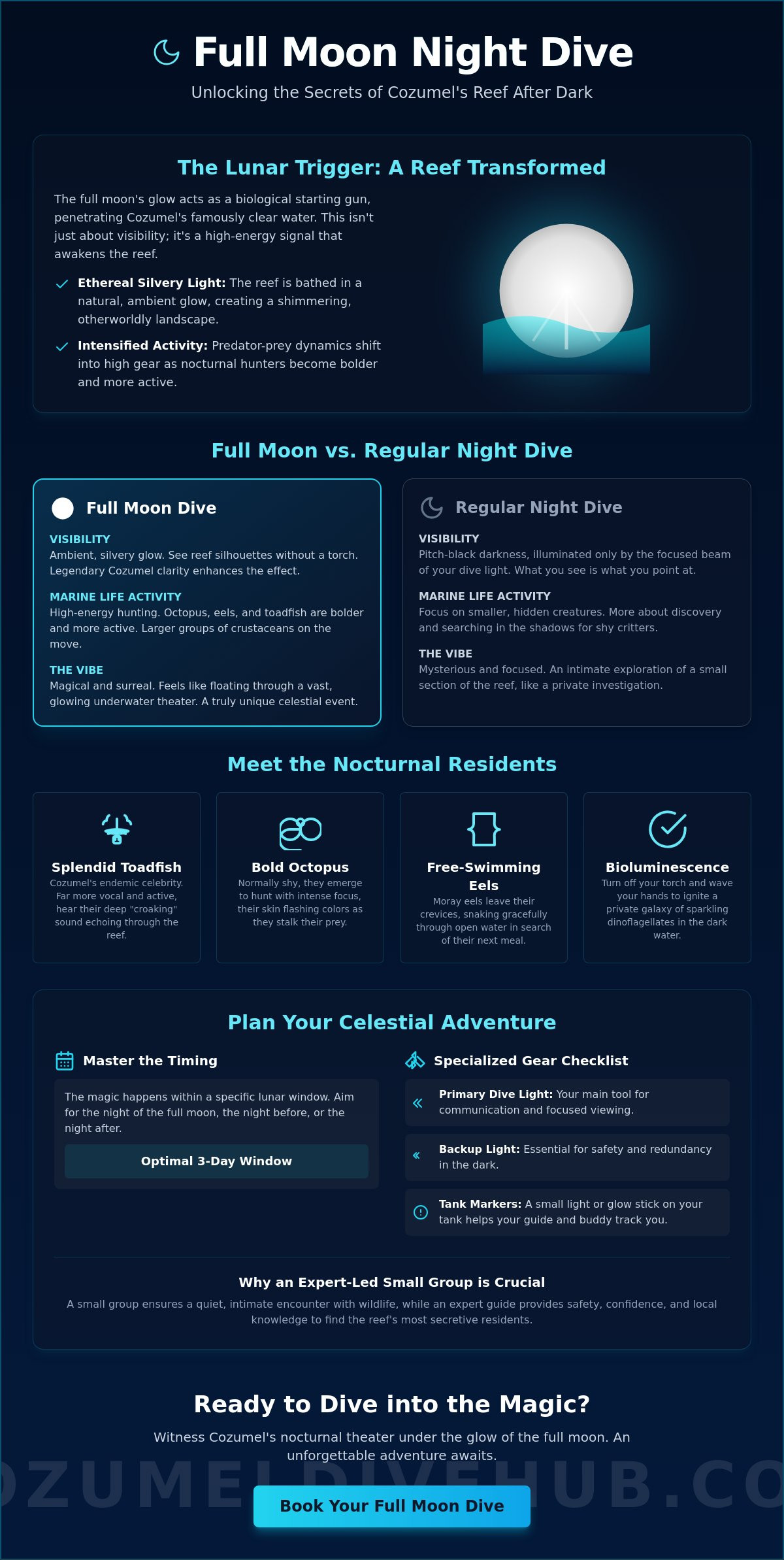
Full Moon vs. Regular Night Dives: Which is Right for You?
Choosing between a standard night dive and a full moon night dive cozumel depends on what kind of thrill you're seeking. A regular night dive, especially during a new moon, is an exercise in focus. Your world is reduced to the 10-foot beam of your torch. It's intimate, quiet, and perfect for spotting tiny macro life like nudibranchs or peppermint shrimp hiding in the crevices. On these darker nights, you'll often see turtles tucked into ledges and parrotfish wrapped in their protective mucus cocoons, fast asleep.
In contrast, the full moon experience is about the "big picture" and high-octane energy. Because of the ambient light we've discussed, you can actually see the massive structure of the reef. It feels less like a tunnel and more like a vast, underwater cathedral. For photographers, this is the "blue hour" of the ocean. You can capture silhouettes and wide-angle shots that are impossible in total darkness. The reef isn't sleeping during the lunar peak; it's wide awake, hunting, and full of movement.
The Atmosphere Comparison
If you're a bit nervous about the dark, a full moon dive is actually a great way to ease in. The ambient glow means you aren't surrounded by an endless black void. You can see your buddy and the boat's hull from much further away. It's incredibly reassuring. However, if you love that "deep space" feeling where nothing exists outside your light beam, a new moon dive is your best bet. Both offer magic; they just tell different stories. Your choice really comes down to whether you want to focus on the small, hidden details or the grand, moonlit landscape.
Logistics and Safety Nuances
There are a few practical things to keep in mind for these lunar excursions. Because the full moon pulls on our tides, you might experience slightly peppier currents in the Cozumel channel. This makes for an exhilarating drift, but it requires solid control and confidence. Surface conditions are often much friendlier for boat pickups because the bright moon illuminates the waves, making it easy for our captains to spot your signal from a distance.
Whether you're chasing the moon or the total dark, both require excellent buoyancy. You don't want to accidentally bump into the delicate coral reef while you're distracted by a hunting octopus! If you want to sharpen those skills before the big night, checking out Cozumel specialty diving is a fantastic way to prepare for these unique conditions. It ensures you're relaxed, safe, and ready to soak in every second of the adventure with your fellow enthusiasts.
Planning Your Celestial Adventure: Timing, Gear, and Safety
Planning your first full moon night dive cozumel is all about getting the timing exactly right. You don't want to fly across the world only to miss the lunar peak by a single day! While the moon shines every night, the specific window for that "silver surface" effect we've talked about is surprisingly short. We recommend focusing on a three-day window: the night of the full moon itself, plus the night immediately before and after. Each offers a slightly different vibe. The night before often has a crisp, rising moon that illuminates the reef early, while the night after might showcase the very first whispers of nocturnal spawning activity.
The 2026 Full Moon Window
Looking ahead to the 2026 season, mark your calendars for Monday, June 29. This is when the lunar energy hits its peak in our Caribbean skies. Because these dates are so specific, Cozumel dive trips scheduled around these lunar cycles tend to book up months in advance. We always suggest planning your island arrival at least two days before the peak. This gives you time to get a regular day dive or two under your belt first. It helps you get comfortable with the local currents before you add the magic of the moonlight into the mix. Plus, seeing the reef in the sun first makes the nighttime transformation feel even more dramatic!
Gear Tips for Night Enthusiasts
When it comes to gear, the most important rule for a full moon is that "less is often more." You want a primary light with a dimmable setting so you don't wash out the natural lunar glow. If your torch is too bright, you'll miss those subtle blue shadows that make the reef look like a dreamscape. Tank markers are absolutely vital for safety. These small, glowing lights help us keep the group together in the moonlit water without needing to shine torches at each other. They act like little beacons for your buddy to follow.
Don't forget a high-quality backup light tucked into your BCD pocket just in case. Also, even though Cozumel’s water stays warm between 75-86°F, you'll likely want a full 3mm wetsuit. You aren't moving as much during a night dive, and your body temperature drops faster when you're moving slowly to watch the hunters. That tropical breeze also feels a lot cooler once you're back on the boat under the stars. If you're ready to start mapping out your next underwater journey, our friendly team would love to help you plan your perfect lunar dive trip and get your gear ready for the shadows.
Communication also changes when the moon is out. We use specific light signals to talk, but under a full moon, you can often see your buddy's hand signals without even using your torch. It's a surreal and peaceful feeling. We always stick to a strict buddy system, staying within an arm's reach. This isn't just about safety; it's about having someone right there to point at the "sparkle" when the bioluminescence kicks in. Staying close ensures no one misses the show!
Experience the Night with Cozumel Dive Hub: Small Groups & Local Expertise
At Cozumel Dive Hub, we don't just see a full moon night dive cozumel as another trip on the schedule. To us, it's a shared passion that we've lived and breathed for generations. Our local guides have spent their entire lives studying the subtle shifts of the Caribbean tides. We know exactly where the Splendid Toadfish likes to hide and which reef corners catch the best lunar glow. When you step onto our boat, you aren't just a customer; you're joining our family of enthusiasts for a journey into the deep.
Safety is our absolute priority, especially when we're exploring the shadows. We follow rigorous night diving standards, including detailed briefings on light signals and group positioning. We know that diving in the dark can feel a bit daunting at first. That's why we focus on creating a reassuring, upbeat atmosphere where you feel supported every step of the way. The boat ride back is often the highlight for many. There's a special kind of camaraderie that happens when you're sharing stories of hunting octopuses while the boat cuts through silver waves under the stars.
Why Small Groups Make the Difference
We believe the best way to experience the lunar glow is in total peace. That's why we specialize in small groups. Have you ever been on a crowded night dive where twenty torches are swinging in every direction? It's chaotic and creates "light pollution" that ruins the natural atmosphere. By keeping our groups intimate, we reduce the noise and artificial light. This allows you to stay quiet and observe natural behaviors longer. It also means we can provide personalized attention for those who are newer to scuba diving Cozumel, ensuring everyone feels relaxed and capable.
Ready to Level Up Your Skills?
A moonlit adventure is also the perfect time to grow as a diver. Did you know that this experience can count toward your Advanced Open Water Cozumel certification? Mastering the art of night navigation and buoyancy in the dark is a huge milestone. For those who want to go even deeper, we offer the Night Diver Specialty course. It’s the ultimate way to become a master of the dark and truly understand the reef's nocturnal secrets. Are you ready to witness the magic of the June 29, 2026 peak with us? Join our next full moon journey! We can't wait to share the "underwater stars" with you.
Your Next Great Adventure Under the Stars
The reef is waiting to reveal its most secret behaviors, from the bold hunting of the octopus to the shimmering dance of bioluminescence. A full moon night dive cozumel isn't just a trip; it's a front-row seat to nature's most dramatic nocturnal show. We've explored how the lunar glow transforms the "scary dark" into a world of ambient wonder and why timing your visit to the June 2026 peak is so essential for the full experience. It's a transformation that every diver should witness at least once.
We're passionate about sharing these moments with you in a way that feels personal, intimate, and safe. Our small group guarantee means you'll have the best visibility without the distraction of too many torches. With our expert local guides and top-tier rental gear, including all necessary safety lights, you're in the best possible hands. Let's make your next dive one for the history books! Book Your Celestial Full Moon Dive with Cozumel Dive Hub Today! We can't wait to see you on the boat and dive into the magic together.
Frequently Asked Questions
Do I need a special certification for a full moon night dive in Cozumel?
You don't need a specific "lunar" certification, but you must be at least an Open Water certified diver to join us. We highly recommend having some previous night diving experience or working toward your Advanced Open Water to feel totally relaxed. If it's your first time in the dark, our patient guides will stay right by your side to ensure you're comfortable and safe.
What marine life is only visible during a Cozumel night dive?
You'll see a completely different cast of characters once the sun goes down! Octopus and moray eels are out hunting in the open, and the endemic Splendid Toadfish is much more active and vocal. You'll also witness the magical sparkle of bioluminescence in the water, a phenomenon that stays hidden during the daylight hours.
Is it actually bright enough to see without a dive light during a full moon?
While the ambient light is incredible, you still need a primary dive light for safety and to see the reef's true colors. The moon provides a beautiful silvery backdrop that helps with your "big picture" orientation, but it doesn't replace the need for a torch. We love to have "blackout" moments where we briefly dim our lights to soak in the natural lunar glow together.
What happens if I get nervous or uncomfortable during the night dive?
It's totally normal to feel a few butterflies before descending into the shadows! Our small group approach means your guide is never more than a few feet away. If you feel uneasy at any point, just signal us. We can stay in shallower areas or even end the dive early if that makes you feel safer; your comfort and peace of mind are our top priorities.
How much does a night dive typically cost in Cozumel for 2026?
Rates for a full moon night dive cozumel depend on the specific adventure you choose, such as a single-tank excursion or a twilight-to-night two-tank dive. Since pricing can shift with seasonal demand and marine park fees, we recommend visiting our booking section for the most accurate 2026 details. We always aim to provide the best value with our small group guarantee and expert local guides.
Can I take photos or video during a full moon night dive?
Absolutely! Capturing the reef under the moon is a blast, though it requires a bit of skill with your lighting and buoyancy. The full moon provides a unique "blue hour" effect that's perfect for wide-angle silhouettes and atmospheric shots. Just remember that your primary focus should always be on your safety and protecting the delicate coral reef.
What is the water temperature in Cozumel for night diving?
Cozumel stays wonderfully warm year-round, with water temperatures ranging from 75°F to 86°F. Even so, we suggest wearing a full 3mm wetsuit for your night adventures. You'll be moving much slower than usual to observe the nocturnal hunters, and your body can cool down faster when you aren't swimming vigorously.
How do we find the boat again in the dark after the dive?
Finding the boat is easy because our captains use high-intensity surface lights to mark our location. Every diver in our group also wears a glowing tank marker, so we can see each other clearly while underwater. When we surface, we use our torches to signal the boat, and our experienced crew will come right to us for a safe pickup.