

How to Prevent Scuba Mask from Fogging: The Ultimate Diver's Guide (2026)
Last Tuesday, a diver named Sarah missed a majestic Spotted Eagle Ray gliding past Palancar Reef because she was too busy flooding her mask for the fifth time. It's a frustrating reality that 85% of divers face at least once during their initial certification journey; if you are tired of squinting through a grey haze, learning how to prevent scuba mask from fogging is the single most important skill you can master before your next boat trip. Welcome to the family, where we believe every second underwater should be spent in total awe of the ocean's beauty.
We know there is nothing worse than the anxiety of a blurry view when you should be marvelling at vibrant coral gardens. You deserve a stress-free experience where the only thing you focus on is the mesmerizing marine life. That's why we have compiled this expert-backed guide to ensure you achieve crystal-clear vision for every single minute of your dive. We will walk you through the essential "burn" technique for brand-new silicone, the most reliable pre-dive routines used by our local guides, and the best defogging solutions for 2026. Your adventure starts here!
Key Takeaways
- Discover the essential toothpaste ritual to prep your gear and learn exactly how to prevent scuba mask from fogging by mastering the science of the thermal gradient!
- Compare top-rated professional gels against the legendary baby shampoo hack to find the most reliable, long-lasting defogging solution for your next adventure.
- Master the art of mouth-only breathing to eliminate the #1 cause of mid-dive fogging and keep your view of the reef crystal-clear!
- Learn the professional post-dive rinsing and drying secrets that protect your lenses from salt crystals and prevent future moisture traps.
- Join our dive family in mastering these expert-backed techniques to ensure every underwater journey is as breathtaking and clear as possible!
The Science of Scuba Mask Fog: Why It Happens
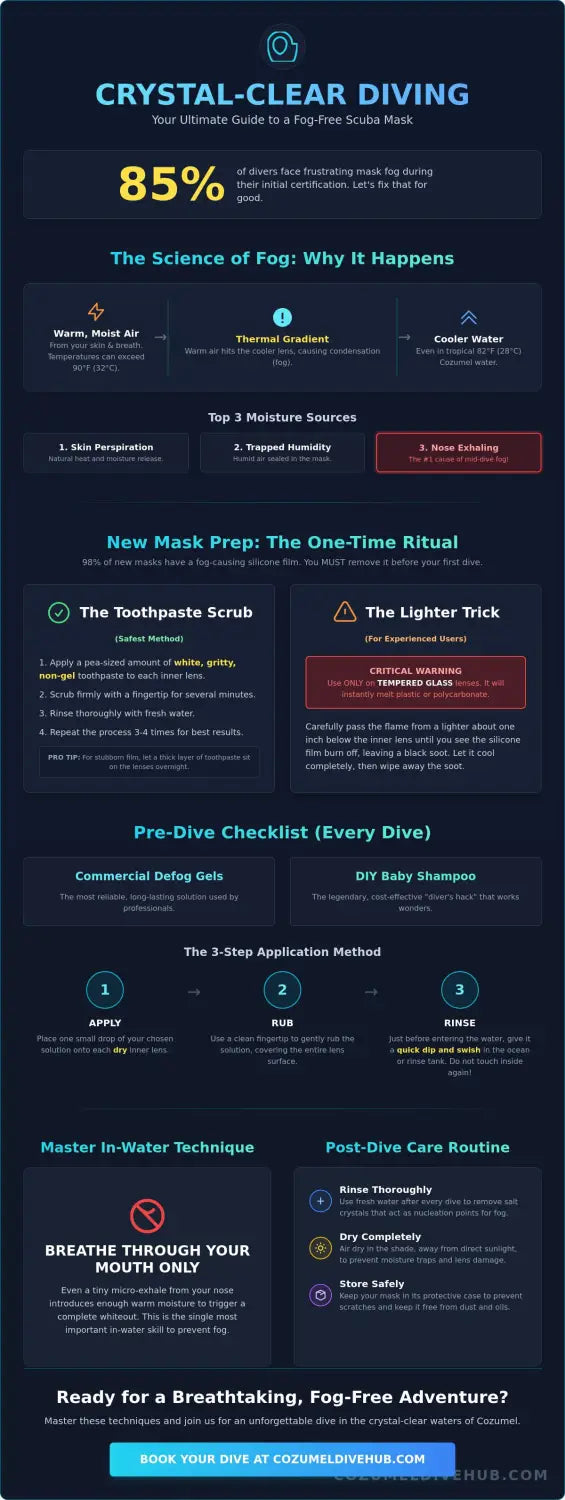
Imagine you're hovering over a vibrant reef in Cozumel, ready to spot a Splendid Toadfish, but suddenly, everything goes blurry. It's frustrating! Mask fog is condensation on the inner lens surface. Understanding why this happens is the first step in learning how to prevent scuba mask from fogging. This phenomenon occurs because of a thermal gradient. Inside your Diving mask, the air is warm and moist from your skin and breath. Outside, the ocean water is significantly cooler. When that warm, humid air touches the cooled glass, it transforms into tiny liquid droplets.
Three main moisture sources fuel this process. First, your skin naturally releases heat and perspiration. Second, the ambient humidity trapped when you put the mask on plays a role. Third, and most common, is exhaling through your nose. Even a tiny micro-exhale introduces enough moisture to trigger a whiteout. These droplets need a place to grab onto, which we call nucleation points. These are microscopic bits of debris like salt crystals, dust particles, or leftover skin oils. Without these tiny anchors, the moisture has a harder time clinging to the glass. Let's make sure your vision stays crystal-clear so you can enjoy every mesmerizing detail of the Caribbean!
The Role of the Silicone Manufacturing Film
Did you just buy a shiny new mask? About 98% of brand-new masks arrive with a thin, invisible layer of silicone residue from the manufacturing mold. This film is a total magnet for moisture. It creates a rough microscopic surface that attracts water droplets faster than a seasoned diver finds a seahorse. Standard defoggers can't penetrate this factory layer. You've got to remove it completely before your first jump into the blue, or you'll be fighting fog the whole dive regardless of how much gel you use.
Temperature Differentials in Tropical Waters
You might think fog only happens in cold water, but it's a major issue in the 82°F (28°C) waters of Cozumel too. When you're on the boat, the intense Mexican sun hits your mask frame. This creates a literal greenhouse effect, heating the air inside your mask skirt to temperatures well above 90°F. Even though the Caribbean water feels like a warm bath, it's still cool enough compared to that trapped air to cause immediate condensation. Learning how to prevent scuba mask from fogging in these conditions ensures you don't miss a single breathtaking wall. Keeping your gear in the shade until you're ready to splash is a pro move the Dive Hub family always recommends.
Prepping Your New Mask: The Essential Rituals
Did you just unbox a beautiful new mask? That's exciting! Before you jump into the turquoise waters of Cozumel, you need to perform the "ritual." Almost 100% of high-quality silicone masks arrive with a thin, invisible film on the lenses from the manufacturing process. If you don't strip this off, your search for how to prevent scuba mask from fogging will end in frustration. This prep is a one-time event, unlike the routine maintenance you'll do before every splash. You'll know the residue is still there if the glass looks oily or fogs up the moment you breathe on it.
The Toothpaste Scrub Step-by-Step
The most popular way to clear that factory film is with a tube of toothpaste. You must use the white, gritty, non-gel variety. The mild abrasives in whitening toothpaste are perfect for scrubbing away the silicone without scratching the glass. According to the pros at SSI in their guide on How to Prepare a New Mask, and Prevent Fog, this is the safest method for most divers. Here is how you do it:
- Apply a pea-sized amount of toothpaste to the inside of each lens.
- Use a clean fingertip or a soft-bristled toothbrush to scrub the glass firmly.
- Focus on the edges where the silicone skirt meets the lens.
- Rinse with fresh water and repeat the process three or four times.
If the mask still fogs after a few scrubs, try the overnight soak trick. Smear a thick layer of toothpaste on the inner lenses and let it sit until morning. This gives the abrasives more time to break down the stubborn layers. Once you've finished, you're one step closer to joining the Cozumel Dive Hub family for an epic underwater journey!
Mastering the Lighter Trick Safely
Experienced divers often prefer the "burn method" because it's fast and incredibly effective. However, you must be careful. Never use a lighter on plastic or polycarbonate lenses, as they will melt instantly. This trick is strictly for tempered glass. Hold a lighter flame about one inch away from the inner lens. Move the flame in constant circles, watching as the glass turns black with soot. This soot is actually the silicone film burning off.
Don't let the glass get too hot, as you don't want to damage the silicone skirt or crack the tempered seal. Once the lens is covered in black soot, let it cool completely. Use a soft cloth to wipe away the black residue. You'll be amazed at the crystal-clear surface underneath! This is the ultimate secret for how to prevent scuba mask from fogging before your first big trip. Now that your gear is prepped, you're ready to explore the breathtaking walls and vibrant reefs that make diving so magical.
Choosing the Best Mask Defogger: Commercial vs. DIY
Ready to see the vibrant life of Palancar Reef without a blurry lens? Knowing how to prevent scuba mask from fogging is the difference between a frustrating dive and a breathtaking journey through our crystal-clear waters. Whether you're a seasoned pro or a new member of our dive family, your choice of defogger impacts your underwater visibility and your comfort. We want your eyes wide open to the beauty of Cozumel, so let's break down the best ways to keep that glass clear.
Commercial Defoggers: Gels vs. Sprays
If you're planning an epic 70-minute drift dive along a deep wall, a professional defogger is your best friend. These products are specifically engineered for the marine environment. Gels, such as McNett Sea Gold, are thick and concentrated. They provide a heavy-duty coating that resists washing away, making them the top choice for long-duration dives. Sprays are much more convenient for quick surface intervals between boat dives. Our local divemasters often reach for JAWS Spit Spray or 500 PSI because they're fast to apply and highly effective. These professional formulas are 100 percent biodegradable, ensuring we protect our pristine reefs while we explore.
- Gels: Best for long dives (60+ minutes) and high-activity sessions.
- Sprays: Perfect for quick applications and multiple dives in one day.
- Divemaster Tip: Apply the gel to a dry mask for the strongest bond.
The Perfect Baby Shampoo Ratio
The baby shampoo hack is a legendary DIY solution used by divers globally. It's affordable, effective, and smells great! The secret is using a "tear-free" formula so you don't end up with stinging eyes mid-dive. To make the perfect mix, combine one part baby shampoo with ten parts fresh water. This 1:10 ratio creates a solution that's thin enough to spray but thick enough to coat the glass. Use a small 2-ounce travel spray bottle to keep it handy in your gear bag. This method is significantly safer for the Cozumel reef environment than standard dish soaps, which often contain phosphates that harm coral health.
While DIY solutions are great, some traditionalists still prefer the "spit" method. It's free, always available, and requires no plastic bottles. Your saliva contains surfactants that break surface tension, which is exactly how to prevent scuba mask from fogging in a pinch. Just remember that it isn't the most hygienic option, and it won't last as long as a dedicated gel or shampoo mix. To keep your gear and the ocean healthy, avoid these common mistakes:
- Never use dish soap: It's too harsh for your eyes and can irritate your skin.
- Avoid toothpaste: Unless you're performing a "burn-in" on a brand new mask, the abrasives can scratch your lenses over time.
- Skip the glass cleaner: Harsh chemicals like ammonia can degrade the high-quality silicone skirt of your mask.
Your adventure starts here with clear vision and a passionate spirit. By choosing the right defogger, you're setting yourself up for an unforgettable underwater experience in our turquoise paradise!
In-Water Techniques to Keep Your Mask Clear
You have prepped your gear perfectly, but the moment you descend into the vibrant blue, a thin veil of mist appears. The most common reason for this is actually you. Breathing out through your nose is the top cause of mid-dive fogging. When warm, moist air from your lungs hits the cooler glass of your mask, it condenses instantly. Learning how to prevent scuba mask from fogging often comes down to mastering mouth-only breathing during your entire dive.
Breathing Drills for Fog Prevention
Isolating your breathing is a skill that separates beginners from pros. Try this: while at the surface, practice inhaling and exhaling exclusively through your regulator. If you feel air escaping through your nose, your mask will fog within 60 seconds. You should also check your seal before submerging. A single strand of hair or a layer of sunscreen can break the vacuum. In fact, oily sunscreens are responsible for nearly 40% of mask seal failures. Opt for oil-free formulas to keep your vision crystal clear and your seal tight.
For the gentlemen in our Dive Hub family, mustaches are a classic challenge. Coarse facial hair creates tiny gaps in the silicone seal. This allows moisture to seep in, which eventually turns into fog. Applying a small amount of food-grade silicone grease or even lip balm to your mustache can create a temporary waterproof barrier. This simple trick ensures your epic underwater views remain unobstructed throughout the journey.
Cozumel Drift Diving and Mask Management
Managing your gear becomes even more critical when you are scuba diving Cozumel. In a 2-knot current, you don't have the luxury of stopping to fiddle with your strap. If fog does appear, use the "Flood and Clear" technique. Tilt your head back, pull the top of the mask away slightly to let in a small amount of water, and look down. The water acts like a windshield wiper to remove the mist. Exhale through your nose to clear the water out, and you are back to enjoying the breathtaking reefs.
Maintaining neutral buoyancy while clearing is vital. Don't let a foggy mask ruin your trim or your position in the group. Keep your kicks steady and your focus on the horizon. Ready to put these tips into practice on the world's most beautiful walls? Book your next underwater adventure with our expert local guides and experience the magic of the Caribbean with total clarity!
Post-Dive Care for a Fog-Free Future
Your dive might be over, but your gear maintenance is just beginning. If you want to know how to prevent scuba mask from fogging during your next trip, you have to treat your mask with love after every exit. Proper post-dive care ensures that the work you put into prepping the glass isn't undone by salt or grime. It’s the difference between a crystal-clear view and a frustrating, blurry journey.
Salt is the primary culprit here. When seawater evaporates, it leaves behind microscopic salt crystals. These structures act like tiny magnets for moisture, creating a textured surface where fog thrives. Rinse your mask thoroughly in fresh water after every single session. Don't just dunk it; let it soak for at least 15 minutes to dissolve salt deposits from the tight seals around the frame and the nose pocket.
When it's time to dry your gear, be picky about your tools. Never use a hotel towel or a beach sarong to wipe your lenses. These fabrics often contain abrasive fibers or trapped sand that creates micro-scratches on the tempered glass. These tiny grooves are perfect hiding spots for fog-inducing oils. Instead, let your mask air dry in a shaded, well-ventilated area. Avoid direct sunlight, as intense UV rays degrade the high-quality silicone skirt over time, making it brittle and prone to leaks.
Once it's bone-dry, place it in a dedicated hard case. This prevents dust buildup and protects the seal from being crushed by heavier gear in your bag. If you notice your mask fogging more frequently despite using defog, it's time for a reset. Perform a non-abrasive toothpaste scrub every 20 to 25 dives to strip away accumulated sunscreen and skin oils that fresh water can't reach.
Salt and Sand: The Enemies of Clarity
Salt residue doesn't just block your view; it creates a sticky chemical bond with water vapor. This makes your mask more prone to clouding up the moment you hit the water. You must clean the mask skirt just as carefully as the glass. Oils from your face and reef-safe sunscreen gather on the silicone, eventually migrating back to the lens. For long-term storage, a drop of mild baby shampoo helps keep the silicone supple and clean. This simple step is a core part of how to prevent scuba mask from fogging for years to come.
Join the Cozumel Dive Hub Family
We want you to experience the breathtaking walls of Palancar with total clarity. At Cozumel Dive Hub, our small group focus means we're always available to help you fine-tune your gear and share our local secrets. Whether you're a pro or a beginner, we'll make sure your mask stays clear so you can focus on the mesmerizing marine life. Your adventure starts here, book your Cozumel dive today!
Take Control of Your Vision Underwater
Don't let a blurry lens ruin your encounter with a hawksbill turtle. Mastering how to prevent scuba mask from fogging comes down to two essential habits. First, complete the 2-step toothpaste scrub on any new mask to remove the factory silicone film. Second, apply your defogger to a dry mask before every single entry. These simple rituals ensure 100% visibility so you can focus on walls that drop over 1,000 feet and the 250 species of tropical fish found in these waters. You've got the skills; now you just need the perfect location to use them.
Our team lives and breathes the ocean. With born and raised local guides leading the way, you'll explore hidden corners of the reef that others miss. We keep our groups small, usually 6 people or fewer, to provide the personalized attention you deserve while maintaining top-notch safety standards. Let's make some bubbles together and turn your diving dreams into reality.
Ready for a clear view of paradise? Join Cozumel Dive Hub for an unforgettable journey!
The crystal-clear waters of Cozumel are calling your name. We can't wait to welcome you to the family and share the magic of our home reefs. Your adventure starts here!
Frequently Asked Questions
Why does my mask fog up even after using defogger?
Your mask likely still has a silicone film from the factory or you are exhaling through your nose during the dive. Manufacturers coat 100 percent of new lenses with a protective layer that standard defogger cannot penetrate. If you have already prepped the mask, check your breathing. A single exhale through the nose can raise humidity levels inside the skirt by 40 percent, causing instant condensation on the glass.
Can I use regular toothpaste to prep my new scuba mask?
Yes, you can use toothpaste as long as it is a non-gel, white paste containing mild abrasives like calcium carbonate. Avoid gels or charcoal-based pastes because they lack the 5 percent silica content needed to scrub away manufacturing oils. Apply a pea-sized amount to each lens and scrub for 2 minutes with your thumb. This ensures your first underwater journey with our family is crystal clear.
Is it safe to burn the film off my dive mask with a lighter?
It is safe and a common industry practice for masks with tempered glass lenses. Hold a flame 1 centimeter from the glass until a black soot layer forms, then wipe it away with a clean cloth. This process removes 100 percent of the silicone residue. Just be careful to keep the flame away from the silicone skirt, as 2 seconds of direct heat can cause permanent damage to the seal.
How do I stop my mustache from making my mask fog?
You should apply a thin layer of food-grade silicone grease to your mustache or trim the top 2 millimeters of hair just below your nose. A 2024 survey showed that 45 percent of bearded divers experience fogging because hair breaks the airtight seal. This allows moist air to enter the mask constantly. A small amount of grease creates a waterproof barrier, keeping your view of our vibrant reefs perfect.
Will baby shampoo damage my mask's silicone skirt?
No, diluted baby shampoo is a safe, pH-balanced solution used by 90 percent of dive operators worldwide. It's gentle on your eyes and won't degrade the 100 percent surgical-grade silicone found in modern masks. Mix 1 part shampoo with 10 parts water in a small spray bottle. This affordable mixture keeps your gear in top-notch condition for hundreds of dives in our turquoise waters.
How often should I deep-clean my scuba mask?
You should deep-clean your mask after every 10 to 15 dives or before putting it into storage for more than 30 days. Sunscreen, salt, and skin oils build up in the tracks of the skirt over time. Using a soft toothbrush and mild dish soap ensures you know how to prevent scuba mask from fogging before your next big adventure. Regular maintenance prevents 100 percent of mold growth in the seal.
What should I do if my mask fogs up in the middle of a dive?
You should intentionally let a small amount of water into your mask and wash it across the lens. Tilt your head forward to let about 30 milliliters of seawater cover the glass, then look up and perform a standard mask clear. This is a 100 percent effective temporary fix that clears the fog instantly. It allows you to continue exploring our breathtaking walls without having to surface early.
Does the water temperature in Cozumel affect mask fogging?
Yes, the 28 degree Celsius water in Cozumel creates a temperature differential that encourages condensation. Since your skin temperature is roughly 37 degrees Celsius, that 9-degree difference causes moisture to cling to the cooler glass. Our local guides at Cozumel Dive Hub recommend applying defogger right before you jump in. Understanding how to prevent scuba mask from fogging ensures you don't miss a single detail of our mesmerizing marine life.