

Logging Your Cozumel Dives: How to Preserve Your Underwater Memories Forever!
What if you could relive the exact moment a Splendid Toadfish peeked out from under a vibrant coral ledge, even years after your bubbles have reached the surface? It's a common feeling for many of us. You climb onto the boat after an incredible drift, your heart is still racing from the beauty of the Mesoamerican Barrier Reef, but by the time you're back on land, the specific details start to fade. Forgetting the name of a unique fish or struggling to estimate your bottom time in those famous currents can make your logbook feel incomplete. We know you want a record that's as vivid as the Caribbean Sea itself.
In this guide, you'll discover why logging your cozumel dives is the secret to building a professional scuba resume while capturing the magic of your journey. We'll help you master the art of recording drift adventures and identifying endemic marine life with total confidence. You'll also learn whether digital apps or traditional paper logs are better for your next PADI certification level. Let's make sure your underwater memories stay as clear as the 100 foot visibility you enjoyed today!
Key Takeaways
- Learn how your logbook serves as a vital "scuba resume" to grant you access to Cozumel's most advanced and thrilling dive sites.
- Master the art of logging your cozumel dives by recording specific drift conditions and reef sections to track your personal growth.
- Weigh the benefits of traditional paper logs against modern digital apps to find the best way to sync your memories to the cloud.
- Discover the social importance of Divemaster signatures and how they turn every dive into a shared story with your buddy.
- See how detailed records help you identify endemic marine life and transition from a beginner to a confident underwater explorer.
Why Logging Your Cozumel Dives is a Vital Part of Your Adventure!
Imagine soaring along the Palancar Reef, feeling the gentle push of the Caribbean current as you glide past towering coral columns. It's an adrenaline rush like no other! But what happens when the gear is rinsed and the sun sets? Logging your cozumel dives ensures that the thrill of that first drift stays with you forever. It's your personal narrative of discovery, turning a single afternoon into a lifelong treasure.
If you're just starting out, you might ask what is a dive log exactly? Think of it as your underwater diary and official record of experience. Beyond the memories, it serves a vital practical purpose. By tracking your air consumption, often called your SAC rate, in different current conditions, you become a more efficient and relaxed diver. You'll see exactly how your comfort level improves as you spend more time in our vibrant waters. It's incredibly satisfying to look back and see your progress from those first nervous breaths to total buoyancy mastery.
Building Your Scuba Resume for Advanced Sites
Cozumel offers some of the most legendary dive sites in the world, but some require a bit more grit and experience. If you have your heart set on the deep walls of Maracaibo or the intense currents of the island's northern end, local shops will often ask to see your records. They want to ensure you have the documented bottom time and drift experience to stay safe and enjoy the ride. Your logbook is the physical proof of your skills. It also tracks the specific milestones you need for your advanced open water cozumel certification. Every entry is a building block for your scuba resume!
Preserving the Magic of the Mesoamerican Reef
How do you describe the exact shade of turquoise in the shallows or the feeling of weightlessness as you fly over the reef? We encourage you to use sensory words in your entries to keep the magic alive. Don't just write "saw a turtle." Describe the way the light hit its shell or the peaceful silence of the deep. This turns your log into a personal "Blue Book" of Caribbean explorations. Years from now, you'll flip through these pages and feel the warmth of the Cozumel sun all over again. It's a beautiful way to honor your connection to the natural world and the community of enthusiasts you've joined.
The Cozumel-Specific Logging Checklist: What to Record
Every dive site on this island has its own distinct personality. To truly capture the essence of your experience, your records need to go beyond the basics of depth and time. Mastering the habit of logging your cozumel dives means capturing the nuances that make this destination world-class. When you look back at your logs, you should be able to feel the pulse of the ocean as it was that very day.
To create a truly detailed record, make sure your checklist includes these Cozumel-specific data points:
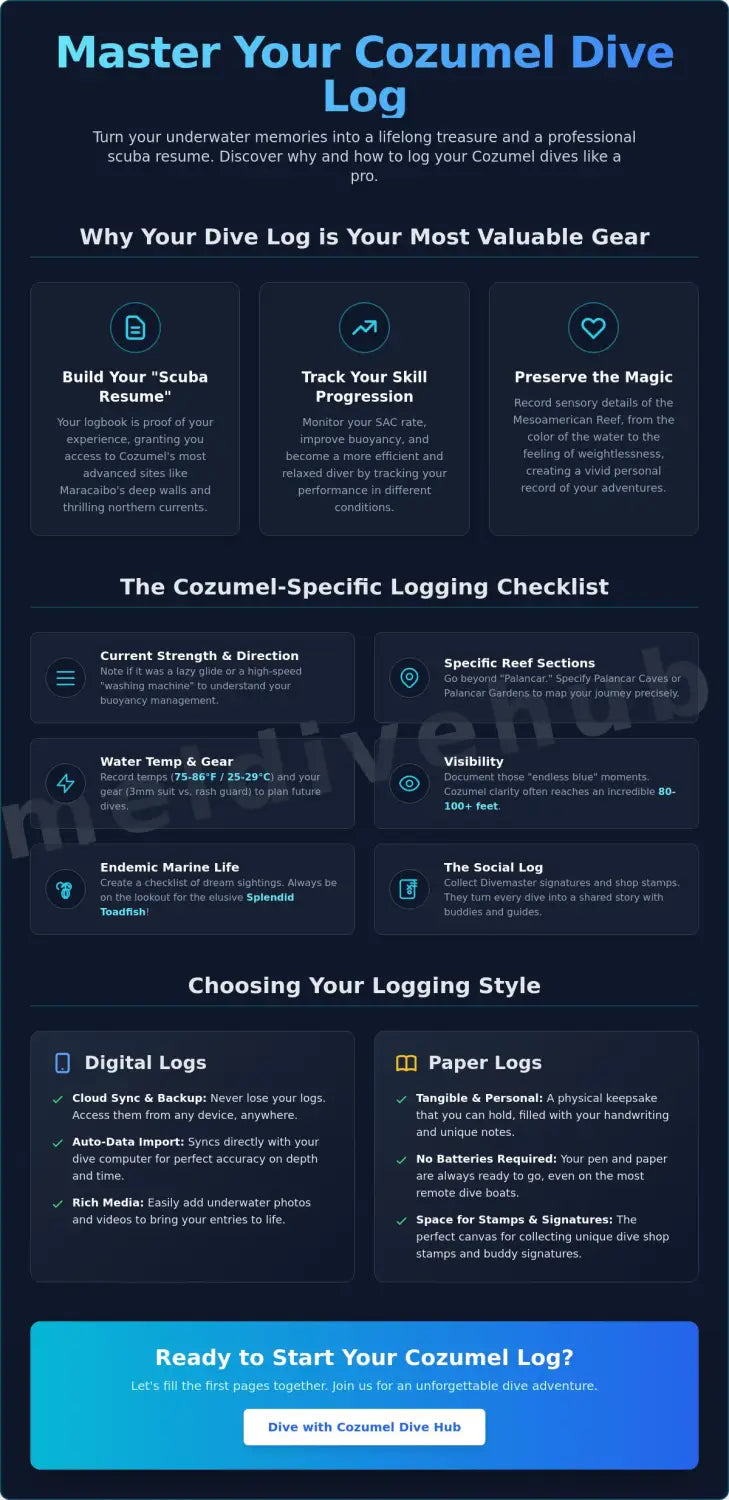
- Current Strength and Direction: Was it a lazy, mild glide or a high-speed "washing machine" rip? Documenting this helps you understand how you managed your buoyancy and effort.
- Specific Reef Sections: Don't just write "Palancar." Specify if you explored the towering swim-throughs of Palancar Caves or the vibrant, sun-drenched coral heads of Palancar Gardens.
- Water Temperature and Gear: With temperatures ranging from 75°F to 86°F (25°C to 29°C), noting whether you wore a 3mm full suit or just a rash guard helps you plan for future comfort.
- Visibility: Cozumel is famous for its clarity, often reaching 80 to 100+ feet. Recording this helps you remember those "endless blue" moments.
Tracking the Cozumel Drift Dynamics
Drift diving is a unique skill. Unlike stationary dives, your entry and exit points are often miles apart! Be sure to note how the "flying" sensation affected your breathing. Did the excitement of soaring over the reef increase your air consumption, or did the effortless movement help you relax? Don't forget to document the surface interval, too. There's nothing quite like sharing stories under the warm Mexican sun while the boat moves to the next site. When you join us for a dive trip, our team loves helping you pinpoint these exact locations on the marine park map.
Marine Life Check-Off: The 'Cozumel Big Five'
The Mesoamerican Barrier Reef is a biological treasure chest. Your logbook is the perfect place to track sightings of the "Big Five" that divers dream of seeing here. The Splendid Toadfish is an endemic species found only in Cozumel's reefs, making it the ultimate prize for your logbook. Keep an eye out for Hawksbill Turtles gracefully munching on sponges, and record the health and size of the ones you spot. Nurse Sharks often nap under ledges, while spotted Eagle Rays might soar past in the blue. Documenting these encounters turns your log into a personal census of the reef's incredible biodiversity.
Digital vs. Paper: Choosing Your Logging Style
You've just climbed the ladder after a breathtaking drift. Your gear is off, and the boat is bouncing toward the next site. Now comes the big debate: do you reach for a pen or a smartphone? When you're logging your cozumel dives, your choice of style says a lot about your personality as a diver. Some love the old-school charm of ink on paper, while others can't wait to see their dive profile synced to the cloud. There's no wrong answer, but Cozumel's unique boat-based environment might influence your decision.
One thing to consider is the "wet hands" dilemma. Saltwater and touchscreens aren't always the best of friends! If you're eager to record data while the boat is still moving, a physical logbook is often more forgiving of a few stray splashes. However, many modern divers are moving toward a hybrid approach. They might jot down the raw numbers on a slate or paper log on the boat, then transfer everything to a sleek digital app once they're back on dry land. This keeps your record-keeping accurate without risking your expensive electronics in the salt spray.
The Case for Traditional Paper Logbooks
Paper logs are the classic social currency of the diving world. There's a tactile joy in flipping through pages that might even be stained with a few drops of Caribbean saltwater. These books are perfect for collecting physical stamps from different shops and signatures from the local guides who showed you the reef's secrets. Plus, there's plenty of white space for hand-drawn maps of intricate swim-throughs. You don't need batteries or a signal to relive your adventure!
Modern Digital Logging Apps
Digital apps offer incredible convenience for the tech-savvy explorer. You can integrate your underwater photos directly into your dive profile, creating a visual timeline of your journey. Many apps also feature GPS tagging, allowing you to see exactly where you dropped in on sites like Columbia Deep or San Francisco. Sharing your highlights with a global community of enthusiasts is just a tap away, making it easy to stay connected with your dive buddies back home.
Ultimately, your logbook is a reflection of your own scuba journey. Whether you prefer the scratch of a pen or the glow of a screen, the goal is the same: preserving the magic of the Mesoamerican Reef. We love seeing our guests' logs at the end of the day, so don't be shy about asking your guide for a signature or a stamp. It's all part of the community spirit that makes diving here so special!
The Social Side of Logging: Stamps, Signatures, and Stories
Have you ever noticed how the boat ride back to the pier feels like a joyful family reunion? The adrenaline is high, the sun is warm, and everyone is buzzing with excitement about the incredible things they just saw. This is the heart of the social experience in the diving world. Logging your cozumel dives is the perfect way to anchor those feelings and turn a group of strangers into a community of friends. It's more than just recording data; it’s a shared celebration of the ocean's magic.
Whether you're grabbing a post-dive taco in the heart of San Miguel or relaxing at one of the local dive hubs, your logbook is a massive conversation starter. It’s the place where you compare notes with your buddy about that massive green moray eel or the tiny, neon-colored nudibranch you spotted. After a successful night dive, the 'Logbook Party' is a real island tradition. We often gather around, recounting the thrill of seeing octopuses hunting and lobsters marching across the sand under the moonlight. These stories are what turn a simple vacation into a lifelong adventure.
The Value of the Divemaster's Stamp
Don't forget to ask your guide for their official stamp before you head out! A local stamp from a reputable shop carries significant weight with dive operations around the globe. It acts as a badge of honor, proving you've successfully navigated the unique drift conditions of the Mesoamerican Reef. Collecting different stamps from various scuba diving cozumel operators is a fun way to track your journey across the island's many reefs. It’s also a wonderful, personal way to say 'thank you' to your Divemaster for their expertise in finding that camouflaged Toadfish or a shy Seahorse tucked into the sea fans.
Turning Your Log into a Travel Journal
Think of your log as a vibrant travel journal that captures the soul of your trip. Beyond the depths and times, try jotting down the 'vibe' of your day. Was the Caribbean sky a perfect, cloudless blue? Did you discover a new favorite snack spot near the ferry pier that serves the best empanadas? Write down the names of the new friends you met on the boat so you can stay in touch. These small, personal details make your entries feel alive when you read them years later. You aren't just documenting a dive; you're preserving the entire experience of your Cozumel getaway.
Ready to start collecting your own stamps and sharing your underwater stories? Book your next dive trip with our passionate team and let's make some memories together!
Start Your Cozumel Journey with Cozumel Dive Hub!
Are you ready to turn your underwater dreams into a permanent record of adventure? We believe that every breath you take under the waves is a story waiting to be told. When you're logging your cozumel dives with us, you aren't just filling out a form. You're joining a family of enthusiasts who care about every detail of your journey. Our team is here to ensure that your logbook becomes a vibrant, accurate, and professional reflection of your growing skills.
The Cozumel Dive Hub stamp is more than just ink on a page. It's a mark of quality that tells dive shops around the world you've trained and explored with the best local experts. We take immense pride in our heritage and our deep-rooted knowledge of these reefs. Whether you're here for a single dive trip or a full scuba dive course, we're committed to your safety and your enjoyment. We want you to feel the same love for the natural world that we've felt our entire lives!
Expert Guidance on Every Drift
Our personalized approach starts long before you hit the water. Every morning begins with a detailed briefing where we highlight the specific species we hope to spot and log that day. We'll talk about the local history of the reef and the unique formations you're about to see. Once we're back on the boat, the magic continues. We hold informal debriefings where we help you identify that mysterious juvenile fish or clarify the technical data for your records. We love sharing our passion and helping you grow from a cozumel beginner diving enthusiast into a confident, pro-level explorer.
Book Your Adventure and Start Your Log Today!
There's a whole world of vibrant coral and stunning marine life waiting for you. Why wait another day to start filling those pages with epic memories? Booking your next adventure is the first step in a larger journey of discovery. We offer small group sizes and personalized care to ensure your experience is safe, fun, and absolutely unforgettable. Whether you're looking to complete your first certification or just want to soar through the Caribbean blue, we're ready to welcome you home.
Join a community of passionate divers at Cozumel Dive Hub. We can't wait to see your face light up when you see the reef for the first time. Let's get out there and make some bubbles together!
Ready to Capture Your Next Underwater Story?
Your logbook is the ultimate treasure map of your scuba journey. By recording the specific current dynamics and identifying the unique creatures you encounter, you turn a simple dive into a lifelong memory. Whether you prefer the tactile joy of a stamped paper log or the high-tech convenience of a digital app, the goal remains the same: preserving the magic of the Mesoamerican Reef. Start logging your cozumel dives today to build a professional resume that opens doors to the island's most legendary sites.
At Cozumel Dive Hub, we're passionate about helping you fill every page with wonder. Our local guides have decades of experience navigating these waters and sharing their heritage with fellow enthusiasts. We specialize in small groups, which means you get the personalized attention needed to spot endemic species like the elusive Splendid Toadfish and take detailed notes for your records. We treat every guest like family and every dive like the adventure of a lifetime.
Are you ready to join our community and start your next chapter? Book your Cozumel dive adventure and start logging memories today! We can't wait to see what incredible stories you'll bring back to the surface.
Frequently Asked Questions
Do I really need to log my dives if I'm already certified?
Yes, logging remains essential because it serves as your official resume for future adventures. Even if you're already certified, many operators require proof of recent experience before taking you to challenging sites. It’s also the best way to track how much weight you need with different thermal protection, making every future splash even more comfortable and stress-free.
What is the most important thing to record for a Cozumel drift dive?
Current strength and direction are the most critical data points to record. Since Cozumel is famous for its drift diving, noting whether the current was mild or a high-speed rip tells the real story of your dive. This information helps you analyze your air consumption and buoyancy control, allowing you to become a more relaxed and efficient explorer in moving water.
Can I use a digital logbook for my PADI Advanced Open Water course?
You can absolutely use a digital logbook for your PADI Advanced Open Water course. Most modern training agencies fully embrace digital platforms for tracking progress. Just make sure your app allows for instructor verification. When you are logging your cozumel dives digitally, it’s easy to share your training milestones with your instructor and keep your certification path organized.
Where can I buy a physical logbook in Cozumel?
You can find physical logbooks at almost any dive center in the heart of San Miguel. Many shops offer custom books with beautiful Caribbean reef art on the cover. If you're near the southern marinas, local dive hubs often stock them too. It’s a great way to support the local community while picking up a durable home for your underwater memories.
How do I identify the fish I saw if I don't know their names?
You can identify mystery fish by using the colorful ID slates available on our boats. We also keep detailed reference books at our shop to help you solve any marine life puzzles. Our guides love helping you name every creature you spotted, from the tiniest shrimp to the largest eagle ray. It’s a fun way to turn your surface interval into a learning session.
Should I log my surface interval time in Cozumel?
Yes, recording your surface interval is a vital part of dive safety. It allows you to track nitrogen off-gassing and ensures you stay within safe limits for your next descent. Beyond the technical side, it's also a great way to remember the "vibe" of the day. Use that time to jot down stories about the boat ride and the new friends you've made.
What happens if I lose my logbook before a dive trip?
Don't panic if your logbook disappears. You can usually download your training records directly from your certifying agency's website or app. If you've dived with us before, we can help you reconstruct your recent history from our boat manifests. It’s always a good idea to take photos of your paper logs occasionally so you have a digital backup of your hard-earned experience.
Does a divemaster have to sign every single log entry?
A professional signature or stamp is the gold standard for every entry. While you can log dives yourself, having a Divemaster or instructor sign off adds a layer of trust and authenticity to your records. This is especially helpful when you visit new destinations. It proves that a professional verified your bottom time and skills, making it easier to join advanced trips without a checkout dive.