Dive Site
Palancar Caves Reef Cozumel Dive Site
Palancar Caves is one of the most structurally dramatic Cozumel dive sites, known for its massive coral architecture, swim-through systems, and multi-level drift profile.
Dive Profile
- Depth
- 50–120 ft
- Skill level
- Intermediate
- Entry type
- Boat
- Coast
- West
Where It Sits
Sits between Palancar Horseshoe to the north and Palancar Bricks to the south along Cozumel's west coast reef line. Current runs south to north, so drifts here typically enter toward Palancar Bricks and finish toward Palancar Horseshoe.
Overview
Palancar Caves Reef Cozumel Dive Site
Overview
Palancar Caves is one of the most structurally dramatic Cozumel dive sites, known for its massive coral architecture, swim-through systems, and multi-level drift profile. Located along the southern section of the Palancar reef system inside the marine park, this site combines depth, current, and complex topography in a way that requires awareness and disciplined dive planning.
Classified as an intermediate dive, Palancar Caves can easily become an advanced dive depending on depth choice and gas management. While the maximum depth commonly reaches 100–120 feet, most dives are conducted as controlled multi-level drift dives that gradually work shallower, finishing around 20–30 feet on top of the reef. This profile makes it a popular choice among the best dive sites in Cozumel, particularly for divers seeking a structured deep reef dive within Cozumel scuba diving itineraries.
Unlike some Cozumel dive sites known primarily for fish density, Palancar Caves stands out for its coral formations and geological relief rather than sheer biomass. The scale and architecture of the reef are the primary attraction.
Site Overview & Conditions
Depth Range: 40–120 feet (12–36 meters)
Typical Profile: Multi-level drift dive
Experience Level: Intermediate to Advanced (depending on depth)
Current: Moderate; can be steady to strong at depth
Visibility: Typically 80–100+ feet in good conditions
Entry Style: Boat entry, negative or standard giant stride depending on current
The dive typically begins deeper along the outer reef slope. The reef gradually descends toward a pronounced edge with a deeply convoluted lip. From there, divers drift along towering coral buttresses, fissures, and large swim-through openings.
Currents are a defining factor in this Palancar Caves drift dive. While usually manageable for intermediate divers, they can increase at depth. Proper buoyancy control and streamlined positioning are essential to avoid contact with delicate coral structures.
Because of the 120-foot potential depth range, bottom time can shorten quickly if divers descend aggressively. Conservative dive planning is critical, especially for those conducting repetitive dives.
Key Features
Palancar Caves is defined by its reef structure and large-scale coral formations.
- Tall coral towers and vertical spires
- Massive buttresses and overhangs
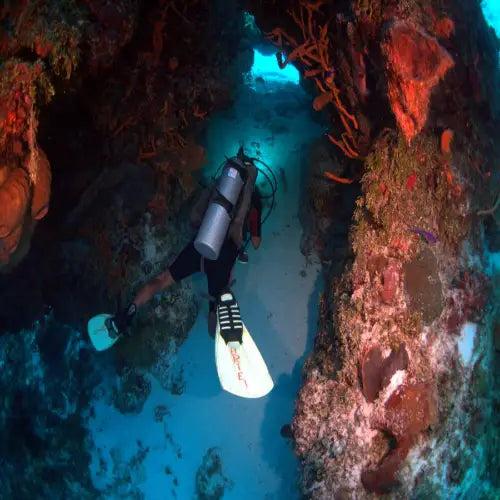
- Interconnected caves and swim-through corridors
- Gullies and narrow canyons
- Deep fissures running beneath coral heads
- Sand chutes that slope into blue water
Despite the name, the “caves” are not overhead environments in the technical diving sense. They are large open swim-throughs with natural light penetration. However, they still require strong buoyancy control and spatial awareness.
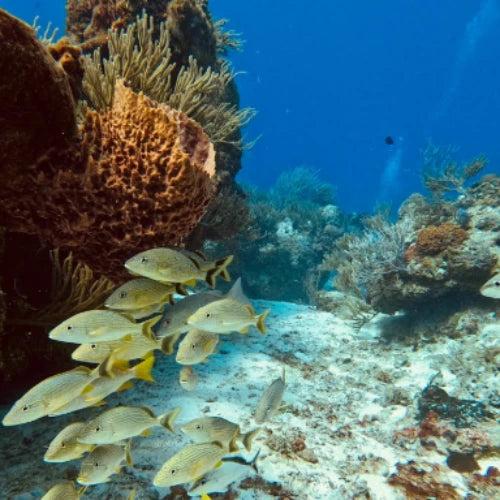
Hard coral formations and large sponges dominate the landscape. Lettuce coral and finger coral are especially prominent toward the shallower top of the reef. The dramatic relief is what makes this one of the more architecturally impressive reef dives in Cozumel.
Dive Experience & Safety Considerations
Difficulty Level: Intermediate minimum; advanced recommended for deeper profiles.
Who Should Dive Palancar Caves:
- Certified intermediate divers comfortable to 100 feet
- Divers with previous drift dive experience
- Divers with strong buoyancy control
- Those comfortable managing depth while drifting
Who Should Not Dive This Site:
- Newly certified open water divers without deep dive experience
- Divers uncomfortable with current
- Anyone with poor air consumption on deeper profiles
- Divers who struggle with buoyancy in swim-through environments
Because this is a Cozumel drift dive with structural complexity, group separation can occur if divers descend at different rates or pause for photography. Staying slightly below and behind the dive guide helps maintain contact in current.
Depth discipline is essential. It is easy to drop deeper along the sand slopes if not monitoring your dive computer carefully. A conservative ascent profile and early leveling-off at mid-depth will significantly extend bottom time.
Although this is not a technical cave dive, divers should avoid penetrating areas without clear exits or proper training. Maintain visual contact with ambient light at all times.
Marine Life Highlights
Common:
- Damselfish
- Reef fish along coral towers
- Small schooling fish in mid-water
Occasional:
- Barracuda
- Grouper and Coney
- Creole Wrasse
- Trumpetfish
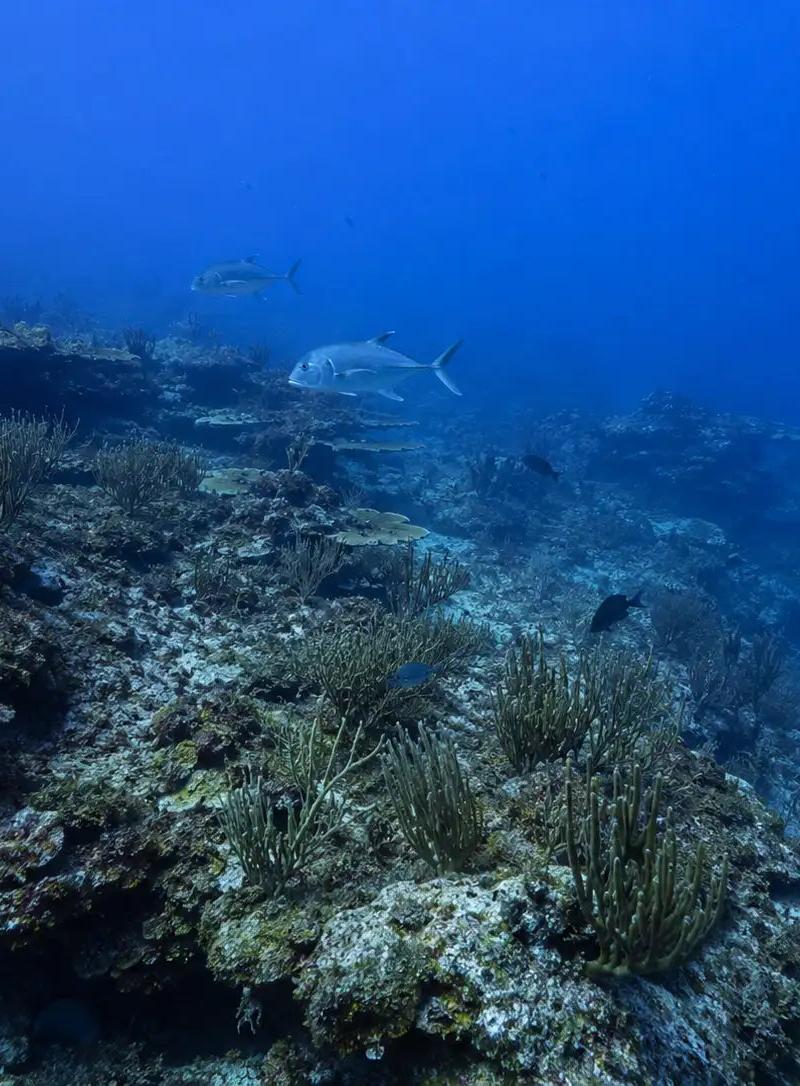
- Bar Jacks
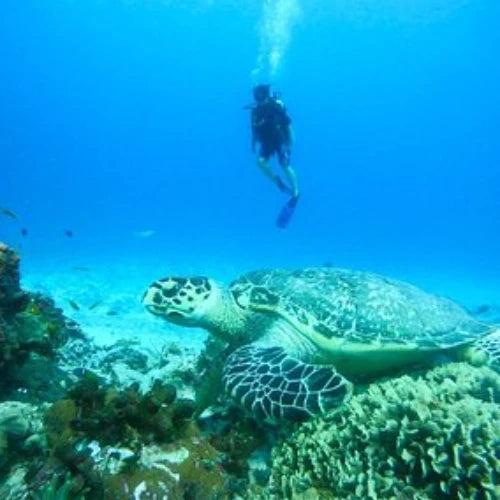
- Turtles
- Hamlets (including Indigo, Shy, and Butter variations)
- Red Spotted Hawkfish hiding in lettuce or finger coral
Rare:
- Nurse Sharks
- Spotted Eagle Rays
- Large Black Groupers
- Green Morays
Marine life tends to concentrate around the upper reef and near structural transitions where current funnels plankton flow.
Why Dive This Site
Palancar Caves stands out among the best dive sites in Cozumel for its scale and architectural drama rather than sheer fish abundance.
What makes it unique:
- Extensive swim-through networks
- Large-scale coral buttresses and canyon systems
- Multi-level deep reef profile
- Strong light play inside open cave formations
Conditions are ideal when current is moderate and visibility exceeds 80 feet, allowing divers to appreciate the full vertical relief of the reef.
For divers seeking a deep reef dive within Cozumel scuba diving itineraries, this site offers structural complexity without requiring technical cave certification.
Best For
- Intermediate to advanced divers
- Divers seeking a structured 80–120 ft depth range dive
- Photographers interested in reef architecture
- Repeat Cozumel visitors exploring deeper Palancar reef sections
- Divers comfortable with drift diving
Planning & Safety Notes
Monitor air consumption carefully during the first 10–15 minutes at depth. Begin your gradual ascent along the reef slope before reaching half tank if currents are stronger than expected.
Because the terrain can draw divers deeper along sand chutes, depth awareness is critical throughout the dive.
If you are building up experience before attempting Palancar Caves at its deeper profile, consider starting with a shallower Palancar site such as Palancar Gardens.
FAQ
Is Palancar Caves a true cave dive?
No. The site features large open swim-throughs with visible exits and natural light. It is not a technical overhead cave dive.
What is the typical maximum depth at Palancar Caves?
Most dives range between 80 and 110 feet, though the reef structure allows descents to approximately 120 feet.
Is Palancar Caves suitable for beginner divers?
It is not recommended for newly certified divers. Intermediate experience and comfort with drift diving are advised.
Marine Life Commonly Seen Here
- Azure Vase Sponge
- Banded Coral Shrimp
- Channel Clinging Crab
- Horse-Eye Jack
- Nurse Shark
- Sponge Brittle Star
Each entry links to a species page with identification notes, depth and season, and the look-alikes divers most often confuse it with. The full list is in the Cozumel marine life guide.
What To Expect
- • 50–120 ft with tunnels and caverns cut through the coral, first dive of the day
- • The caves are swim-throughs rather than overhead penetration, but they are dark and narrow
- • Depth builds quickly if you follow the formations down the slope
- • Barracuda and nurse sharks in the passages, eagle rays out over the sand
- • One of the most photographed sites in Cozumel, so boats stack up mid-morning
Reviews
Reviews Coming Soon.
Frequently Asked Questions
Is Palancar Caves a true cave dive?
What is the typical maximum depth at Palancar Caves?
Is Palancar Caves suitable for beginner divers?
Plan Your Dive Trip
Tell us your dates, certification level and what you want to see — we'll match you with the right dive site.
Plan Your Dive Trip