Palancar Gardens Reef Cozumel Dive Site
Palancar Gardens - a scenic dive with lots to see
Palancar Gardens is one of the most popular dive sites in the southern Palancar reef system and one of the best introductions to the dramatic underwater architecture that makes Palancar famous. Despite the name, this is not simply a flat coral garden dive. Palancar Gardens combines huge coral formations, swim-throughs, sand channels, reef spires, and a wall-style drop-off that descends into much deeper water.
This site is often considered one of the more accessible Palancar dives, but it should still be respected as a real Cozumel drift dive with depth, current, and wall-diving considerations. The typical dive profile is usually in the 40 to 80 foot range, though the outer slope and wall can continue much deeper if divers descend beyond the standard recreational profile.
Most dives are conducted as multi-level drift dives. Divers usually begin around the reef slope or near the wall edge, move with the current along large coral structures, pass through open swim-throughs or channels when conditions allow, and gradually finish shallower on top of the reef.
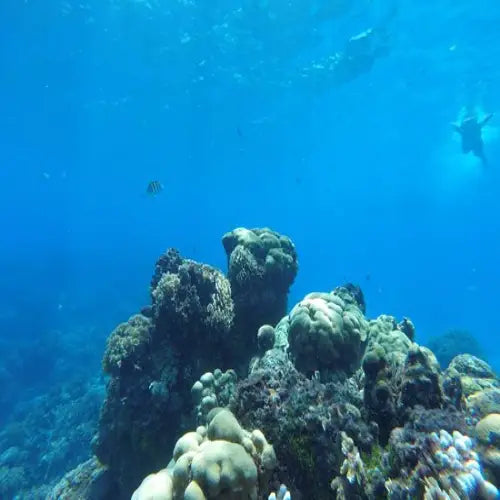
As with many of the best dive sites in Cozumel, the main attraction at Palancar Gardens is the reef architecture. Marine life is part of the experience, but the real highlight is the combination of scale, coral relief, wall scenery, swim-through options, and the feeling of drifting along the edge of a massive reef system.
For divers exploring the Palancar area, Palancar Gardens is a natural starting point before progressing to more complex or deeper sites such as Palancar Horseshoe, Palancar Caves, or Palancar Bricks.
Site Overview & Conditions
- Depth Range: 40–80 feet (12–24 meters), with deeper water along the outer wall
- Typical Profile: Multi-level drift dive along reef formations and wall edge
- Experience Level: Beginner-friendly in calm conditions with the right guide; best for comfortable beginners and intermediate divers
- Current: Usually mild to moderate; can vary by day and depth
- Visibility: Typically 80–100+ feet in stable conditions
- Entry Style: Boat entry; standard giant stride or negative entry depending on current
Palancar Gardens sits within the broader Palancar reef system, where the reef structure rises from deeper water and creates large formations, sandy channels, ridges, and wall-like edges. Divers may start near the shallower sandy area and move out toward the larger reef structures and wall drop-off, depending on the operator’s plan and current direction.
The site has a more open and forgiving feel than Palancar Caves, but it still offers impressive structure. Divers can encounter huge coral heads, tall formations, sponge-covered slopes, gorgonians, swim-through passages, and cracks or channels between coral structures. The wall edge can create dramatic views into deeper blue water, especially when visibility is high.
Current usually carries divers along the reef in classic Cozumel scuba diving style. On calm days, the dive can feel relaxed and scenic. On stronger current days, divers need to stay close to the guide, avoid stopping suddenly, and keep strong buoyancy control around coral formations and swim-through entrances.
Because the reef drops toward deeper water, divers should monitor depth, no-decompression limits, and air consumption throughout the dive. The site can be approachable, but it is not a careless shallow reef dive.
Key Features
- Huge coral formations
- Wall-style drop-off into deeper water
- Open swim-throughs and reef channels
- Large sponges, sea fans, and gorgonians
- Sand channels between coral structures
- Wide-angle reef scenery
- Strong visibility in stable conditions
Palancar Gardens is best understood as a scenic wall-and-formation dive. The name may sound gentle, but the site is part of a much larger reef structure with significant vertical relief. Divers often move between coral towers, across sandy cuts, and along reef edges where the slope drops into deeper blue water.
The swim-throughs are generally open reef passages rather than technical overhead cave environments. Natural light is usually visible, and exits are normally wide enough for recreational divers with good buoyancy control. Still, divers should never enter any swim-through unless they are comfortable, properly positioned, and following the guide’s route.
Hard corals, sponges, sea fans, and gorgonians create much of the visual impact. The reef top and shallower areas can feel colorful and active, while the deeper outer edge gives the dive a more dramatic wall-dive character.
Compared to Palancar Caves, Palancar Gardens is usually less cavern-dense and less intimidating. Compared to Palancar Horseshoe, it is often more accessible and flexible. But it still belongs to the same powerful Palancar reef system and can deliver a serious, memorable dive when conditions are good.
Dive Experience & Safety Considerations
Difficulty Level: Easy to intermediate, depending on current, depth, and route.
Who Should Dive Palancar Gardens:
- Certified divers with basic buoyancy control
- Comfortable beginners diving with a good guide and calm conditions
- Intermediate divers who want a scenic Palancar wall-and-formation dive
- Divers building experience before Palancar Caves or Palancar Horseshoe
- Underwater photographers with good trim and reef awareness
Who Should Be Careful With This Site:
- Newly certified divers with no drift experience
- Divers who are uncomfortable near wall drop-offs
- Divers who struggle with buoyancy around coral or swim-throughs
- Divers with poor air consumption at depth
- Anyone who tends to chase the group or lose position in current
Palancar Gardens is often described as one of the more manageable Palancar dives, but it still requires awareness. The combination of drift current, depth changes, coral formations, swim-throughs, and a wall edge means divers should stay alert and follow the guide’s briefing.
Group positioning matters. If part of the group enters a swim-through while others remain outside, separation can happen quickly in current. Stay close enough to your guide to understand the route, but avoid crowding other divers inside narrow passages.
Buoyancy is especially important around the coral formations. Keep fins high, secure gauges and accessories, and avoid using the reef for balance. Photographers should take extra care to stabilize their body position before raising a camera.
A surface marker buoy is strongly recommended in Cozumel, especially on drift dives where the boat follows the group from the surface and picks divers up after ascent.
Marine Life Highlights
Common:
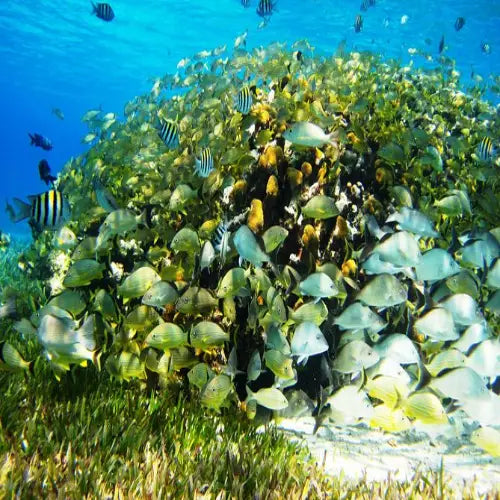
- Angelfish
- Parrotfish
- Butterflyfish
- Blue chromis
- Damselfish
- Grunts
- Snappers
- Small reef fish around coral heads
Occasional:
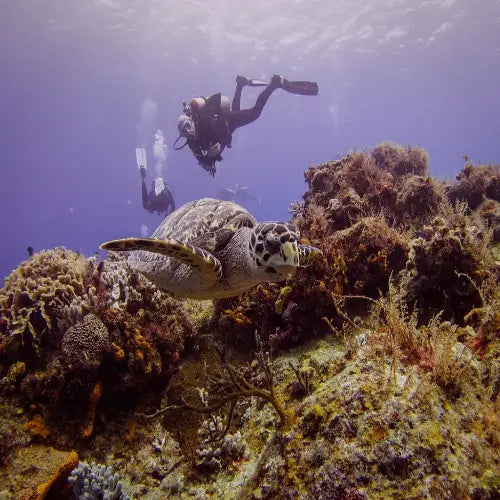
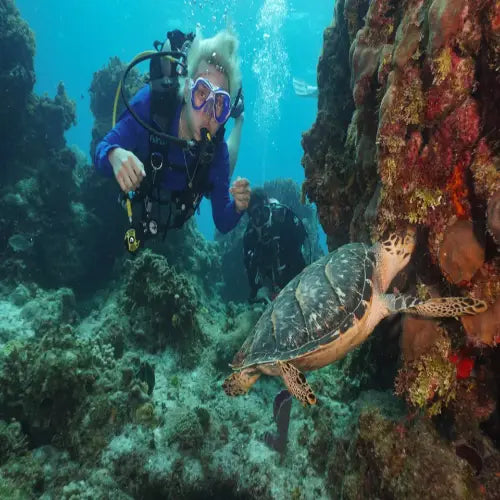
- Turtles
- Southern stingrays
- Nurse sharks
- Moray eels
- Lobsters
- Barracuda
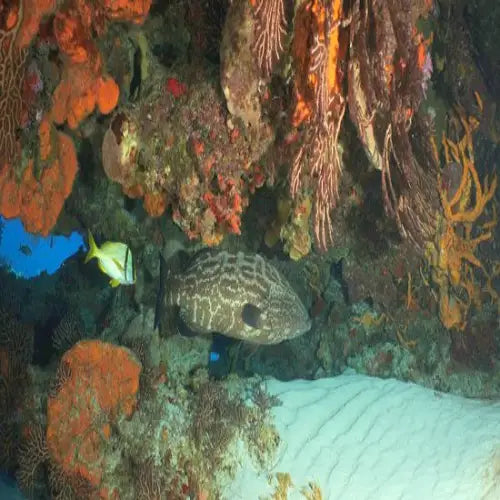
- Groupers
- Jacks
- Creole wrasse
Rare:
- Spotted eagle rays
- Reef sharks
- Large black groupers
- Octopus
- Splendid toadfish
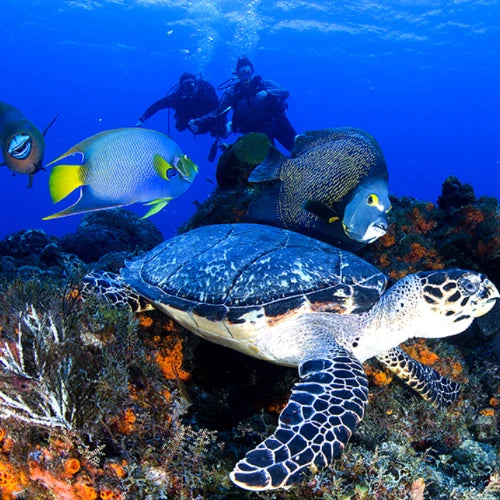
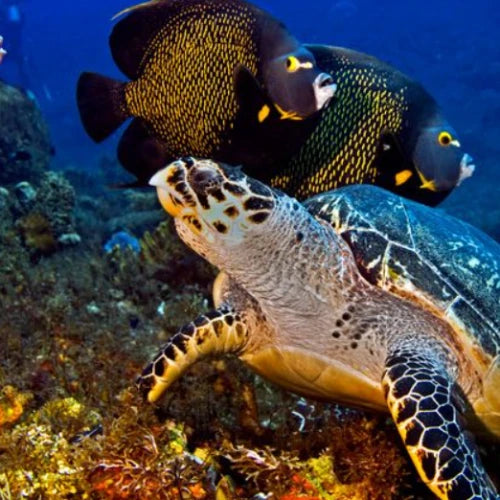
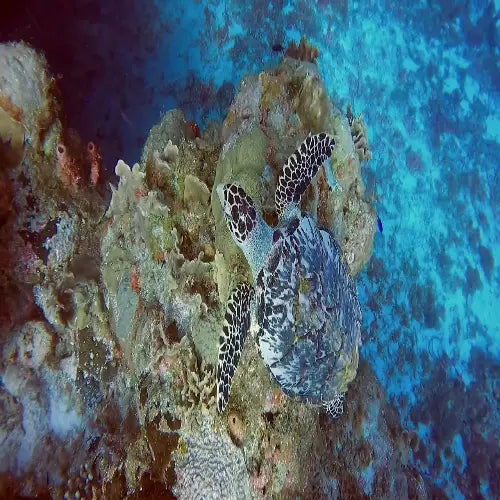
Marine life at Palancar Gardens is usually found around coral heads, ledges, sponge areas, sandy cuts, and the reef top. Turtles may pass through the reef or feed near sponge-covered areas. Nurse sharks can sometimes be seen resting under ledges or moving along the reef edge. Moray eels may hide in cracks and coral openings.
The site is especially strong for wide-angle scenery. When visibility is high, the combination of coral structures, blue water, sand channels, and wall drop-off creates excellent photo and video opportunities. Macro subjects may also be present, but Palancar Gardens is usually more memorable for reef structure, light, and scale.
Why Dive This Site
Palancar Gardens is one of the best Cozumel dive sites for divers who want the Palancar experience without immediately choosing the most advanced profile.
It offers:
- Huge coral formations
- Open swim-through options
- A dramatic wall-style edge
- A flexible multi-level drift profile
- Strong wide-angle scenery
- A useful progression toward deeper Palancar dives
This site is often a strong choice for divers who want something more impressive than a simple shallow reef but less intense than deeper Palancar Caves or Palancar Bricks. It gives divers a real sense of the southern reef system: the scale, the depth, the coral relief, and the way Cozumel drift diving works along a massive reef structure.
When the current is moderate and visibility is high, Palancar Gardens can be one of the most enjoyable dives in Cozumel. Divers drift between coral formations, pass sand channels, look toward the deeper wall, and finish shallower with a safe multi-level profile.
For repeat visitors, the site is worth diving more than once because the route can change based on current direction, starting point, visibility, and guide preference.
Best For
- Comfortable beginner divers with a guide
- Intermediate drift divers
- Divers new to the Palancar reef system
- Divers who want huge coral formations without a very advanced profile
- Underwater photographers
- Wide-angle reef scenery
- Divers preparing for Palancar Caves or Palancar Horseshoe
- Second dives or relaxed first dives, depending on operator planning
Planning & Safety Notes
If you are newer to Cozumel diving, Palancar Gardens can be a good option when conditions are calm and the operator confirms it fits your level. Tell your guide about your recent dive history, comfort with current, air consumption, and buoyancy before entering the water.
Plan the dive conservatively. The site may feel relaxed, but the wall and outer slope can lead divers deeper than expected. Watch your dive computer, maintain a gradual profile, and avoid following deeper divers if that does not match your comfort level or certification.
Swim-throughs should be treated with respect. Enter only when the guide leads the route, exits are clear, and you are confident in your trim and buoyancy. Avoid kicking up sand, touching coral, or stopping inside a passage.
Photographers should secure their position first, check buoyancy, look around their fins and equipment, and only then take the shot. No photo is worth damaging coral.
If you enjoy Palancar Gardens and want the next logical step in the same reef system, Palancar Horseshoe offers a more defined structural profile. If you want more swim-through density and a more dramatic reef route, Palancar Caves may be the next step once you are fully comfortable with depth, current, and buoyancy.
For a broader overview of nearby reef options, see the Cozumel Dive Sites Guide or the full Palancar Reef diving guide.
FAQ
Is Palancar Gardens a beginner dive?
Palancar Gardens can be suitable for comfortable beginner divers when conditions are calm and the operator chooses an appropriate route. It is still a drift dive with depth changes and a wall edge, so beginners should dive with a guide and stay within their comfort level.
How deep is Palancar Gardens?
Most recreational profiles are usually around 40–80 feet, though some descriptions place the site as shallow as around 30 feet and deeper water continues along the outer wall. Your actual depth depends on the starting point, current, and dive plan.
Does Palancar Gardens have swim-throughs?
Yes. Palancar Gardens can include open reef swim-throughs and channels. These are not technical caves, but divers still need good buoyancy, trim, and awareness before entering them.
Is Palancar Gardens a wall dive?
Palancar Gardens can be done as a wall-style dive because the reef slopes and drops toward much deeper water. It is often considered one of the more accessible first wall dives in the Palancar system.
Is Palancar Gardens easier than Palancar Caves?
Generally, yes. Palancar Gardens is usually more open and more flexible, while Palancar Caves is more focused on deeper swim-throughs, caverns, and complex reef structure.
What makes Palancar Gardens special?
The main attraction is the combination of huge coral formations, open swim-throughs, reef channels, strong visibility, and the wall-style drop-off into deeper blue water.