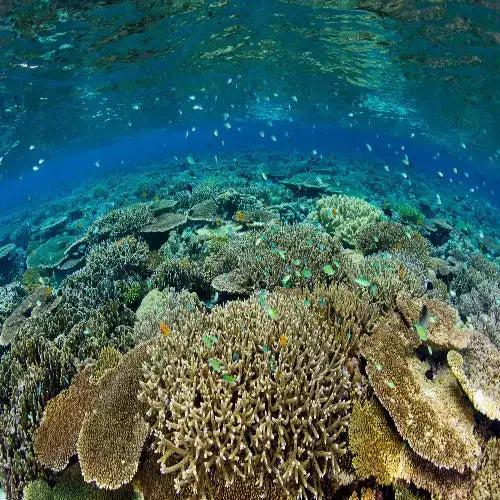
Cozumel's everyday diving is reef diving: drift dives along the walls, coral and swim-throughs of the Cozumel Reefs National Marine Park. A dive special is the trip that sits outside that routine — a shipwreck, a seasonal animal encounter, a freshwater cavern, or a scatter of colonial-era relics on the seabed.
The most useful thing to understand before planning one is geography. Some of these experiences happen in Cozumel waters and slot straight into a normal dive morning. Others are mainland experiences, reached by the passenger ferry to Playa del Carmen, and they need a full day, an early start and a flexible itinerary. Both are worth doing, but they are not interchangeable — and booking one while picturing the other is the most common planning mistake divers make here.
The six guides below set out what each experience is, where it actually takes place, when it is relevant, and what level of diving it asks for.
Specials dived from Cozumel itself
These three are reached on boats leaving the island. No ferry, no land transfer, and in most cases they fit inside an ordinary dive day.
The C-53 Felipe Xicoténcatl wreck
Cozumel's one established wreck dive. The C-53 is a former military minesweeper, sunk intentionally in June 2000 to become an artificial reef, and it now rests upright on a sandy bottom off the western side of the island near Chankanaab. The sand setting is what makes it feel so different from Palancar, Santa Rosa Wall or the island's other reef dives: you see the whole ship structure rather than a wall.
Depth runs to roughly 80 feet / 24–25 metres at the bottom, with the upper sections around 40–50 feet / 12–15 metres depending on the profile. Because it sits close to the main west-coast dive area, it can often be scheduled as part of a two-tank trip. A dedicated wreck certification is not always required to dive the exterior; penetration is a different matter and calls for proper training and planning.
Read the full C-53 wreck guide
Spotted eagle ray season
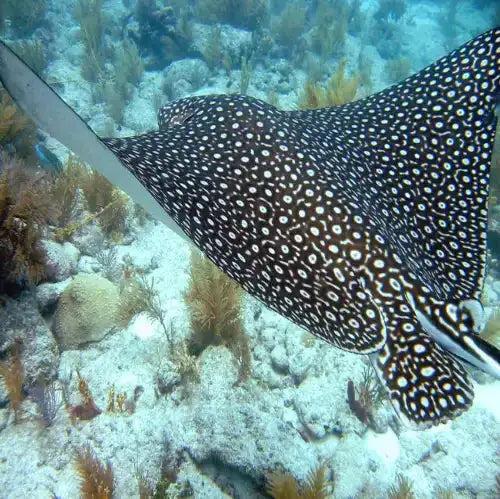
Unlike the shark experiences, eagle ray diving happens directly in Cozumel waters, which makes it the easiest special to add to a normal itinerary — provided the timing is right. The main season usually runs from December to March, with January and February generally the strongest months and March a good late-season possibility. Sightings still vary with weather, current, visibility and the year itself; they are never a fixture.
Open Water certification is the practical minimum, with Advanced Open Water or equivalent recommended for the northern sites, where current and depth ask more of a diver. Comfort with drift diving and steady buoyancy matter more here than the certification card, because the encounter depends on holding position and not chasing the animal.
Read the full eagle ray season guide
The Spanish Galleon and Cannons area
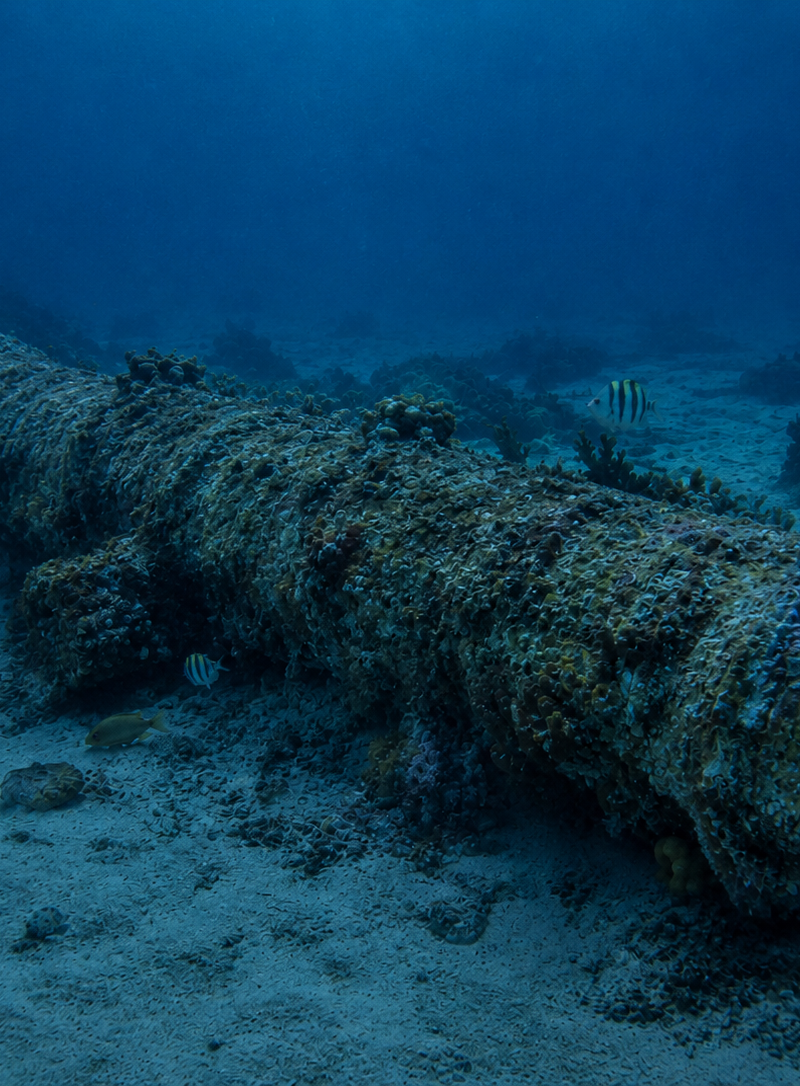
The island's most unusual special, and the least predictable. This is not a ship you swim around: the attraction is historic material scattered across the reef — cannons, anchors, cannonballs and colonial-era relics. One historic account connects the area with the San Francisco de Sales, also known as La Tetis, a merchant galleon reported to have foundered on Cozumel's windward side in April 1761 on a return voyage from Cartagena.
The site is associated with Cozumel's exposed east or north-east coast, away from the sheltered west-side marine park routes that carry almost all of the island's daily diving. That exposure is the whole planning problem: access depends on wind, waves, surge, current and boat conditions, and on many days it is simply not realistic. Advanced Open Water or equivalent is the sensible level, and it is not a treasure dive — the relics stay where they are.
Read the full Spanish Galleon dive guide
Specials that are mainland day trips
These three are genuinely available to divers based on Cozumel, but none of them happens on Cozumel's reefs. Each begins with the passenger ferry to Playa del Carmen, which usually takes around 45 minutes each way, and each should be planned as a half to full day rather than slotted between two reef dives.
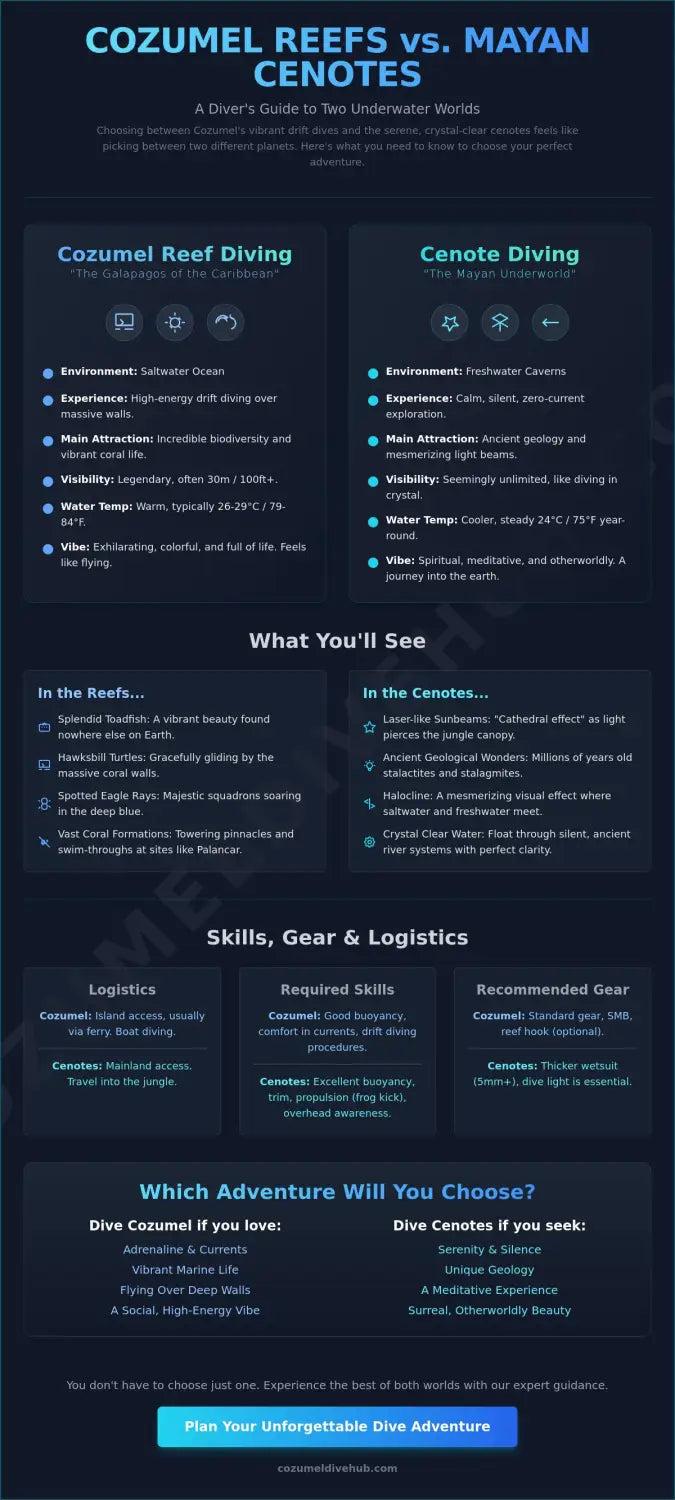
Cenote diving
Cozumel does have its own freshwater systems — Cenote Aerolito and Jade Cavern among them — but both are cave environments requiring cave or cavern certification, appropriate equipment and a guide who knows the system. They are not guided day-trip dives, and no reputable operator treats them as such. The cenotes that visiting divers picture are on the mainland, mainly around Playa del Carmen, Puerto Aventuras, Akumal and Tulum, reached by ferry and then by road.
The distinction that decides whether this trip is open to you is cavern versus cave. Cavern diving stays inside the natural light zone, with the surface reachable in a direct ascent along a permanent guideline, within recreational limits — around 30 metres / 100 feet maximum and no decompression. An Open Water certification plus a guide is enough for most cavern routes, though some operators prefer Advanced Open Water and many set a minimum number of logged dives. Cave diving goes beyond the light zone and requires dedicated cave training, redundant gas and redundant lights. It is not something to try on holiday.
Read the full cenote diving guide
Bull shark diving
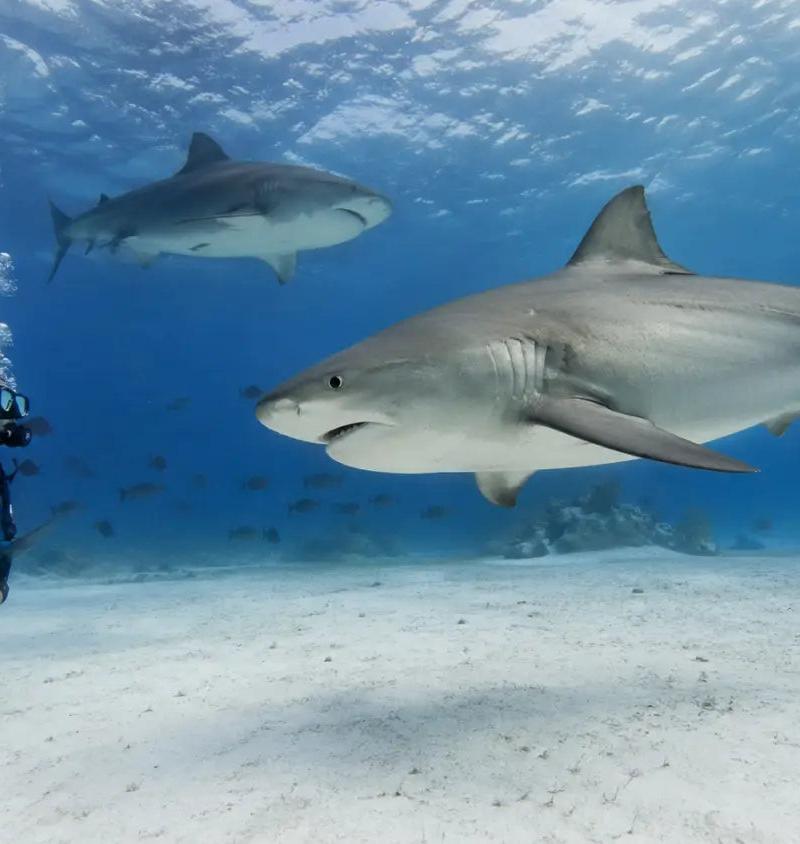
The bull shark encounter takes place off Playa del Carmen on the mainland side of the Riviera Maya, not on Cozumel's reefs, and it is a winter experience — the season usually runs from November to March. The dive itself is close to the Playa del Carmen coast, so the day is mostly ferry and transfer time rather than boat time.
It is also a different kind of diving from anything Cozumel does daily. Instead of drifting along a reef, divers typically descend to a sandy bottom and hold a controlled position while sharks pass in open water. Advanced Open Water or equivalent, recent diving experience, good buoyancy and calm around large animals are the realistic requirements; some operators will take experienced Open Water divers, but the higher level is the better benchmark.
Read the full bull shark diving guide
Whale shark tours
The one entry on this list that is not scuba diving at all. Whale shark encounters in this region are surface snorkelling tours, run from the mainland side around Cancún, Isla Mujeres and nearby offshore feeding areas, with the exact location shifting through the season with conditions and where the animals are being seen.
The season commonly runs from around May or June through September, depending on the operator, permits, conditions and the official seasonal rules in force that year. From Cozumel this is a full-day excursion: early ferry, land transfer, boat, and the same journey in reverse. Sightings are never guaranteed, which is the strongest argument for building flexibility into the trip rather than pinning it to the last day.
Read the full whale shark tour guide
Working out which one belongs in your trip
Three questions settle most of it. When are you here — eagle rays and bull sharks are winter, whale sharks are summer, and the C-53 is available year-round. How much of your trip can you give up — the three mainland experiences cost a whole day each, the island specials cost part of a morning. And how much diving have you done recently, because the mainland shark dive and the east-side cannons area both ask for more than a comfortable reef diver needs. If the reef diving itself is still the open question, the complete guide to scuba diving in Cozumel covers the everyday diving these specials are built around.
If that still leaves a choice, tell Cozumel Dive Hub what you want to see, what your certification level and recent experience look like, your travel dates, and anything that matters to you about how a trip is run — group size, language, pace, photography. We will point you to the right experience for those constraints and pass your enquiry to a suitable operator. The enquiry stays with us; you are not being sent off to canvass dive shops yourself.
Tell us what you want to dive