Cozumel Dive Shop Differences: What Actually Matters
The real differences between Cozumel dive shops: boat speed, group size, pier location, pricing, and guide ratios. Compare what matters for your dive trip.
Carmen Novelo · October 13, 2026
What Actually Differs Between Cozumel Dive Shops
Choosing a dive shop in Cozumel often feels like picking between dozens of nearly identical operators. The differences that genuinely affect your experience come down to six practical factors: boat type and speed, group size and guide ratios, pier location and pickup logistics, what is included in your quoted price, briefing language, and whether the shop owns or charters its boats. Most reputable shops follow similar safety standards, dive the same moorings, and operate under the same park rules.
Key Takeaways
- Reputable Cozumel dive shops meet similar safety and certification standards, but differ in logistical factors like boat speed, group size, and location.
- Boat speed determines access to distant southern sites; fast twin-engine boats offer more flexibility than single-engine alternatives.
- Small-group operators typically cap boats at six to twelve divers total; guide ratios and total boat capacity vary by operator.
- Pier location and pickup logistics affect your commute and convenience, especially if staying downtown versus at a resort.
- Price transparency matters—confirm whether your package includes marine park fees, gear, weights, tanks, and pier fees before booking.
Boat Type and Speed
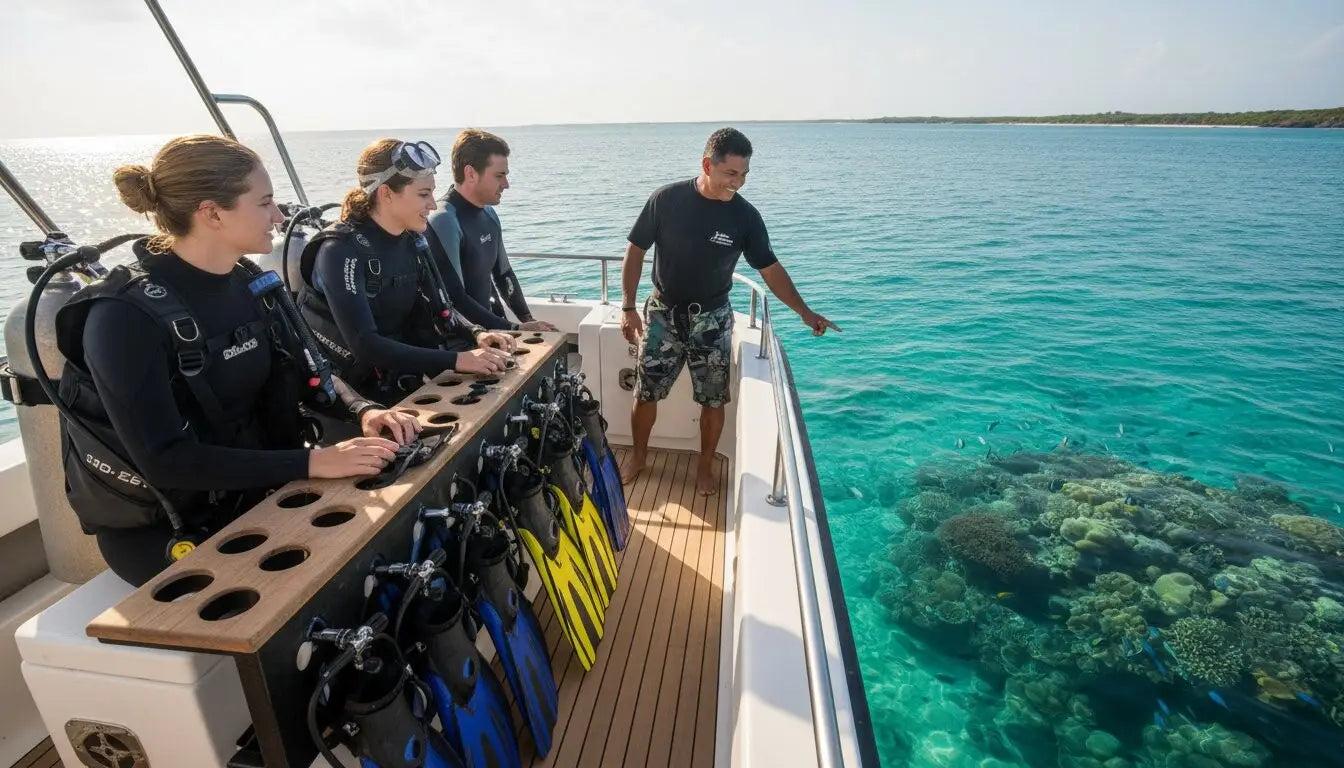
Boat speed determines which reef sites fit into a two-tank morning and how much time you spend transiting versus diving. The west coast of Cozumel hosts dive moorings spanning the island, from northern shallow-water sites down to southern wall dives like Punta Sur and Maracaibo. A fast boat with twin outboards can cover distance quickly and reach far-southern sites earlier in the day, leaving more bottom time. A slower single-engine boat typically spends more time in transit, which means fewer options for site rotation over a multi-day trip.
Speed matters most if your itinerary focuses on southern walls and deeper dives. Shops running high-horsepower twin engines can offer a broader variety of southern sites in a single week. Slower boats often run regular routes to established northern and mid-island reefs, which are excellent dives but limit site variety over repeated visits. For a one- or two-dive trip, boat speed is less critical—most visiting divers are satisfied with any healthy reef.
Owned vs Chartered Boats
Some shops own and maintain their own vessels; others charter boat space from independent captains or cooperatives. Shop ownership does not guarantee better service, but it does mean the operator controls scheduling, crew training, and maintenance standards. Shops with their own boats can adjust departure times, respond to weather changes, and enforce crew standards more directly. Chartered boats often run multiple groups from different shops, which can result in larger combined groups and less scheduling flexibility.
Both models exist successfully on the island. The key is whether the shop views the boat as part of the customer experience or just as logistics. When you book, ask whether the boat is exclusive to the shop or shared with other operators. If shared, ask how many total divers will be aboard and whether groups are kept separate or combined.
Maintenance standards matter more than ownership model. When comparing shops, pay attention to customer reviews mentioning boat condition, mechanical reliability, and captain professionalism rather than focusing solely on ownership structure.
Group Size and Guide Ratios
Group size shapes the quality of the dive experience. A guide managing four to six divers can monitor air consumption, buoyancy, and positioning without converting the dive into a logistics exercise. Smaller groups also mean less crowding at the mooring, calmer entries, and better chances for underwater photography or spotting small marine life. Larger groups work when appropriate guide ratios are maintained—two guides for twelve divers, for example—but the pace typically feels busier.
Some operators cap boats at six to eight divers total, running one or two guides. Others carry more divers per boat, split among multiple guides. Neither approach is inherently unsafe; the trade-off is economic and experiential. Small groups cost more per diver because overhead is spread across fewer customers. Larger groups offer lower per-person rates but require patience at the ladder and during briefings.
Guide Ratios and Diver Experience
When selecting a shop, ask about the maximum number of divers assigned to each guide and whether that ratio adjusts for mixed-ability groups. The ratio matters significantly when the group includes newer divers, divers with high air consumption, or divers attempting skills like underwater photography or compass navigation. A guide managing eight divers of mixed certification levels will spend more time on group management and less on the reef details that make a dive memorable.
If you are new to diving or uncomfortable in current, confirm group size and guide ratios when you book. Some operators separate groups by certification level or dive count, which keeps fast divers from waiting and slower divers from feeling rushed. If you are taking a Discover Scuba program or refresher dive, ask whether those divers train in a separate group or mix with certified divers on the same boat. Discover Scuba participants require dedicated instructor attention and should dive separately from recreational divers running an independent dive plan.
Your own experience level also affects how you perceive group size. An advanced diver comfortable with navigation and strong current may dive contentedly in a group of eight or ten. A newer diver or someone managing air consumption issues will feel more confident with four to six divers per guide. Be honest about your comfort level when evaluating group-size trade-offs against cost.
Pier Location and Pickup Logistics
Pier location affects your morning routine more than the dive itself. Cozumel's main departure points include Caleta marina, the international cruise pier area, Fonatur marina south of town, and several smaller docks along the west coast. Shops based at Caleta or the municipal pier near downtown San Miguel offer convenience for guests staying in town or cruise passengers. Shops based at southern marinas suit resort guests on that side of the island. A shop far from your hotel means a longer taxi commute each morning unless the operator offers boat pickup.
Some shops pick up divers by boat from hotel piers along the coast. This is convenient when available, but not all hotels permit commercial dive-boat docking, and some charge pier fees that may or may not be covered by your package. Confirm pickup arrangements and pier-fee responsibility when you book. If the shop says they will collect you from your hotel, ask whether your property charges a docking fee and who is responsible for paying it.
Downtown vs Resort Locations
Shops with street-front locations in downtown San Miguel cater to walk-in customers and cruise-ship visitors. Shops based at resort marinas or southern piers primarily serve hotel guests along the coast. Your lodging determines which location is more convenient. A shop office on a central street works well if you are staying at a downtown budget hotel; the same shop is inconvenient if you are at a resort three miles away and must taxi each morning.
Most shops transport your gear from their office to the boat, so you do not have to carry tanks and weights through town. Confirm whether gear transport is included in your package or whether you bring your kit to the marina yourself. Valet-service operators handle setup, rinse, and storage, which is genuine convenience when diving multiple days in a row.
Transit time also affects your personal schedule. A pier thirty minutes away by taxi means a 5 a.m. wakeup for a 7 a.m. boat departure. A five-minute walk or taxi ride means you can sleep another hour. For early-morning divers, pier proximity is worth a small price premium.
What Is Included in Your Price
Price transparency varies among Cozumel dive shops. Some operators quote an all-in price including tanks, weights, marine park fees, snacks, and beverages. Others quote a base rate and add charges at the dock for the park bracelet, pier access, nitrox, or gear rental. These differences can affect the total cost, so always confirm what is included before you commit.
Marine park fees are mandatory for diving within park boundaries, which covers most popular west-coast sites. Some shops include park fees in their package price; others collect them separately. Confirm the exact amount when you book. Pier fees are charged by some hotels and marinas when a dive boat uses their docks. These are separate from park fees and are not always disclosed up front. Request a complete breakdown of all charges before booking.
Gear Rental and Hidden Costs
Gear rental is usually priced separately unless you book a full package. A complete rental kit—BCD, regulator, wetsuit, mask, fins, computer—typically costs extra per day. If you own some gear but not all, ask whether the shop offers partial rentals. Nitrox fills are another common upcharge; confirm whether they are included or add cost per tank. The same applies to third dives, night dives, or specialty sites—always confirm what is included and what costs extra.
When comparing prices between shops, build a complete picture of total cost per dive. A shop quoting a lower base price but adding separate line items at checkout may actually be more expensive than a higher-quoted all-in operator. Request a written quote detailing every charge, including taxes if applicable. A professional shop will provide this without hesitation.
Cancellation and refund policies also affect effective cost. A nonrefundable booking at a lower rate is riskier than a slightly higher-priced booking with a reasonable cancellation window. If you are traveling during hurricane season or have flexible dates, ask about weather-delay policies. Some shops offer rescheduling credits for weather cancellations; others do not.
Briefing Language and Communication
Most Cozumel dive guides speak both Spanish and English. Many also speak German, French, or Italian, especially at shops catering to international visitors. Language is rarely a barrier for English-speaking divers, but it is worth confirming if you have specific communication needs or are traveling with divers who speak limited English. A guide who can brief and answer questions in your native language makes the experience smoother, especially for nervous or less-experienced divers.
Briefings typically cover the dive plan, entry and exit procedures, marine life to watch for, and hand signals. A quality briefing is clear, specific, and delivered at a pace allowing everyone time to ask questions. If you are new to drift diving or unfamiliar with Cozumel's current-based reef system, ask the guide to review the entry and pickup procedure before entry. Understanding the current direction and exit strategy is essential for confidence, especially on your first Cozumel dive.
Guide Experience and Local Knowledge
Guide experience is harder to evaluate online but shows in the details. A guide familiar with the reef can locate cleaning stations, identify camouflaged creatures, and adjust the dive plan based on conditions. If you care about marine life observation or underwater photography, mention your interests when you book and ask whether the shop can match you with a suitable guide. Most operators will try to accommodate requests if you ask in advance.
A well-informed guide also adapts to your group's interests in real time. If your group is interested in fish behavior, the guide may pause longer at cleaning stations. If someone is chasing a photo opportunity, the guide holds the group briefly to allow the shot. When reading reviews, look for comments about guide enthusiasm and attentiveness to individual diver interests.
What Remains Consistent Across Shops
Safety standards, equipment maintenance, and dive-site access are broadly similar across Cozumel's reputable operators. All shops operate under similar training-agency standards and follow the same marine park rules. Reef conditions and water temperature do not vary by shop. Equipment quality and vessel maintenance do vary, so review customer feedback specifically mentioning boat condition and gear function.
Dive Sites and Mooring Access
All operators use the same public moorings managed by the Cozumel National Marine Park. No shop has exclusive access to any reef. Site selection depends on current, weather, and diver experience, not on which shop you book. Some shops prefer certain reefs based on location or client interests, but that is routine preference, not access rights. If you want to dive a specific site, mention it when you book and confirm the shop includes it in their regular rotation. The marine park controls which sites are open on any day and may close moorings for maintenance.
Weather and current change day-to-day, and even hour-to-hour. A shop that promises a specific site as a guarantee is making a promise it cannot ethically keep. Professional operators reserve the right to modify the dive plan based on conditions on the morning of the dive. This flexibility keeps you safe and keeps the reef protected from dives conducted in unsafe conditions.
Sustainability and Reef-Safe Practices
Reef-safe practices should be standard, but enforcement varies. Every shop will brief divers not to touch coral, but not every guide actively corrects poor finning or stops divers from touching the reef. Shops that prioritize sustainability train guides to enforce buoyancy standards, brief divers on proper finning technique, and intervene when behavior threatens the reef.
Look for shops that participate in reef restoration programs or support marine park conservation efforts. These signal that the operator treats the reef as a resource to protect, not just a backdrop. If you see a guide allowing divers to touch, chase, or harass marine life, that is a red flag. A conscientious shop will address violations immediately to protect the reef.
As a visiting diver, you share responsibility for reef conservation. Before your dive trip, practice buoyancy control in confined water or a pool. Arrive at Cozumel already comfortable with your gear and confident in your positioning. This effort on your part makes every guide's job easier and every reef experience safer for the ecosystem.
Responsible Diving Practices
- Master neutral buoyancy before your trip; controlling your position in the water prevents accidental contact with coral and marine life.
- Follow current park sunscreen guidance; Cozumel National Marine Park guidance prohibits the use of sunscreen in park waters, including biodegradable and reef-safe formulations, so apply your sunscreen well before arrival and allow it to absorb completely, or wear protective clothing instead. Consult official park resources for the latest guidance.
- Stay with your guide and follow the dive plan; Cozumel's currents can be strong, and separation is a safety hazard.
- Never touch, chase, or feed marine life; handling animals stresses them and disrupts natural feeding and breeding behavior.
- Do not kneel or stand on the reef; even brief contact damages coral polyps and can take years to heal.
- Do not remove shells, sand, or coral; taking souvenirs is illegal under park regulations and harms the ecosystem.
- Use proper finning technique; avoid frog kicks near the seafloor and be aware of how your fins and equipment are positioned to avoid stirring sand or bumping coral.
Dive Certification and Skill Requirements
Most Cozumel dives require an Open Water certification or equivalent. Some shops offer Discover Scuba programs for beginners, and some welcome Advanced or Rescue-certified divers on technical or deep dives. When you book, provide your certification level, agency, and approximate dive count. This information helps the shop match you to the right group and guide.
If you are certified but have not dived in a year or more, consider booking a refresher dive or confined-water session before your ocean dives. Rusty buoyancy control and rusty memory of safety procedures can undermine your confidence and affect the group's experience. Most shops are happy to schedule a refresher and view it as an investment in safety and customer satisfaction.
Specialty certifications like Advanced Open Water, Nitrox, or Navigation are not required but are common. If you hold them, let the shop know—it may unlock access to deeper or more complex dives. If you are working toward a specialty certification, ask whether the shop offers training dives. Some operators run in-house certification programs; others refer you to dedicated dive schools.
Insurance, Medical Clearance, and DAN Membership
Travel insurance and dive-specific medical coverage are separate issues. Dive-accident insurance through organizations like the Divers Alert Network (DAN) covers emergency evacuation and hyperbaric treatment. Dive shops do not provide this insurance; it is your responsibility to secure it before traveling. DAN membership is recommended by many experienced divers.
Before diving, especially if you have any medical history—even minor conditions like asthma or ear issues—review medical guidelines published by training agencies and discuss your health with a physician familiar with diving medicine. Dive shops provide medical questionnaires and may ask about your health history. Answer honestly; shops are not trying to exclude you but to ensure your safety and the safety of your guide and group.
Some divers have underlying conditions that require medical clearance from a diving-familiar doctor before they can dive safely. This is not a shop's way of excluding you; it is a liability and safety measure. If you have questions about your medical eligibility, contact a diving medicine professional.
Pre-Trip Planning and Preparation
Preparation before your trip improves safety and enjoyment. Practice buoyancy control, review your skills, and ensure all your gear is functional and properly sized. If you are traveling with personal gear, have it inspected by a technician before you travel. Traveling with a regulator that has not been serviced in two years risks a malfunction underwater.
Book your shop at least two to four weeks before your trip. This gives you time to ask questions, understand what is included, and make payment arrangements. Last-minute bookings are possible, especially for single dives, but advance planning provides more flexibility and reduces the chance of your preferred departure time being unavailable.
Research weather patterns and seasonal conditions for your travel dates. Cozumel has calm water and excellent diving year-round, but current and visibility vary by season. Knowing what to expect helps you pack correctly and set realistic expectations for dive quality. If you are traveling during hurricane season, confirm the shop's weather-related cancellation and rescheduling policies.
Pre-Trip Checklist
Before you book, confirm the following with your chosen shop:
- What is the maximum group size, and how many divers per guide?
- Does the quoted price include marine park fees, tanks, weights, and pier fees?
- Where is the boat departure point, and do you offer hotel pickup?
- Is the boat owned by the shop or chartered, and how many total divers will be aboard?
- What language(s) do the guides speak fluently?
- Are nitrox fills included, or do they cost extra?
- What is the cancellation and refund policy?
- Do you provide gear rinse and storage between dive days?
These questions eliminate surprises and ensure the shop's model matches your expectations. A shop that answers clearly and completely is signaling professionalism; one that avoids direct answers is sending a different message.
Shop Types and Comparison
| Shop Type | Typical Capacity | Boat Configuration | Best For | Who This Isn't For |
|---|---|---|---|---|
| Small, Locally-Owned Shop | 6–8 divers per boat | Varies by operator | New divers, photographers, divers seeking personalized attention and reef-focused experience | Divers on tight schedules who need guaranteed fast southern-site access, or those looking for the lowest possible price |
| Fast Twin-Engine Operator | Varies by operator | Twin outboards | Divers targeting Punta Sur, Maracaibo, and Colombia Deep; repeat visitors wanting site variety over a week-long trip | Budget-conscious divers or those with limited mobility who prefer shorter boat rides |
| Large Resort-Based Operator | Higher capacity boats | Moderate to high speed | Cruise passengers with limited time, large groups, divers seeking convenience and resort amenities | Photographers, nervous divers, or anyone preferring small-group attention and a quieter reef experience |
| Charter/Shared Boat Model | Varies (mixed shops) | Varies | Budget-focused divers, casual visitors, those flexible on site selection | Divers wanting exclusive guide attention or specific site guarantees; groups that prefer not to combine with other shops |
Note that specific operators set their own maximum capacities, guide ratios, and equipment standards. Some operators cap boats at six divers; others may run larger configurations. Southern-site access may incur additional fees at some shops. Ask your chosen operator for their specific policies and capacities.
Seasonal Considerations and Planning
Cozumel diving is excellent year-round, but seasonality affects current, swell, and water conditions. Understanding these patterns helps you book with a shop equipped to handle the conditions you will encounter. Some shops specialize in the calmest periods; others thrive in high-current conditions and cater to advanced divers. Matching your skill level and comfort to the season and the shop's expertise is part of smart planning.
Seasonal patterns also affect pricing and availability. Popular vacation periods may have limited boat slots, while shoulder seasons often offer more flexibility and sometimes lower rates. If you have flexible travel dates, asking a shop about quiet seasons is a way to find personalized attention and potentially better value.
Building Relationships and Repeat Visits
If you enjoy your dive trip, return to the same shop on your next visit. Repeat customers often receive perks—priority booking, flexibility on group composition, or introductions to specific guides you connect with. Shops value regulars and often invest extra effort into their return customers. Over time, a good relationship with a local shop becomes invaluable; the staff learns your preferences, certifications, and comfort level, and they will advocate for your best interests on future dives.
The dive industry in Cozumel is relationship-based. Many shop owners and guides have worked the island for years and know each other professionally. If you recommend a friend to your trusted shop, that shop takes extra care because they value the trust you have placed in them. This informal network of relationships often results in better service and better diving than you would get from purely transactional bookings.
Our Recommendation
Match your dive priorities to the right shop type:
- If you want small groups and personalized service, look for operators capping boats at six to twelve divers total with low diver-to-guide ratios. Ask whether guides are trained in specific customer-service practices and whether the shop offers language options matching your needs.
- If you want to dive the southern walls, prioritize shops running fast twin-engine boats that access Punta Sur and Maracaibo reliably. Confirm that the operator dives southern sites regularly and ask whether surcharges apply for distant sites.
- If you are staying downtown, choose a shop with a Caleta or central-pier departure to minimize commute time. Factor in your wakeup time and whether you prefer to sleep in or start early.
- If you are budget-conscious, confirm exactly what is included—marine park fees, gear, tanks, and nitrox charges add up quickly. Request a detailed written quote and compare total cost across shops, not just the headline price.
- If you are a new or nervous diver, ask about guide ratios, language fluency, and whether beginner groups train separately from certified divers. A small-group shop with guides trained in nervous-diver psychology is worth paying extra for.
- If you are a repeat visitor or planning a week-long trip, establish a relationship with a shop that can customize your itinerary over multiple days, rotate you through the reef sites that match your interests, and recognize your preferences from one visit to the next.
The differences between Cozumel dive shops are real and meaningful, but they are logistical rather than philosophical. Understanding these six factors makes choosing the right operator straightforward and ensures your dive trip matches your expectations and priorities.
Related on Cozumel Dive Hub
Dive sites:
More reading:
- How to Choose a Cozumel Dive Shop: An Independent 2026 Guide
- Diver Medical Form Cozumel: Conditions & Physician Clearance
Trusted resources: PADI, SSI, and DAN (Divers Alert Network).
Frequently Asked Questions
What is the most important factor when choosing a Cozumel dive shop?
Do all Cozumel dive shops charge the same marine park fees?
How do I know if a dive shop owns or charters its boats?
What is a reasonable group size for a Cozumel drift dive?
Can I use reef-safe sunscreen when diving in Cozumel?
What should I do if I have not dived in over a year?
Do I need dive insurance for Cozumel?
How far in advance should I book a Cozumel dive shop?
Share This Article
Carmen Novelo