How to Choose a Cozumel Dive Shop: An Independent 2026 Guide
Seventy dive centers, no commission, and the six checks that separate a great week of diving from a crowded one. An honest guide to picking the right Cozumel operator for the diver you actually are.
Carmen Novelo · March 3, 2026 · 7 min read
There are dozens of dive centers on an island of about 90,000 people. They are not interchangeable, and the difference between the right one and the wrong one is the difference between a week you talk about for years and a week you spend queuing on a crowded deck.
This guide is written by an independent Cozumel guide. No operator pays to appear here, and our contacts on the island open up rates and deals that are not advertised — so what follows is the honest version, including the parts operators would rather you didn’t ask about.
The One Number That Predicts Your Whole Trip
Ask a single question before anything else: how many divers per guide?
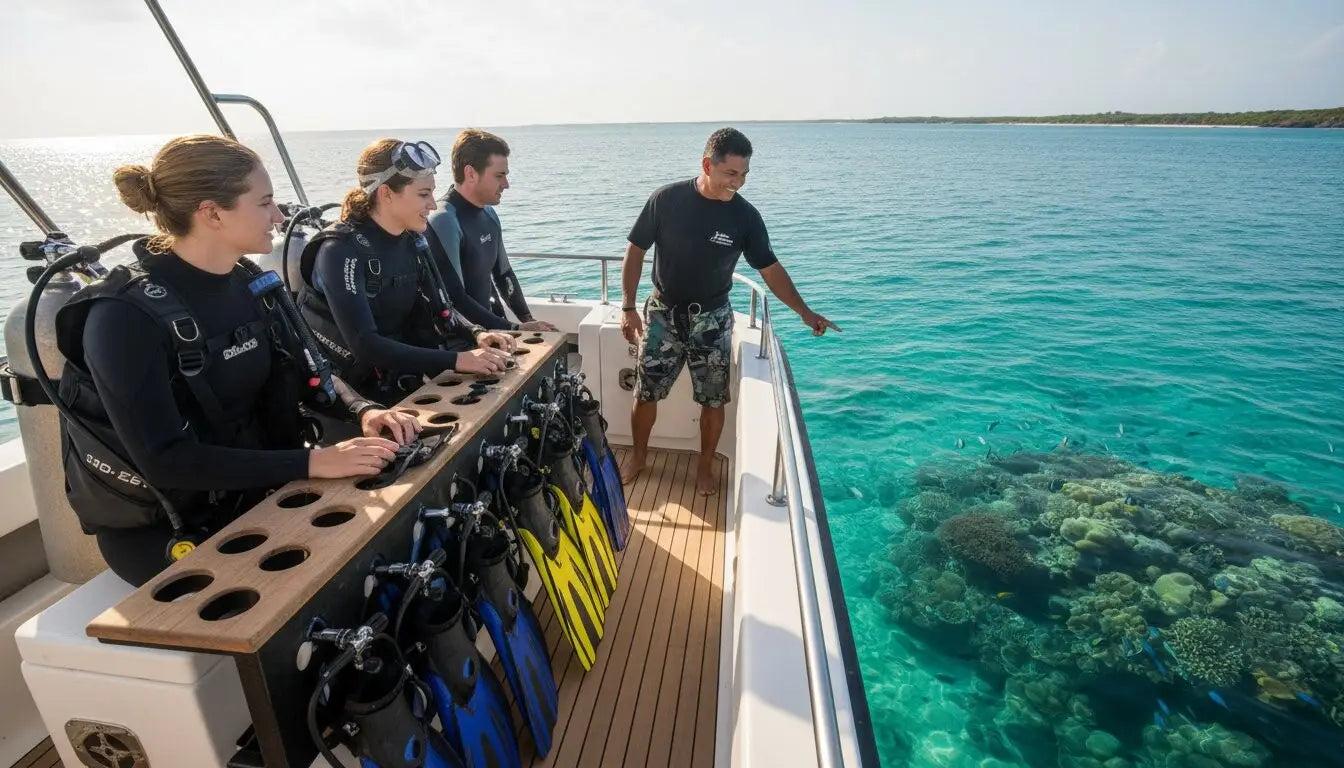
Everything else follows from it. A guide with four to six divers can watch your buoyancy, point out a splendid toadfish tucked under a coral head, notice you are breathing fast before it becomes a problem, and adjust the dive to the group. A guide with twelve is doing crowd control.
Group size also decides your bottom time. On a large boat the dive ends when the first person hits their reserve. If you are a moderate breather in a group of fourteen, you will surface with 70 bar still in your tank, every single dive, for a week. Small owner-run outfits are where the opposite happens — Sharky's Scuba runs fast small boats and advertises bottom times past sixty minutes.
What good looks like: 4–6 divers per guide, stated on the website without you having to ask.
What to walk away from: an operator who will not give a number, or answers "it depends".
Cozumel’s Specific Problem: The Cruise Schedule
Cozumel takes several million cruise passengers a year. That creates real pressure on some operators to run high-volume, fixed-schedule trips built around ships docking and departing — not around diving.
You can spot these easily. They cluster around the International Pier and Puerta Maya. Departures are timed to ship arrivals rather than conditions. And the dive gets cut short because the boat must be back before all-aboard, regardless of your air.
None of this makes them dishonest. It makes them optimised for a different customer. If you are staying on the island for a week, you are not that customer.
The independent-operator advantage is real: they pick sites based on the morning’s current and their group’s skill, not a timetable.
The Kiosk Problem
The stands along the waterfront are sales operations. The person selling you a dive has usually never dived with the outfit they are booking you onto, and earns a commission that comes out of either your price or the operator’s margin — which means quality.
This is not a Cozumel-specific scam; it is how commissioned travel sales work everywhere. But it does mean the pier is the worst place to book a dive, and you will almost always do better contacting a center directly.
Six Checks Before You Pay
They take about ten minutes and they filter out most of the risk.
1. Certification agency status. PADI, SSI and other WRSTC-member agencies all produce competent divers — the agency matters far less than the instructor. What matters is that the center is a current, listed member. Both PADI and SSI publish searchable dive-center directories.
2. They ask about you. A good operator asks your certification level, your last dive date and your logged dive count before taking your money. One that does not ask is not screening for safety.
3. Marine park fee transparency. Entry to Parque Nacional Arrecifes de Cozumel carries a mandatory daily fee, paid by every diver and snorkeller. A straight operator either includes it in the quoted price or states it clearly as a separate government charge. Vagueness here predicts vagueness elsewhere.
4. What is actually included. Tanks, weights and marine park fees are usually included. Full equipment rental, nitrox and private guiding usually are not. Get the total, in writing, before you commit.
5. Tank inspection dates. Every cylinder carries a visual inspection sticker. Look at one. A current date means the center maintains its kit on schedule; an expired one tells you what you need to know about everything you cannot see.
6. Emergency oxygen on the boat. Ask whether the boat carries emergency oxygen and whether the crew is trained to use it. Cozumel has a hyperbaric chamber, and any competent operator will answer this instantly and without irritation.
Matching the Operator to the Diver You Actually Are
This is where most people go wrong — not by picking a bad center, but by picking a good center that is not right for them.
Newly certified, or diving after a long break. You want small groups, patient guiding and shallow to mid-depth reefs — Paradise, Yucab, Chankanaab. Ask specifically whether they run a refresher. Do not let anyone talk you onto Punta Sur in your first few dives.
Experienced and current. You want an operator running the southern sites — Palancar, Colombia Deep, Punta Sur, Maracaibo — with a fast boat, because those sites are a long run from town and a slow boat eats your day.
Underwater photographer. Small groups are non-negotiable; you need permission to hang back. Ask directly whether the guide is comfortable with a photographer working at their own pace.
Nervous, or bringing a nervous partner. Look for centers that advertise private guiding. The extra cost buys a guide whose only job is your comfort, and it is the best money you will spend.
Technical or overhead-environment diving. A short list of Cozumel operators run tec, and Riviera Maya cenote and cave diving is a separate discipline requiring separate training. General recreational centers should be referring you on, not selling you a cave dive.
What Cozumel Diving Actually Costs
Prices move with season and operator, but the shape is consistent.
| Dive | Typical price (USD) |
|---|---|
| Two-tank boat dive | $120–$180 |
| Single afternoon dive | $60–$90 |
| Night dive | $70–$110 |
| Discover Scuba (no certification) | $150–$200 |
| Open Water course (PADI or SSI) | $450–$650 |
| Multi-day package (5–6 days) | Best per-dive rate |
| Private charter | Quoted per boat |
Indicative only — confirm current pricing with the operator.
Two things worth knowing. Multi-day packages drop the per-dive rate substantially, so if you are diving more than twice, ask. And the cheapest quote on the island is cheap for a reason that will become apparent somewhere between the boat ramp and the safety stop.
Drift Diving Changes the Calculation
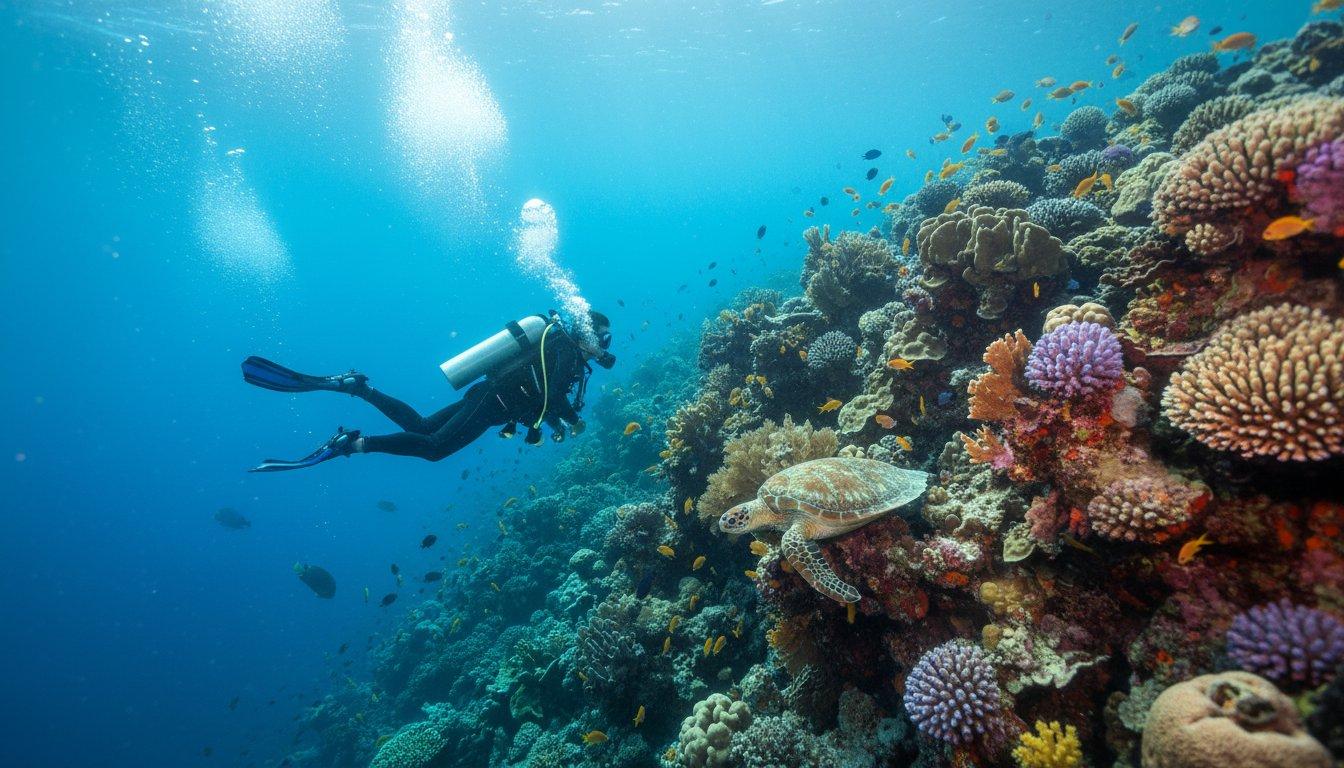
Almost all Cozumel diving is drift diving. The current runs south to north along the west coast, you enter, and it carries you. It is the reason the reefs are as healthy as they are, and it is genuinely one of the great diving experiences anywhere.
It also means the guide’s judgement matters more than it would elsewhere. They are reading current strength and direction, keeping a group together in moving water, and deciding whether today’s conditions suit today’s divers. A guide who checks the current before dropping a group is doing the job. One who follows a fixed schedule regardless is not.
If you have never drifted before, say so. A good guide will brief you properly and put you somewhere forgiving.
When Something Feels Wrong
Trust the feeling. If the boat is overloaded, the briefing is perfunctory, the gear looks tired, or nobody asked to see your certification card — you are allowed to not get in the water. You will lose the cost of one dive. The alternative is worse.
A center that skips certification checks is skipping other things too. That one is not a preference. It is a line.
How to Book
Contact the center directly. Email or WhatsApp, tell them your dates, your certification level, when you last dived, how many people and what you want to see. A good operator will answer with a real plan rather than a payment link.
Book ahead for December through March — that is peak season and the best operators fill up. May through September is quieter, warmer and often cheaper, with excellent conditions.
You can compare every Cozumel dive center here, or tell us your dates and experience level and we will point you at the right ones. We take no commission and add nothing to the price.
Frequently Asked Questions
How many divers per guide should a Cozumel dive shop have?
Is it cheaper to book a Cozumel dive at the pier?
Do I have to pay the Cozumel marine park fee separately?
How much does a two-tank boat dive cost in Cozumel?
Is PADI or SSI better for diving in Cozumel?
What should I ask a Cozumel dive shop before booking?
Is Cozumel diving suitable for beginners?
When is the best time to book a Cozumel dive trip?
What should I be careful of when booking diving in Cozumel?
Which is better for scuba diving, Cancun or Cozumel?
Share This Article

Carmen Novelo
Carmen Novelo is a Cozumel native and an active scuba instructor and dive guide on the island. She has spent twelve years diving the Cozumel reef system, and writes about its dive sites, conditions and marine life for Cozumel Dive Hub.