Clown Wrasse in Cozumel
Clown Wrasse (Halichoeres maculipinna) in Cozumel: how to identify it, where it is reliably seen, and what it is commonly confused with.
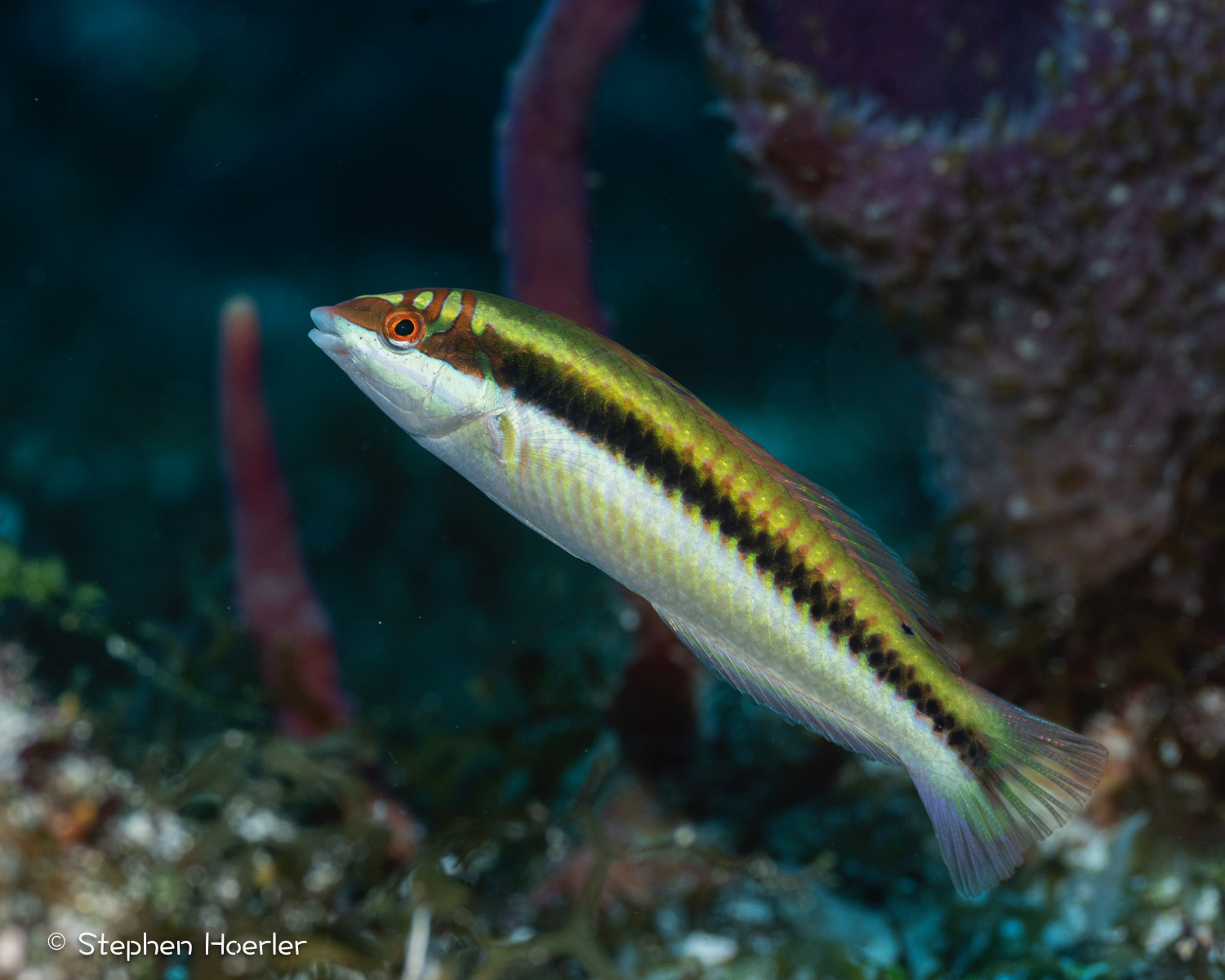
A fast, restless little wrasse that never stops moving — green above, white below, with a black blotch mid-flank and red-orange markings on the head that change with age.
Quick ID
| Scientific name | Halichoeres maculipinna |
|---|---|
| Group | Colourful Reef Fish |
| Typical size | Up to 18 cm |
| Depth range | 2–30 m |
| When to see it | Year-round |
| Active | Day |
| Conservation status | Least Concern |
How To Identify It
Terminal males are green with a dark mid-body blotch and orange head markings. Initial-phase fish are paler with a black stripe and a dark spot. It swims with a rowing motion of the pectoral fins.
Where You Will See It In Cozumel
Clown Wrasse works the 6 to 98 foot band. On this island that means the sheltered west-coast reefs, and the shallow east-side entries when the sea is flat — these are the sites where the depth and the habitat line up for it.
Without a boat. It is worth looking for at El Islote, El Mirador and El Presidente — all shore entries, so you dive them on your own schedule.
On an ordinary beginner boat dive. It should be within reach at San Clemente, Yellow House, Yucab, Casa Blanca and Chankanaab Bolones. No advanced certification needed.
Deeper, and on the walls. It is also plausible on Santa Rosa Wall, Tormentos, Villa Blanca Wall and Barracuda Reef.
Conditions change the odds more than the site does — the current, the time of day and how much the group has already stirred up the sand. Ask your guide what they have been seeing that week.
Behaviour
Hunts small invertebrates over the bottom, flipping rubble and inspecting crevices. Like other wrasses it changes sex — initial-phase fish can become terminal males — and it buries itself in sand to sleep.
Commonly Confused With
- Yellowhead wrasse — Yellow head and no mid-body blotch.
- Slippery dick — Two lateral stripes and a more uniform pale body.
- Puddingwife — Much larger and heavier-bodied.
Diving Etiquette And Safety
Keep fins off the reef and hands to yourself. Nothing here needs to be touched, moved or provoked to be seen well.
Part of the Cozumel marine life guide · see Cozumel dive sites · plan your Cozumel dive trip
Photo © Stephen Hoerler, courtesy of the Cozumel Coral Reef Restoration Program, used with permission.
Clown Wrasse Photos
Frequently Asked Questions
Do clown wrasse sleep in the sand?
Why does the clown wrasse look different on different dives?
How big do clown wrasse get?
Diving Cozumel soon?
Tell us your dates — we'll send options and connect you with the right dive shop.