Cozumel Dive Sites: Every Reef, Ranked by Depth and Skill
Cozumel has more than 40 named dive sites and a week gets you eight to twelve tanks, so the real question is which four or five to ask for by name. Paradise and Palancar Gardens to start, Santa Rosa Wall and Colombia Deep once you are advanced.
Cozumel has more than 40 named dive sites and a week of diving gets you eight to twelve tanks, so the useful question is not which reef is best but which four or five you should ask for by name. For the wider picture — operators, courses, conditions and costs — start with our complete guide to diving Cozumel. As a new Open Water diver, ask for Paradise Reef (30–40 ft) and Palancar Gardens (30–80 ft). Once you are confident, ask for Paso del Cedral (45–100 ft) and Palancar Horseshoe (50–110 ft). With Advanced and recent deep drift experience, ask for Santa Rosa Wall (50–120 ft) and Colombia Deep (60–120 ft). Everything else on the island is a variation on those four profiles.
This is the opinionated version. If you want the full catalogue with depth, current, skill level and marine life for every reef, that lives on the Cozumel dive sites index and the 43-reef overview. What follows is a shorter list: the sites worth spending one of your limited tanks on, and who each one is actually for.
The One-Line Answer By Diver Type
| If you are | Ask for | Depth | Skip for now |
|---|---|---|---|
| Doing your first ocean dives | Paradise, Chankanaab | 30–40 ft | Anything described as a wall |
| Newly Open Water certified | Palancar Gardens, La Francesa | 30–80 ft | Punta Sur, Barracuda |
| Open Water, ten-plus dives, comfortable | Paso del Cedral, Tormentos, Palancar Horseshoe | 45–110 ft | The far northern reefs |
| Advanced certified | Santa Rosa Wall, Palancar Caves, Colombia Deep | 50–120 ft | Devil's Throat on day one |
| Advanced with recent deep dives | Punta Sur, Devil's Throat, Maracaibo | 70–150 ft | Nothing, but check the day's current |
| Shooting photos | Yucab, Columbia Shallows, Palancar Gardens | 30–80 ft | Deep drift sites with fast water |
| After a wreck | C-53 Felipe Xicoténcatl | 40–55 ft | It is the only wreck here |
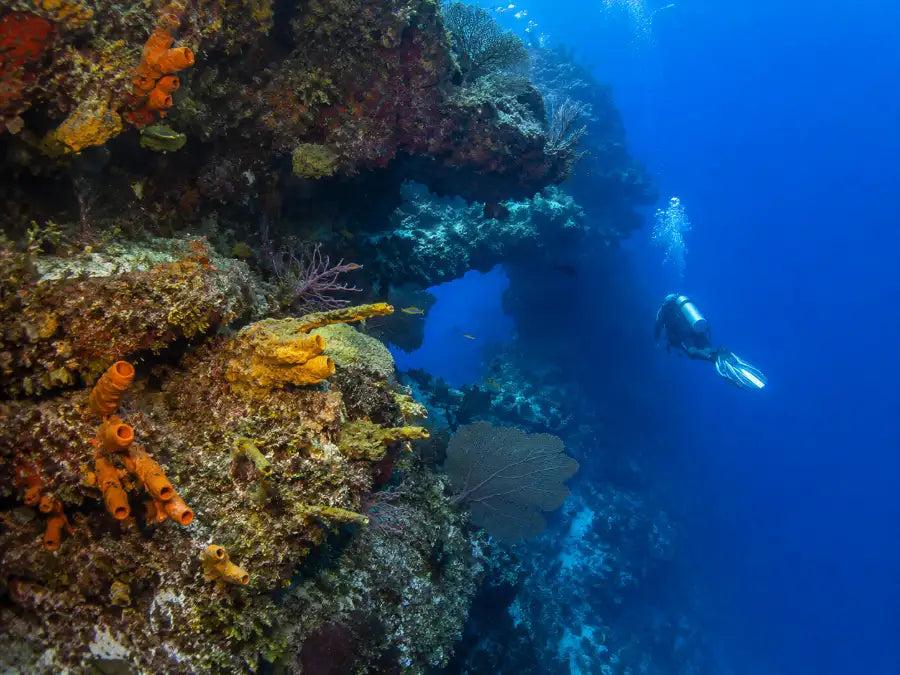
Cozumel's west-coast reefs run north to south, and where a site sits on that line predicts most of its character.
Why Position On The Island Matters More Than Reputation
Almost every Cozumel dive is a drift dive on the sheltered west coast inside the national marine park. The current runs broadly south to north and carries you along the reef while the boat follows. That single fact reshuffles the usual assumptions.
The one worth correcting first: northern does not mean sheltered. The far northern reefs — Barracuda Reef (45–80 ft) and San Juan (40–80 ft) — carry the strongest current on the island, listed as strong to very strong. They are not shallow-and-easy because they sit at the top of the map. They are the two sites most operators quietly leave off the schedule.
The reefs that are genuinely forgiving are the mid-island ones — Paradise, Chankanaab, Las Palmas, San Clemente. They sit closest to town, they are shallow, and the water over them is usually the mildest you will find.
| Stretch of coast | Representative sites | Typical depth | Current | Honest read |
|---|---|---|---|---|
| Far north | Barracuda Reef, San Juan | 40–80 ft | Strong to very strong | Genuinely committing, not a badge |
| North of town | Cantarel, Molas Shallow | 20–90 ft | Mild to strong | Seasonal, condition-dependent |
| Mid-island | Paradise, Chankanaab, Las Palmas | 30–70 ft | Mild to moderate | The actual beginner reefs |
| Mid-south | Tormentos, Yucab, Paso del Cedral | 45–100 ft | Moderate | The island's most consistent diving |
| South | Palancar, Colombia, Santa Rosa | 30–120 ft | Mild to strong | Deeper, more dramatic, longer ride |
| Far south | Punta Sur, Maracaibo, Chun-Chacaab | 70–150 ft | Moderate to strong | Advanced only, weather permitting |
| East coast | Chen Rio, Punta Morena | 10–25 ft | Mild to moderate | Exposed, rarely dived, never combined with west-coast trips |
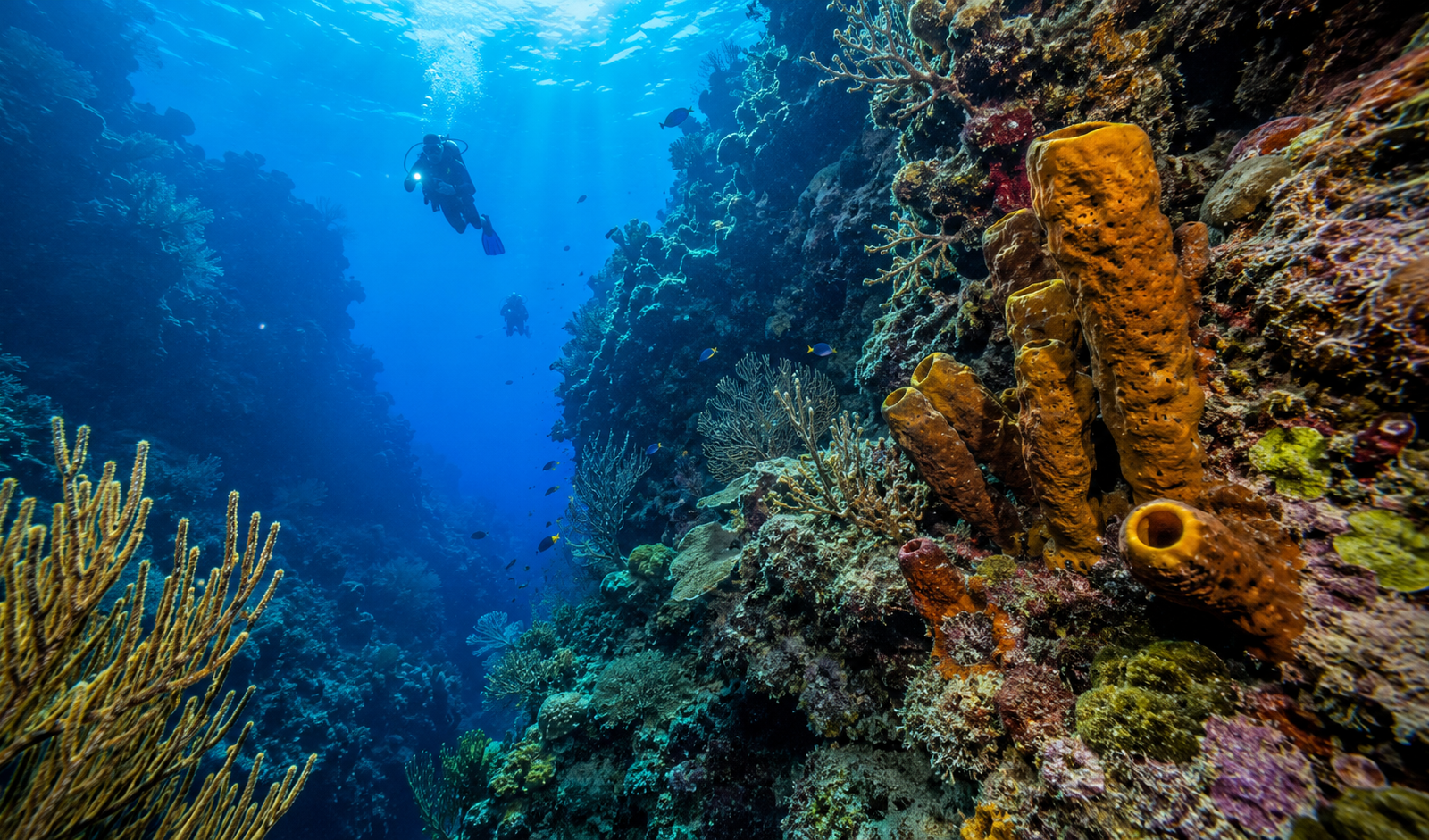
Site character in Cozumel is set by depth, current and structure — not by which name is most famous.
To see how the sites are laid out along the coast, use this map:
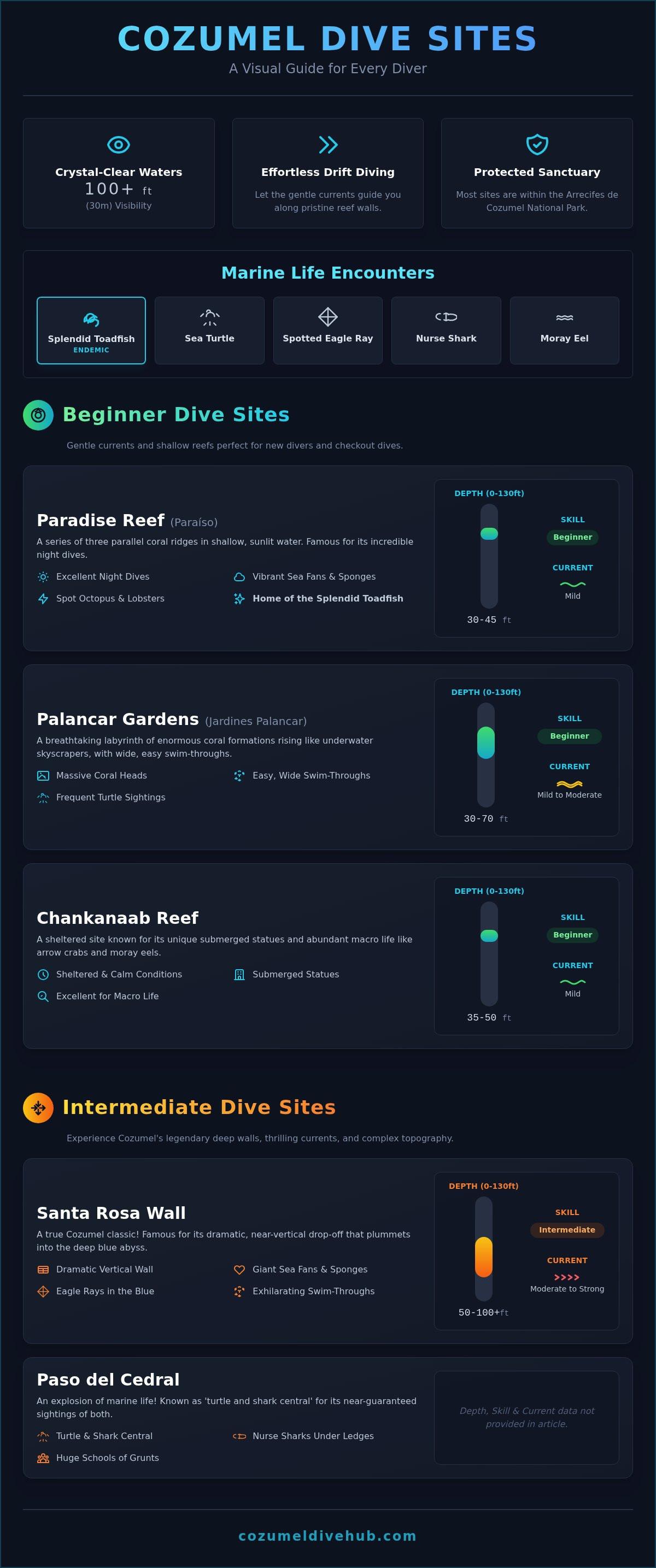
The locations of Cozumel's dive sites along the island's sheltered west coast.
Which Sites Suit A First-Time Or Nervous Diver?
If these are your first ocean dives, or your first in several years, the goal is a shallow reef with mild water and enough to look at that you forget to be tense. Three sites do that job well.
Paradise Reef — 30 to 40 ft, mild to moderate current, close to town. It is the island's default first dive for good reason: the profile is shallow enough that gas lasts, the coral heads are low and easy to hold position over, and the marine life list runs to green moray, nurse shark, seahorse and queen angelfish. It is also the standard night-dive site.
Chankanaab Reef — 35 to 40 ft, mild to moderate, and one of the few sites with genuine shore access. The species count here is one of the highest on the island, including the endemic splendid toadfish. Note that Chankanaab Bolones is a separate site at the same depth with moderate to strong current — ask which one the boat is running.
San Clemente — 30 to 40 ft and the only west-coast site listed as mild current outright. Quiet, low-drama, and rarely on a printed itinerary, which is exactly why it is worth requesting.
For a shore-based warm-up before a boat trip, Money Bar (10–20 ft), Playa Corona (20–40 ft) and Tikkila Shallow (15–30 ft) all let you sort weighting and buoyancy without a boat schedule. Every site on the island at 60 ft or shallower is listed in the next section.
Which Cozumel Sites Give You The Longest Bottom Times?
The shallow reefs are not a consolation prize for divers who cannot go deep. They are the profiles that put the most minutes in the water, and across a week of two-tank mornings that difference adds up to whole dives.
The mechanism is pressure, not skill. At 33 ft you breathe gas at two atmospheres; at 99 ft you breathe it at four. A diver whose breathing rate never changes still empties a tank roughly twice as fast at 99 ft as at 33 ft. Above about 60 ft the no-decompression limit also stops being the binding constraint — the tank runs out before the computer does — so the dive ends when you decide it ends. In practice a shallow reef gives a comfortable 55 to 70 minutes where a deep wall gives 35 to 45. Air consumption is also the thing that improves fastest with experience, so the shallow sites are where a nervous or newly certified diver notices progress soonest.
Light works the same way. Water absorbs the red end of the spectrum first, and by the time you are on a wall at 90 ft the coral reads grey-blue to the eye and to a camera without strobes. In the top 20 to 30 ft enough red survives that available-light photography still carries colour, which is why the photographic shortlist and the long-bottom-time shortlist point at the same reefs.
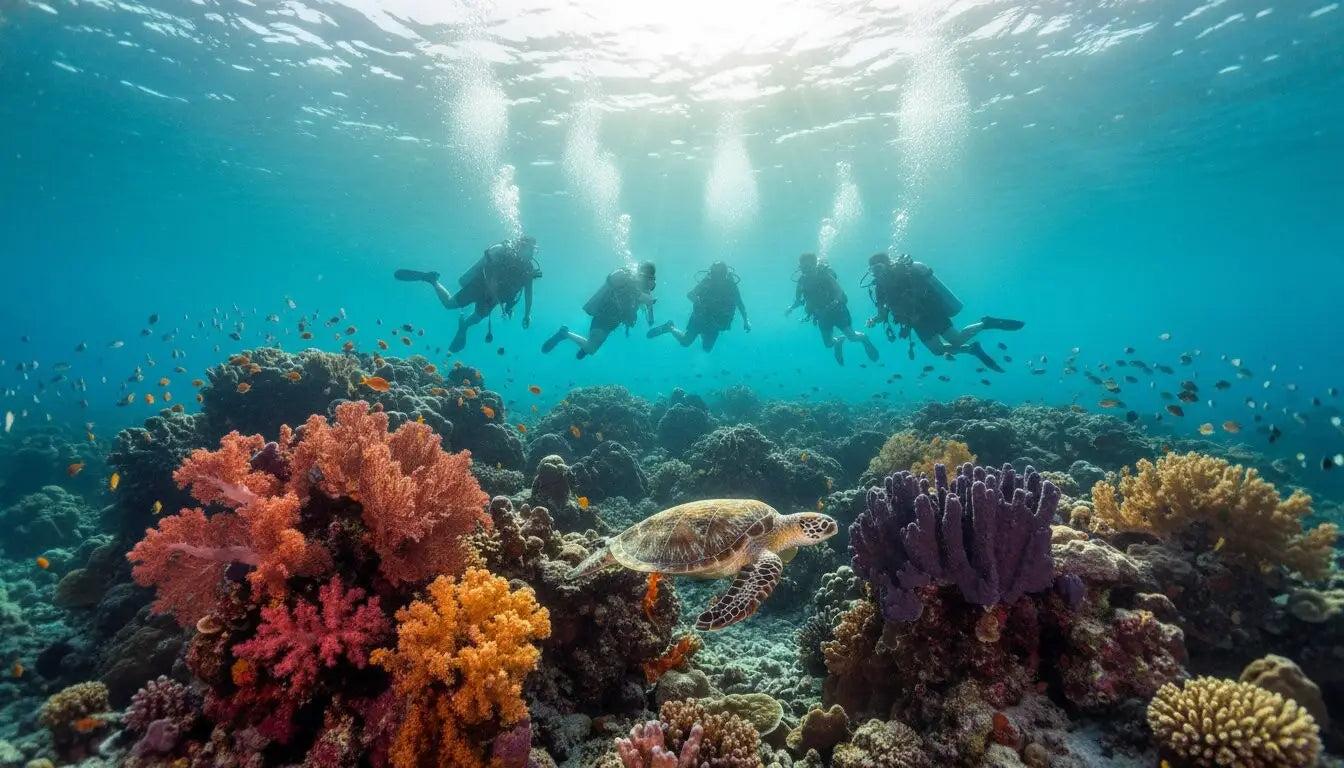
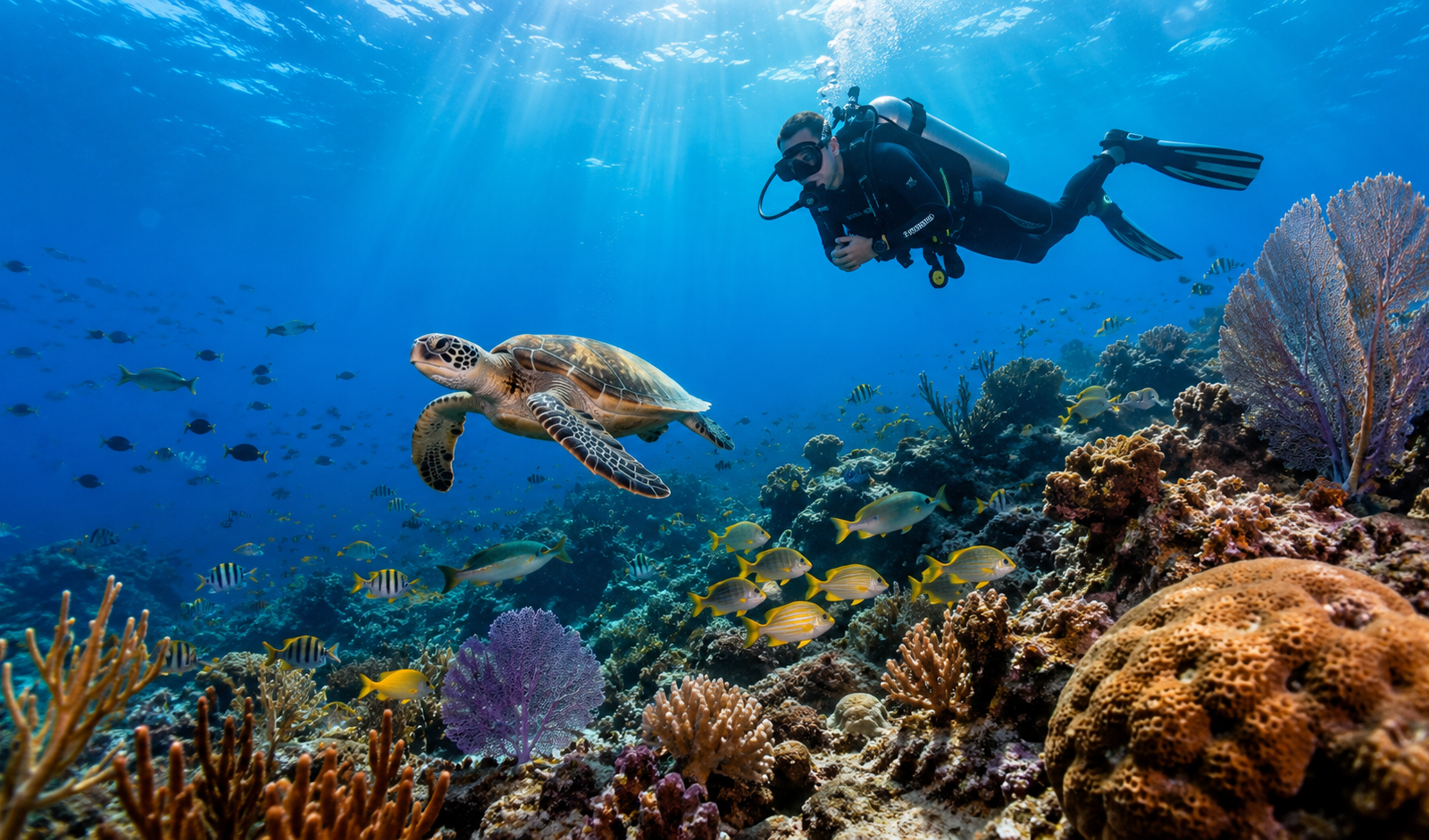
Shallow profiles hold their colour in daylight and let the tank, rather than the computer, end the dive.
Every Cozumel dive site listed at 60 ft or shallower
| Site | Depth | Skill level | Current |
|---|---|---|---|
| Molas Shallow | 20–40 ft | Beginner | Moderate to strong |
| Casa Blanca | 30–60 ft | Beginner | Mild to moderate |
| Coral Princess | 10–20 ft | Beginner | Mild to moderate |
| Paradise Reef | 30–40 ft | Beginner | Mild to moderate |
| Chankanaab | 35–40 ft | Beginner | Mild to moderate |
| Chankanaab Bolones | 35–40 ft | Beginner | Moderate to strong |
| C-53 Wreck | 40–55 ft | Intermediate | Moderate |
| Playa Corona | 20–40 ft | Beginner | Mild to moderate |
| Tikkila Shallow | 15–30 ft | Beginner | Mild to moderate |
| Money Bar | 10–20 ft | Beginner | Mild to moderate |
| Tormentos | 50–60 ft | Intermediate | Moderate |
| Yucab | 50–60 ft | Beginner | Moderate to strong |
| San Clemente | 30–40 ft | Beginner | Mild |
| Yellow House | 35–50 ft | Beginner | Mild to moderate |
| La Francesa | 30–60 ft | Beginner | Mild to moderate |
| Punta Dalila | 40–60 ft | Beginner | Moderate to strong |
| Columbia Shallows | 30–50 ft | Beginner | Moderate to strong |
| El Cielo | 5–15 ft | Beginner | Mild to moderate |
| El Islote | 10–25 ft | Beginner | Mild to moderate |
| Chen Rio | 10–25 ft | Beginner | Mild to moderate |
| El Mirador | 10–25 ft | Beginner | Mild to moderate |
| Punta Morena | 10–25 ft | Beginner | Mild to moderate |
Four of those — El Islote, Chen Rio, El Mirador and Punta Morena — sit on the east coast and are almost never run. Money Bar, Playa Corona and Tikkila Shallow are the shore entries. El Cielo is a sand flat rather than a reef. That leaves roughly a dozen shallow west-coast reefs a boat will actually take you to.
The caveat is the one that catches people out: shallow does not mean mild. Columbia Shallows, Punta Dalila, Molas Shallow, Chankanaab Bolones and Yucab are all listed moderate to strong. If you want depth and calm water together, San Clemente is the only west-coast site listed mild outright, with Paradise, Chankanaab, Yellow House and La Francesa close behind.
Which Sites Should A New Open Water Diver Ask For?
This is the group most likely to be undersold. A freshly certified diver in Cozumel is often kept on the same two shallow reefs all week, when the reality is that several of the island's signature sites are rated beginner.
Palancar Gardens is the one to insist on. It runs 30 to 80 ft with mild to moderate current and is rated beginner in every listing on this site. It carries the Palancar name, the coral formations are the ones in every photograph of Cozumel, and the marine life list is the longest of the Palancar sections — reef shark, octopus, southern stingray, spotted eagle ray, sea fan. There is no good reason a comfortable new diver should leave the island without it. If you are weighing it against its neighbour, the Gardens versus Horseshoe comparison breaks down the difference.
La Francesa — 30 to 60 ft, mild to moderate, beginner-rated, and genuinely underdived because it sits next to Palancar and loses the schedule to it. Thirteen species on the listing, including southern stingray and splendid toadfish.
Yellow House — 35 to 50 ft, mild to moderate. A quiet mid-south reef that almost nobody requests.
Yucab — 50 to 60 ft, beginner-rated but with moderate to strong current. This is the one to be honest with yourself about. The depth is easy; the water is not always. It is one of the better sites on the island for spotting the splendid toadfish under coral ledges, which is why photographers keep going back.
Two more beginner-rated sites deserve a caveat rather than a recommendation. Columbia Shallows (30–50 ft) and Punta Dalila (40–60 ft) are both listed moderate to strong. Shallow does not mean slow in Cozumel, and a beginner rating here describes the depth and the structure, not the speed of the water.
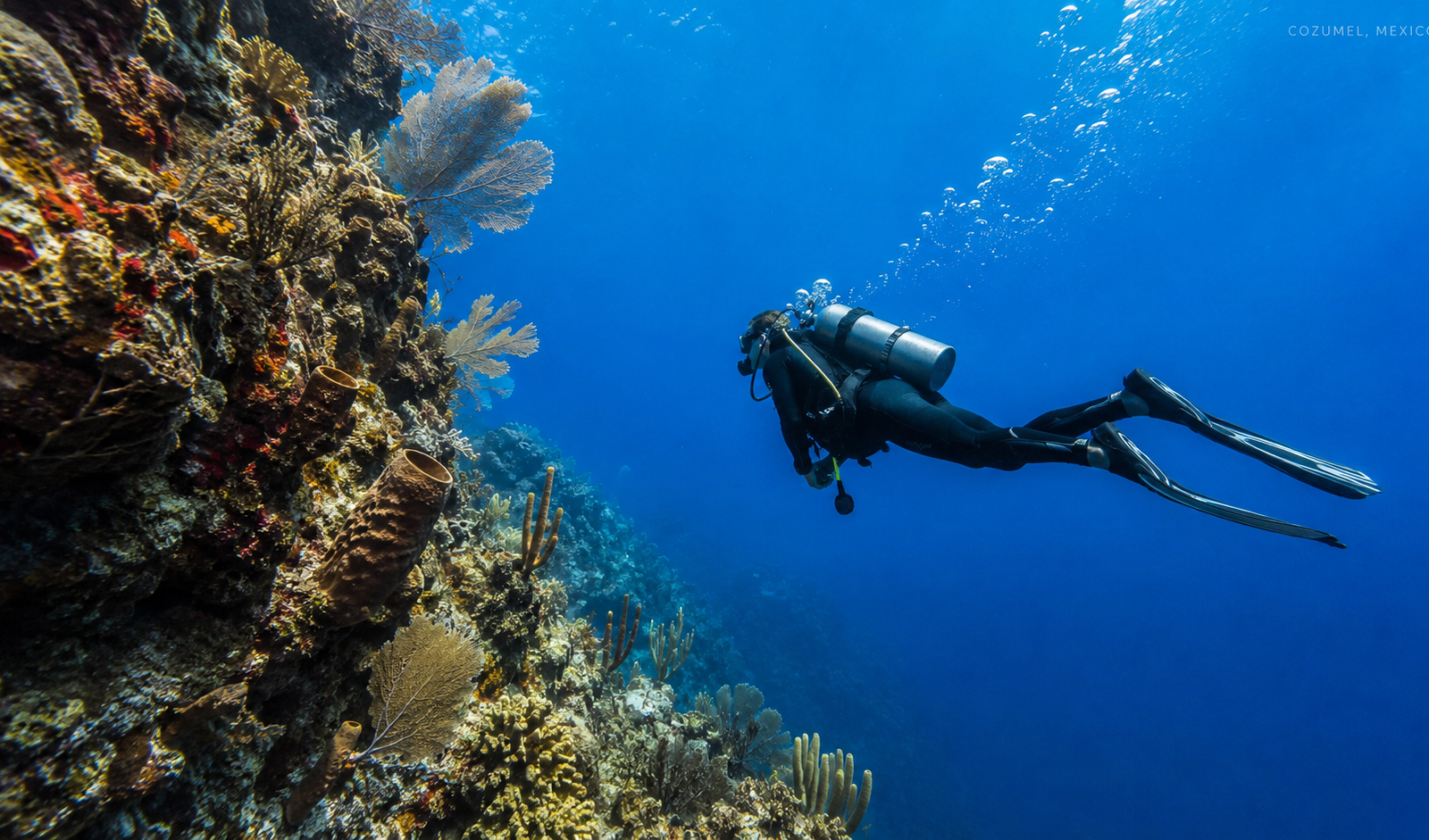
Cozumel dives are drift dives — the boat follows the group and collects divers where they surface.
Which Sites Are Worth Using An Advanced Certification On?
Advanced opens the deep drift and wall profiles, and this is where Cozumel earns its reputation. Four sites justify the certification on their own.
Santa Rosa Wall — 50 to 120 ft, moderate to strong current, advanced. The archetypal Cozumel wall dive: a sheer face with overhangs and tunnels, dived as a drift along the edge rather than a descent to the bottom. If you only do one wall dive in Cozumel, do this one.
Colombia Deep — 60 to 120 ft, moderate to strong, advanced. Enormous coral pinnacles rising from sand, with barrel sponges, reef shark and eagle ray on the listing. Structurally the most impressive site on the island, and the one where something large is most likely to pass in the blue.
Palancar Caves — 50 to 120 ft, moderate, intermediate. Despite the name these are swim-throughs through reef structure, not cave diving, but they demand real buoyancy control. Getting this wrong means scraping coral in a confined space.
Punta Tunich — 50 to 120 ft, mild to moderate, intermediate. A deep drift that rarely appears on a wishlist and consistently delivers. Twelve species on the listing.
Also in this band: San Francisco Wall (45–120 ft), Palancar Bricks (50–90 ft), Palancar Horseshoe (50–110 ft), Villa Blanca Wall (50–100 ft) and Los Atolones (40–70 ft). The Palancar reef guide covers how the four Palancar sections differ from each other.
Which Cozumel Dives Are Genuinely Committing?
Some sites are advanced because they are deep. A smaller group is advanced because getting it wrong has consequences. It is worth separating the two.
| Site | Depth | Current | What makes it demanding |
|---|---|---|---|
| Devil's Throat | 80–130 ft | Moderate to strong | A true overhead swim-through at depth, with no easy exit partway |
| Punta Sur | 90–120 ft | Moderate to strong | Deep start, complex structure, short bottom time |
| Maracaibo | 70–150 ft | Moderate to strong | Deepest site listed, southernmost, long boat ride |
| Barracuda Reef | 45–80 ft | Strong to very strong | Fastest water on the island; depth is not the issue |
| San Juan | 40–80 ft | Strong to very strong | Same — a shallow site you can still lose control of |
| Barracuda Wall | 90–130 ft | Moderate to strong | Depth and northern position together |
| Chun-Chacaab | 70–80 ft | Moderate to strong | Far south, exposed, rarely run |
Devil's Throat is the one people book for the story. It is a vertical chimney through the reef that exits onto the wall at depth, and it is the dive most likely to go wrong for a diver who overstated their experience. Depth, an overhead environment and a limited no-decompression limit stack up at once. The Devil's Throat guide sets out what the dive actually involves before you commit to it.
Barracuda and San Juan deserve their own warning. Both sit at 40 to 80 ft — shallower than several intermediate sites — and both are listed strong to very strong. Advanced on those two is not a status marker earned by depth. It means the water moves faster than you can swim against, and the number of operators willing to run them is small. That is a signal, not a gap in the market.
Which Sites Are Best For Underwater Photography?
Photography inverts the usual priorities. Depth costs you light and bottom time, and fast water costs you the ability to hold a frame. The best photographic sites in Cozumel are shallow, slow and structurally busy.
Yucab (50–60 ft) for macro — low coral heads with undercut ledges, and the most reliable splendid toadfish habitat on the island. Palancar Gardens (30–80 ft) for wide angle, with mild current and the classic coral architecture. Columbia Shallows (30–50 ft) for coral heads near the surface in good light, though the current can run. El Cielo (5–15 ft) is a sand-flat site rather than a reef, and shallow enough for available-light work.
For animals specifically: Cantarel (60–90 ft) is the site associated with seasonal spotted eagle ray aggregations in the cooler months. Paso del Cedral carries the longest marine life listing of any mid-south reef. Punta Dalila is the one site whose listing names green sea turtle directly. The marine life by site guide maps species to reefs and seasons, and the shark encounter guide covers what is realistic to expect.
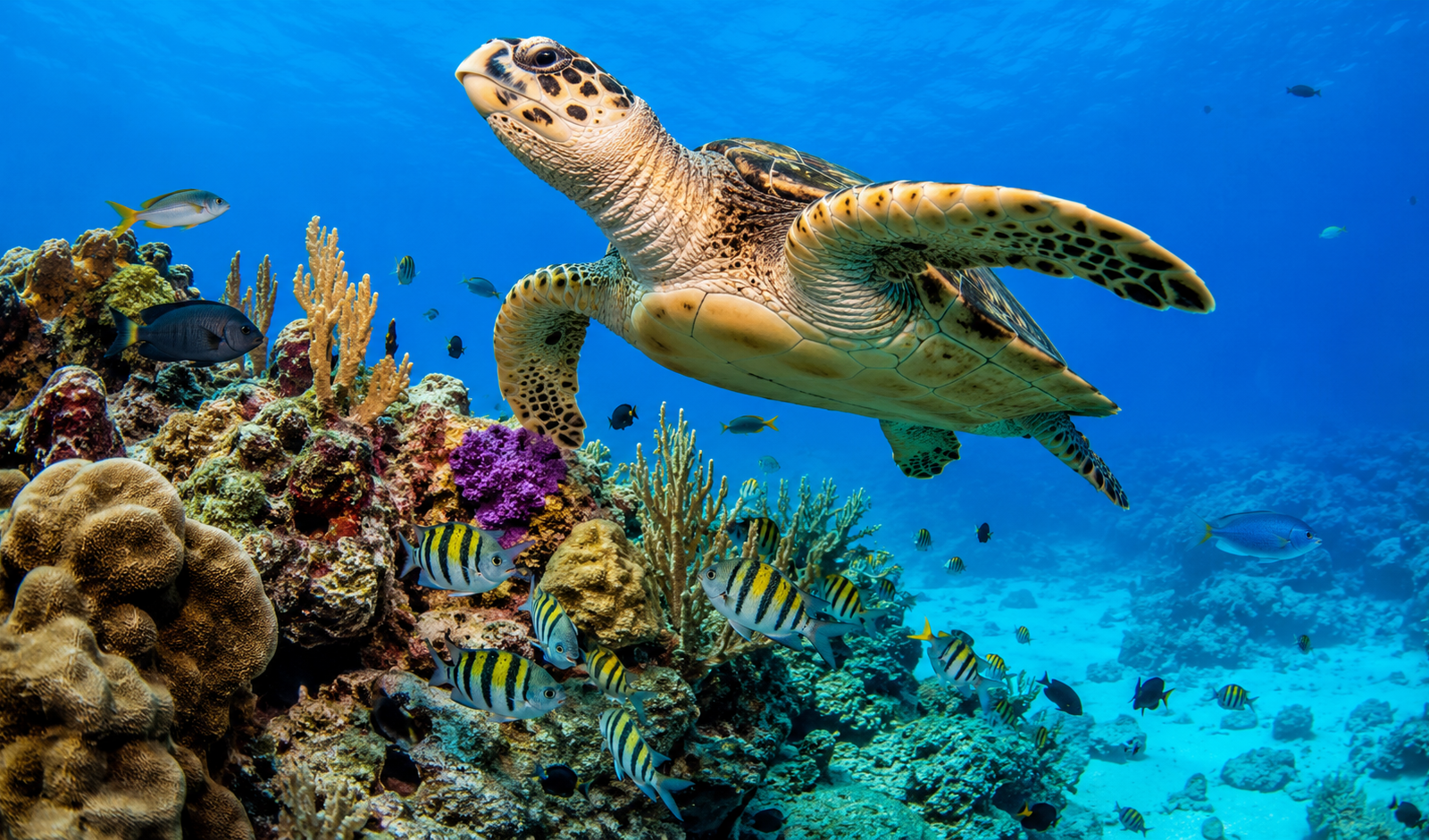
Sightings depend on site, season, current and luck — no reef guarantees an animal.
Is The C-53 Wreck Worth One Of Your Tanks?
Yes, once. The C-53 Felipe Xicoténcatl is a former navy minesweeper sunk deliberately as an artificial reef, sitting upright in sand at 40 to 55 ft with moderate current and an intermediate rating.
It is the only wreck on the island, and it dives nothing like the reefs — the appeal is structure, orientation and photography rather than coral or fish density. The listed marine life is short: green moray, lobster, nurse shark, seahorse. If you have dived wrecks elsewhere it will not rank among your best. If you have not, it is a genuinely different experience to fit into a week of drift diving, and the depth is modest enough that it works as a second tank. The full C-53 guide covers what the wreck dive involves.
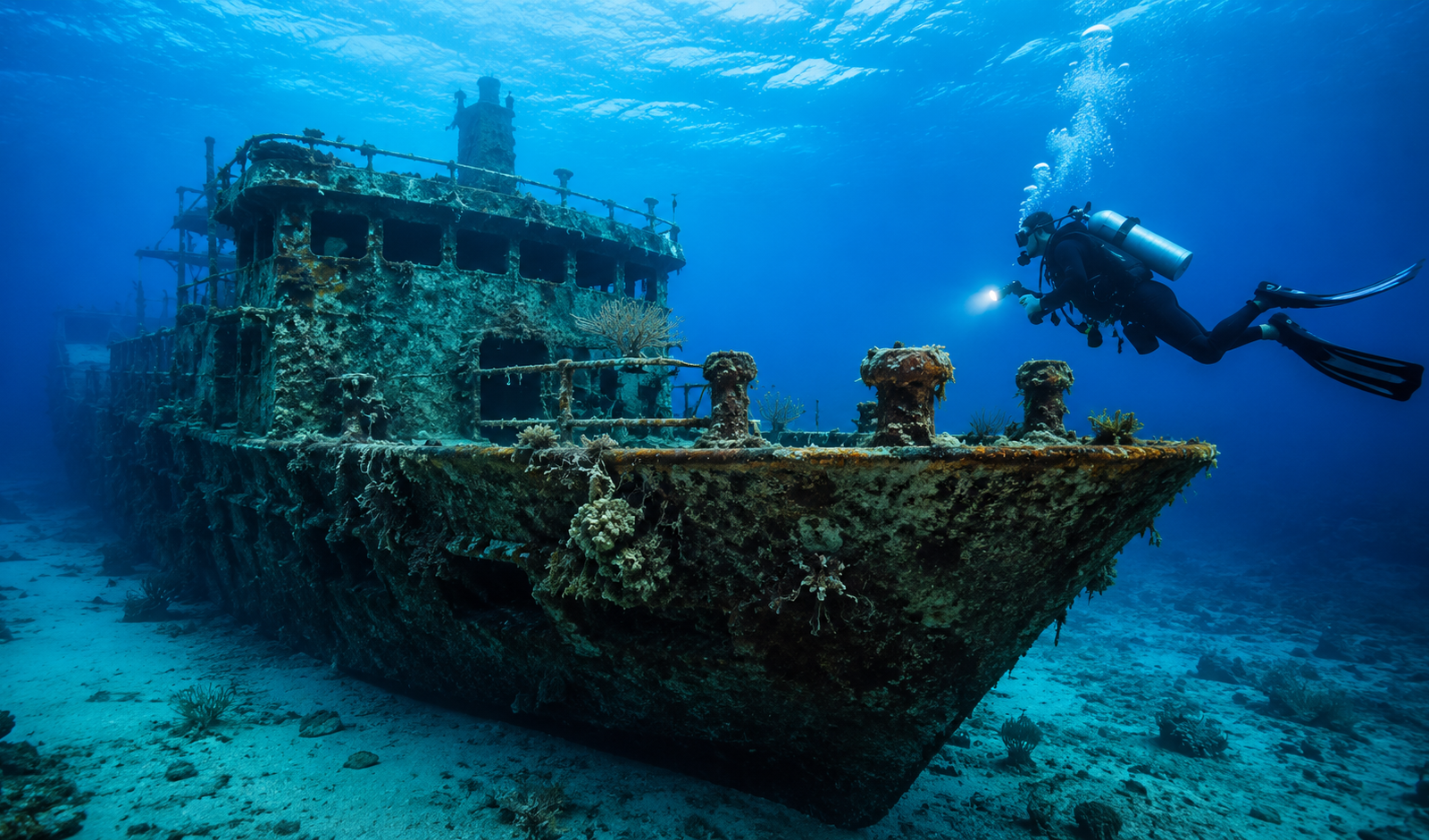
The C-53 is Cozumel's only wreck dive, sitting upright in sand at 40 to 55 ft.
What Most Visitors Actually Dive
Here is the part operators do not lead with: most visitors dive wherever the boat was already going that day. A standard two-tank morning runs a deeper site first and a shallower one second, and the itinerary is set by the boat's schedule, the group's mix of certifications and the morning's conditions — not by what any individual diver hoped for. A few operators invert that — a shop where divers choose the sites, ScubaLuis, runs two boats with six to eight divers and builds the day around what the group asks for.
In practice that means the same dozen or so sites cycle continuously. Palancar Gardens, Santa Rosa, Paso del Cedral, Tormentos, Yucab, Columbia Shallows, Paradise and the C-53 appear again and again. Meanwhile Maracaibo, Chun-Chacaab, Los Atolones, Casa Blanca, El Presidente and the four east-coast sites — El Islote, Chen Rio, El Mirador and Punta Morena — go long stretches without a recreational group.
None of that is dishonest. It is how boat logistics work. But it does mean the difference between a generic week and a good one is almost entirely down to asking, and asking early.
How To Actually Get The Sites You Want
Site requests work in Cozumel, but only under specific conditions. The pattern that works looks like this.
- Name the sites when you book, not on the dock. Boat routes are set the night before at the latest. A request made as you board is a request for the next trip.
- State your real dive count and your last dive date. An operator matching you to a site is doing a risk calculation. Overstating experience is how divers end up on Devil's Throat with fourteen logged dives.
- Ask which sites they ran last week. This is the single most revealing question. It tells you the boat's actual range rather than the brochure's.
- Ask how many divers per guide. Small-group diving is what makes off-schedule sites possible; a cattle boat runs a fixed route.
- Accept a substitution without argument. If the guide moves you off a site because of current or visibility, that is the system working.
- Carry an SMB. Boats collect divers where they surface, and it is expected equipment on drift sites.
- Check what is included — marine park fee, rental gear, Nitrox, hotel pickup — before comparing prices.
Which operator you choose determines which reefs you see more than any other decision on the trip. The dive center selection guide covers how to read an operator, how to judge the operators compares them, and the full center directory lists who runs small groups. If you want a briefing-quality guide rather than a headcount, the divemaster guide is worth reading first.
When You Visit Changes Which Sites Are Good
Season shifts the answer more than most divers expect. December to March brings the best visibility and the strongest current — the southern deep sites are at their best and the northern ones at their least forgiving. June to September brings the warmest water and the lightest current, which is better for photography, for building confidence and for reaching sites like Maracaibo that need calm conditions.
If you are new to being carried by water, read the drift diving guide and the current strength guide before you arrive; they describe what each listed current strength actually feels like. The month-by-month conditions guide has water temperature and visibility for every month. For anyone returning after a break, a refresher before the first boat day is time well spent — the Cozumel dive courses page lists the options. And for something different on a site you already know, twilight dives change Paradise Reef entirely.
The Underrated Ones
Yucab — low-profile coral heads with steady current. One of the best sites on the island for finding the splendid toadfish.
Tormentos — scattered heads and undercut edges, consistently good and rarely crowded.
Paso del Cedral — 45 to 100 ft with heavy fish life, often overlooked in favour of Palancar next door.
Columbia Shallows — coral heads close to the surface, calm, and far less trafficked than the deep section.
The Sites Most People Never Reach
A standard week gets you eight to twelve dives, and most operators cycle the same fifteen or so sites. These are the ones that get skipped:
Maracaibo — the southernmost reef, an hour-plus boat ride each way, and only run when conditions and group experience allow.
Barracuda and San Juan — far north, fastest current on the island, and skipped by most operators because the conditions are unforgiving.
Punta Dalila and La Francesa — good mid-south reefs that lose the schedule to Palancar next door.
If you are here for a week and want these, say so when you book. Small-group operators will run them; larger ones generally will not.
Reading A Dive Site Profile
Every site page on this guide carries the same fields, and knowing what they mean saves you asking.
Depth range is the diving range, not the depth of the wall below it. A site whose structure drops to 180 ft may still be dived as a 60–100 ft profile — you follow the reef, not the bottom.
Current strength is typical, not guaranteed. It changes daily. A site marked moderate can run strong on the day.
Skill level reflects what most Cozumel operators require, not a legal limit. Operators set their own policies and some are stricter than others.
Entry type is almost always boat. Where shore entry exists it is noted.
Coast matters more than it looks. West coast is sheltered marine park diving. East coast is exposed windward reef with a different profile entirely, and the two are never dived on the same trip.
Where To Go From Here
Pick two or three sites from the table at the top, name them when you book, and be honest about your dive count. That is the whole method. For the complete reference — every site with depth, current, skill level and species — use the full dive sites index. For everything else about the trip, including operators, courses, logistics and season:
Frequently Asked Questions
How many dive sites are there in Cozumel?
What is the best dive site in Cozumel?
Which Cozumel dive sites are good for beginners?
Which Cozumel dive sites require Advanced certification?
Is all diving in Cozumel drift diving?
Can you shore dive in Cozumel?
How do I choose which dive sites to visit?
Where is the splendid toadfish found in Cozumel?
Diving Cozumel soon?
Tell us your dates — we'll send options and connect you with the right dive shop.