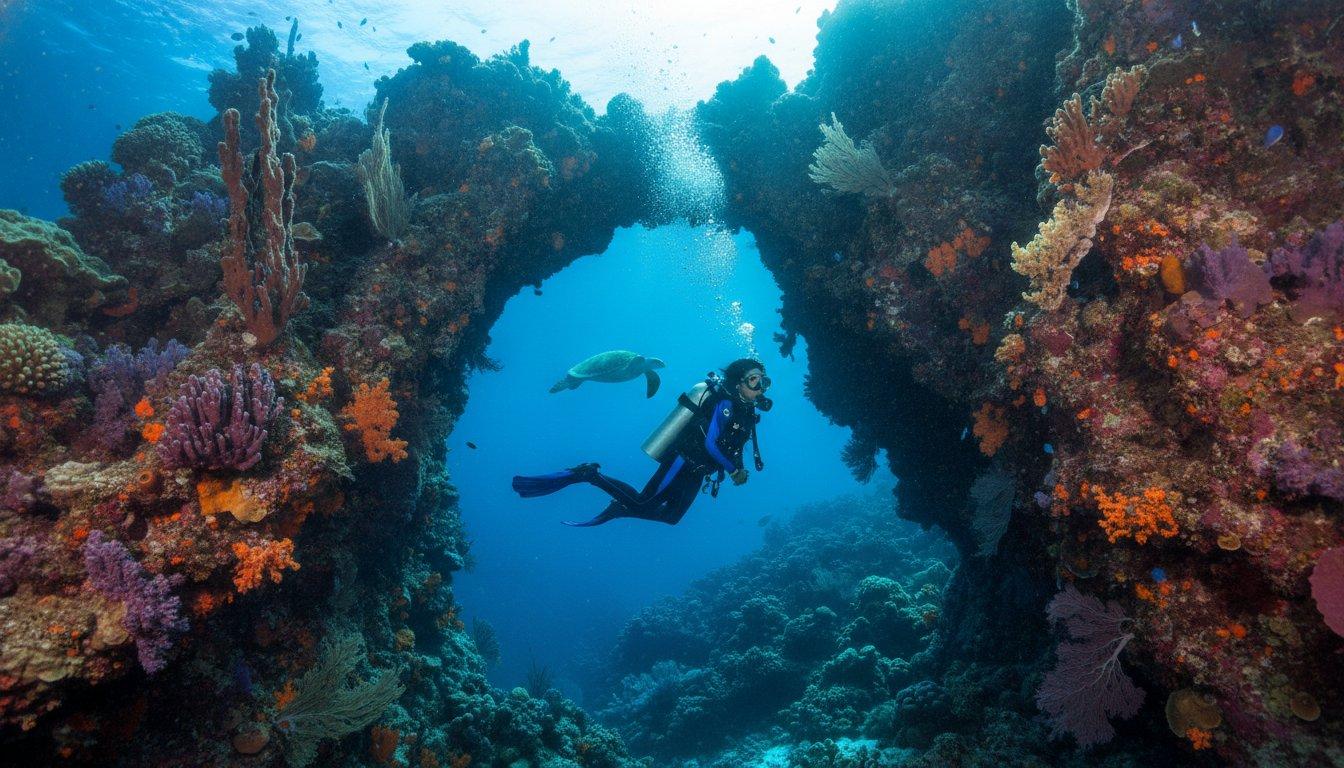
Palancar Reef Cozumel Diving: The Ultimate Guide to the Crown Jewel
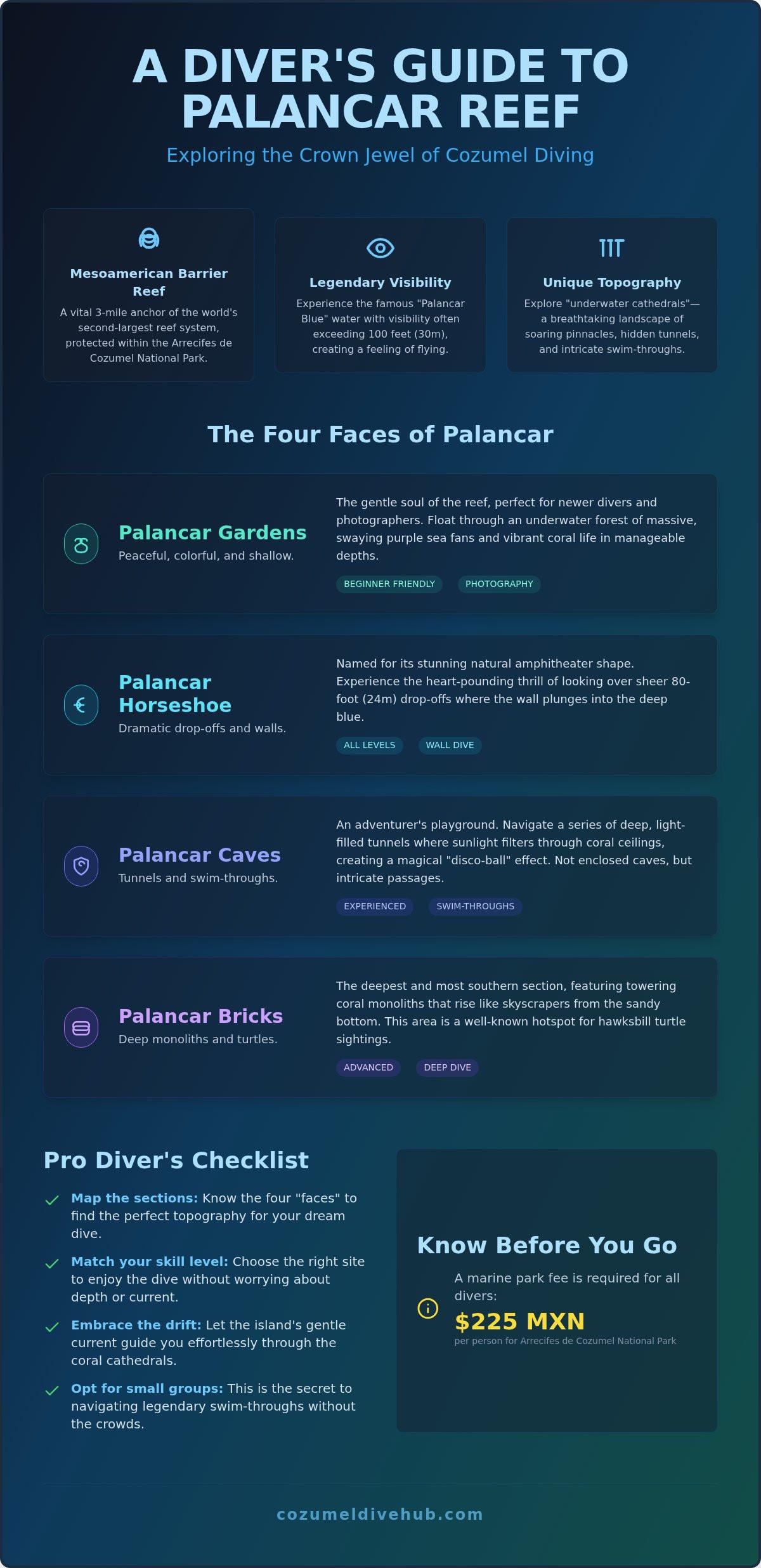
Palancar is not a dive site. It is three miles of reef that boats treat as four: Gardens, Horseshoe, Caves and Bricks. Gardens starts at 30 feet and suits a week-old Open Water diver, while Caves drops to 120 through coral tunnels.
Carmen Novelo · August 16, 2026
Palancar is not a dive site. It is about three miles of reef at the southern end of the Cozumel Marine Park, and dive boats treat it as four separate sites: Gardens, Horseshoe, Caves and Bricks, running north to south in that order.
That distinction is the single most useful thing to know before you book. Gardens starts at 30 feet and suits a diver who finished Open Water last week. Caves drops to 120 and involves threading coral tunnels with a moderate current pushing you along. Someone who says "we did Palancar" has told you almost nothing about what they actually dived.
So here is each section, what it asks of you, and how to end up on the right one.
The Four Sections Of Palancar
| Section | Depth | Level | Current | What defines it |
|---|---|---|---|---|
| Palancar Gardens | 30–80 ft | Beginner | Mild to moderate | Low coral heads, sand channels, wide open — the forgiving one |
| Palancar Horseshoe | 50–110 ft | Intermediate | Mild to moderate | A curved amphitheatre of coral with a wall on the seaward side |
| Palancar Caves | 50–120 ft | Intermediate | Moderate | Tunnels, chimneys and swim-throughs cut through the buttresses |
| Palancar Bricks | 50–90 ft | Intermediate | Moderate | The southernmost section, big coral towers off a sand floor |
One correction to something you will read elsewhere, including on older versions of this page: Bricks is not the deepest section. It is the furthest south, but Caves runs deeper. If depth is what you are chasing, Caves and the seaward side of Horseshoe are where it is.
Palancar Gardens
Gardens is the section most first-time Cozumel divers see, and there is nothing second-rate about that. The reef here sits as a series of separate coral heads on white sand rather than one continuous wall, which means light everywhere, easy navigation and no sensation of being hemmed in.
Because the top of the reef is around 30 feet, you can spend most of the dive shallow and still see the good stuff. Long bottom time, plenty of gas left at the safety stop, and the current is usually gentle enough that you can stop and look at something without being dragged off it.
If you are diving Cozumel for the first time, this is the sensible place to meet the island's drift. Small fin adjustments to steer, nothing more. Our first-time Cozumel diving guide covers the technique in more detail.
Palancar Horseshoe
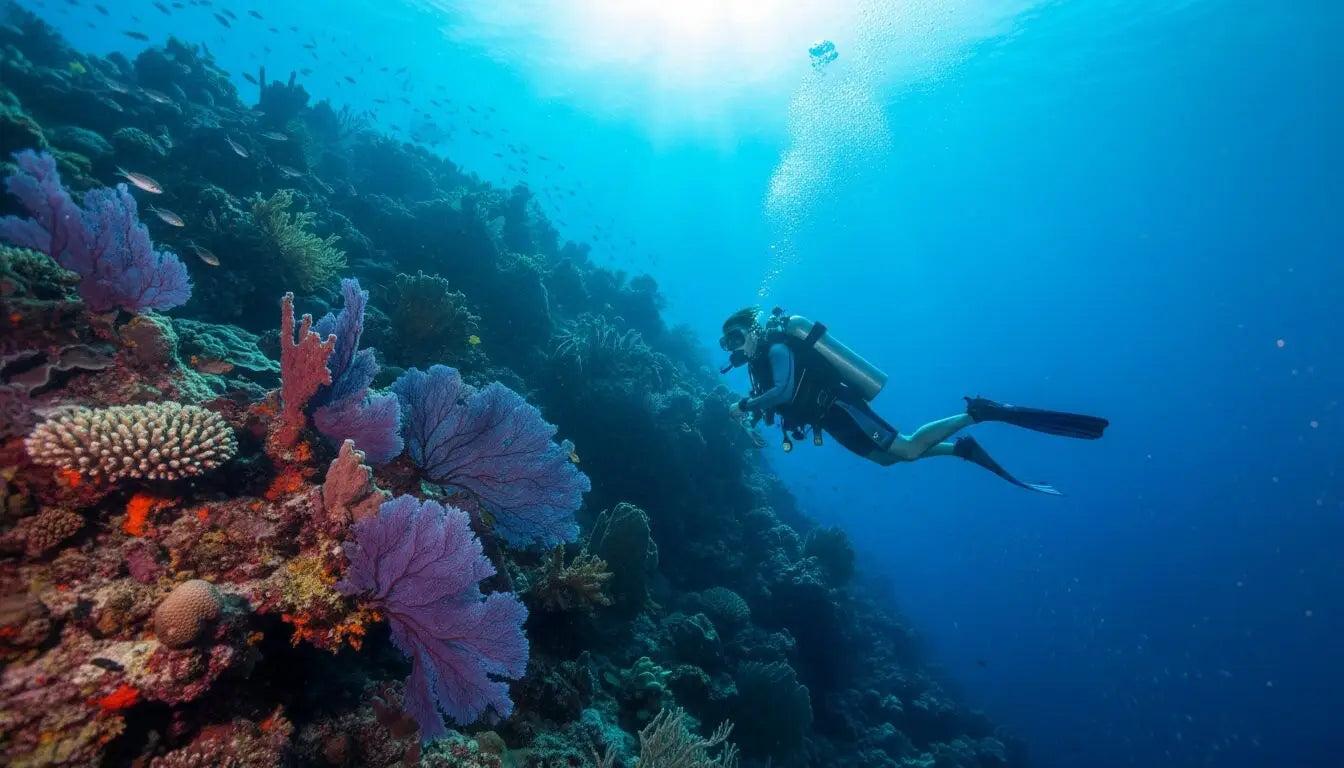
Named for its shape — a curved bowl of coral open to the sea. Divers usually enter over the shallower inner section and work out toward the seaward edge, where the reef ends and the bottom drops away into open blue.
That drop is the point of the site. Standing at the lip and looking down into water that just keeps going is a specific feeling, and it is the reason Horseshoe shows up on so many people's lists. It also puts you at 80 to 110 feet if you follow it, so gas planning matters more here than at Gardens.
Horseshoe and Gardens sit close enough together that operators often pair them on a two-tank morning. If you are trying to decide between them, we compared them directly in Palancar Gardens vs Palancar Horseshoe.
Palancar Caves
The name oversells it and undersells it at the same time. These are not caves. They are swim-throughs — tunnels, arches and vertical chimneys carved through massive coral buttresses, most of them short, most of them open to daylight at both ends.
What makes Caves worth the trip is the light. Sun comes through gaps in the coral ceiling in visible shafts, and you spend the dive moving between bright open sand and shadowed passages. It is the most photogenic section of Palancar by some distance.
It also asks the most of you. Buoyancy control is not optional in a tunnel — there is coral above you as well as below, and it is fragile. If you are still using your BCD inflator as a lift, do Gardens first and come back to Caves on a later trip. An Advanced Open Water certification is not legally required for most of the swim-throughs, but the depth training behind it is genuinely useful here.
Palancar Bricks
The southernmost of the four, and the least visited — partly because it is the longest boat ride, partly because Caves gets the attention.
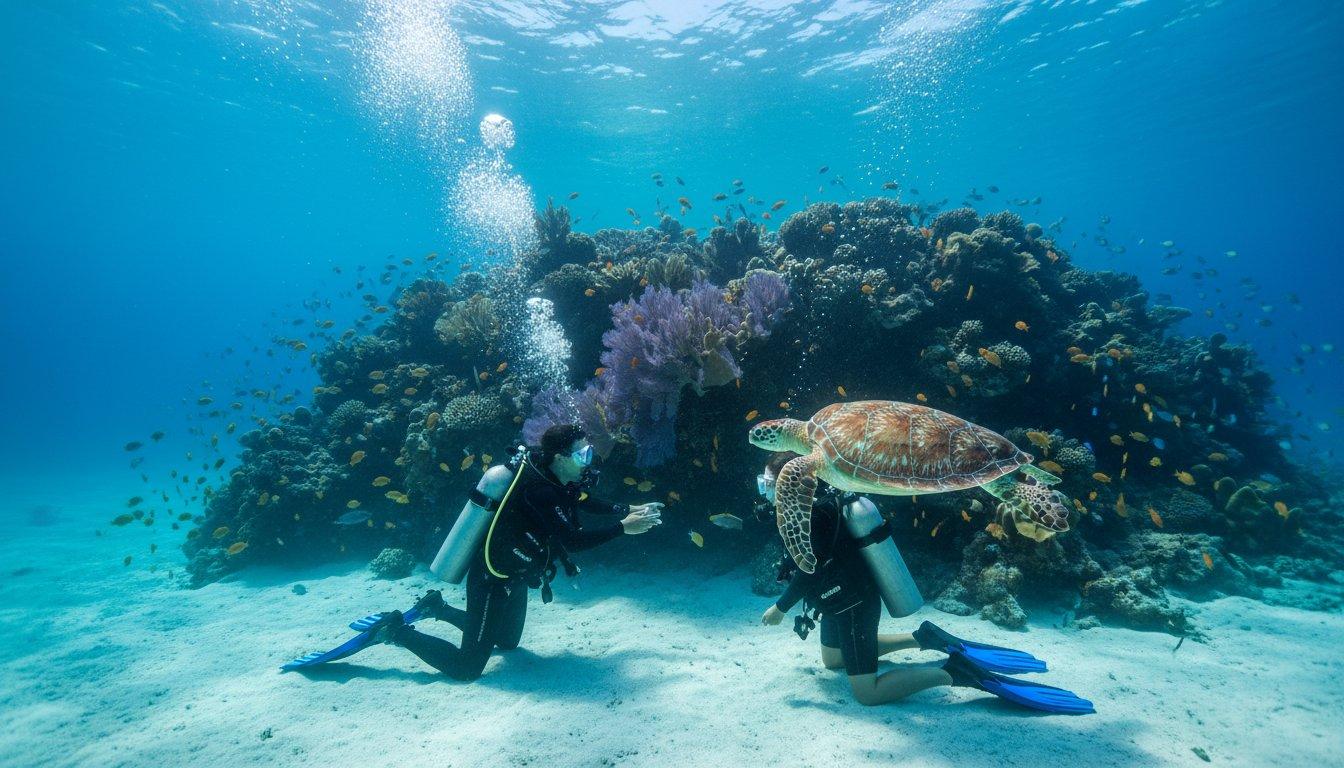
Bricks is big coral towers rising off a sand bottom, with wide gaps between them. Fewer divers means the reef feels emptier in a good way, and it is a reliable spot for hawksbill turtles working the sponges.
You will read that the name comes from a shipwreck that scattered building material across the reef. It is a good story and it is repeated everywhere, but we have not found a source for it that is not just another dive site page repeating the same line. Treat it as folklore rather than history.
Which Section Fits Your Certification
- Open Water, fewer than 20 dives — Gardens. Ask the shop to keep the profile above 60 feet and you will have a better dive than you would fighting depth at Caves.
- Open Water, comfortable, good on air — Gardens or the inner part of Horseshoe.
- Advanced Open Water — any of the four. Caves is the one to prioritise.
- Advanced with solid buoyancy and a camera — Caves in the morning, when the light angle through the swim-throughs is at its best.
The honest version: there is no section of Palancar that a nervous diver enjoys at 100 feet, and no section that an experienced diver finds dull at 40. Depth is not the same thing as quality here.
What The Drift Is Actually Like
The Yucatán Current runs south to north along this coast, so a Palancar dive is a one-way trip. The boat drops you up-current, you drift, and it picks you up wherever you surface. You are not swimming back to anything.
At Palancar the current is usually mild to moderate — noticeably gentler than the far north sites like Barracuda and San Juan. That surprises people who assume "southern" means "advanced". It does not. The strongest current in Cozumel is at the northern end of the reef line.
Visibility is routinely 80 to 100 feet and often more. Water sits between roughly 78°F in February and 84°F in September, so a 3mm suit covers most people year-round and a rash guard is enough for some in summer.
Marine Life Worth Watching For
Palancar is reef fish and turtles rather than big animals. Realistic expectations for a two-tank morning:
- Hawksbill and green turtles — common, particularly at Bricks and Gardens
- Spotted eagle rays — seasonal, more likely in winter, never guaranteed
- Splendid toadfish — found nowhere else on earth, tucked under ledges. Ask your guide; they know the specific holes
- Green moray eels — regular, usually just a head poking out
- Nurse sharks — resting under overhangs, most often at Bricks and Caves
What you will not reliably see: reef sharks, and nothing bigger. Cozumel's reef is not a shark destination — bull sharks are a winter day trip to the mainland, not something that swims past Palancar.
Park Fees, Boat Times And The Practical Stuff
Palancar sits inside Parque Nacional Arrecifes de Cozumel, so every diver needs a park bracelet. The fee is 225 pesos per person per day as of 2026 — it rose from 108 pesos to 218.32 at the start of 2025 and again since, so budget a little over that and expect to pay in cash. Most operators collect it at the shop and hand you the bracelet on the boat.
The ride from the downtown piers is 35 to 45 minutes each way depending on the boat. That is the real cost of diving Palancar — a two-tank Palancar morning eats more of your day than a mid-island reef trip does. A fast boat with a small group gets you there quicker; a large boat making multiple hotel pickups does not.
Two other things worth knowing:
- Chemical sunscreen is prohibited in the marine park. Bring mineral, or bring a rash guard and skip it.
- Snorkelling at Palancar is possible but limited. The best structure is 50 feet down. Snorkellers get the shallow tops at Gardens, which is pleasant, but it is not the reason Palancar is famous. El Cielo is the better snorkelling call.
Choosing An Operator For Palancar
We do not run boats and we do not sell dives, so take this as what it is — an opinion formed from years of watching how the day goes wrong.
For Palancar specifically, three things matter more than price:
Group size. Caves is the argument. Six divers can move through a swim-through cleanly; sixteen cannot, and the last four get whatever visibility the first twelve left them. If you are going to pay extra for anything in Cozumel, pay it here.
Whether they will actually dive the sections you asked for. Site selection depends on conditions, and a good operator will tell you honestly when the plan changes. A less good one takes you to Gardens twice and calls it a Palancar trip.
Departure time. Palancar is a long ride. First boat out means better light in the swim-throughs and fewer boats on the mooring lines.
Our dive center directory lists every operator on the island with their boat setup and group sizes, so you can compare before you commit.
Worth Doing
If you dive Cozumel and skip Palancar, you have missed the thing the island is known for. But book the right section for your actual certification and comfort, not the one with the best name — a well-run dive at Gardens beats a stressful one at Caves every time.
Frequently Asked Questions
What are the four sections of Palancar Reef?
Is Palancar Reef good for beginner divers?
How deep is Palancar Reef?
Do I need an Advanced Open Water certification for Palancar Caves?
What is the best time of day to dive Palancar?
Can you snorkel at Palancar Reef?
How far is Palancar Reef from the Cozumel cruise ship piers?
What is the water temperature at Palancar Reef?
What sharks might I see at Palancar Reef?
Share This Article

Carmen Novelo
Carmen Novelo is a Cozumel native and an active scuba instructor and dive guide on the island. She has spent twelve years diving the Cozumel reef system, and writes about its dive sites, conditions and marine life for Cozumel Dive Hub.