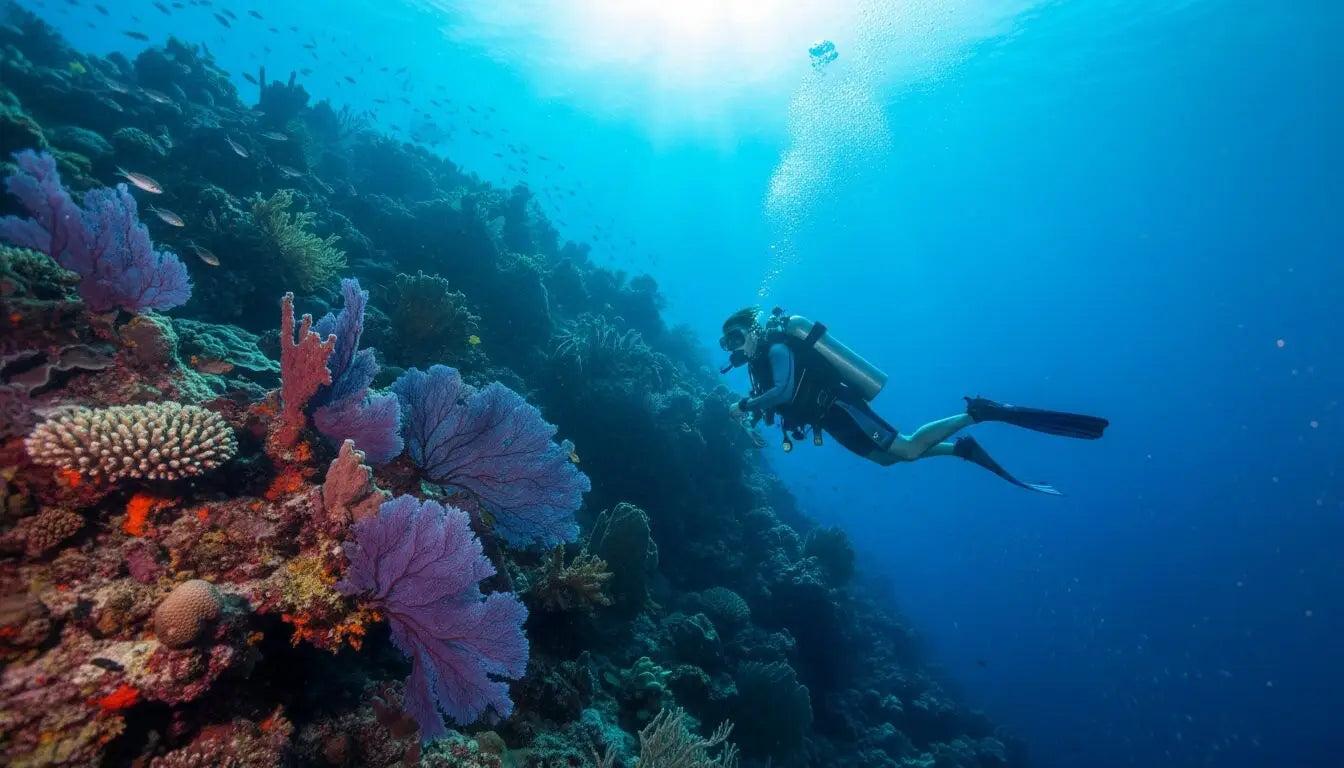
Scuba Refresher Course Cozumel: Dive Back into Paradise with Confidence (2026 Guide)
A scuba certification does not expire. PADI and SSI both certify for life, so what fades is your currency, not the card, and a refresher restores it in two or three hours of shallow water. The requirement comes from the shop, not the agency.
Carmen Novelo · March 9, 2026 · 20 min read
A scuba certification does not expire. PADI states that "your PADI scuba certification is for life," and SSI says "once you are certified you are certified for life." There is no renewal date, no lapse and nothing to reinstate. If you were certified in 2011 and last dived in 2018, you are still a certified diver today. What fades with time away is not your certification but your currency — and that is what a refresher fixes, usually in two to three hours of shallow water, after which a Cozumel dive operator will put you on a boat without a second thought.
The second thing worth knowing is that the requirement comes from the dive shop, not the training agency. PADI's published advice is to "avoid six to 12 months or longer periods without diving," which is a recommendation, not a rule. Individual Cozumel operators turn that into policy at thresholds they choose: some ask for a refresher after six months out of the water, some after twelve, some after twenty-four, and some just want to look at your logbook and talk it through. Ask before you book. The answer varies by shop, and it is never a judgement on you.
And here is the part shops rarely volunteer. In Cozumel, the refresher is only half the problem. Almost every dive here is a drift dive, carried by the Yucatán Current running south to north along the west coast, and the boat picks you up wherever you surface. A rusty diver's first dive back should not be a deep wall in moving water on the southern reefs. Do the refresher, then ask for a sheltered shallow reef, then work up. This guide covers both halves — what the refresher actually is, and where to point it.
Does A Scuba Certification Expire?
No. Recreational scuba certifications from PADI and SSI are issued for life and have no renewal cycle, no expiry date printed on the card and no reinstatement process. This is the single most misunderstood fact in diving, largely because the plastic card looks like a driving licence. It is not one. A 1998 Open Water card is as valid in 2026 as it was the day it was issued.
What agencies and operators care about is recency, not validity. A dive shop asking "when did you last dive?" is not questioning your certification; it is trying to work out whether you will be comfortable on a live-boat drift dive in an hour's time. Those are different questions, and the answer to the second one is a refresher, not a re-certification. You never need to redo an Open Water course because of time away.
When Do Cozumel Operators Require A Refresher?
There is no island-wide rule. Thresholds are set operator by operator, and published examples make the spread obvious: Maple Leaf Scuba frames its ReActivate options as being for certified divers who have not dived for over six months, while Scuba Reef Cozumel pitches its refresher at anyone "out of the water for 12 months or 12 years" without setting a cut-off at all (both checked August 2026). Twelve and twenty-four months are the two most common thresholds you will meet.
Three practical points. First, ask when you enquire, not when you arrive — a shop that requires a refresher and cannot fit one in on your arrival day has just cost you a diving day. Second, a recent refresher date on your record travels: shops read it as a green light and check-in gets faster. Third, if you carry a logbook or a dive-computer history showing recent dives, bring it; it often settles the question in thirty seconds. The guide to choosing a Cozumel dive shop covers what else to ask at this stage.
What Does PADI ReActivate Actually Involve?
PADI ReActivate has two parts. The first is online: a knowledge review of more than 20 sections covering dive theory, equipment, planning and safety, delivered with videos and interactive scenarios and finished with a quiz. PADI puts study time at two to three hours; other published accounts say two to four. It is genuinely doable on the flight down.
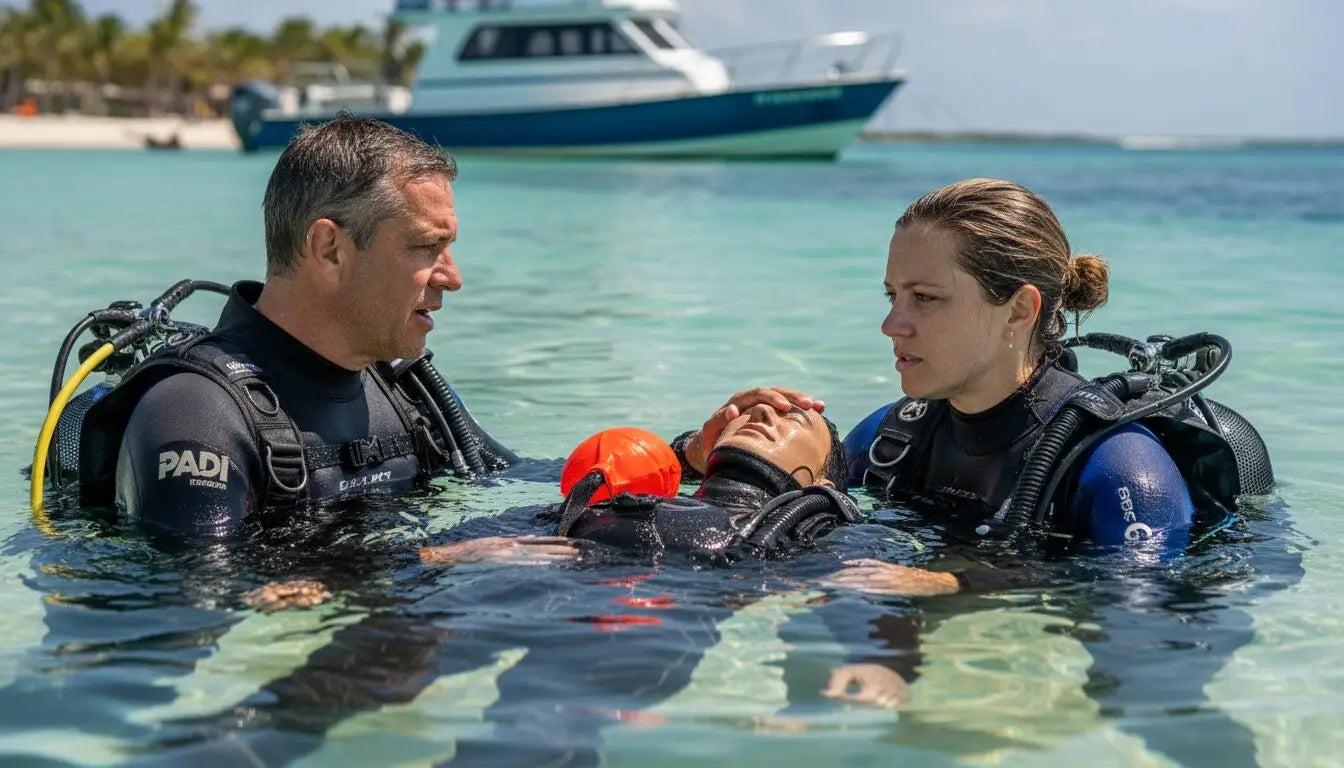
The second part is the in-water session with a dive professional. PADI's own product listing calls it "optional inwater practice," but it is what produces the card: to obtain a "ReActivated" card you must schedule in-water practice with a dive professional. A PADI-certified diver has their existing certification updated with a "ReActivated through" date. A diver certified with another agency receives a separate ReActivate card confirming that knowledge and entry-level skills have been refreshed — so ReActivate is available to you even if your original card says SSI, NAUI or BSAC.
That date is a two-year window, and PADI is explicit with its own professionals that it is guidance rather than a deadline: "the 'ReActivate thru' date provides an outside window for recommended retraining, but it's their knowledge, skill proficiency and familiarity — not a date — that should guide ReActivating." Read it as a prompt, not an expiry.
What Does The SSI Scuba Skills Update Involve?
SSI's equivalent is the Scuba Skills Update. SSI lists it as five academic sessions plus one pool or confined-water session, with a suggested duration of two to three hours and a minimum age of ten. SSI training standards cap confined-water depth at 15 feet and set a student-to-professional ratio of 8:1 for divers aged fifteen and over. There is no fixed course duration — the point is to spend the time on whatever you are actually rusty at.
On completion, SSI standards state that "an Assistant Instructor may issue the Scuba Skills Update digital recognition card," which lands in your MySSI app alongside your certifications and logbook. SSI also builds the programme into its own training: if an Open Water student's last academic or pool session was more than six months ago, a Scuba Skills Update is required before they carry on. That six-month figure applies to students mid-course rather than certified divers, but it tells you how the agency thinks about skill decay.
How Do PADI ReActivate And The SSI Scuba Skills Update Compare?
| PADI ReActivate | SSI Scuba Skills Update | |
|---|---|---|
| Online theory | 20+ sections, videos, scenarios, quiz | 5 academic sessions via MySSI |
| Stated study time | 2–3 hours (PADI); 2–4 hours reported elsewhere | Included in a 2–3 hour suggested total |
| In-water session | With a dive pro; required to earn the card | 1 pool / confined-water session |
| Depth limit for the session | Pool or confined water | Max 15 ft under SSI standards |
| Prerequisite | Certified diver, any agency | Open Water Diver; minimum age 10 |
| Produces a dated card | Yes — "ReActivated through" date, 2-year window | Yes — digital recognition card in MySSI |
| Non-agency divers | Non-PADI divers get a standalone ReActivate card | Handled by the dive center |
| Buying the theory direct | USD $85 from the PADI store (checked Aug 2026) | Bundled by the dive center |
Neither is better. ReActivate is the more portable credential because the dated card is recognised on sight worldwide; the SSI update is often quicker to arrange and cheaper when the shop is an SSI center. Pick whichever agency your Cozumel operator teaches — PADI and SSI centers both operate on the island, and you can see the range in the Cozumel dive courses overview.
Which Skills Does A Refresher Actually Review?
Short and specific. Drawing on PADI's published refresher outline and its description of the ReActivate in-water session, expect:
- Gear assembly — putting the kit together yourself while the instructor watches
- Buddy check — BWRAF: BCD, Weights, Releases, Air, Final okay
- Descent — the S-O-R-T-E-D sequence: Signal, Orientation, Regulator, Time, Elevate the BCD hose, Descend
- Ascent — S-T-E-L-A: Signal, Time, Elevate the hose, Look up, Ascend
- Mask skills — partial flood and clear, full flood and clear, then remove and replace
- Regulator recovery — one of the five core skills the session is built around
- Buoyancy — fin pivot, hover, and swimming while holding neutral buoyancy
- Emergency weight drop — finding the quick release and dropping enough lead to become positively buoyant
- Alternate air source ascent — both donating and receiving
- Weight check — included where the instructor judges it useful
Two Cozumel-specific additions worth requesting by name. Ask for a proper salt-water weight check, because most returning divers are over-weighted and Cozumel's salinity plus a 3mm suit changes the number you remember. And ask to deploy a surface marker buoy, because on a live boat drift dive the SMB is how the captain finds you. Neither is standard in the outline; both are ten minutes well spent here.
What Does A Refresher Cost In Cozumel?
Prices below are published rates checked in August 2026 and are estimates for planning — confirm directly, because rates move and inclusions differ more than headline prices do.
| Format | Typical price (USD) | Published example |
|---|---|---|
| Shore or confined-water refresher, roughly 2 hours, tanks and weights | $85–$100 | Deep Blue Cozumel $85; Sand Dollar Sports $100 |
| Beach refresher, 2–3 hours, gear and transport included | around $115 | Maple Leaf Scuba |
| Refresher packaged with two boat dives | around $195 | Maple Leaf Scuba |
| Full PADI ReActivate: eLearning, two boat dives, gear, updated card | around $279 | Scuba XOC |
| PADI ReActivate eLearning bought direct from PADI | $85 | PADI online store |
Read the inclusions rather than the number. The $85 tier is typically theory plus confined water plus a supervised beach dive; the $279 tier is the same skills wrapped around two boat dives you were going to pay for anyway, plus the eLearning and the card. Marine park fees are charged separately almost everywhere — Sand Dollar Sports lists USD $13 per person per day — and the Cozumel marine park fees guide explains how those are collected. If you do not own gear, the scuba gear rental price guide is worth reading before you compare quotes.
You can also buy the PADI eLearning yourself for $85 and arrange the in-water session locally. That sometimes saves money and sometimes does not, because shops bundle. Ask.
Where Should Your First Dive Back In Cozumel Be?
This is the question that matters more than which refresher you choose. Cozumel's reputation is built on effortless drift diving, but "effortless" assumes you can hold depth without thinking about it. On a moving reef you cannot stop, you cannot go back for something you dropped, and a diver fighting buoyancy burns air fast enough to end the dive for everyone. The first drift dive guide is worth reading before you go.
The fix is simple: after the refresher, ask specifically for a shallow, sheltered reef with mild current for dive one. The sites below are the ones in this guide's dive site data rated for beginners with the gentlest listed current.
| Dive site | Depth | Listed current | Why it works as a first dive back |
|---|---|---|---|
| San Clemente | 30–40 ft | Mild | The only beginner-rated site in the data listed as plain "Mild" — the softest option on the island |
| Paradise Reef | 30–40 ft | Mild to moderate | Shallow, close to town, the classic check-out reef; short boat ride if you are queasy |
| Chankanaab Reef | 35–40 ft | Mild to moderate | Flat profile with sand patches to settle on and sort yourself out |
| Casa Blanca | 30–60 ft | Mild to moderate | Gentle reef with room to stay shallow while you rebuild trim |
| Playa Corona | 20–40 ft | Mild to moderate | Shore access — no boat, no giant stride, stand up whenever you want |
| Money Bar Reef | 10–20 ft | Mild to moderate | Shallowest realistic option; a shore entry where nothing can go far wrong |
| Las Palmas Reef | 40–70 ft | Mild to moderate | Good dive two once you have proved the weighting works |
A note on El Cielo: at 5–15 feet it is a sandbar and snorkel stop rather than a dive that will rebuild anything. Lovely, but not the tool for this job.
Which "Beginner" Sites Are The Wrong First Dive Back?
Skill rating and current rating are two different things, and this is where returning divers get caught. Several Cozumel sites are correctly labelled beginner on depth and terrain while still running moderate to strong current — perfectly fine dives once you are current, genuinely unpleasant on your first dive in three years.
| Dive site | Depth | Listed current | Save it for |
|---|---|---|---|
| Yucab Reef | 50–60 ft | Moderate to strong | Dive three or four, once air consumption has settled |
| Punta Dalila | 40–60 ft | Moderate to strong | After a couple of relaxed drifts |
| Columbia Shallows | 30–50 ft | Moderate to strong | Later in the week; the southern reefs run faster |
| Chankanaab Bolones | 35–40 ft | Moderate to strong | Once you are comfortable holding position |
| Molas Shallow Reef | 20–40 ft | Moderate to strong | Northern site, conditions-dependent — ask the guide |
The advanced sites are a separate conversation entirely. Santa Rosa Wall (50–120 ft), Punta Sur (90–120 ft), Devil's Throat (80–130 ft) and Colombia Deep (60–120 ft) all combine depth with moderate-to-strong current. They are the reason people come to Cozumel and they will still be there on day four. Work up: sheltered shallow reef, then a mild drift such as Paso del Cedral or Tormentos, then Palancar Gardens, then the walls. The full dive sites guide maps the whole reef in order.
When In The Trip Should You Do The Refresher?
Day one. A refresher on the first morning pays for itself across every remaining dive of the week — better weighting, lower air consumption, more relaxed guides, better site choices offered to you. A refresher on the last day is money spent on nothing.
The practical sequence for a week's diving looks like this: refresher on the morning of day one, a sheltered shallow reef that afternoon or the next morning, mild drifts on days two and three, and the deep southern walls from day four once your air consumption has come back down. That also leaves room at the end of the trip for the flying after diving surface interval before your flight home.
Two scheduling notes. If you buy PADI ReActivate, do the eLearning before you travel — spending vacation hours on a laptop is the most avoidable mistake in this whole process. And if you are diving from a cruise ship call, a refresher almost certainly will not fit in the window; the cruise port diving guide explains why timing is so tight.
Do You Need A Medical Form For A Refresher?
Expect to complete the Diver Medical Participant Questionnaire before any training programme, refreshers included. If you answer yes to any question, a physician's evaluation is needed before you get in the water. The form you signed years ago is not the one that applies now — health and medications change, and so does the questionnaire.
Fill it in honestly and fill it in early. Divers who tick a box on arrival day and then need a doctor's signature can lose two days of a week-long trip. If anything on the form is likely to apply to you, sort the paperwork at home with a physician familiar with diving medicine. Nothing in this guide is medical advice about any individual situation; that conversation belongs with a doctor.
What If You Have Forgotten Everything?
Then the refresher is doing exactly the job it exists for, and instructors see it constantly. The skills come back faster than the confidence does, which is the part worth planning around: the mask clear returns in ten minutes, and the feeling of being relaxed at 40 feet returns somewhere in the middle of dive two. Book the sheltered reef accordingly.
If the rust runs deeper than a refresher can handle, two structured options do more than another tune-up. A buoyancy specialty — PADI Peak Performance Buoyancy or SSI Perfect Buoyancy — rebuilds trim and weighting properly, and the PADI Drift Diver specialty teaches the specific skills Cozumel demands. If you are already thinking about the deeper southern sites, the Advanced Open Water route is the honest way to get there.
Booking It Without Wasting A Day
Message the shop before you fly and ask four things: what their inactivity threshold is, whether the refresher is confined water or a beach dive, whether it can run on your arrival day or first dive morning, and which site they would put you on for dive one. A shop that gives a straight answer to the fourth question is a shop paying attention. The dive center directory and the guide to what a PADI 5 Star rating actually means will narrow the list.
Check conditions for your dates too. Nortes between roughly November and March can close the port for a day or two, and the month-by-month conditions guide shows what to expect. It is also worth confirming your dive insurance is current before you travel, and if boats have bothered you in the past, the seasickness guide is short and useful.
Your certification is still valid. It always was. Two or three hours in shallow water and a well-chosen first reef is all that stands between you and the wall at Santa Rosa. Start with Plan Your Cozumel Dive Trip to put the week together in the right order.
Frequently Asked Questions
Does my scuba certification expire?
Do I need a refresher course before diving in Cozumel?
How long since my last dive is too long?
What does PADI ReActivate involve?
What is the SSI Scuba Skills Update?
Does a refresher give me a new certification card?
How much does a scuba refresher cost in Cozumel?
Can I do a refresher and a boat dive on the same day?
Where should my first dive back in Cozumel be?
What if I have forgotten everything?
Share This Article

Carmen Novelo
Carmen Novelo is a Cozumel native and an active scuba instructor and dive guide on the island. She has spent twelve years diving the Cozumel reef system, and writes about its dive sites, conditions and marine life for Cozumel Dive Hub.