

Great Star Coral in Cozumel
Great Star Coral (Montastraea cavernosa) in Cozumel: how to identify it, why it flattens at depth, and what it is confused with.
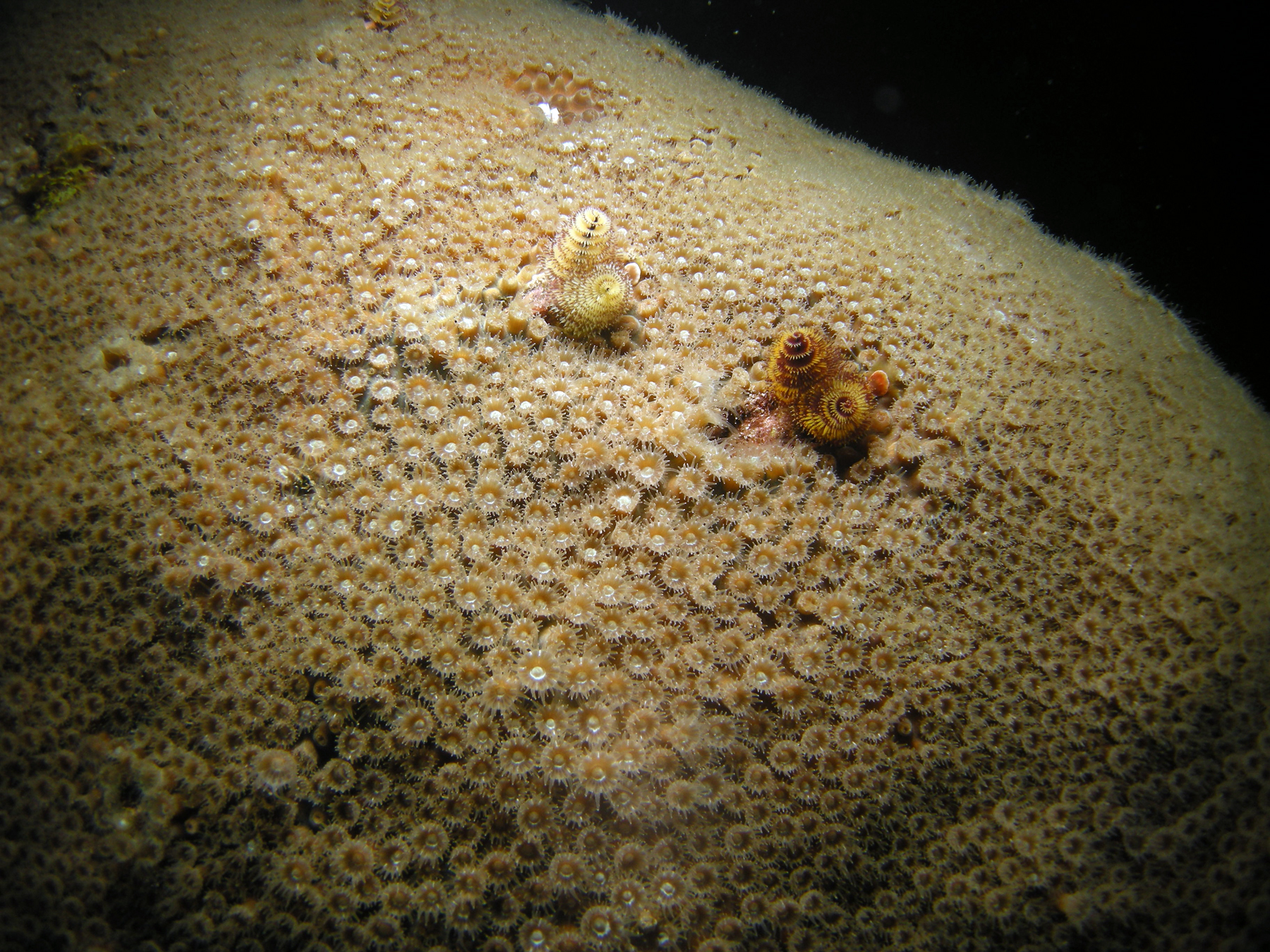
Boulders and plates covered in evenly spaced raised polyp cups, each about the size of a pencil eraser, giving a distinctly beaded surface.
Quick ID
| Scientific name | Montastraea cavernosa |
|---|---|
| Group | Hard Corals |
| Typical size | Colonies to 3 m across |
| Depth range | 3–40 m |
| When to see it | Year-round |
| Active | Polyps feed at night |
| Conservation status | Least Concern |
| Notes | — |
Where You Will See It In Cozumel
Great Star Coral works the 9 to 82 foot band. On this island that means the sheltered west-coast reefs, and the shallow east-side entries when the sea is flat — these are the sites where the depth and the habitat line up for it.
Without a boat. It is worth looking for at Playa Corona, Punta Morena and Tikkila Shallow — all shore entries, so you dive them on your own schedule.
On an ordinary beginner boat dive. It should be within reach at Yellow House, Yucab, Casa Blanca, Chankanaab Bolones and Columbia Shallows. No advanced certification needed.
Deeper, and on the walls. It is also plausible on San Juan, Santa Rosa Wall, Tormentos and Villa Blanca Wall.
Conditions change the odds more than the site does — the current, the time of day and how much the group has already stirred up the sand. Ask your guide what they have been seeing that week.
Behaviour
A major framework builder that grows in boulders in the shallows and flattens into plates at depth to catch more light. At night the polyps extend into a field of translucent tentacles.
Commonly Confused With
- Brain coral — Continuous valleys rather than separate raised cups.
- Boulder star coral — Boulder star coral has smaller, less prominent cups.
Diving Etiquette And Safety
Do not touch. Neutral buoyancy on a wall is what protects these colonies.
Part of the Cozumel marine life guide · see Cozumel dive sites · plan your Cozumel dive trip
Photo: NOAA, Public domain, via Wikimedia Commons.

Great Star Coral Photos

Frequently Asked Questions
How do you identify great star coral?
Why does it grow flat at depth?
Where is it common in Cozumel?
What does it look like at night?
Diving Cozumel soon?
Tell us your dates — we'll send options and connect you with the right dive shop.