

Peacock Flounder in Cozumel
Peacock Flounder (Bothus lunatus) in Cozumel: how to identify it, where it is reliably seen, and what it is commonly confused with.
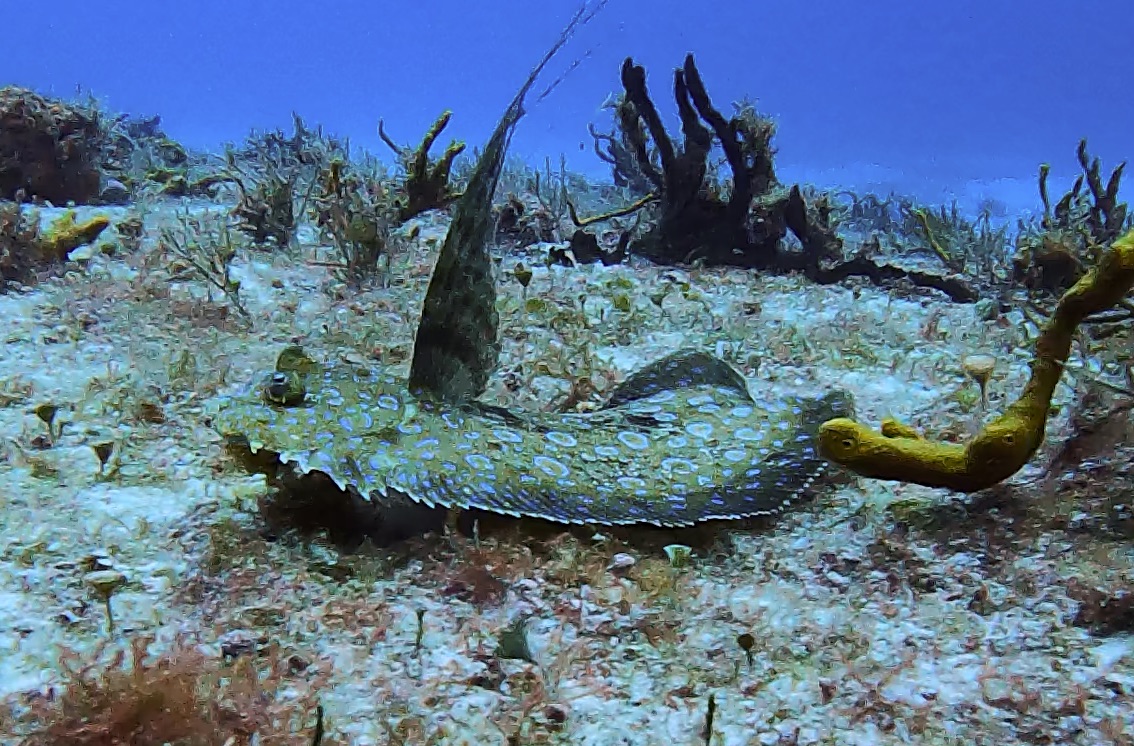
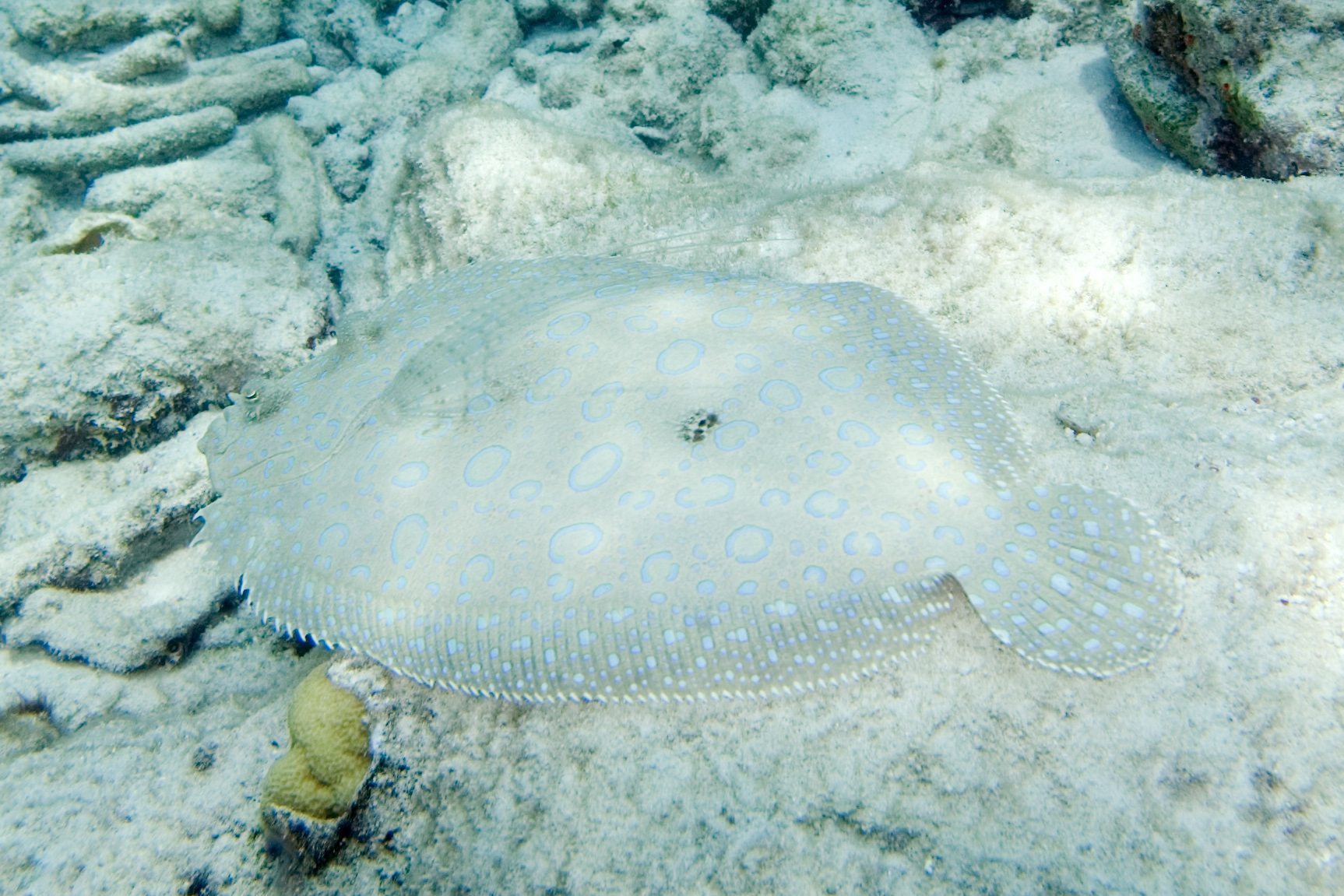
A flat oval lying on the sand with both eyes on the same upward-facing side, scattered with pale blue rings and spots. Males have very long pectoral fin extensions.
Quick ID
| Scientific name | Bothus lunatus |
|---|---|
| Group | Camouflaged & Odd-Shaped Fish |
| Typical size | 20–40 cm |
| Depth range | 2–25 m |
| When to see it | Year-round |
| Active | Daytime |
| Conservation status | Least Concern |
| Notes | — |
Where You Will See It In Cozumel
Peacock Flounder works the 6 to 82 foot band. On this island that means the sheltered west-coast reefs, and the shallow east-side entries when the sea is flat — these are the sites where the depth and the habitat line up for it.
Without a boat. It is worth looking for at Chen Rio, Coral Princess and El Islote — all shore entries, so you dive them on your own schedule.
On an ordinary beginner boat dive. It should be within reach at El Cielo, La Francesa, Las Palmas, Molas Shallow and Palancar Gardens. No advanced certification needed.
Deeper, and on the walls. It is also plausible on Colombia Deep, Devil's Throat, Los Atolones and Maracaibo.
Conditions change the odds more than the site does — the current, the time of day and how much the group has already stirred up the sand. Ask your guide what they have been seeing that week.
Behaviour
Changes colour and pattern within seconds to match the substrate underneath it, and buries itself with a flick of the fins leaving only the eyes exposed. Born with an eye on each side; one migrates across the skull as it matures.
Commonly Confused With
- Other flounders and soles — The pale blue rings and spots are the peacock flounder's marker.
- Flying gurnard — The gurnard sits up on its fins rather than lying flat.
Diving Etiquette And Safety
Nothing required. Do not fan the sand to make it move.
Part of the Cozumel marine life guide · see Cozumel dive sites · plan your Cozumel dive trip
Photo: Becky A. Dayhuff, Public domain, via Wikimedia Commons.

Peacock Flounder Photos

Frequently Asked Questions
Why are both eyes on one side?
How do they camouflage?
Where do you see them in Cozumel?
How big do they get?
Diving Cozumel soon?
Tell us your dates — we'll send options and connect you with the right dive shop.