Cozumel Dive Sites Map: Reef Zones & Layout Guide
Map of Cozumel's dive sites: northern beginner reefs, central drift zones, and southern walls. Understand the reef system layout before you dive.
Carmen Novelo · October 12, 2026
Cozumel dive sites map understanding starts with a simple picture: nearly all named reefs, walls, and wrecks run along the island's protected west and southwest coasts in a horseshoe pattern. A prevailing south-to-north current shapes drift-dive planning, and sites vary widely in depth, current strength, and difficulty. If you are planning your first trip or choosing where to dive next, a mental map of the reef system will help you communicate clearly with your dive shop and set realistic expectations before you board the boat.
Unlike destinations where sites scatter across different islands or headings, Cozumel's geography keeps things simple. The Caribbean Current flows consistently along the west shore, delivering nutrients and keeping coral thriving. Most dive boats run two-tank trips, choosing sites based on weather, diver experience, current conditions, and traffic. Understanding the general layout and how conditions influence site selection will help you ask better questions and make the most of every tank.
Key Takeaways
- Cozumel's dive sites run along the protected west and southwest coasts, with depth, current, and topography varying by location rather than following a strict zone model.
- Sites range from shallow coral gardens suitable for beginners to deep walls that demand advanced drift and buoyancy skills.
- A south-to-north current shapes drift-dive profiles, though current direction and strength vary by site and conditions.
- Dive boats plan routes based on weather, diver ability, site traffic, and conditions — not a rigid deep-first pattern.
- Understanding the reef layout and asking site-specific questions helps you choose the right dive day and set realistic expectations before you arrive.
General Geography of Cozumel's Reef System
The easiest way to visualize the reef is to think of it as a continuous ribbon running down the leeward coast, with depth, topography, and current varying from site to site. This is not an official designation, and dive shops do not always group sites into rigid zones, but understanding the general north-to-south progression helps you follow along when your guide explains the day's plan.
Northern Sites: Shallow Reefs and Training Areas
The northern section begins near the cruise-ship piers and runs south past the hotel zone. Many sites here are shallow — typically ten to fifteen meters — with rolling coral gardens, sand patches, and gentle to moderate current on calm days. This is where most training dives, Discover Scuba sessions, and refresher dives take place. The reef structure includes brain coral, star coral, scattered sponge formations, and good populations of juvenile fish: damselfish, parrotfish, angelfish, and the occasional turtle or nurse shark.
Because northern reefs are shallow and accessible, they see steady dive traffic, though the reef is vast enough that crowding is rarely an issue. Shorter boat rides, manageable conditions, and dive profiles that allow extended bottom time make these sites popular for building confidence and practicing skills. If you are shaking off rust or working on buoyancy, a northern site is a reliable choice.
Central Sites: Mid-Depth Reefs and Marine-Life Variety
South of the hotel zone, the reef deepens and topography becomes more varied. Central sites include sloping reefs, coral buttresses, small walls, and swim-throughs, with depths typically ranging from twelve to twenty-five meters. Current varies: some sites are gentle enough for intermediate divers, while others pick up speed and demand good drift technique and buoyancy control.
This area includes some of Cozumel's most famous names and rich marine-life encounters: schools of horse-eye jacks, green morays threading through coral, elkhorn and staghorn in shallower sections, and large angelfish. Many two-tank trips include a central site, and guides can tailor the profile to the group by adjusting depth and pace.
Central dives teach you how drift technique scales up. You learn to trust your buoyancy, relax into the water movement, and let your guide set the pace. This is also where you refine air-management skills at moderate depth, which is essential before advancing to deeper or faster sites.
Southern Sites: Deep Walls and Strong Drift
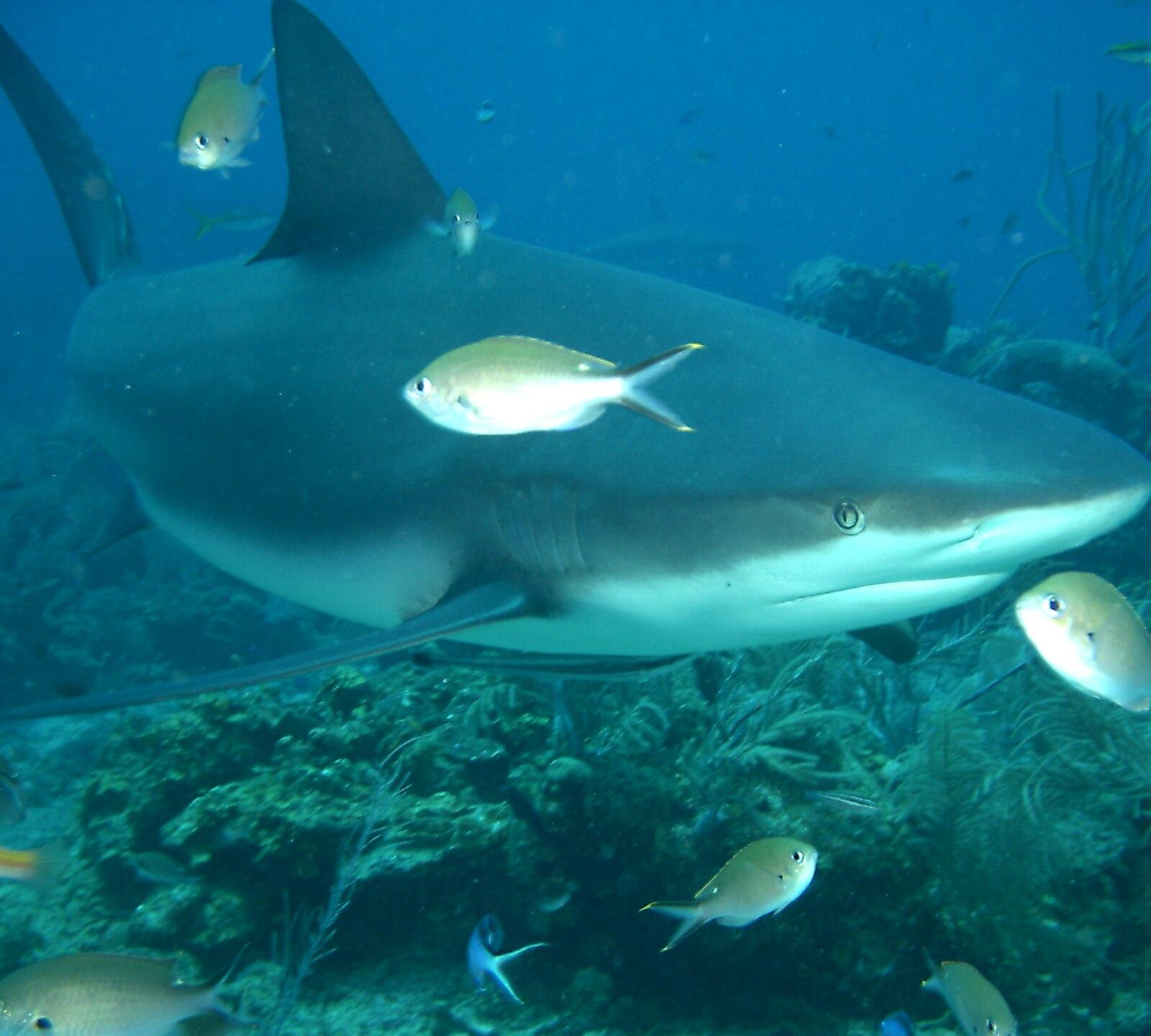
Farther south, the reef transitions into dramatic walls that drop past recreational limits. Southern sites are where Cozumel earns its reputation among experienced divers. Walls are often sheer, current can be strong, and marine life includes reef sharks, large grouper, eagle rays, and other pelagic species. Depths start around twenty meters, and walls drop to forty meters and beyond. Most recreational dives here are planned to thirty meters maximum, with a slow ascent and safety stop.
Southern sites demand solid buoyancy, depth awareness, and the ability to hold a safety stop in current. Most shops ask that you log a few easier drifts before heading south. The reward is spectacular underwater scenery: towering coral formations, overhangs, swim-throughs, and the electric-blue water column Cozumel is known for.
Diving deep walls also teaches you to manage descent and ascent in less forgiving conditions. You need to control your depth throughout the dive and plan your safety stop carefully. Stronger current means less time for dawdling, so navigation and observation skills need to be sharp.
Understanding the Prevailing Current and How It Shapes Dive Planning
The south-to-north current, driven by the Caribbean Current, flows with remarkable consistency year-round, though speed varies day to day — gentle on calm mornings, stronger on windy afternoons. This current is why Cozumel developed as a drift-dive destination, and it keeps the reef healthy by delivering nutrients and sweeping away sediment.
From a dive-planning perspective, the current determines where the boat drops you and where it picks you up. Most dives are negative entries — you descend immediately and start the drift — and the boat follows your bubbles on the surface. At the end of the dive, you deploy a surface-marker buoy during your safety stop, drift the last few meters, and the boat collects you.
One possible two-tank pattern is to dive deeper while you are fresh and your tank is full, then motor north or to a shallower reef for the second dive. However, operators choose sites based on conditions, traffic, diver ability, and route — not a universal deep-first rule. By the time you finish, you have typically seen two different reef environments and experienced a range of depths and topography.
Current speed affects more than the ride. When flow is mild, you can pause to inspect a cleaning station or watch a turtle graze on sponge. When it picks up, the dive becomes faster and more dynamic — you cover more reef, see more variety, and rely more on your guide to navigate and signal points of interest. The most common mistake new drift divers make is fighting the current instead of relaxing into it.
Understanding the current also helps you plan air consumption and bottom time. In strong current, you cover more distance horizontally, which means you see more reef in less time. But current can also make you work harder to hold position, which burns air. Your guide will show you how to position yourself efficiently. On your second or third drift dive, you will start to feel the rhythm, and your body will naturally adjust.
Key Dive Sites and What Makes Each One Distinctive
A handful of representative sites will give you a clear sense of what to expect across the reef system. These are not necessarily the most famous names, but they illustrate the range of topography, depth, and marine life. Learning to recognize the character of different sites will help you understand what guides mean when they mention a reef you have not visited yet.
Paradise Reef (Shallow, Beginner-Friendly)
Paradise sits just south of the international pier, close to town and reachable in about ten minutes by boat. The reef slopes gently from around ten to fifteen meters, with sand patches, coral heads, and good populations of small reef fish. Current here is often light, making it popular for training dives, refreshers, and snorkelers. You will see angelfish, butterflyfish, yellowtail snapper, and the occasional southern stingray on the sand. Coral includes brain, star, and fire coral, with scattered sponges and cleaning stations.
Paradise is not a dramatic dive, but it is reliable, pretty, and forgiving. If you are shaking off rust or diving with a mixed group that includes newer divers, this is a smart first stop. The site is also good for practicing buoyancy work or fin technique without the pressure of current pushing you along.
Chankanaab Reef (Beginner-Friendly with Structure)
A bit farther south, Chankanaab offers more topography without adding much depth. The reef features low walls, coral ridges, and small swim-throughs that give the site more character than flatter northern gardens. Depth ranges from around nine to fourteen meters, and current is typically mild. Marine life includes reef fish, green morays, spotted drums, and queen angelfish. The site sits inside the marine park, and mooring buoys are maintained.
Chankanaab is a good second dive after a deeper morning drop, or a solid choice for a single-tank afternoon when you want interesting structure without pushing your limits. Visibility is typically excellent on calm days. The small walls and ridges give divers practice in contour diving, a fundamental skill that carries over to more complex sites.
Palancar Caves (Intermediate to Advanced)
Palancar is not one site but a series of reefs that stretch along the southwest coast. Palancar Caves is among the most famous and sits at the deeper end of the recreational range. The reef features coral arches, overhangs, swim-throughs, and tunnels large enough to swim through comfortably but still creating a cathedral feeling when sunlight filters down from above.
Marine life at Palancar includes everything from tiny cleaning shrimp and flamingo tongues on sea fans to large groupers, turtles, and occasional reef sharks. Coral is dense, and topography is dramatic without being intimidating. This is a site that rewards experience — you want solid buoyancy to navigate overhangs and good air consumption to make the most of time at depth — but it is accessible to divers who have moved beyond the beginner stage.
Overhangs and swim-throughs at Palancar demand that you stay aware of your vertical position and remain in control of buoyancy. Descending into a tunnel is thrilling, but you need to know how to level out, turn around in confined space, and ascend without hitting coral above you.
Barracuda Reef (Northern Advanced Drift)
Barracuda Reef is located in the far northern waters and is known for strong current and dynamic drift diving. The reef features dramatic structures, and current here can be vigorous. You will see schools of horse-eye jacks, eagle rays, and reef sharks. Coral coverage varies, and the scenery is dynamic. The dive is fast, engaging, and exhilarating for experienced drifters.
Barracuda demands good skills: you manage your depth carefully, stay aware of your air, and plan your ascent with a solid safety stop. Most shops will assess your experience and comfort level before taking you to this site. Strong current means you need to be especially diligent about maintaining depth and monitoring air. Divers who underestimate the physical and mental demands of high-current diving can burn through air quickly if they are fighting the water or not paying attention to consumption.
How Dive Shops Use the Map to Plan Your Two-Tank Day
When you book a two-tank morning trip, the boat captain and dive guide check weather, wind direction, current forecast, and the experience level of the group, then plot a route that makes sense. Some operators may choose a deeper site early and a shallower reef for the second dive, but route also depends on conditions. If wind is up and certain areas are choppy, the boat may stay in calmer zones for both dives. If you have a group of advanced divers asking for dramatic sites, the guide may tailor the itinerary accordingly. With a mixed group, the guide will often default to moderate-depth sites where everyone can enjoy the dive without stress.
The best dive days come when divers trust their guide's knowledge of the reef system and stay flexible. The map gives you a framework, but the ocean has the final say. A site that was calm yesterday may be different today, and a reef you planned to visit may be passed over in favor of a better option nearby. That is not a problem — it is the nature of drift diving in a dynamic environment.
Before you arrive, ask your dive shop about their typical route and what factors influence site selection. Some shops have published itineraries, while others prefer to decide on the day depending on conditions. Either approach is valid. If you have specific requests — a particular depth range, a desire to see certain marine life, or concerns about your comfort level — let the shop know when you book.
Booking and Logistics for Multi-Site Diving
Most visitors to Cozumel book their dives through their hotel, a local dive shop, or an online booking site. When you reserve, provide your certification level, your total logged dives, and any recent training you have completed. If you have been inactive for a while, mention that — shops can recommend a refresher or a checkout dive before moving to more advanced sites. The more information you share, the better the shop can match you with appropriate sites and dives.
Two-tank morning dives typically depart early — between 7 and 8 a.m. — and return by midday. This schedule lets you explore two different sites, complete your safety stops, and still have time for lunch, gear maintenance, and rest before an optional afternoon dive. Some shops offer three-tank days or afternoon single-tank dives, which extend your bottom time across different areas.
When you arrive at the dive shop in the morning, the crew will review your certification and log details, make sure your rental gear fits properly, and brief you on the day's plan. If the plan has changed due to overnight weather shifts, the guide will explain the new route and what to expect. This is a good time to ask questions about the sites, the current, or any concerns you have.
Bring your logbook and certification card to every dive, along with your dive computer if you use one. Some shops provide computers as part of the rental package, but having your own gives you more familiarity and control. Also bring a towel, sunscreen, and a rash guard or wetsuit appropriate for the season. Even though the water is warm, you will spend time on a moving boat in the sun, and exposure protection matters.
Seasonal Variations and How They Affect Site Selection
Cozumel's reef system is diveable year-round, but seasonal shifts in weather and water temperature do influence which sites see the most action. Winter months — December through March — bring cooler water, slightly more wind, and the chance of cold fronts that can stir up the surface. Dive shops may favor central and northern sites during winter if the wind is up, saving more exposed areas for calm mornings.
Spring and summer — April through September — offer warmer water, calmer seas, and longer weather windows. This is peak season when guides will run a wider range of sites without worrying as much about weather.
Fall — October and November — brings a bit more variability. The reef remains diveable, and many experienced divers prefer this time of year for smaller crowds. Seasonal changes do not fundamentally alter the map, but they do shift day-to-day tactics that guides use to plan your dives.
Water temperature affects your exposure protection. Winter water calls for a full wetsuit or thicker jacket, while summer diving may only require a thin rash guard or shorty. If you rent gear, the shop will help you choose the right thickness. If you bring your own, pack a range of options.
Certification and Skill Requirements
Most shops in Cozumel follow PADI (Professional Association of Diving Instructors) standards or equivalent systems from other training organizations. To dive shallower sites, you need a valid Open Water certification or equivalent. Shops typically ask to see your certification card and your logbook before taking you into the water. If your certification is from another organization, most shops recognize it — the key is that you have trained and been certified by a recognized body.
For deeper or moderate-current sites, shops prefer to see divers with at least a few dives logged since certification, ideally from the last year or so. If you have been inactive for a long time, the shop may recommend a refresher dive or a checkout dive before moving to sites with stronger current. These sessions are not punitive — they are a way to rebuild your skills in a relaxed setting before you commit to a regular dive.
Deeper sites with stronger current typically require more experience. Most shops ask for evidence that you have recently completed drift dives, deep dives, or both. Some may require specialty training or a certain minimum number of logged dives. If you are interested in diving deeper or faster sites but do not meet these thresholds, ask about specialty courses. Many shops run these courses over one or two days and can prepare you for advanced diving.
If you have trained for nitrox diving, let your shop know. Some sites can be dived with nitrox for extended bottom time, and having your nitrox certification opens more options. Not all shops offer nitrox fills, so confirm in advance if this is important to you.
Insurance and Safety Considerations
Diving accident insurance is not required by law in Mexico, but it is strongly recommended. When you book your dives, ask if insurance is included or how you can purchase coverage. A standard policy covers emergency evacuation, medical treatment, and recompression therapy if you suffer decompression sickness or another diving-related injury. This is serious protection that can save your life and prevent financial catastrophe.
Before you travel, review your health and fitness. Diving is a physical activity, and you need to be in reasonable health to do it safely. If you have a medical history of heart problems, lung issues, or ear conditions, consult a dive physician before traveling. Pregnancy and certain medications can also affect your dive clearance, so have these conversations with your doctor.
On the day of your dive, avoid alcohol the night before and the morning of your dive. Alcohol dehydrates you and can impair your judgment and coordination. Also avoid heavy meals immediately before diving, and do not dive if you are sick, especially if you have congestion or ear problems. If you feel unwell or have concerns on the morning of your dive, talk to your guide. It is better to skip a dive than to push through when something is not right.
During the dive, follow your guide's instructions, maintain good buoyancy, and never exceed your training or experience level. Stay close to your buddy and the guide, and use hand signals to communicate. If you run low on air, signal your guide immediately — do not try to stretch your supply or make a rushed ascent. The guide will help you end the dive safely and return to the boat in an organized way.
Understanding Current and Gas Management
Current diving burns more air than a calm site dive because you are working against the water and moving continuously. When you plan a dive with moderate to strong current, expect your air consumption to be higher than it would be on a calm, shallow site. Your dive computer and pressure gauge are your primary tools for managing this. Check your air frequently, communicate with your buddy, and signal your guide when you reach your turnaround pressure or reserve threshold.
Good buoyancy control reduces air consumption. When you are properly weighted and neutrally buoyant, you glide through the water with minimal effort. When you are overweighted or fighting your position, you burn through your tank quickly. Before your trip, practice buoyancy skills in a pool or on a checkout dive. Small adjustments in your breathing, your weight distribution, and your body position make a big difference over the course of a dive.
Plan your dive profile conservatively, especially on deeper dives. Use your dive computer to track your depth, bottom time, and no-decompression limits. Stay well within those limits, and build in a generous safety stop at the end of every dive. If you are diving multiple days in a row, consider using nitrox to extend your bottom time and reduce nitrogen loading. Always dive within the limits of your training and certification.
Our Recommendation
The Cozumel dive sites map is less about memorizing reef names and more about understanding how depth, current, and topography vary along the west coast. If you are a newer diver, start with shallower, calmer sites to build your drift skills and confidence. If you are more experienced, communicate your goals and comfort level with your dive shop so they can plan a route that matches your ability. Ask site-specific questions about depth, current, and marine life, and trust your guide's knowledge of conditions on the day you dive. The reef system is vast, healthy, and accessible year-round — your job is to show up prepared, stay flexible, and enjoy the ride.
Related on Cozumel Dive Hub
Dive sites:
- Barracuda Reef Cozumel: Advanced Drift Dive Site
- C-53 Shipwreck Dive Site
- Cantarel Cozumel – Seasonal Eagle Ray Diving
- Casa Blanca Cozumel: Complete Dive Site Guide
Dive shops:
Courses:
- AWARE Shark and Ray Conservation Specialty Course in Cozumel
- Emergency First Response Care for Children Course in Cozumel
More reading:
- Deepest Dive Sites in Cozumel: 2026 Wall Dive Guide
- Are There Sharks in Cozumel? What You'll Actually See
- Best Cozumel Dive Sites for Marine Life: A Local Expert's Guide (2026)
- PADI Rescue Diver Course Cozumel Prerequisites: Are You Ready?
- Why Do Scuba Divers Fall Backwards? Cozumel Dive Guide
Trusted resources: PADI, SSI, and DAN (Divers Alert Network).
Share This Article
Carmen Novelo