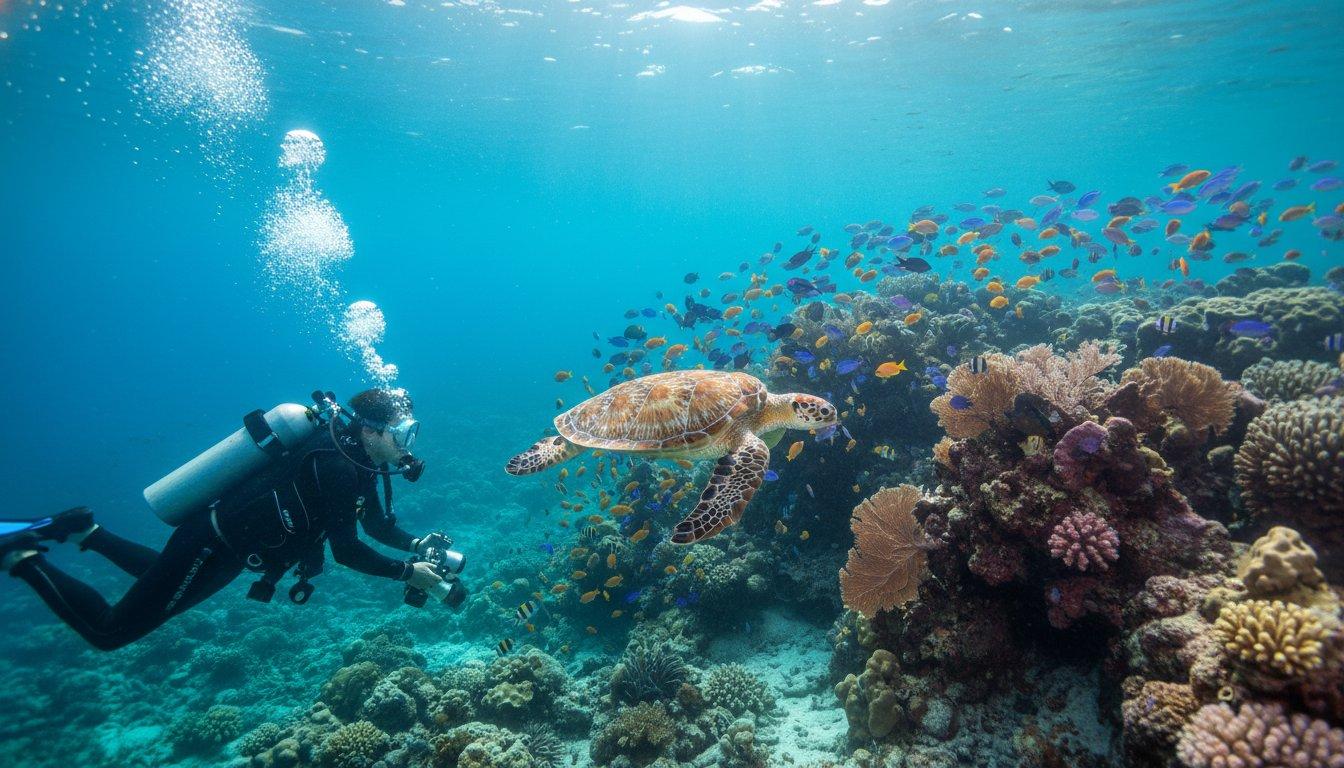
Scuba Diving in Cozumel: A Beginner's Guide
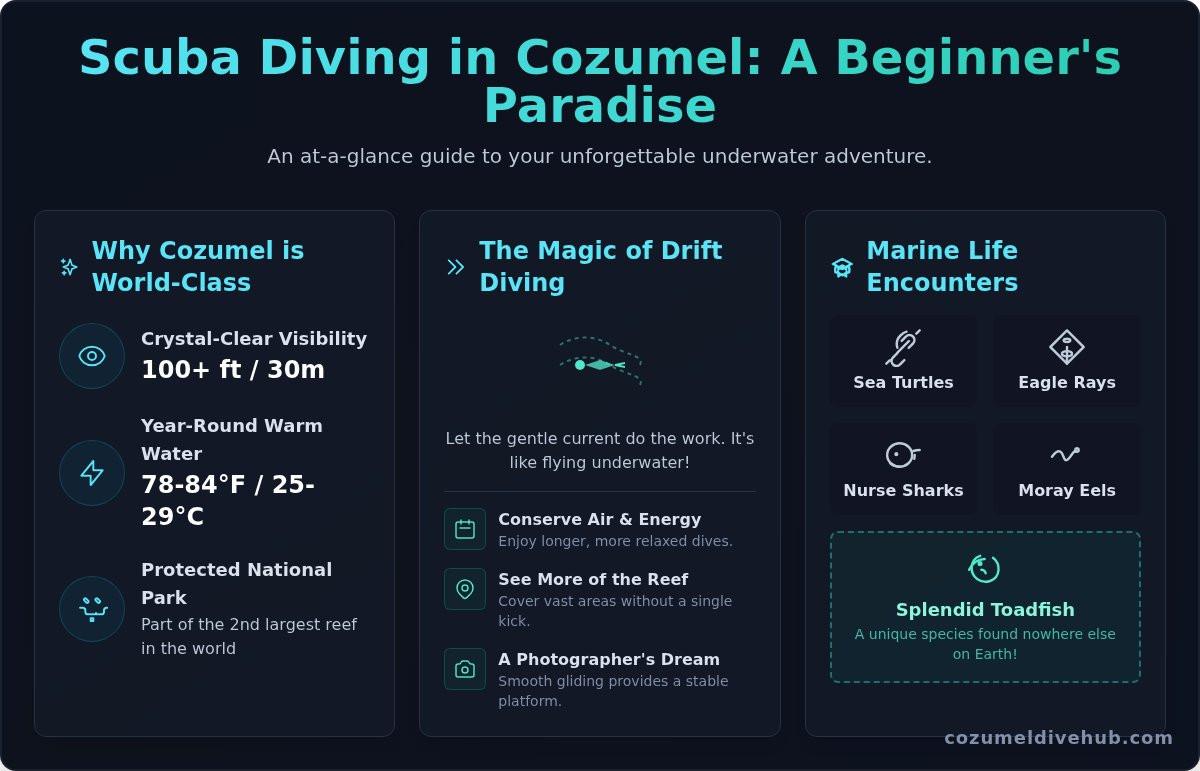
Water between 26 and 29C all year, visibility of 30 metres or more, and shallow sheltered mid-island reefs make scuba diving Cozumel unusually forgiving for beginners. The one thing that catches people out is that nearly every dive is a drift.
Carmen Novelo · January 24, 2026 · 4 min read
Cozumel is honestly one of the easiest places in the world to learn to dive. The water sits between 26 and 29°C all year, you can usually see 30 metres or more, and the mid-island reefs are shallow, sheltered and absolutely full of life. If you have not certified yet, the dive courses available on the island run from a first try-dive to full Open Water, and our complete guide to diving Cozumel covers what the diving is like once you have.
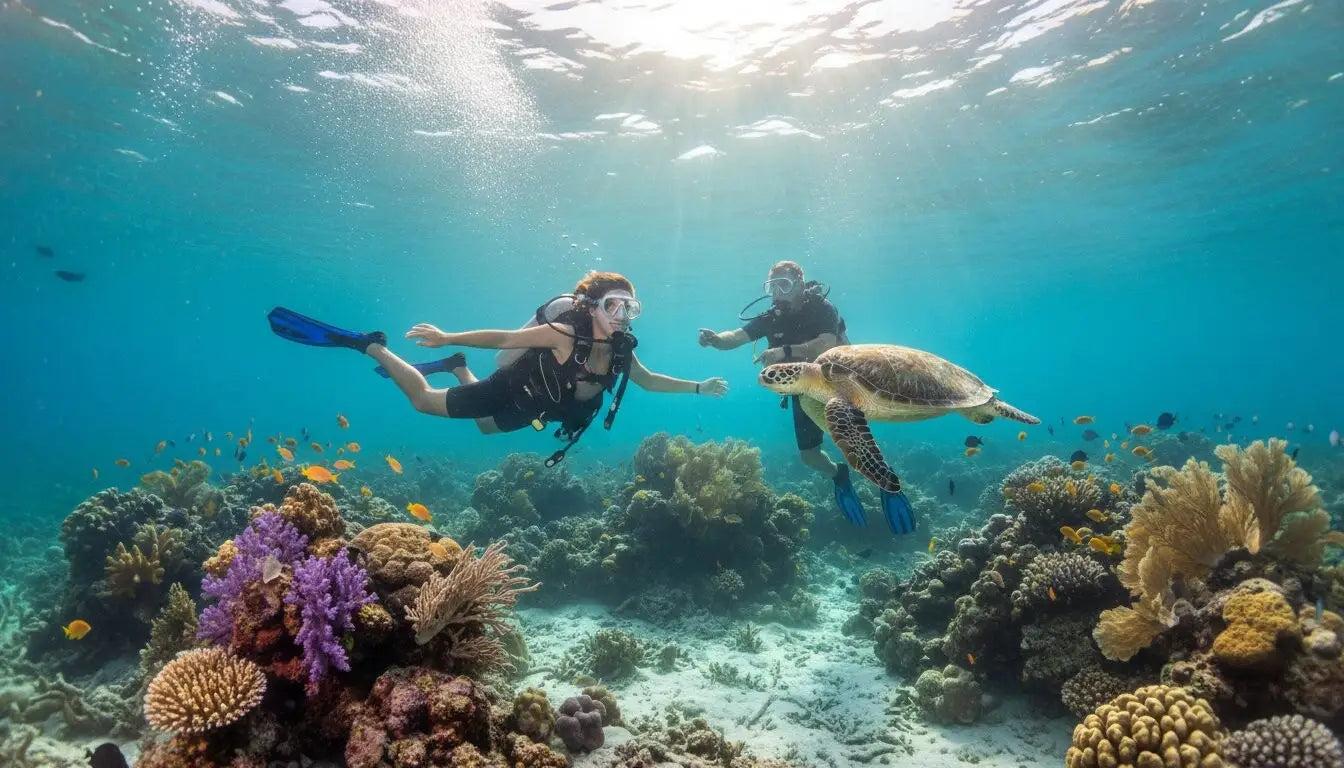
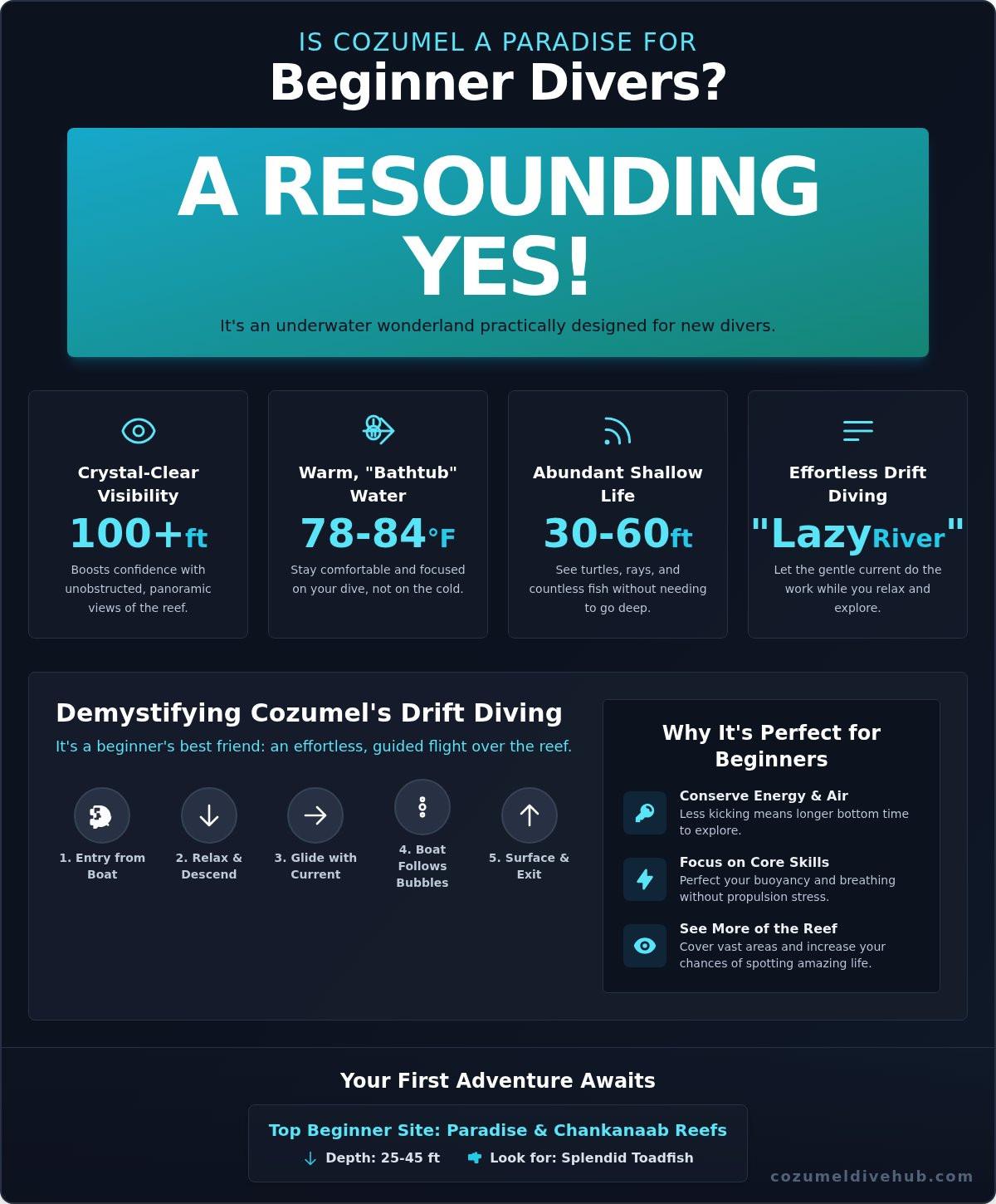
The one thing that catches people out is the current. Nearly every dive here is a drift dive — you get in, the current takes you along, and the boat follows your bubbles. It’s easier than it sounds and most people love it by the second dive. But nobody really warns you beforehand, so if you turn up expecting to swim around a reef, it’s a bit of a surprise.
What your first dive actually looks like
You go in backwards. Not a giant stride — Cozumel boats sit low, so it’s a backward roll. Feels alarming the first time, and then it just isn’t.
Descend as a group down the line or free, usually to 12–18 m on a first dive.
Then you stop swimming. This is the bit that surprises everyone. You just hang there, stay neutral, and the reef slides past you. Trying to fight the current is the most common beginner mistake by a mile, and it’ll empty your tank fast.
The guide leads, you follow. They will be watching your air, your depth and your buoyancy. Signal your pressure whenever asked.
You surface wherever you end up. Could be a few hundred metres from where you started. The boat comes and gets you — that’s just how it works here.
Sites that suit a new diver
| Site | Depth | Why it works |
|---|---|---|
| Paradise Reef | 30–50 ft | Shallow, mild current, long bottom time |
| Chankanaab | 30–55 ft | Sheltered, easy, good for a first ever dive |
| Yucab Reef | 50–60 ft | Classic Cozumel drift, forgiving structure |
| Villa Blanca | 50–100 ft | Shallow section only — the wall drops past Open Water limits |
| Tormentos | 40–70 ft | Coral heads, plenty to look at — stay in the shallower half |
Sites to leave until later
Punta Sur and Devil’s Throat. A genuine overhead environment at depth. This is the dive that gets people into trouble in Cozumel. Reputable operators will not take a new diver there, and if one offers, that tells you what you need to know about them.
Maracaibo and Colombia Deep. Deep, strong current, long boat ride. Excellent dives once you have the experience.
Barracuda and San Juan. The far northern sites, and the strongest current on the island. Not for a first week.
The five mistakes that cost you
Fighting the current. Relax and let it do the work. Swim against it and you’ll be out of air in twenty minutes.
Too much weight. Most new divers carry way too much lead and then spend the dive fighting to stay off the bottom. Get your guide to check it on dive one — you probably need less than you think.
Breathing too fast. Air consumption is mostly nerves, not fitness. It sorts itself out after a few dives, honestly.
Leaving it too late to equalise. Start before you even go down, then every metre or so on the way. And never push through pain — ever.
Booking a big boat. Group size determines your dive. See how to choose an operator — four to six divers per guide is the number that matters.
What you need before you go
Open Water certification, or a Discover Scuba session if you are not certified. Discover Scuba lets you dive to 12 m with an instructor, same day, no course.
Your certification card. Any operator that does not ask to see it is skipping other checks too.
A logbook or your dive count. If it has been over a year, book a refresher rather than finding the gap at depth.
Your own mask if you have one. A leaking rental mask ruins a dive faster than anything else.
When you’re ready to book, the dive center listing shows who runs small groups, and the full certification guide covers the course itself if you are not certified yet.
Frequently Asked Questions
Is Cozumel good for beginner divers?
Can beginners dive in Cozumel?
Which Cozumel dive sites are best for beginners?
Is the current in Cozumel dangerous for beginners?
What is the most common mistake new divers make in Cozumel?
Do I need to be a strong swimmer to dive in Cozumel?
How deep will I go on my first dive in Cozumel?
What should I bring on a Cozumel dive boat?
Share This Article
Carmen Novelo
Carmen Novelo is a Cozumel native and an active scuba instructor and dive guide on the island. She has spent twelve years diving the Cozumel reef system, and writes about its dive sites, conditions and marine life for Cozumel Dive Hub.