
Cozumel Snorkeling Tours: What to Book and What to Skip
Not all Cozumel snorkeling tours are the same. What the three-reef trip actually includes, why El Cielo gets crowded, and when to book private.
Luisa Carmona · August 19, 2026 · 6 min read
Cozumel snorkelling trips come in five shapes: the 2–3 stop reef boat, the El Cielo or Palancar combo, the private charter, the beach club day pass, and riding along on a dive boat. As of August 2026 a small-boat reef tour started around $50 per person and a private charter around $600 for the boat. The single biggest difference between a good trip and a bad one is not price — it is how many people are on the boat and whether a guide gets in the water with you.
Here is what each type actually buys, and where the cheap ones cut.
The Five Kinds of Cozumel Snorkelling Trip
| Type | Typical price (Aug 2026) | Duration | Group size | Best for | Main drawback |
|---|---|---|---|---|---|
| 2–3 stop reef boat | From $50 per person | 3–4.5 hrs | 6–15 | Seeing actual reef, best all-round value | Fixed itinerary, fixed schedule |
| El Cielo / Palancar combo | From about $63 per person | 4 hrs | Up to 15 on small boats, 40+ on catamarans | Mixing reef with the starfish sandbar | The big catamarans are a party, not a snorkel trip |
| Private charter | From roughly $600 for the boat | 4–4.5 hrs | Up to about 12 | Groups, families, choosing your own reefs | Only economic with four or more people |
| Beach club day pass | Around $55 all-inclusive | Full day | Open | Unlimited water time, no schedule | You supervise yourself; reef quality varies |
| Ride-along on a dive boat | Around $73 per person | 4–5 hrs | 6–8 | Staying with diving friends | You wait through two dives |
The 2–3 stop reef boat
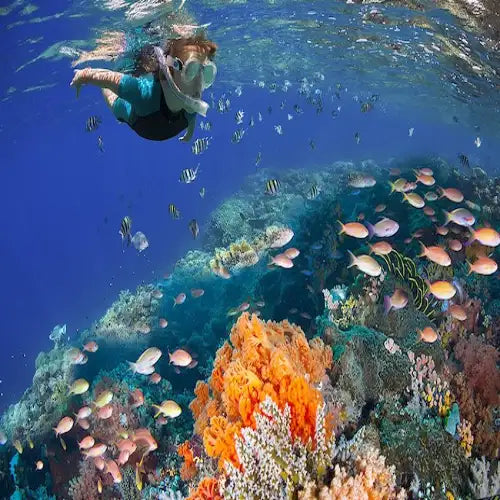
The default and, for most people, the right answer. Three stops on the southern reefs — typically Paradise Reef, Columbia Shallows and Palancar Gardens or similar — over three to four and a half hours. Gear, guide and drinks are normally included. One published small-boat operator listed three reefs plus El Cielo from $50 per person with a twelve-guest maximum in August 2026.
The El Cielo or Palancar combo
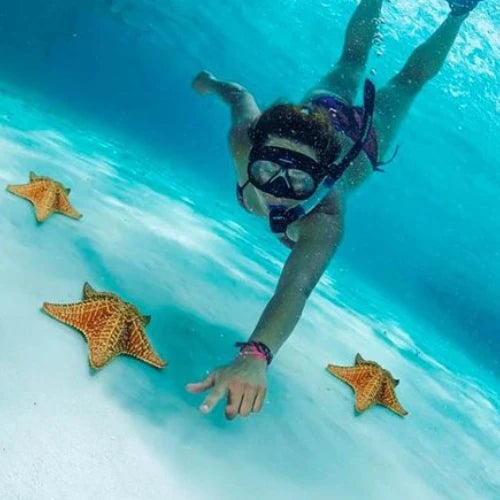
Same reefs, plus the shallow starfish sandbar. Worth understanding before booking: El Cielo is not a reef at all but a waist-deep sand flat where starfish gather, logged at 5–15 feet. It is a photo stop and a wade, not a snorkel. Small boats treat it as one stop among several. The large sailing catamarans build the whole day around it with an open bar and forty-plus passengers, which is a good day out if that is the day you want and a poor one if you came to look at the water.
The private charter
You pick the reefs, the departure time and the pace, and you avoid every crowd. Published rates in August 2026 started near $600 for a boat carrying up to about twelve, with larger operators pricing 4.5-hour charters by vessel size. Split four or six ways it lands close to group-tour pricing per head, which is why it is the quiet recommendation for families.
The beach club day pass
Not a tour, but it competes with one. An all-inclusive pass ran around $55 per person in August 2026. At a club built on actual reef — Sky Reef is the clearest example, with reef about twenty metres off the dock — you get unlimited water time with no schedule. At a club built on sand you get a nice lunch and nothing to look at. Check what is under the water before you pay. More options sit under explore Cozumel.
The ride-along on a dive boat
Most dive centres will take a snorkeller on a two-tank boat, often around $73 per person against $89 for their dedicated snorkel trip. It is the right call if you are travelling with divers and want to stay together. Be clear about the trade: a two-tank morning is roughly an hour underwater for the divers across two dives, plus a surface interval of an hour or so between them. As the snorkeller you are in the water for the two dive windows and sitting on a boat for the rest, over sites chosen for divers rather than for you. Boats moor over reefs like Palancar Gardens where the crest is 30 feet down — you will be looking at structure from a distance.
What a Decent Tour Includes — and What It Does Not
Advertised inclusions are where operators differentiate quietly. This is the checklist that separates a good boat from a cheap one.
| Item | What good looks like | What to watch for |
|---|---|---|
| Named reefs | The itinerary names the sites | "Three beautiful reefs" means whichever is closest |
| Guide | In the water, leading the group | A guide who stays on the boat |
| Group size | Stated up front; under 12 is comfortable | Unstated, or "large boat" |
| Gear | Range of mask sizes, fins that fit, vests offered | One bin of mixed sizes; a leaking mask ruins the day |
| Flotation | Vests available without fuss | Charged extra, or treated as embarrassing |
| Marine park fee | Included, or clearly flagged as separate | Discovered at the marina |
| Time in water | 40–60 minutes per stop | Twenty minutes, then back on the boat |
| Drinks | After snorkelling | Open bar before and during |
The last one deserves saying plainly. Several tours advertise an open bar that runs from departure. Alcohol before or between snorkel stops is a genuine safety problem in open water with current, not a bonus inclusion.
Is the Marine Park Fee Included?
Often not, and it is the most common surprise on the dock. The fee applies to every person entering the water inside Parque Nacional Arrecifes de Cozumel — snorkellers as much as divers — and is charged per person per day. It stood at 225 Mexican pesos, roughly $13, in August 2026.
Some operators fold it into the headline price. Others collect it in cash at the marina during check-in, and at least one published booking page listed the "National Marine Park & Marina Access Fee" explicitly as not included. Ask which it is, and carry cash either way. The marine park fee guide covers how the park fee is collected and what it funds.
What the Cheapest Cruise-Pier Tours Actually Buy You
The lowest-priced snorkelling excursions sold at the cruise piers work on volume. That is the whole model, and it has predictable consequences.
A lot of people on one boat. Large-capacity vessels are how a tour reaches the lowest price point. Forty-plus snorkellers entering the water together stirs up sand, scatters fish and turns a reef into a queue.
The easiest and nearest sites. Volume boats go where the run is short and the mooring is reliable, which means the same shallow northern and mid-island reefs every trip, not the southern sites the island is known for.
Peak timing. These trips run to ship schedules, so they arrive when every other ship's excursion arrives. On a three- or four-ship day the popular reefs are crowded from mid-morning. Cruise arrival schedules are public and worth thirty seconds before booking.
Less time in the water. Loading and unloading forty people eats the clock, and it comes out of the snorkelling.
None of this makes them a scam. If the ship's guarantee that the boat waits for you is what you are buying, that is a real thing to buy, and the cruise port diving guide covers how that guarantee works. But an independent small-group trip on a full port day usually costs less and puts you in the water with a handful of people. Book a morning slot and tell the operator which ship you are on.
How Many People Should Be on the Boat?
The number matters more than the price. On a snorkelling boat, under twelve is comfortable and under eight is genuinely good. A six-pack boat or panga with a guide in the water means someone is actually counting heads. A cattle boat means you are counting your own.
This is a safety point, not a comfort one. Snorkellers drift apart quickly in current, and a guide managing eight people can see all of them. One managing forty cannot.
Morning or Afternoon?
Morning wins on almost every measure. The surface is calmer, the light is better for seeing and photographing, and the reefs are empty until the cruise excursions arrive. First departures run around 8:00 to 9:00.
Afternoon trips are quieter on the dock but the wind usually builds through the day, the surface chops up and the light goes flat. In the winter norte season an afternoon trip is the one most likely to be cancelled or moved.
Whatever you book, check the forecast the evening before. Anyone prone to seasickness should strongly prefer the morning and sit outside at the back of the boat.
Which Reefs Will the Tour Actually Visit?
Snorkelling boats work a short list of sites where the reef top is close enough to the surface to be worth the stop.
| Reef | Depth | Current | What snorkellers get |
|---|---|---|---|
| El Cielo | 5–15 ft | Mild to moderate | Sandbar and starfish — a wade, not a reef |
| Tikkila | 15–30 ft | Mild to moderate | Shallow and quiet, rarely on standard itineraries |
| Paradise Reef | 30–40 ft | Mild to moderate | Fish-rich, easy, the usual first stop |
| San Clemente | 30–40 ft | Mild | The calmest current rating on the island |
| Chankanaab | 35–40 ft | Mild to moderate | Coral heads and sand channels |
| Columbia Shallows | 30–50 ft | Moderate to strong | Coral heads near the surface; needs a guided drift |
| Palancar Gardens | 30–80 ft | Mild to moderate | The tops of the coral towers, from above |
If an operator will not tell you which of these you are visiting, that is the answer to your question. The full list is in the dive site index.
Questions to Ask Before You Book
Five questions settle almost everything, and a straight answer to all five is the best signal you will get.
- Which reefs, by name?
- How many people on the boat?
- Is the marine park fee included, or paid at the marina?
- Does the guide get in the water?
- How long at each stop?
Booking ahead through a named operator gives you a named itinerary and an agreed price. Booking on the dock is not automatically worse — plenty of good operators sell that way — but pier and street pricing varies by who is asking, and the photos on a board are not a contract.
Do You Need a Tour At All?
Not always. Cozumel has a handful of places where reef sits close enough to shore to snorkel without a boat, and if that is what you want, a day pass beats a boat ticket. The complete snorkelling guide sets out which shore entries genuinely work, where the current makes swimming out a bad idea, and why the east coast is off the list entirely.
If a snorkel trip leaves you wanting to get down to the reef rather than look at it from above, Discover Scuba Diving is the same-day route with no course attached, and most dive centres run it daily. Families should check the diving with kids guide for age limits first.
Putting the Days Together
One boat morning to the southern reefs and a couple of shore sessions covers most of what Cozumel offers a snorkeller, at a fraction of the cost of booking a tour every day. Read up on the individual sites before you choose — Paradise Reef, Sky Reef, El Cielo and the turtle guide — and use the Cozumel trip planner to put the week in order.
Frequently Asked Questions
Share This Article
Luisa Carmona is a PADI Master Scuba Diver Trainer living and working in Cozumel. She has been diving its reefs most of her life and has thousands of dives logged here. She knows the reefs season by season and the marine life that comes with them, and has great friendships and relationships with the shops and guides working the island. Each year her knowledge helps hundreds of visitors get more out of diving in Cozumel.
@cozumelmermaid