Snorkeling in Cozumel: The Complete Guide
You can snorkel straight off the beach in Cozumel and see real reef. Where to go, what it costs, and whether a boat trip is worth it.
Luisa Carmona · August 19, 2026 · 7 min read
Cozumel's famous reefs — Palancar, Santa Rosa, Columbia — begin at 30 to 50 feet and fall away from there. That is too deep to reach from the sand and too deep to see properly from the surface. So the honest answer for snorkellers is that the good snorkelling here happens either from a boat or from a short list of sheltered west-coast beach clubs built directly on top of shallow inshore reef: Money Bar (Dzul-Ha), Sky Reef, Playa Corona and Chankanaab. Most other beaches are sand with nothing to look at, and the entire east coast is unsuitable for snorkelling of any kind.
That is less disappointing than it sounds. The inshore reef is shallower, brighter and busier with fish than the deep stuff, and a boat trip to the southern reefs costs about the same as a beach club day pass with lunch.
How Cozumel's Reef Is Actually Laid Out
Understanding the layout answers most snorkelling questions before you ask them. The west coast has three distinct bands running north to south.
The inshore patch reef sits in 10 to 25 feet of water, between roughly 20 and 60 metres off the sand. It is broken, low-relief coral and rock with sand channels between. This is the band you can snorkel from the beach, and only at the places where a beach club or park happens to sit on top of it.
A sand plain follows — several hundred metres of featureless bottom sloping gently away. There is nothing to look at and it is a long swim.
The main reef tract runs along the drop-off, starting at 30 feet on the shallowest crests and falling past 100 feet within a few fin kicks. This is the Cozumel that divers travel for, and reaching it means a boat. A shallow reef crest at 30 to 40 feet is snorkellable in the sense that you float above it in very clear water and look down at the structure. You are not swimming through it.
Browse the full dive site index to see how quickly the depths climb once you leave the shoreline.
Which Cozumel Reefs Are Shallow Enough to Snorkel?
These are the sites where the reef top sits within useful range of the surface. Depths are the site's own logged range.
| Reef | Depth | Current | Access | Snorkeller verdict |
|---|---|---|---|---|
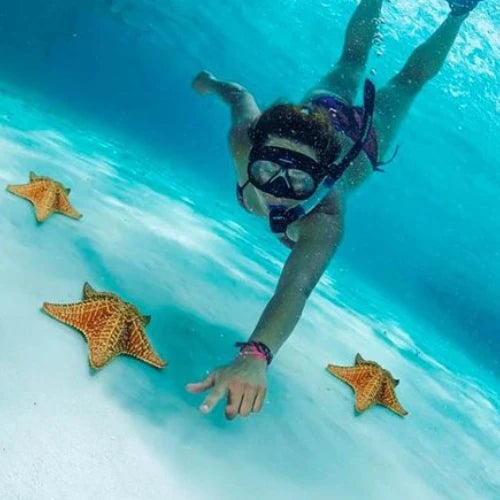
| El Cielo | 5–15 ft | Mild to moderate | Boat | Sandbar, not reef — waist deep, starfish |
| Money Bar | 10–20 ft | Mild to moderate | Shore | The best shore reef on the island |
| Coral Princess | 10–20 ft | Mild to moderate | Boat | Shallow, but a poor shore entry — see below |
| Tikkila | 15–30 ft | Mild to moderate | Boat | Quiet, easy, rarely on tour itineraries |
| Playa Corona | 20–40 ft | Mild to moderate | Shore | Coral close in, small walls further out |
| El Presidente | 20–70 ft | Mild to moderate | Shore | Good inshore section, deepens fast |
| Molas Shallow | 20–40 ft | Moderate to strong | Boat | Shallow but the current rules it out from shore |
| Paradise Reef | 30–40 ft | Mild to moderate | Boat | The standard first stop, fish-rich |
| Chankanaab | 35–40 ft | Mild to moderate | Boat | The named reef is deeper than the park lagoon |
| San Clemente | 30–40 ft | Mild | Boat | Calmest current rating on the island |
| Columbia Shallows | 30–50 ft | Moderate to strong | Boat | Coral heads near the surface, guided only |
| Palancar Gardens | 30–80 ft | Mild to moderate | Boat | You see the tops of the coral towers |
Note the trap in that table. Shallow does not mean safe to swim to. Coral Princess and Molas sit in 20 feet of water but are at the island's north end, where the current runs hard and unpredictably. Shore snorkellers should treat both as boat sites.
Can You Snorkel Straight Off the Beach in Cozumel?
Yes, at a specific and fairly short list of places. Everywhere else on the west coast, you will swim over sand.
| Spot | Entry | What you get | Cost (checked August 2026) |
|---|---|---|---|
| Money Bar (Dzul-Ha) | Rock and sand, water shoes helpful | Reef in 10–20 ft within about 20 m; the strongest shore reef on the island | Free to low, usually a food or drink minimum |
| Sky Reef | Dock and steps straight into the water | Reef running parallel to shore about 20 m out, dock entry, showers, bar | Beach club day pass |
| Playa Corona | Sand track into the water | Coral close in, small 10–20 ft walls around 50 yards out | Modest cover charge |
| Chankanaab park | Man-made beach and stairs | Easiest entry, gear on site, turtle grass and statues; coral is limited | $31 adult, $22 child; snorkel gear $15 extra |
| Villa Blanca shallows | Shore entry near the hotel | Quiet, with the top of the wall well offshore | Varies by access point |
Chankanaab is the right choice for a first time, nervous swimmer or a family, because everything is on site and the water is enclosed and calm. It is also the most expensive per hour and busiest with cruise passengers from mid-morning. Money Bar is the better reef for less money. More beach club options are collected under explore Cozumel.
How Strong Is the Current for Snorkellers?
Cozumel's current is the reason divers come here and the reason snorkellers get into difficulty. It runs broadly south to north along the west coast, driven by the Yucatán Current, and it does not stop at the shallows.
Divers plan for it — every boat dive here is a drift dive with a boat following the group. A snorkeller who swims out from a beach has no boat following them. That is the whole difference, and it catches people who assume snorkelling just means floating.
Where it is reasonable to swim out. The sheltered south-west beach club spots — Money Bar, Sky Reef, Playa Corona, the Chankanaab lagoon — on a day with a light mild current and no wind. Swim out across the current rather than along it, keep the reef line and your exit point in sight, and turn back while you still have plenty left. If you cannot make progress back towards your entry point, you have already gone too far.
Where it is not. The island's north end, anywhere near a boat channel or ferry route, and any site rated moderate to strong. Columbia Shallows and Molas belong to boats with crew watching. On a windy day, or when a norte is blowing, the sheltered spots stop being sheltered.
Boat traffic matters as much as current. The west coast is a working corridor of dive boats, tour boats and ferries, and a swimmer at the surface is close to invisible from a helm. A bright rash guard, a float, or a surface marker buoy is worth carrying. Never cross a channel on the surface.
For the full picture of how the drift behaves through the year, see how strong the current in Cozumel really is.
Why the East Coast Is Not a Snorkelling Coast
Cozumel's east side faces the open Caribbean with no reef tract offshore to break the swell. Waves arrive with the full fetch of open ocean behind them, break directly on the shore, and pull back hard. Local guidance describes strong and unpredictable undertows in water shallow enough to stand in, and advises against snorkelling there.
There are logged dive sites along that coast — Punta Morena, Chen Rio — but they are shore dives for experienced local divers on rare flat days, not snorkelling beaches. Chen Rio has a natural rock pool that shelters a swimming area and is where island families go, and even there the water outside the rocks is not a place to snorkel.
Most east coast beaches have no lifeguard. Where a flag is flown, it is the whole safety system:
| Flag | Meaning |
|---|---|
| Green | Calm conditions, safe for all ages |
| Yellow | Caution — moderate conditions, supervise children |
| Red | Dangerous conditions, swimming discouraged |
| Black | Extremely dangerous, do not enter the water |
If you are caught in a rip current anywhere on the island, do not swim straight back against it. Swim parallel to the beach until you are out of the pull, then angle back in. Go to the east coast for the beach bars, the wind and the view. Snorkel on the west.
Shore or Boat: Which Should You Choose?
| Shore snorkelling | Boat trip | |
|---|---|---|
| Typical cost | Free to a beach club day pass | $50–75 per person |
| Gear | Rent on site or bring your own | Normally included |
| Reef | Inshore patch reef, 10–25 ft | The named reefs, 30–50 ft crests |
| Supervision | None — you are on your own | Guide in the water on a good boat |
| Schedule | Whenever you like, as long as you like | Fixed departure, 3–4.5 hours |
| Current risk | You manage it yourself | Managed by crew |
| Best for | Families, repeat sessions, budget, nervous swimmers | Palancar, Columbia, El Cielo, turtles |
Most people should do both. One boat morning to the southern reefs, and beach snorkelling on the other days at a fraction of the cost. The tour guide breaks down what each kind of trip includes.
What Does Snorkelling in Cozumel Cost?
Prices checked against published operator and park pages in August 2026. Treat them as the current shape of the market rather than a quote.
| Item | Price | Notes |
|---|---|---|
| Marine park fee | 225 MXN, about $13 USD | Per person per day, everyone entering the water |
| Chankanaab admission | $31 adult, $22 child | Snorkel gear a further $15 for the day |
| Beach club day pass | Around $55 all-inclusive | Cheaper passes exist without food and drink |
| Small-boat reef tour | From $50 per person | Three stops plus El Cielo, max 12 guests |
| Larger reef and El Cielo tour | From about $63 per person | Max 15, park fee usually extra |
| Snorkeller on a dive boat | Around $73 per person | You wait through two dives |
| Private charter | From roughly $600 for the boat | Up to about 12 people |
What You Will Actually See
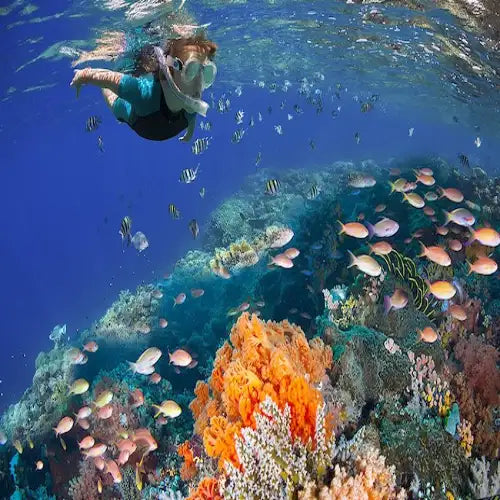
The shallow reef is busier than the deep reef, not emptier. Expect stoplight parrotfish, sergeant majors, blue tang, French angelfish, wrasse, grunts and the occasional barracuda hanging motionless in the blue.
Green turtles and hawksbills feed in the seagrass beds and are a realistic sighting from the surface — where to see Cozumel's sea turtles covers the seasons and the seagrass, and the turtle sanctuary guide explains the difference between the conservation programme and the boat tours sold under that name. Southern stingrays sit in the sand channels.
What you will not see from the surface: the walls, the swim-throughs and most of what makes the island famous among divers. The splendid toadfish, the endemic species everyone wants, sits under ledges at 30 feet and deeper. That is a dive sighting.
When Is the Best Time of Year to Snorkel?
Divers and snorkellers want different things from the same water. Divers want winter visibility. Snorkellers want a flat surface and a gentle current.
May to September is the snorkeller's season — lightest current, warmest water, calmest surface, and long settled mornings. It is also hurricane season, so watch the forecast.
December to March brings the best visibility but the strongest current and the nortes, winter north winds that chop the surface and shut down the shore entries for days at a time.
Sargassum mainly affects the east coast and comes and goes through spring and summer. The month-by-month detail is in the conditions guide.
Whatever the month, go early. Mornings are calmer, clearer and emptier, and the cruise crowds reach the reefs from mid-morning.
Marine Park Rules That Apply to Snorkellers Too
The reefs along the west and south coast sit inside Parque Nacional Arrecifes de Cozumel. The rules are not diver-specific.
The park fee is charged per person per day to everyone entering the water inside the park, snorkellers included — currently 225 MXN, roughly $13. Boat operators may collect it at the marina rather than including it in the headline price. Full detail in the marine park fee guide.
Do not touch or stand on anything. No-touch applies at the surface as much as at depth, and standing on coral kills it. Fire coral will make the point for you if the rule does not.
Mineral sunscreen only. Chemical filters such as oxybenzone and octinoxate are not permitted in the park. A rash guard is better than any sunscreen — you are floating face-down in tropical sun and your back will burn through most of what you put on it.
No gloves, no feeding, no collecting. Shells, coral fragments and starfish stay where they are. Lifting a starfish out of the water at El Cielo is the single most common violation on the island.
Snorkelling, Freediving or Learning to Dive?
If a snorkel session leaves you wanting to get closer to the reef, Discover Scuba Diving is the same-day option with no course attached — an instructor, a shallow reef and a briefing. The Discover Scuba page explains what the experience covers, and most dive centres run it daily.
Families weighing up the options will find age limits and practicalities in the diving with kids guide.
Staying Safe in the Water
Snorkelling looks undemanding, which is exactly why it deserves respect. A few things reduce nearly all of the risk.
- Never snorkel alone. Go with someone who will notice if you stop moving.
- Wear a flotation vest if you are not a confident swimmer. Beach clubs and boats carry them and there is nothing to prove by refusing one.
- Check the flag and the surface before you commit. Wind chop that looks minor from the sand is exhausting to swim against.
- Plan the exit before the entry. Know exactly where you are getting out and how far along the beach the current will have carried you.
- Watch for boats. Stay inside the reef line and never cross open water where boats run.
- Sun and dehydration cause more ruined days than anything underwater. A rash guard, water and shade between sessions.
Anyone with a heart, lung or ear condition, or who is unsure whether snorkelling is suitable for them, should raise it with their own doctor before travelling.
Planning the Rest of the Trip
Snorkelling fits around everything else on the island, and the reef you can reach from the sand is genuinely worth a morning. Work out which shore spots suit your group, book one boat trip for the southern reefs, and keep the east coast for lunch and a view.
Start with the Cozumel trip planner to put the days in order, or read the site-by-site detail on Paradise Reef, Sky Reef and El Cielo before you choose.
Frequently Asked Questions
Share This Article
Luisa Carmona is a PADI Master Scuba Diver Trainer living and working in Cozumel. She has been diving its reefs most of her life and has thousands of dives logged here. She knows the reefs season by season and the marine life that comes with them, and has great friendships and relationships with the shops and guides working the island. Each year her knowledge helps hundreds of visitors get more out of diving in Cozumel.
@cozumelmermaid