Cozumel Turtle Sanctuary and Where to See Sea Turtles
Turtle nesting runs May to October and releases follow from July. Here's what the sanctuary programmes involve and where turtles actually are in the water.
Carmen Novelo · August 19, 2026 · 6 min read
There is no captive turtle sanctuary in Cozumel — no tanks, no enclosure, no visitor center where turtles are kept. What actually exists are two working turtle camps on the island's wild eastern beaches: the Campamento Tortuguero Punta Sur, run by the Fundación de Parques y Museos de Cozumel inside Punta Sur park, and the San Martín turtle camp, run by the municipal Ecology Department's sea turtle protection committee. They mark, monitor and protect nests through a season that runs from roughly 15 May to 30 October, and they take volunteers. Separately, wild green turtles feed year-round in the seagrass along the sheltered west coast, which is where snorkellers and divers actually meet them. Touching, riding, chasing or blocking a sea turtle is prohibited — Mexico has had a total, permanent ban on capturing sea turtles since a presidential decree of 28 May 1990, and the marine park rules forbid disturbing any marine organism.
This page covers what the programme is, when nesting and hatching happen, how to join, and where turtles are genuinely reliable in the water. For the wider snorkelling picture start with the Cozumel snorkelling guide, and for site-by-site sighting detail see swimming with Cozumel's sea turtles.
Is There Actually a Turtle Sanctuary in Cozumel?
Two very different things get sold under that name, and it is worth separating them before you book anything.
The conservation programme is real, and it is fieldwork. Cozumel's eastern beaches are protected nesting grounds. Nests are located, marked, counted, sometimes relocated away from erosion or lights, and excavated after hatching to count survivors. Two organisations do this work:
| Programme | Run by | Where |
|---|---|---|
| Campamento Tortuguero Punta Sur | Fundación de Parques y Museos de Cozumel (FPMC) | Punta Sur Eco Beach Park, southern tip |
| San Martín turtle camp | Municipal Ecology Department's sea turtle protection committee | East coast nesting beaches |
Both operate under Mexican federal environmental authority. Neither is an attraction. There are no turtles on display, no feeding sessions and no scheduled show — the work happens on dark beaches at night and on hatching mornings, and what a visitor can join is the work itself.
The commercial "turtle sanctuary" tours are something else entirely. They are boat or shore snorkel trips to seagrass and shallow reef on the west coast, where wild green turtles feed. These are perfectly good trips and often the easiest way to see a turtle. But you are snorkelling with wild animals in a national park, not visiting a facility, and any operator implying otherwise is selling you a name rather than a place.
Both are worth doing. Just know which one you have paid for.
When Is Sea Turtle Nesting Season in Cozumel?
| Period | What is happening |
|---|---|
| Mid-May | Season opens; first females come ashore at night |
| June–July | Nesting builds; monitoring patrols run nightly |
| July onward | First hatchlings emerge |
| 15 August – 30 October | Peak hatching; nest observation window |
| September–October | Peak releases and nest excavations |
| 30 October | Programme season formally closes |
| November–April | No nesting activity on the island |
The scale is larger than most visitors expect. In a full recent season the municipal programme recorded just over four thousand marked nests and released more than 178,000 hatchlings across the island. Punta Sur's camp alone had protected 361 nests and released hundreds of hatchlings within the first months of the 2026 season.
Nesting happens at night on the wild eastern beaches — Punta Morena, Chen Rio and the sand between them — which is exactly where nobody stays and almost nobody goes after dark. That is not a coincidence; it is why the nesting works.
Which Turtle Species Are in Cozumel?
| Species | Role on the island |
|---|---|
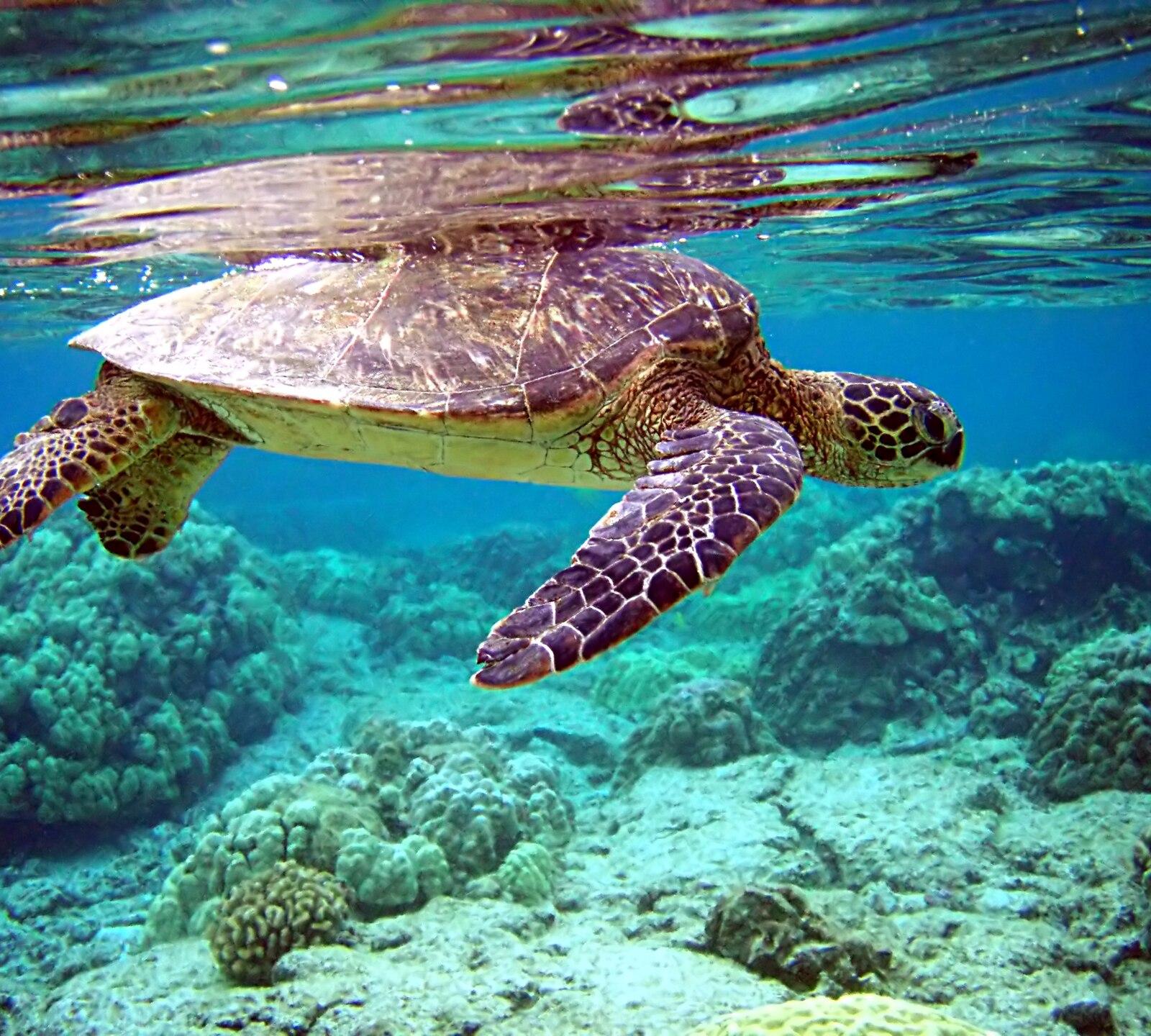
| Green turtle (Chelonia mydas) | The main nester and the one you see feeding on seagrass |
| Loggerhead (Caretta caretta) | The second nesting species, in much smaller numbers |
| Hawksbill (Eretmochelys imbricata) | Seen on the reef by divers; not a significant nester here |
Green turtles dominate both the nesting counts and the in-water sightings. In the recent season figures, greens accounted for roughly 3,900 of the 4,073 marked nests, with loggerheads making up the remainder. The green sea turtle and hawksbill glossary entries cover how to tell them apart in the water — the short version is the beak.
Can Visitors Join the Nesting Programme?
Yes, and this is the genuinely public-facing part of it, though it works nothing like booking a tour.
Night patrols. Volunteers walk the nesting beaches with the camp team looking for females coming ashore, typically from about 22:00 to 05:30. This is the real work and it is long, dark and unglamorous. It is also the only way most people will ever see a nesting turtle.
Nest hatching observation. Roughly 15 August to 30 October. Observation only, with no direct contact with the hatchlings — you watch, you do not carry them to the water. Availability depends entirely on what has actually hatched, which nobody can schedule in advance.
Nest excavation. After a nest has hatched, the team digs it out to free any trapped hatchlings and count shells and unhatched eggs. It is data collection, and volunteers help.
To take part, contact the programmes directly rather than a tour desk — Punta Sur's conservation team through the parks foundation, and the San Martín camp through the municipal ecology committee. Some tourist-facing turtle workshops do exist and carry a fee. Availability is limited, the season is short, and a request made a few weeks ahead lands far better than one made on the day.
The rules on a nesting beach are absolute. No flash photography and no white torches: hatchlings orient by light and a flash sends them inland to die. No handling unless a team member specifically asks. No walking on marked nests. No noise near a nesting female — she will abandon the attempt and return to the sea without laying.
Where Do You Actually See Turtles in the Water?
Not on the nesting beaches. Green turtles feed on turtle grass in the shallows along the sheltered west coast, year-round, and that is where snorkellers meet them.
| Where | Depth | Access | Why turtles are there |
|---|---|---|---|
| Chankanaab seagrass beds | Shallow, close to shore | Shore | The most reliable seagrass feeding ground on the island |
| Chankanaab Reef | 35–40 ft | Boat | Reef adjacent to the grass beds |
| Paradise Reef | 30–40 ft | Boat | Sand and grass edges beside the ridges |
| Punta Dalila | 40–60 ft | Boat | Green sea turtle is logged in the site record |
| Yucab | 50–60 ft | Boat | Turtles resting under ledges between coral heads |
| Palancar Gardens | 30–80 ft | Boat | Larger turtles cruising the coral towers |
Mornings are better. Turtles feed early and settle into rest later in the day, and the surface is calmer before the wind builds. Nothing about a turtle sighting is guaranteed; anyone promising one is guessing.
The shore option matters here. You do not need a boat or a "sanctuary" ticket to see a green turtle in Cozumel — the seagrass at Chankanaab and the beach clubs along that coast, including Sky Reef, put you in the right habitat for the price of a day pass.
Is It Illegal to Touch a Sea Turtle in Cozumel?
Yes, on two separate grounds.
Mexican federal law. A presidential decree of 28 May 1990 established a total and permanent ban on the capture of sea turtles and trade in turtle products, covering every species in Mexican waters. Sea turtles are protected species under Mexican wildlife law, and harassment is not a grey area.
Marine park rules. The reefs along Cozumel's west and south coast sit inside Parque Nacional Arrecifes de Cozumel, where the published prohibitions forbid fishing for, collecting or disturbing any marine organism, along with feeding animals and carrying gloves without registration. The no-touch rule is enforced, and the fee that funds that enforcement is covered in the marine park fee guide.
Riding a turtle is the worst version of it. Grabbing a shell holds the animal down, stops it surfacing to breathe, damages the shell coating, and terrifies it. It appears in holiday photographs anyway. It is prohibited, it is enforceable, and no legitimate guide on this island will tolerate it on their boat.
How Should You Behave Around a Sea Turtle?
- Stay above and behind, never in front. A turtle heading up to breathe needs a clear path to the surface. Blocking it is the single most common mistake and it is genuinely distressing for the animal.
- Keep about three metres back. Hang off and it keeps feeding. Crowd it and it leaves, and so does everyone else's sighting.
- Do not touch, grab, ride or chase. Under any circumstances, for any photograph.
- No flash. Same rule in the water as on the nesting beach.
- Do not corner one. Never position yourself between a turtle and open water, or between it and the surface.
- Do not feed anything. Feeding changes behaviour across the whole reef.
- Mineral sunscreen only, and a rash guard in preference to lotion.
Turtles in Cozumel are easy to find precisely because they are largely left alone. That only holds while visitors keep leaving them alone. The reef conservation guide covers the wider version of the same argument.
Seeing Turtles While Diving
Divers see turtles constantly, and usually in a different posture from snorkellers — resting wedged under a reef ledge rather than grazing on grass, or cruising the wall in mid-water. They are also more relaxed with a diver holding position at distance than with a group of snorkellers directly overhead.
A turtle at a cleaning station, sitting still while small fish work over its shell, is worth staying with. Hover, do not approach, and it will often ignore you completely.
If you have only ever snorkelled and want to see them at depth, Discover Scuba Diving puts you on a shallow reef with an instructor the same day, no course required, and most dive centers run it daily. The full dive site index shows what each reef holds.
When to Plan a Turtle Trip
For in-water sightings: any month. Green turtles feed on the west coast seagrass year-round. May to September gives the calmest surface and lightest current for snorkelling; December to March gives the best visibility but stronger current and nortes. Detail is in the conditions guide.
For nesting: June to August, at night, on the east coast, with a programme.
For hatchlings: mid-August to late October, and even then subject to what has actually emerged.
For both: September is the overlap month — hatching season is at its peak, the water is warm and calm, and the island is quiet.
Planning Turtles Into a Cozumel Trip
Turtles do not need a dedicated day. Pick a snorkel spot in the right habitat, go early, and the odds are good on their own. Pair a seagrass morning with a boat trip that includes real reef — the El Cielo sandbar and the southern reefs make a natural half day, and what to book on a Cozumel snorkel tour compares the options.
If nesting season is the reason you are travelling, plan around September, contact a camp weeks in advance, and treat the beach nights as the point rather than a bonus. Look through explore Cozumel for what else fills the east coast days, and use the Cozumel trip planner to put it all in order.
Frequently Asked Questions
Is there a turtle sanctuary in Cozumel?
When is sea turtle nesting season in Cozumel?
Which sea turtle species nest in Cozumel?
Can visitors join Cozumel's turtle conservation programme?
Where can you swim with sea turtles in Cozumel?
Do you need a tour to see turtles in Cozumel?
Is it illegal to touch a sea turtle in Mexico?
Why is riding or chasing a sea turtle so harmful?
How close can you get to a sea turtle when snorkelling?
Can you see baby turtle releases in Cozumel?
Share This Article

Carmen Novelo
Carmen Novelo is a Cozumel native and an active scuba instructor and dive guide on the island. She has spent twelve years diving the Cozumel reef system, and writes about its dive sites, conditions and marine life for Cozumel Dive Hub.