Cozumel Reef Conservation Diving: How to Explore with Purpose in 2026
Reef conservation diving in Cozumel runs on enforceable rules, not advice: no gloves or knives, no touching coral, mineral sunscreen only, an authorised guide in the water, and 225 pesos a day. Unstable buoyancy breaks more coral than rule-breaking does.
Carmen Novelo · July 11, 2026 · 14 min read
Reef conservation diving in Cozumel means diving inside Parque Nacional Arrecifes de Cozumel under a set of rules that are enforceable, not advisory: no gloves or knives for recreational divers, no touching or standing on coral, no collecting anything, mineral sunscreen only, no anchoring on the reef, and an authorised guide in the water with you. Every visitor also pays a daily park fee of 225 pesos per person (roughly US$12 in 2026) and wears the wristband that proves it. Beyond the rulebook, the single biggest variable is your own buoyancy: more reef damage comes from unstable divers and dangling gauges than from anyone deliberately breaking a rule.
This guide sets out what the marine park rules actually require, what each one means once you are in the water, what is documented about bleaching, disease and sargassum on Cozumel specifically, and what a visiting diver can genuinely do that makes a measurable difference. It is written for people planning a trip, not for people looking for reassurance.
What Do the Cozumel Marine Park Rules Actually Require?
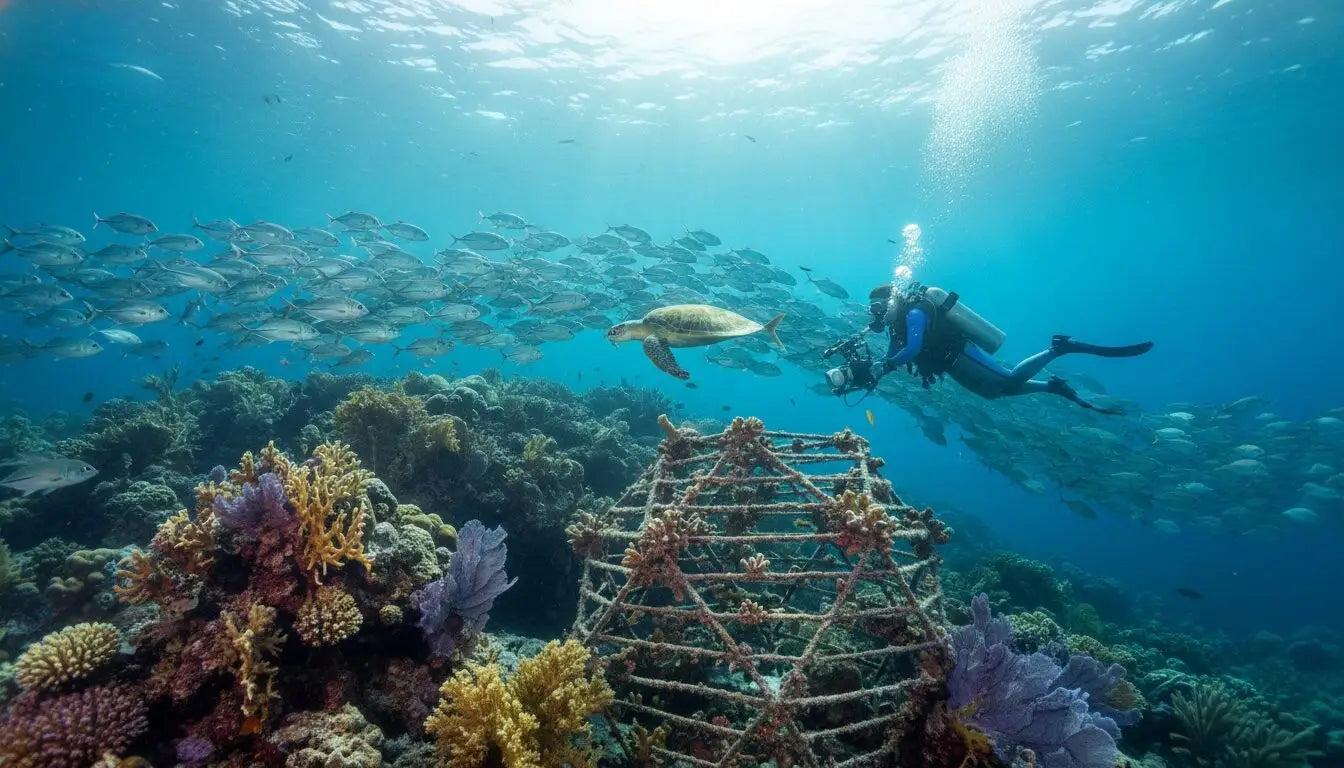
The park was decreed in 1996 and covers close to 12,000 hectares of reef along the island's sheltered west coast. It is administered by CONANP, Mexico's national protected areas commission, and every operator working inside it does so under a CONANP authorisation. The rules below are the ones a recreational diver is directly accountable for.
| Rule | What It Means in Practice |
|---|---|
| No gloves or knives for recreational divers | You cannot bring them on the boat "just in case". The point is not the glove, it is that a gloved hand grabs the reef without hesitating. Bare hands make you keep your distance. Documented medical exemptions are handled by the park, not by the dive shop. |
| No touching, holding or standing on coral | Includes steadying yourself on a "bare" rock, which is usually a living colony, and includes resting a camera housing on the reef. A single contact strips the mucus layer corals use to fend off infection. |
| No collecting anything | No shells, no coral rubble, no dead fan fragments, no sand, no live animals. Empty-looking shells frequently contain something. |
| No chemical sunscreen | Oxybenzone and octinoxate are prohibited; octocrylene is widely refused too. Only mineral filters — non-nano zinc oxide or titanium dioxide — are accepted. A long-sleeved rash guard removes the problem entirely. |
| No spears, hooks or harpoons | Recreational spearfishing is not permitted inside the park boundaries, lionfish included. Carrying the gear is itself the violation. |
| No anchoring on reef | Boats use fixed mooring lines. If you are ever on a boat that drops an anchor onto structure, that is a reportable incident. |
| An authorised guide in the water | Reef dives inside the park are guided dives. Independent buddy-pair diving on park reefs is not how the permit system works here. |
| Daily park fee: 225 pesos per person | Around US$12. Paid per diving or snorkelling day, usually collected by the operator, and evidenced by a wristband that rangers can ask to see. |
| Rotating site closures | CONANP rests sections of reef on a rotating schedule that changes through the year. Published dates move, so the only reliable source is the operator's current CONANP briefing on the day. |
Two of these are worth flagging because visitors get them wrong most often. "Reef-safe" printed on a bottle is a marketing phrase with no legal weight in Mexico — check the active ingredients panel for zinc oxide or titanium dioxide and nothing else. And the sunscreen rule follows you onto the boat deck: lotion applied before departure washes off during the surface interval. The reef-safe sunscreen entry in the terminology guide covers what the label claims are actually worth. For the fee mechanics, payment methods and what happens if you dive multiple days, see the Cozumel marine park fees guide; for the broader legal picture facing visiting tourists, the Cozumel diving regulations guide goes further.
Why Is Buoyancy the Single Biggest Thing a Diver Controls?
Everything in the rulebook assumes you can hold your position. If you cannot, the rules do not save the reef — you will contact it by accident long before you would ever reach out on purpose.
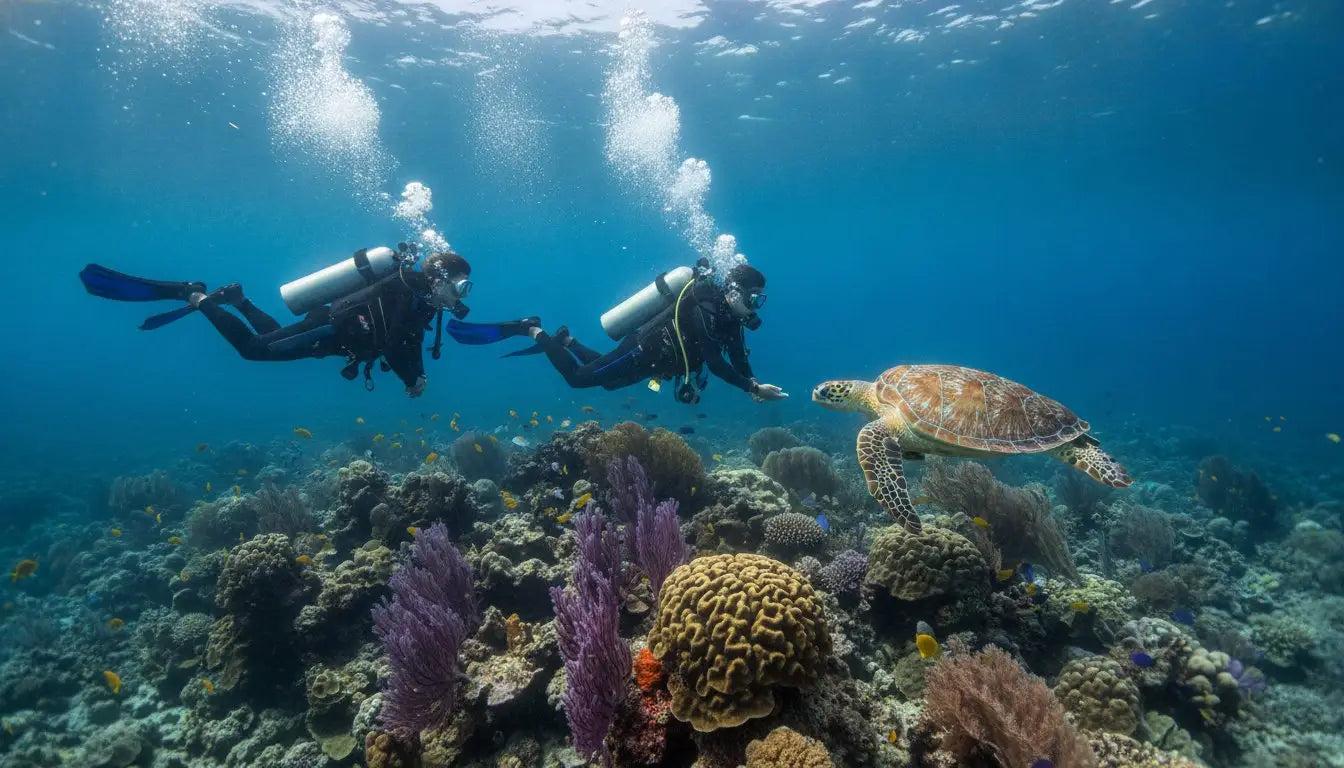
Most reef damage from recreational diving is not deliberate. It is a fin tip clipping a sea fan during a photograph, an over-weighted diver dropping onto a coral head on descent, a pressure gauge trailing on a hose and mowing a line across a sponge, or a hand going out to stop an unplanned slide toward the wall. Cozumel makes this harder than most destinations because you are almost always moving: the Yucatán Current carries you along the reef whether or not you are ready, so corrections have to happen early and small. Read the drift diving guide before your first day if you have not drifted before.
Four things fix most of it, in this order:
Get your weighting right on day one. A proper weight check at the surface — floating at eye level, empty BCD, normal breath — takes three minutes. Most new divers carry too much lead, then compensate with air in the BCD, then bounce. If you are renting, sort weight before the first dive rather than after it; the gear rental guide covers what to check.
Fix your trim. Flat and horizontal means your fin wash goes behind you instead of down onto the reef. Feet-down is the single most common cause of accidental contact.
Secure everything that hangs. Gauge, alternate second stage, camera lanyard, torch. Clip them. A trailing SPG or octopus does damage the diver never sees or feels.
Learn the frog kick for sand channels and anywhere you are working close to structure. It is the difference between a clear photograph and a silt out.
If any of that sounds like a stretch, a buoyancy specialty is the highest-value two days you can spend here — the PADI Peak Performance Buoyancy course or the SSI Perfect Buoyancy course, depending on the shop's agency. It also improves air consumption, which is a separate argument entirely.
What Can a Visiting Diver Genuinely Do?
Every line here is an action, with a place to do it. Anything that cannot be turned into a specific behaviour has been left out.
| Action | Why It Matters | When to Do It |
|---|---|---|
| Ask an operator how many divers per guide and whether they carry a spare weight belt | Group size is the best single predictor of how much attention you get and how much accidental contact happens. A six-pack boat behaves differently from a cattle boat. | Before booking |
| Do a surface weight check and adjust | Over-weighting causes descent impacts and a permanently unstable dive. | First dive of the trip |
| Clip the gauge, octopus and camera | Removes the damage you cannot feel happening. | Every kit-up |
| Bring mineral sunscreen or a rash guard | Chemical filters are prohibited and wash off on the boat as well as in the water. | Packed at home |
| Bring a refillable bottle and take your rubbish off the boat | Wind lifts unsecured wrappers off an open deck. Nothing single-use should leave with the boat and stay behind in the water. | Every trip |
| Keep your distance from turtles, rays and nurse sharks | Chasing or blocking an animal changes its behaviour and costs it energy. Stay level with it, never above or in front. | Every encounter |
| Say nothing to a diver touching coral underwater, and raise it on the boat | Underwater intervention creates two unstable divers. Tell the guide at the surface instead. | Same dive |
| Report anchor damage, a boat off its mooring, or a dead-coral outbreak | The guide and the CONANP office in Cozumel both take reports; a boat name and date is enough. | Same day |
| Take a conservation-focused specialty rather than assuming you already know | Coral Reef Conservation, Dive Against Debris and Fish Identification all convert into usable behaviour. | During the trip |
| Log what you saw and report unusual mortality | Useful sighting data is the cheapest contribution a visiting diver makes. The reef fish identification guide helps you name what you are logging. | After each dive |
Note what is absent. Buying a "conservation" add-on, choosing a shop with a green logo, or paying the park fee are not, in themselves, conservation actions — the fee is a legal requirement everyone pays.
Lionfish in Cozumel: What May a Visiting Diver Do?
Lionfish are an invasive Indo-Pacific predator with no natural controls in the Caribbean, venomous dorsal, pelvic and anal spines, and an appetite for the juvenile reef fish that keep algae in check. Culling programmes operate across the region, Cozumel included.
What a visiting recreational diver may do is narrower than the internet suggests. Spearfishing is not permitted inside Parque Nacional Arrecifes de Cozumel, and that includes lionfish — the commercial lionfish trips run by island operators work outside the park boundary, under their own permits and with their own equipment. Culling inside the park happens through authorised programmes and permitted personnel, not through visiting divers who brought a pole spear in their luggage.
So: do not bring a spear. Do not buy one here and take it onto a park reef. If you want to take part, join an authorised operator's programme and let them handle the permit, the containment tube and the handling. And never touch a lionfish, live or dead, with bare hands — the spines stay venomous after death and the sting is genuinely serious. Point them out to your guide; that is a useful contribution on its own.
What Coral Restoration Actually Exists in Cozumel?
Cozumel has a real, long-running restoration effort rather than a marketing programme, and it is worth describing accurately.
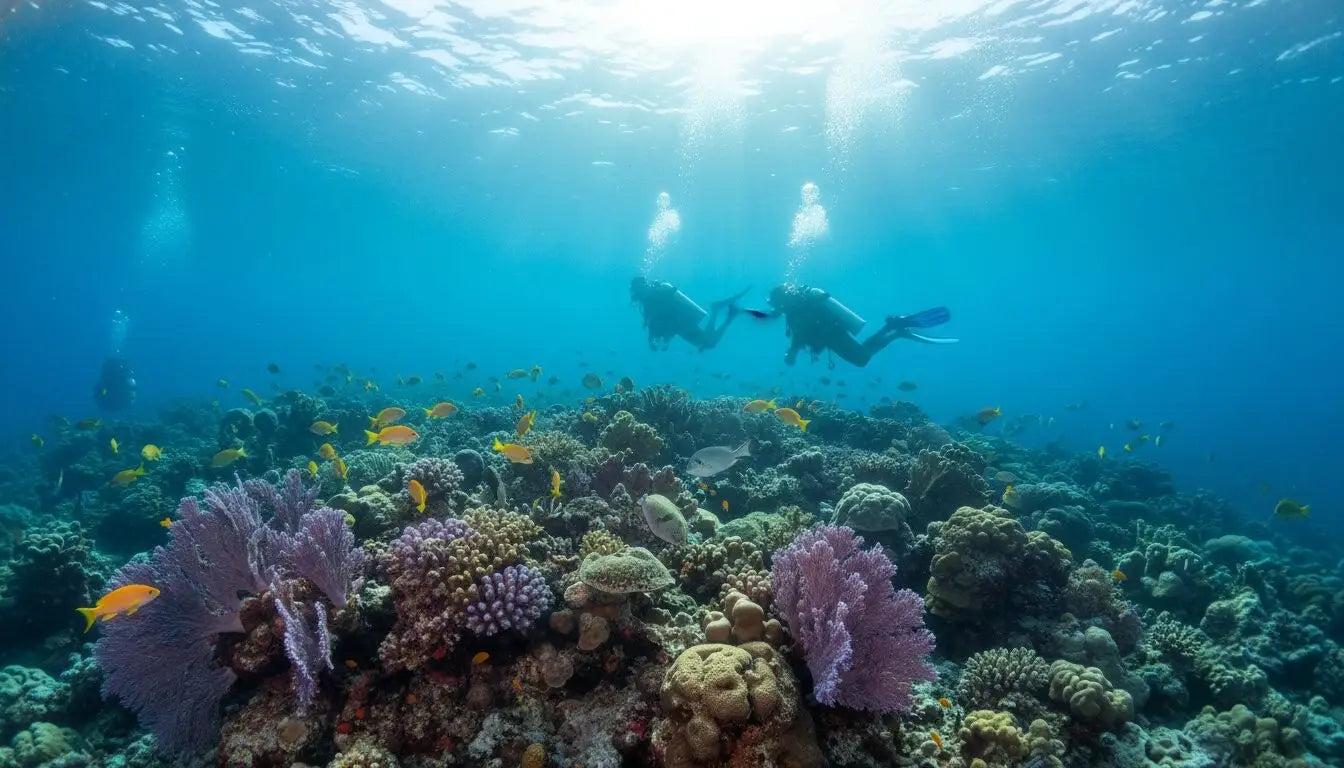
The Cozumel Coral Reef Restoration Program (CCRRP) was founded in 2017 by Dr German Mendez. It grows coral fragments on nursery platforms and outplants them, with its main work concentrated on the Villablanca reef area near Villa Blanca Wall. The programme states on its own site that it has built 29 restoration platforms and planted more than 10,000 fragments, and it runs both volunteer days and conservation courses that visiting divers can join. There is also a permanent reef restoration programme established at Chankanaab park on the island's west coast.
Two honest caveats. First, those are the programme's own published figures, not independently audited outcomes — outplanting counts are an input, not a measure of reef recovery. Second, coral restoration at any current scale is a supplement to reducing pressure on the reef, not a replacement for it. You will find articles quoting precise "reef health" percentages for Cozumel; treat unattributed figures of that kind with suspicion, because they circulate widely and trace back to nothing.
If restoration is genuinely why you are coming, contact a programme directly and ask what their volunteer requirements are before you book flights. Most restoration work needs training and stable buoyancy, which loops straight back to the section above.
What Is Documented About Bleaching and Coral Disease in Cozumel?
Two things are well documented here, and one gets confused with the other.
Coral bleaching is a heat-stress response: corals expel the symbiotic algae that feed and colour them, turning white. Bleached coral is not dead and can recover if the stress lifts. The wider Mesoamerican Reef was hit hard during the 2023–2024 global bleaching event, which NOAA confirmed as the fourth on record, and Cozumel sits inside that system.
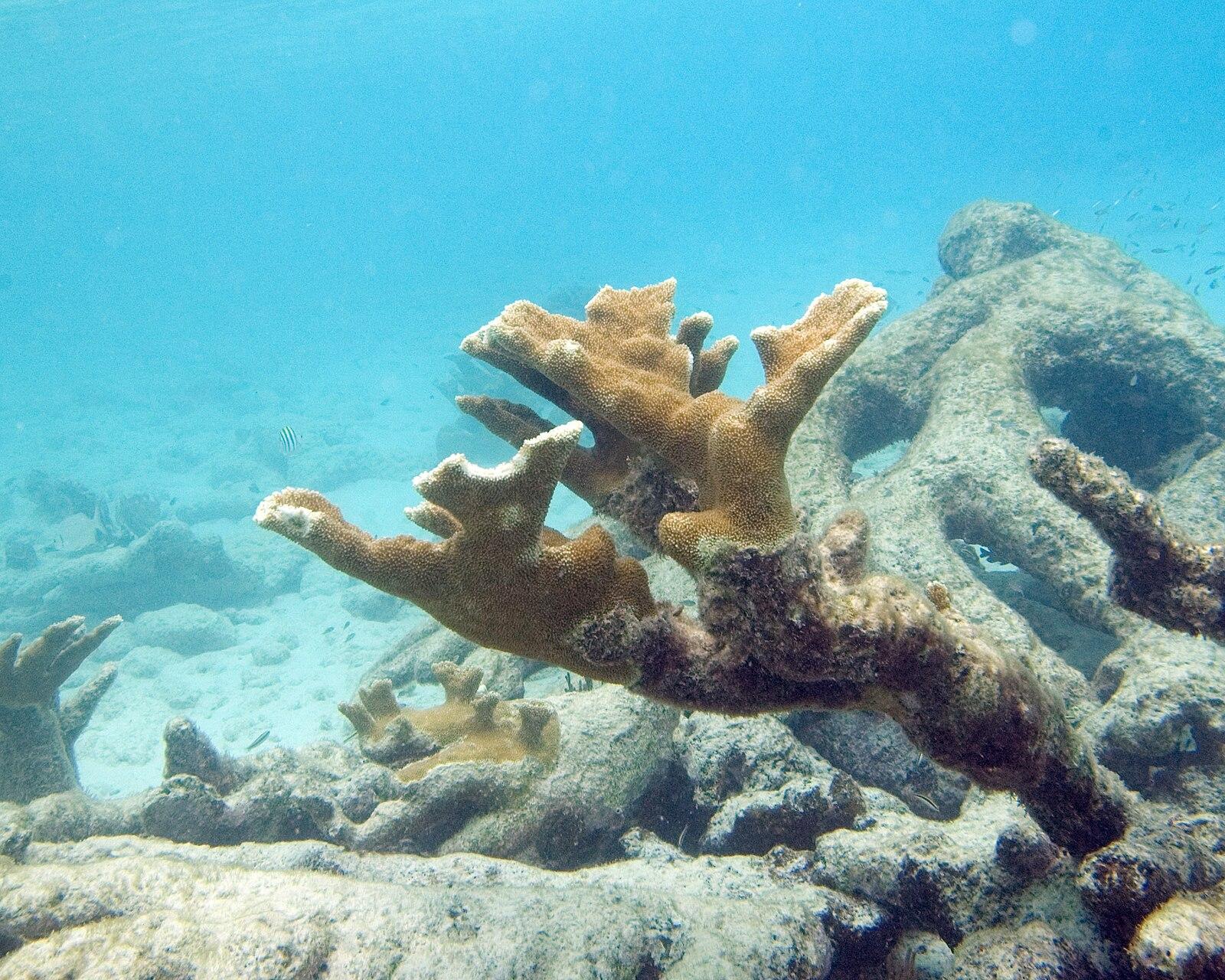
Stony coral tissue loss disease (SCTLD) is different and worse. Peer-reviewed work published in Frontiers in Marine Science documents its arrival in southwestern Cozumel at Paraiso reef in December 2018, spread across the island's southwest within about two months, and a fall in mean coral cover across surveyed reefs from 26.4% in July 2018 to 14.7% in July 2019 — roughly a 46% loss, with the worst-hit site losing around 80%. Brain corals and pillar coral were among the most susceptible. Algal cover rose over the same period. These are the numbers to cite for Cozumel; they come from surveys, not from press releases.
The practical consequence for a visiting diver is a decontamination protocol. Coral disease can travel on wet dive gear between reefs and between destinations, and Cozumel operators may ask you to disinfect kit — particularly if you have dived elsewhere in the Caribbean immediately before. The protocol used across the region follows the NOAA guidance: non-sensitive items such as weight belts and tools soak for ten minutes in a 10% bleach solution; wetsuits, BCDs, masks and fins soak ten minutes in a quaternary ammonium disinfectant such as Virkon S or RelyOn at label concentration; regulators, computers and cameras get twenty minutes in warm water with antibacterial soap, or an isopropyl alcohol wipe. Everything is rinsed in fresh water and air dried, and no solution goes into the ocean or a storm drain. If your operator asks, they are not being fussy.
You will notice the older articles this guide replaces made no mention of any of this. That was the gap worth closing.
Does Sargassum Affect Cozumel's Dive Reefs?
Mostly no, and this is one of the few pieces of good news in the list. Sargassum is floating brown seaweed that has arrived on Caribbean shorelines in heavy volumes since 2011, worst in the summer months and highly variable year to year. Cozumel's exposed windward shore is the east coast, which is largely undeveloped. The diving is all on the sheltered west side, where the island itself acts as a barrier, so sites such as Palancar Gardens, Santa Rosa Wall and Paradise Reef are affected far less than mainland beaches at Playa del Carmen or Cancún.
Where sargassum does matter is at the surface and shoreline: shore entries, beach clubs and the look of the water from a boat. It is a comfort and aesthetics issue on this island, not a visibility issue at depth. For how conditions actually vary through the year, see the dive conditions by month guide.
How Do You Choose an Operator Whose Practice Matches the Rules?
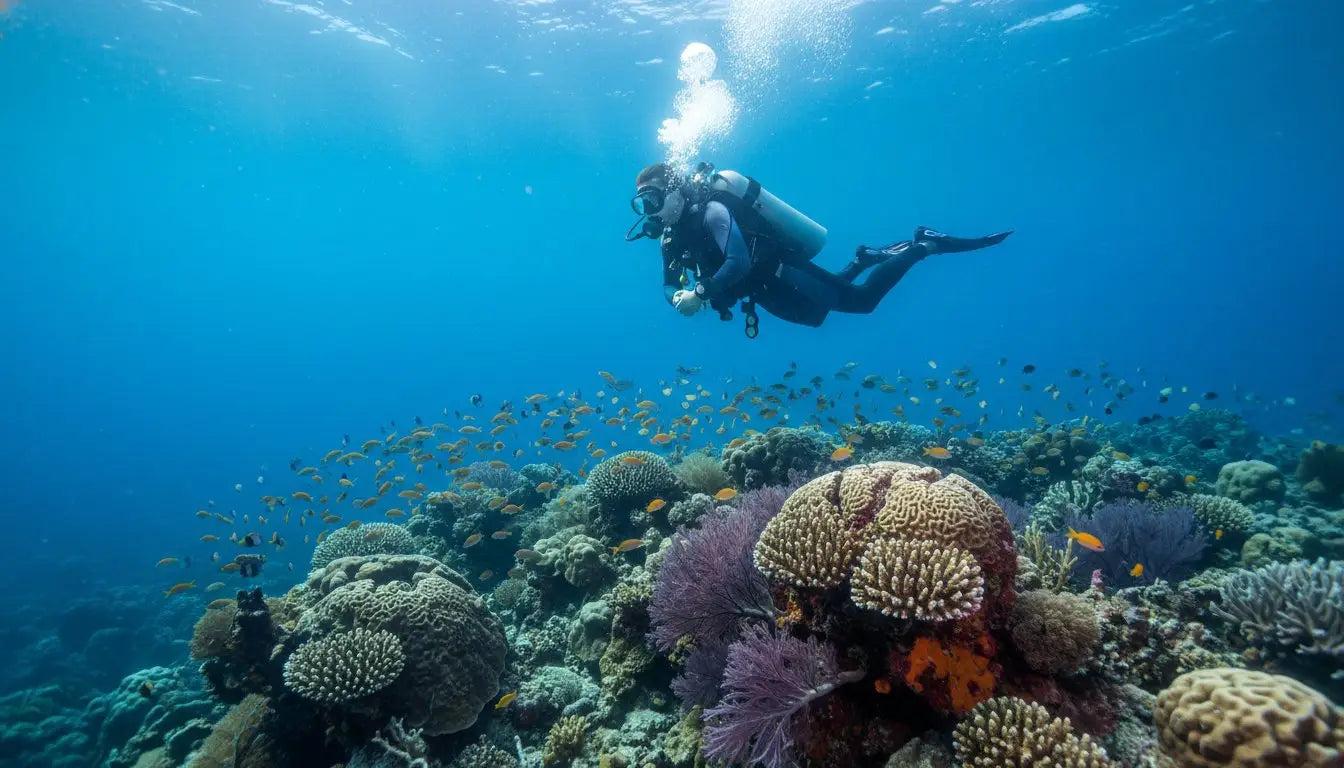
Every dive shop on the island will describe itself as eco-conscious. The claim is free. What distinguishes them is answerable in four questions, all of which you can ask by email before you pay anything:
How many divers per guide? A ratio you can get a straight number for is a better signal than any certification badge. Smaller groups mean the guide can actually watch trim.
What happens on the boat if someone repeatedly contacts the reef? A shop with a real answer has thought about it. A shop that says it never happens has not.
Do you carry mooring lines and use them, and do you brief the current before every dive? The dive briefing is where park rules and site closures get communicated. A thin briefing is a reliable warning sign.
Do you use the CONANP rotating closure schedule to plan the day? Sites rest on a rotation and it changes. An operator who cannot tell you which sites are open this week is not planning around it.
For narrowing the field, the Cozumel dive centers guide covers who operates on the island, and the article on what to look for in a Cozumel divemaster covers the person who actually determines how your dives go. Cozumel Dive Hub is an independent editorial guide and does not run trips, sell dives or take a cut from any operator listed.
Planning a Conservation-Minded Trip to Cozumel
Put together, the practical version of reef conservation diving here is unglamorous: turn up correctly weighted, keep your hands to yourself, clip your hoses, buy mineral sunscreen before you fly, pay the 225 pesos, dive with an operator who runs small groups and briefs properly, and report what you see. That covers more real-world reef protection than any add-on you can buy.
To build the rest of the trip around it — when to come, which sites suit your certification level, what the whole thing costs — start with the Cozumel dive sites guide, the guide to how deep Cozumel's reefs actually are, and the packing list for a Cozumel dive trip. When you are ready to put the dates together, plan your Cozumel dive trip.
Sources: CONANP, Parque Nacional Arrecifes de Cozumel; Estrada-Saldívar et al., "Effects of the Stony Coral Tissue Loss Disease Outbreak on Coral Communities and the Benthic Composition of Cozumel Reefs", Frontiers in Marine Science, 2021; Cozumel Coral Reef Restoration Program; NOAA, preventing the spread of coral disease; NOAA confirmation of the fourth global bleaching event.
Frequently Asked Questions
How much is the Cozumel marine park fee in 2026?
Why are gloves banned for divers in Cozumel?
What sunscreen is allowed in the Cozumel Marine Park?
Can recreational divers spear lionfish in Cozumel?
Do I need a guide to dive in Cozumel?
How does buoyancy affect coral damage?
What is stony coral tissue loss disease and does it affect Cozumel?
Should I disinfect my dive gear before diving in Cozumel?
Does sargassum affect diving in Cozumel?
What can a visiting diver actually do to help the reef?
Share This Article
Carmen Novelo
Carmen Novelo is a Cozumel native and an active scuba instructor and dive guide on the island. She has spent twelve years diving the Cozumel reef system, and writes about its dive sites, conditions and marine life for Cozumel Dive Hub.