Cozumel Wreck Diving: The Ultimate 2026 Guide to the C-53 Felipe Xicoténcatl
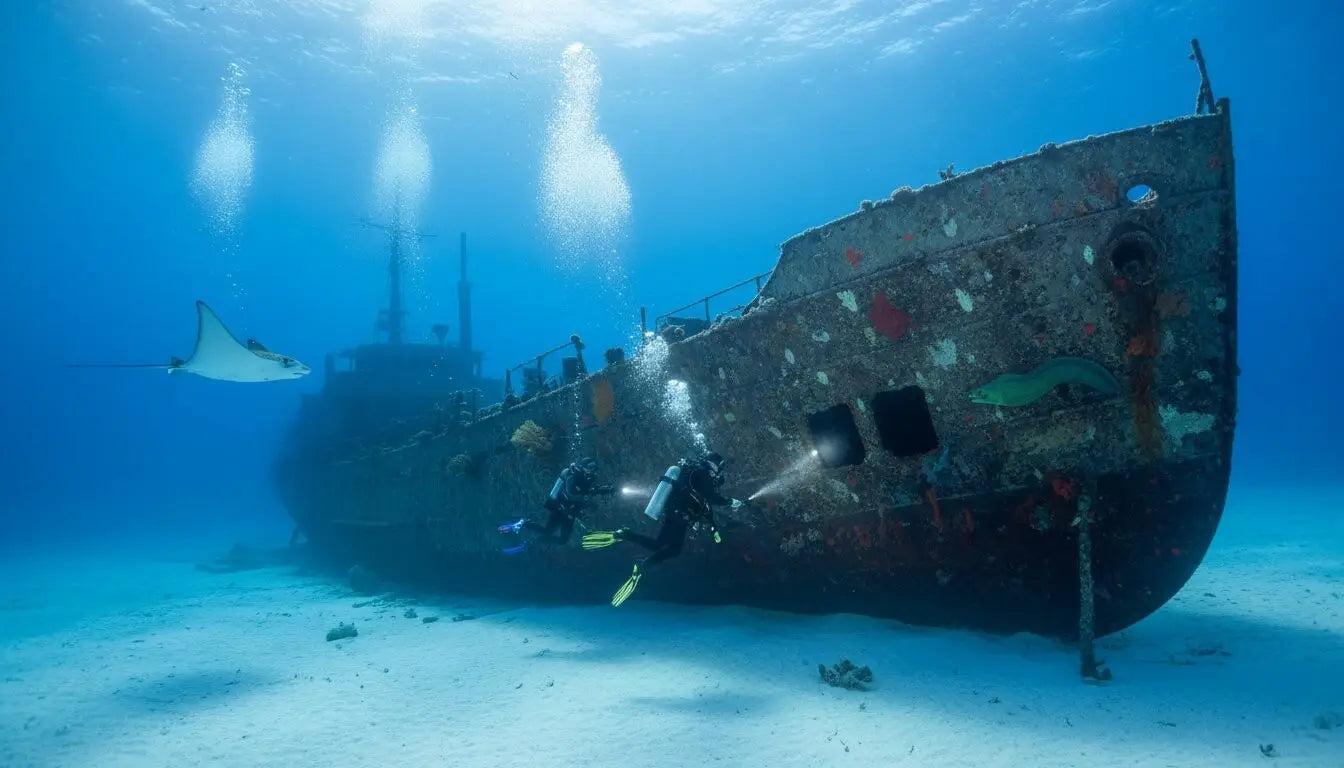
Cozumel wreck diving comes down to one ship. The C-53 Felipe Xicotencatl is a 184-foot Admirable-class minesweeper sitting upright off Chankanaab, superstructure at 45 to 55 feet and sand at about 80, so the whole hull is inside recreational limits.
Carmen Novelo · March 6, 2026 · 20 min read
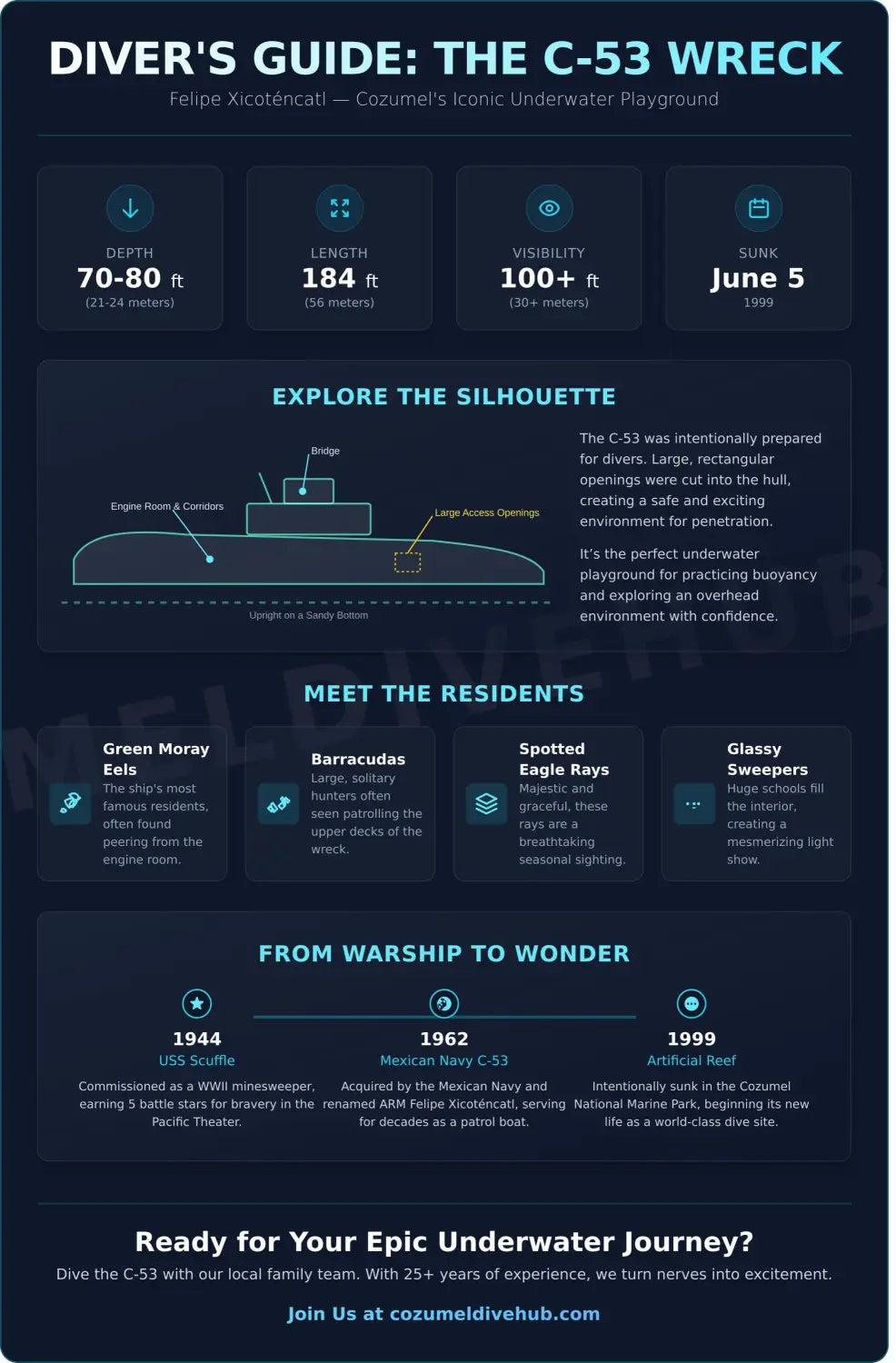
Cozumel wreck diving comes down to one ship. The C-53 Felipe Xicoténcatl is a 184-foot 6-inch Admirable-class minesweeper resting upright on sand off Chankanaab, inside the Cozumel Marine Park. It was laid down in Seattle on May 4, 1943, launched that August, and commissioned into the US Navy as USS Scuffle (AM-298) on May 2, 1944. Mexico took delivery on October 1, 1962. It was cleaned out and sunk on purpose as an artificial reef. The superstructure tops out somewhere around 45 to 55 feet down, and the sand beside the hull runs to roughly 80 feet, so the whole ship sits inside recreational limits.
Cozumel Dive Hub is an independent editorial guide to diving this island. No boats, no courses, no instructors, no PADI rating — just research, years of local contacts, and access to deals worth passing along. What follows is what the C-53 actually is, what it takes to dive it responsibly, and the question most pages skip: whether it deserves one of your limited tanks at all.
What the C-53 Actually Is
Strip away the brochure language and the C-53 is a small warship, deliberately sunk, that has spent about a quarter century turning into reef. Admirable-class minesweepers were built in numbers during the Second World War to clear mines ahead of the fleet. They were not glamorous ships. They were workhorses — under 200 feet, shallow-draft, crewed by around a hundred men.
USS Scuffle earned five battle stars for her wartime service before the United States transferred her to Mexico in 1962. She served as ARM DM-05 and was later renamed for General Felipe Xicoténcatl, the Mexican officer killed defending Chapultepec Castle in 1847. The hull number C-53 came with that renaming in 1994.
Then she was retired, stripped, and put on the bottom off Chankanaab to take pressure off the natural reef. That last part matters more than the war record. Cozumel gets a very large number of divers on a fairly small stretch of coast, and an artificial reef absorbs some of that traffic. The wreck has its own page on this site with the current depth range, skill rating, and position in the reef line: C-53 Shipwreck Dive Site.
What Is Verified and What Is Not
There is one date worth flagging because sources genuinely disagree. Pacific Wrecks and most Cozumel operators place the scuttling in June 2000. Wikipedia's entry on the Mexican Navy vessel lists the sinking as 1999, with the ship stricken in 2000. Both are cited, and they do not reconcile. If a page tells you the exact day with total confidence, treat it as decoration.
Everything else in the table below is consistent across naval records. Build dates, class, builder, and length all check out. The oft-repeated claim that she was built in Georgia in 1944 does not — she was built by Winslow Marine Railway and Shipbuilding in Seattle, Washington, and launched in 1943.
The Numbers
| Detail | Figure |
|---|---|
| Original name | USS Scuffle (AM-298) |
| Class | Admirable-class minesweeper |
| Builder | Winslow Marine Railway and Shipbuilding, Seattle |
| Laid down / launched / commissioned | May 4, 1943 / August 8, 1943 / May 2, 1944 |
| Length | 184 ft 6 in (about 56 m) |
| Transferred to Mexico | October 1, 1962 |
| Renamed C-53 Felipe Xicoténcatl | 1994 |
| Sunk as artificial reef | June 2000 (some records say 1999) |
| Typical dive range | 40–55 ft on the structure |
| Sand alongside the hull | roughly 75–82 ft |
| Skill rating on this site | Intermediate |
| Current | Moderate, running south to north |
| Position | Between Chankanaab Bolones to the north and Playa Corona to the south |
Depth figures vary by source because the ship is tall relative to the water it sits in. The deck and superstructure are where most of the dive happens, in the 40-to-55-foot band. Drop to the sand at the bow or stern and you are near 80 feet. Plan for a multi-level profile and check your computer rather than trusting a number from a blog — including this one. The buoyancy, depth and dive profile terms glossary covers the vocabulary if any of that is new.
Going Inside: What Your Training Actually Covers
This is where a lot of published advice about Cozumel wreck diving goes wrong, so it is worth being blunt.
The wreck dive included in the PADI Advanced Open Water course is an Adventure Dive. It is an introduction to wrecks conducted on the outside of the structure. It does not qualify anyone to swim into an overhead environment. A single adventure dive is not penetration training, and no responsible operator on this island will lead a diver whose only wreck experience is that dive into the engine spaces.
Penetration is the domain of the full Wreck Diver specialty, which adds line and reel work, light protocol, gas planning, and the discipline of always keeping a continuous guideline to open water. Even then, "penetration" in a recreational specialty means the light zone — you can still see the exit. It is not cave diving, and the training does not pretend to be. If you are weighing whether to add that course, the PADI Wreck Diver specialty in Cozumel guide walks through what it involves, and the Advanced Open Water in Cozumel piece covers what AOW does and does not get you.
The honest framing: the C-53 was prepared with cut openings so divers can see through and move through the light zone safely. That preparation lowers the risk. It does not remove the overhead. Steel does not care how many logged dives are in your book.
The Silt Nobody Warns You About
The C-53 sits on a sand-and-sediment bottom, and two decades of rust flake have settled inside the compartments. Cozumel's famous 80-to-100-foot visibility stops at the hatch. Inside, one careless flutter kick puts a cloud in the water that does not clear on any useful timescale, because there is no current in there to move it.
That has three practical consequences. The diver who kicks it up ruins the dive for everyone behind them. Anyone inside loses their visual reference to the exit. And on a wreck where the group is stacked in a corridor, that is exactly the scenario the training exists to prevent.
Frog kick, keep your fins above the plane of your body, and stay off the deck. If your buoyancy is not there yet, the outside of the ship is a genuinely good dive and nobody will think less of you.
Currents and How the Dive Runs
Cozumel is a drift-diving island and the wreck is no exception. The current here runs south to north at moderate strength, so drifts typically enter from the Playa Corona side to the south and finish north toward Chankanaab Bolones. The hull itself creates a lee — get behind or below it and the water goes noticeably calmer, which is part of why the wreck is manageable for divers who are still getting used to Cozumel's water.
The descent is the demanding part. If the current is running, you need to get down and onto the structure without being pushed past it, which usually means a prompt, controlled descent rather than a leisurely one. Boats vary in how they handle this. Ask at the briefing.
For context on what "moderate" means here compared to the northern sites, see How Strong Is the Current in Cozumel and the broader Cozumel drift diving guide. First-timers should also read what to expect on your first drift dive before the boat leaves the dock. The drift diving terminology section defines the terms briefings actually use.
Marine Life on the Wreck
Twenty-plus years of growth means the hull is no longer bare steel. Sponges and encrusting corals have taken hold, and the structure holds fish the way any reef does.
The site's recorded residents include green moray eels tucked into the machinery and piping, lobster in the recesses, nurse sharks using the shadow of the hull, and seahorses for anyone with the patience to hunt them. Barracuda hang above the upper decks. Schools of small silvery fish fill the darker compartments and scatter when a light hits them.
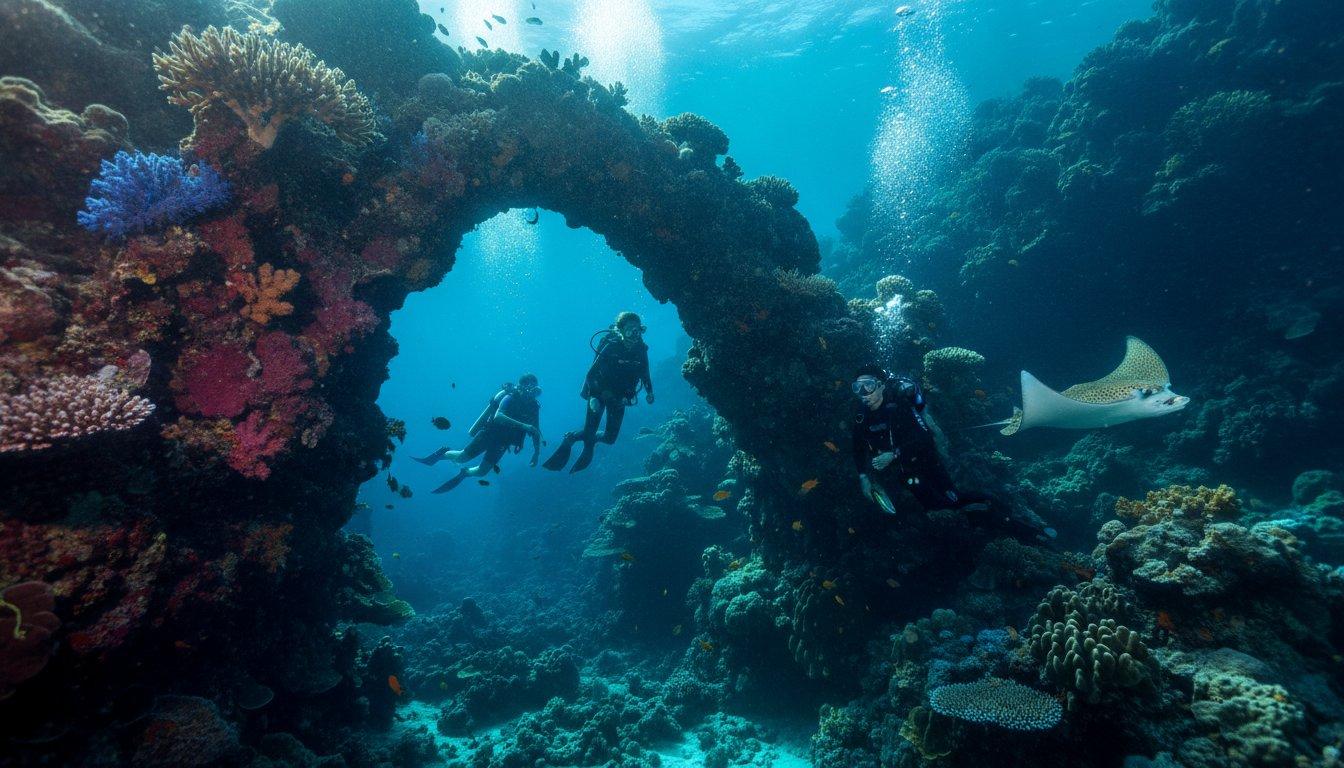
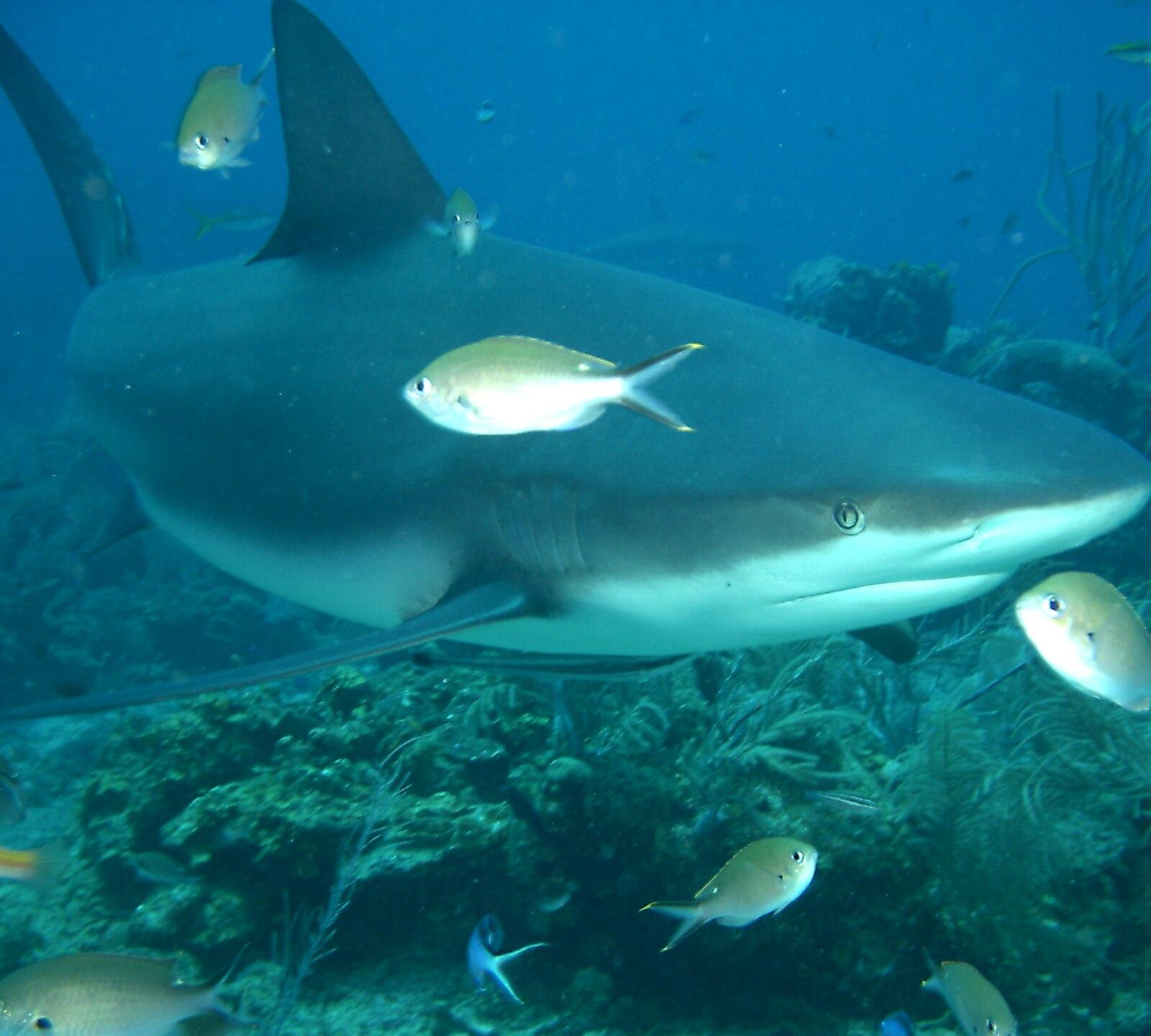
Eagle rays are a seasonal maybe rather than a promise. Winter is the window, and they are more reliably found on the reef line than on the wreck itself — the eagle ray season guide covers where and when. For sharks, the realistic picture is in Are There Sharks in Cozumel.
Here is the calibration, though: the C-53 is a decent fish dive. It is not a better fish dive than Palancar or Santa Rosa. What it offers is structure, and structure is a different kind of pleasure.
Is the C-53 Worth a Tank?
Most guides will not say this, so here it is plainly. The C-53 is a small wreck in a place that is world-famous for something else.
Cozumel's reputation was built on drift diving along a spectacular wall system — swim-throughs at Palancar, the cuts at Santa Rosa, the coral heads at Tormentos, sponge gardens running for miles. A 184-foot minesweeper is a good wreck by Caribbean standards, but it is not the Zenobia and it is not the Oriskany. If you have dived wrecks elsewhere, you may find it modest.
So the calculus depends on your trip:
- Three or four days, six to ten tanks total. The reef is why you came. Doing the wreck costs you one of very few dives on world-class coral. Many divers reasonably skip it.
- A week or more. Absolutely do it. Variety is good, the history is real, and by day four you will welcome something structurally different.
- You are working toward the Wreck Diver specialty. Then it is the obvious training platform on the island, and the prepared openings are a genuine asset.
- You love wrecks specifically. Do it early in the trip so you can repeat it if it grabs you.
- You are newly certified and still fighting your buoyancy. Do the reef first. The wreck rewards control you have not built yet.
Pairing it well helps. The wreck is usually run as the deep dive of a two-tank morning, followed by a shallow reef on the same stretch of coast — Chankanaab Shallow is right there and makes a relaxed second dive. That combination gets you the wreck without giving up a whole day of reef.
If you want the wreck specifically, the C-53 wreck dive listing collects the operators who run it regularly. Divers drawn to underwater history should also look at the Spanish galleon dive, which is a very different and much older sort of wreck.
Practical Planning
A few things that change the experience more than the marketing does.
Nitrox is worth it here. At 60 to 80 feet, a 32% blend buys meaningful bottom time and leaves you fresher for the second dive. The Cozumel nitrox guide covers cost and certification.
Bring a light even for an exterior dive. The cut openings let you look into compartments from outside, which is most of the visual payoff if you are not going in.
Budget for the Marine Park fee. It applies to every dive inside the park boundary, wreck included. Current amounts are in the Marine Park fees guide.
Watch the season. Winter nortes close the harbor for days at a time, which can wipe out a wreck day entirely. The month-by-month guide and the conditions by month breakdown show the pattern. Divers going in winter should read the January guide too.
Group size matters more on a wreck than on a reef. A crowded corridor is unpleasant and, if someone silts it, unsafe. Ask what ratio an operator runs before booking. How to Choose a Cozumel Dive Shop covers the questions worth asking, and the best dive centers roundup narrows the field.
The terminology in a wreck briefing is not always obvious on a first trip — the certification and training terms glossary is a quick way to decode it.
Where to Start
Browse operators who run the C-53 in the Cozumel dive centers directory, and compare the wreck against the reef sites you are choosing between using the dive site pages.
When you are ready to build the actual schedule — how many tanks, which days, where the wreck fits, and how to get access to the better rates — start with Plan Your Cozumel Dive Trip.
Frequently Asked Questions
How deep is the C-53 wreck in Cozumel?
Do you need a wreck certification to dive the C-53?
Can you go inside the C-53?
What ship was the C-53 before it was sunk?
When was the C-53 sunk off Cozumel?
How long is the C-53?
Is the C-53 a good dive for beginners?
Is the C-53 worth doing on a short Cozumel trip?
What is the current like on the C-53?
What marine life lives on the C-53?
Share This Article
Carmen Novelo
Carmen Novelo is a Cozumel native and an active scuba instructor and dive guide on the island. She has spent twelve years diving the Cozumel reef system, and writes about its dive sites, conditions and marine life for Cozumel Dive Hub.