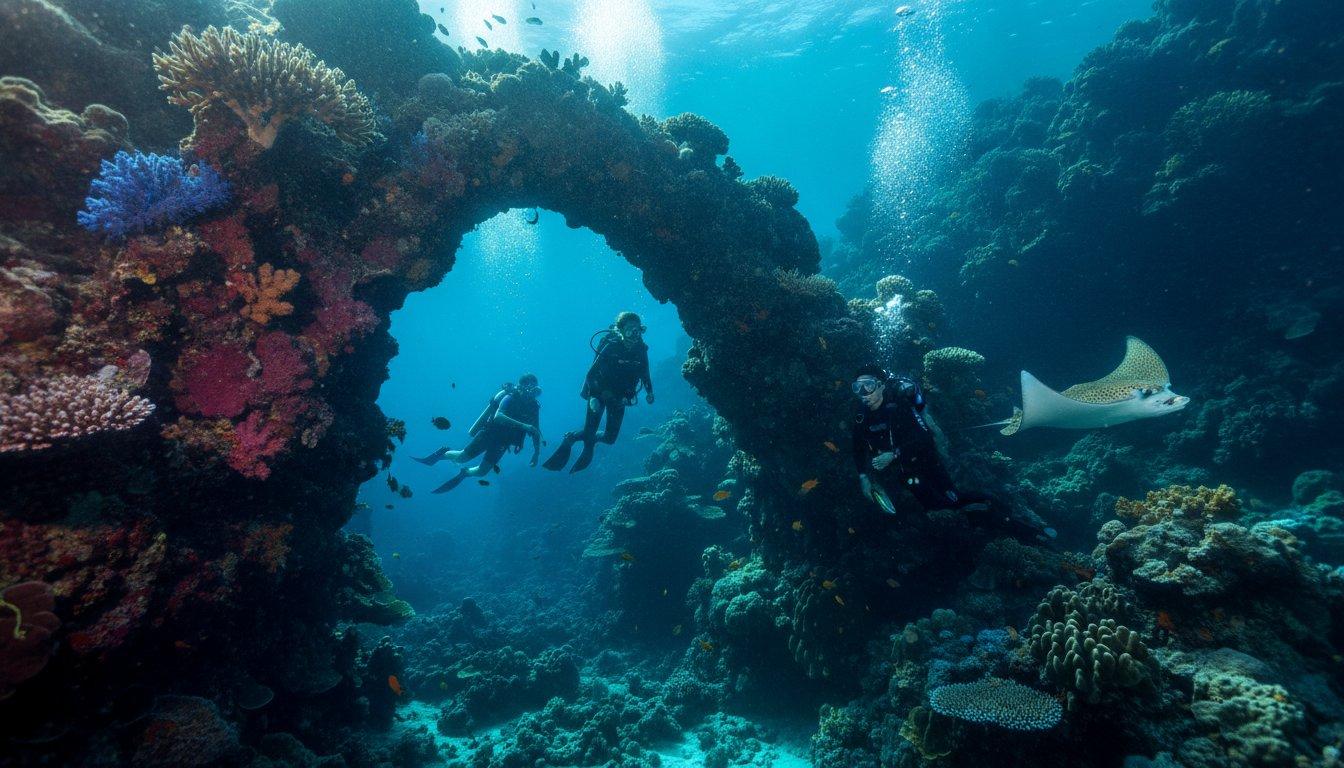
Colombia Reef Cozumel: A Complete Guide to the Island's Underwater Cathedral
Two different dive sites share the Colombia name on Cozumel's southern reef line. Columbia Shallows runs 30 to 50 feet and is rated for beginners; Colombia Deep runs 60 to 120 feet and is rated advanced. Both carry real current.
Carmen Novelo · August 6, 2026 · 16 min read
"Colombia Reef" is not one dive site. It is two, sitting on the same stretch of Cozumel's southern reef line, and they are dived by different people for different reasons. Columbia Shallows runs 30 to 50 feet and is rated for beginners — a low-relief reef drift with heavy fish life. Colombia Deep runs 60 to 120 feet and is rated advanced — a deep drift along the drop-off with big coral structure and open blue water on one side. Both carry moderate to strong current. Booking the wrong one is the single most common mistake divers make with this name.
Getting that distinction right before you board matters more here than at most Cozumel sites, because the gap between the two profiles is 70 feet and two certification levels. This guide covers both, what separates them, and how to work out which belongs on your dive plan.
Colombia Deep vs Columbia Shallows: The Comparison
| Columbia Shallows | Colombia Deep | |
|---|---|---|
| Depth range | 30–50 ft | 60–120 ft |
| Skill level | Beginner | Advanced |
| Dive type | Reef drift dive | Deep drift dive |
| Current | Moderate to strong | Moderate to strong |
| Entry | Boat | Boat |
| Coast | West | West |
| Position on the reef line | Between Palancar Bricks to the north and Los Atolones to the south | Between Los Atolones to the north and El Cielo to the south |
| Drift direction | Enters toward Los Atolones, finishes toward Palancar Bricks | Enters toward El Cielo, finishes toward Los Atolones |
| Typical role in the day | Second, shallower dive | First, deeper dive |
The two sites are not stacked on top of each other. Columbia Shallows sits further north along the reef line than Colombia Deep, with Los Atolones between them. They are neighbours, not an upper and lower storey of the same structure — a distinction the "two levels of one reef" framing gets wrong.
Why Is It Spelled Both Colombia and Columbia?
Both spellings are in circulation, and both are used on Cozumel boats, in logbooks and on operator schedules. There is no correct version that has displaced the other. The site index here follows local usage: Colombia Deep and Columbia Shallows.
The practical consequence is that searching for one spelling will miss listings using the other. When you are checking a boat schedule or comparing operator itineraries, search both. It is also worth naming the depth rather than the site when you book — "the shallow one, thirty to fifty feet" is unambiguous in a way that "Colombia" is not.
Where Does Colombia Sit on Cozumel's Reef Line?
Both sites are on the west coast at the southern end of the island, in the stretch of reef that also holds the Palancar system and runs down toward Punta Sur.
Running from north to south along that line: Palancar Bricks, then Columbia Shallows, then Los Atolones, then Colombia Deep, then El Cielo.
Because the Yucatán Current runs south to north along this coast, drifts at both sites move northward. At Columbia Shallows that means entering toward Los Atolones and finishing toward Palancar Bricks. At Colombia Deep it means entering toward El Cielo and finishing toward Los Atolones. Knowing the direction in advance is useful: it tells you which way to face on descent, and it explains why the boat will not be where you left it.
Both sites sit at the far end of the island from the main piers. Expect a boat ride of forty minutes or more each way, which is why they are usually paired with other southern sites into a single trip rather than dived in isolation.
Diving Columbia Shallows
At 30 to 50 feet this is a genuine beginner site, and it is one of the better ones on the island for divers still working on buoyancy. The profile is forgiving, the light is excellent at that depth, and gas lasts a long time — which matters, because the current here is classed as moderate to strong and a nervous diver burns air faster than they expect.
What you are diving is a low-relief reef structure with coral heads, ledges and sand channels between them. The interest is in the fish rather than the topography: the site's recorded species list is dominated by schooling reef fish, with grunt and snapper appearing here that do not appear on the deep site's list.
The "beginner" rating is about depth, not about current. This is still a Cozumel drift, and a first-time drift diver should treat it as such. The drift diving guide and the notes on how strong Cozumel's current actually gets are worth reading before your first southern reef day.
Diving Colombia Deep
At 60 to 120 feet, Colombia Deep is rated advanced and the rating is earned. Three things drive it:
Depth. A profile that touches 100 feet or more eats no-decompression limits quickly, particularly on a second or third day of repetitive diving. Most groups run this as a multilevel dive, starting deep and working shallower along the reef, which is the only way to get a reasonable bottom time out of it.
Gas. At 100 feet you consume roughly four times the surface rate. Divers who comfortably get 50 minutes from a tank on a shallow reef will get half that here. If your consumption is the limiting factor on your dives, the air consumption guide is more useful preparation than any amount of reading about the site.
Current on a wall. Moderate to strong current alongside a drop-off is a different management problem from current over a flat reef. Depth changes happen faster than you notice, and the blue side offers no visual reference at all.
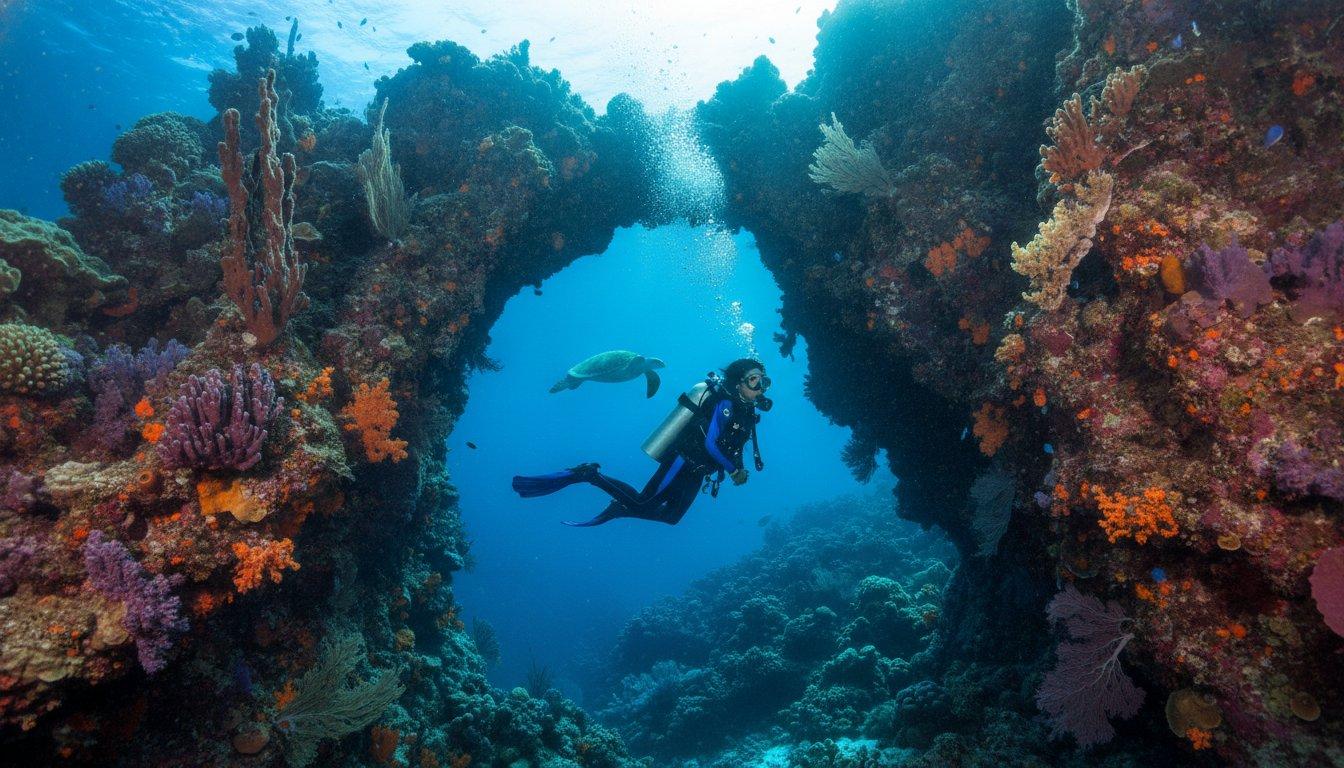
What you get for that is the most dramatic structure on this section of reef — large coral formations, barrel sponges and sea fans on the wall face, and the open blue on your left where the larger animals pass. If you are not yet certified for this depth, the Advanced Open Water route is the standard path to it, and the Cozumel reef depth guide explains how depth maps to sites across the island.
What Marine Life Is Recorded at Colombia?
| Species | Columbia Shallows | Colombia Deep |
|---|---|---|
| Barracuda | Yes | Yes |
| Grouper | Yes | Yes |
| Jacks | Yes | Yes |
| Nurse shark | Yes | Yes |
| Octopus | Yes | Yes |
| Parrotfish | Yes | Yes |
| Spotted eagle ray | Yes | Yes |
| Grunt | Yes | — |
| Snapper | Yes | — |
| Barrel sponge | — | Yes |
| Queen angelfish | — | Yes |
| Reef shark | — | Yes |
| Sea fan | — | Yes |
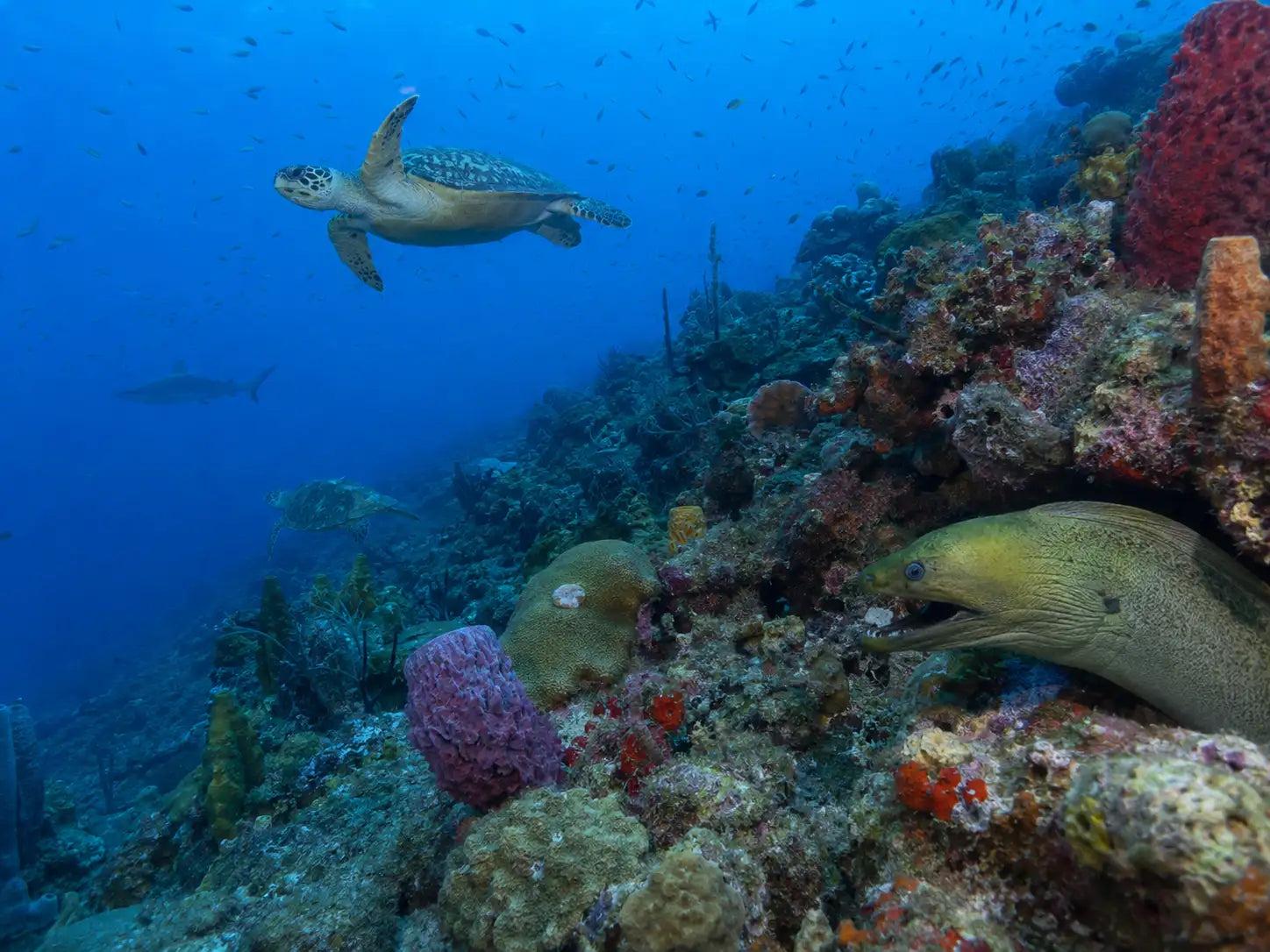
The pattern is exactly what the depth difference predicts. The shallow site adds schooling reef fish; the deep site adds the larger reef structure organisms and the one species most divers are quietly hoping for, the Caribbean reef shark. Reef sharks are recorded here but they are not common anywhere in Cozumel — treat a sighting as a bonus rather than a reason to book.
Eagle rays appear on both lists, and the winter months are when Cozumel divers see them most reliably. The eagle ray season guide covers timing and the sites where they turn up. For a broader view of which reefs deliver which animals, see the marine life dive site guide.
Conditions, Current and When to Go
Both sites carry moderate to strong current. That is a feature rather than a warning — it is what makes the drift work, and it is why the reef here is as healthy as it is. It does mean that neither site is a place to fight the water. Let it carry you, stay with the group, and keep your fins off the reef.
The southern end of the island is also the part most exposed to weather. A norte — the winter north wind that runs roughly November to March — can make the crossing uncomfortable or close the port entirely, and southern sites are usually the first dropped from a schedule when conditions deteriorate. That is worth knowing if you have booked a trip specifically to dive here. The conditions by month guide covers water temperature and visibility across the year, and the marine park fee guide explains the daily charge that applies at every site inside the park.
Which One Should You Book?
Book Columbia Shallows if you are newly certified, working on buoyancy, running a long relaxed second dive, or diving with a mixed-ability group. It is the more forgiving profile and the better light.
Book Colombia Deep if you hold Advanced Open Water or equivalent, you are comfortable managing depth and gas on a wall in current, and dramatic structure is what you came for.
Book both if you have a southern-sites day. The natural order is Colombia Deep first while you are fresh and unloaded with nitrogen, then Columbia Shallows as the second, shallower dive. That is the standard Cozumel deep-then-shallow pattern and it is how most boats will schedule it anyway.
If neither quite fits, the neighbours are worth considering: Palancar Caves for swim-through topography at intermediate depth, Santa Rosa Wall for a classic wall further north, Paso del Cedral for fish density at easy depth, or Punta Sur and Devil's Throat if you want the island's most demanding southern dive. El Cielo, immediately south of Colombia Deep, is a shallow sandbar rather than a dive site — a common surface-interval stop rather than a tank.
Colombia belongs on any serious Cozumel plan. Where exactly it belongs depends on which of the two sites you mean — and now you know the difference. Start with the best dive sites in Cozumel guide for how these reefs fit together, browse the full dive site index for depths and skill levels across the island, check the dive center directory for operators running southern trips, and use plan your Cozumel dive trip to build the week around them.
Frequently Asked Questions
What is the difference between Colombia Deep and Columbia Shallows?
How deep is Colombia Reef in Cozumel?
Is Colombia Reef suitable for beginners?
Why is it spelled Colombia in some places and Columbia in others?
Which direction does the current run at Colombia?
What certification do I need to dive Colombia Deep?
What marine life is recorded at Colombia Reef?
Can you snorkel at Colombia Reef?
How far is Colombia Reef from the Cozumel piers?
When is the best time of year to dive Colombia Reef?
Share This Article
Carmen Novelo
Carmen Novelo is a Cozumel native and an active scuba instructor and dive guide on the island. She has spent twelve years diving the Cozumel reef system, and writes about its dive sites, conditions and marine life for Cozumel Dive Hub.