The Ultimate Scuba Diving Packing List for Your Cozumel Adventure
Packing for Cozumel is mostly an exercise in bringing less. A 3mm wetsuit is the thickest thing most divers need, tanks and weights are always included in a boat dive, and gloves, knives and reef pointers are prohibited in the national park.
Carmen Novelo · February 8, 2026 · 16 min read
Packing for Cozumel is mostly an exercise in bringing less. The water sits between 78°F and 85°F all year, so a 3mm wetsuit is the thickest anything most divers need — and from June to October a shorty or rash guard is plenty. Tanks and weights are always included in the price of a boat dive, so they never go in the bag. Gloves, knives and reef pointers are prohibited inside the national park. What you do need to bring: a mask that fits, a dive computer you know, mineral reef-safe sunscreen, and cash in pesos for the 225 MXN daily marine park fee.
Everything beyond that is a baggage-allowance calculation, and Cozumel tilts it further toward renting than most destinations do. Full gear rental runs roughly US$25–40 a day here, and shops are dense enough that walking off the plane with nothing but a swimsuit is a genuinely reasonable plan. This guide covers what is actually different about packing for this island — the rules, the temperatures, the fees — rather than repeating a generic tropical dive checklist.
Cozumel Dive Hub is an independent guide. We do not rent gear, run boats or take bookings; confirm anything operator-specific with the shop you choose.
What Cozumel Provides So You Do Not Have To Pack It
This is the single biggest source of over-packing among first-time visitors. Four things are standard on every Cozumel boat dive and should never take up weight allowance.
| Item | Status | Notes |
|---|---|---|
| Scuba tanks | Always included | Aluminium 80s are standard; larger cylinders or steel by arrangement. Compressed cylinders cannot fly anyway |
| Weights and weight belt | Always included | Integrated weights come with rental BCDs; belts are on every boat |
| Air fills | Included in the dive price | Nitrox is a supplement, typically US$10–15 per tank |
| Drinking water and usually fruit | Standard | Boat snacks vary; lunch is normally extra |
The full price breakdown sets out what a two-tank morning does and does not cover. The short version is that boat, guide, tanks and weights are in the advertised price, and equipment rental, nitrox, tips and lunch generally are not.
The Complete Cozumel Dive Packing List
Use this as the master checklist. The right-hand column is the honest verdict on whether the item earns its place in your luggage for this specific destination.
| Category | Item | Bring it? |
|---|---|---|
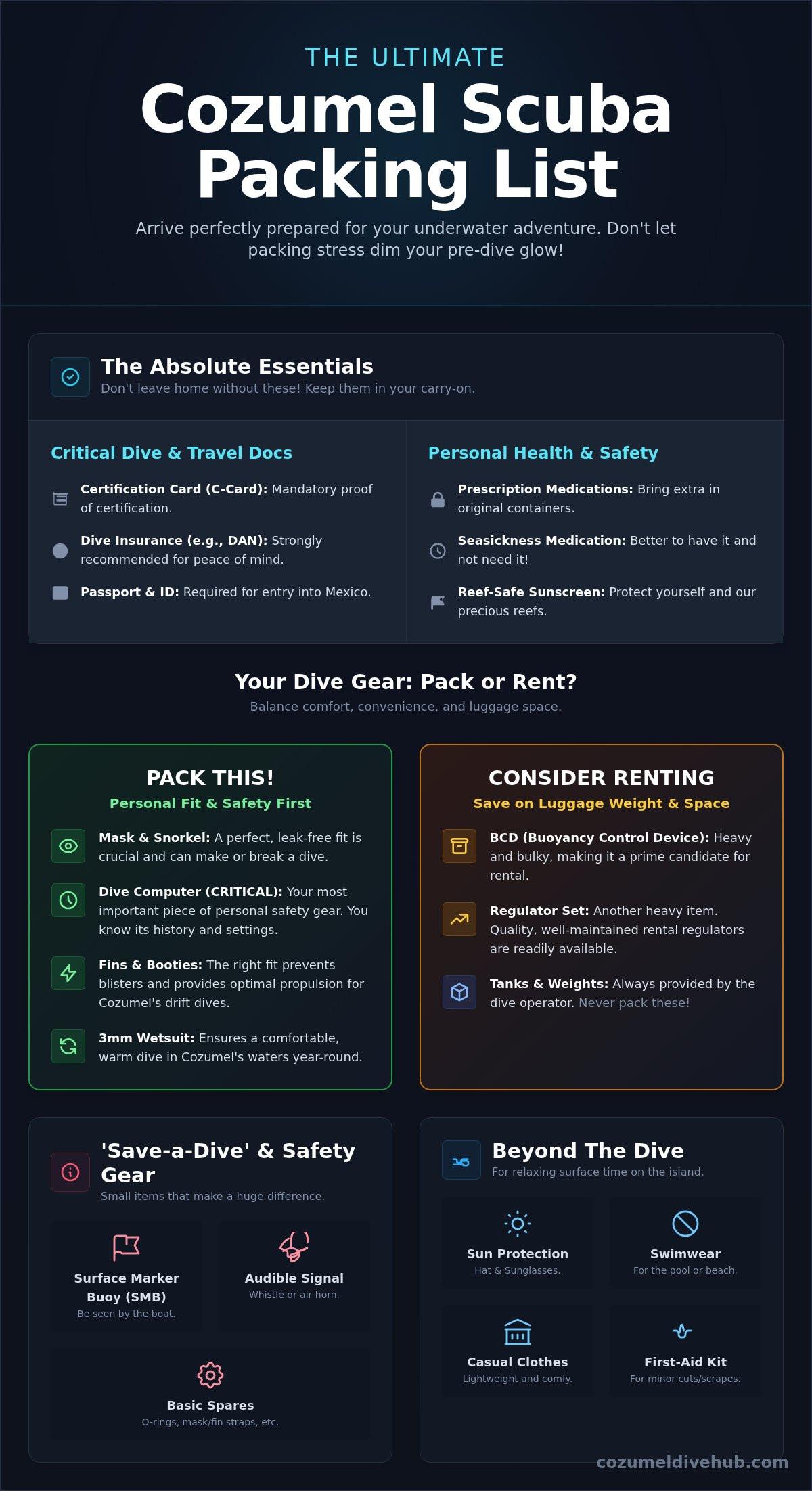
| Documents | Certification card, physical or in the agency app | Essential |
| Passport valid for your stay | Essential | |
| Dive insurance details (DAN or equivalent) | Essential | |
| Logbook or logging app | Useful for deeper sites | |
| Exposure | 3mm full suit (Dec–Apr) | Most divers |
| Shorty, skin or rash guard (Jun–Oct) | Most divers | |
| Hood or vest | Only if you run cold | |
| Gloves | Prohibited in the park | |
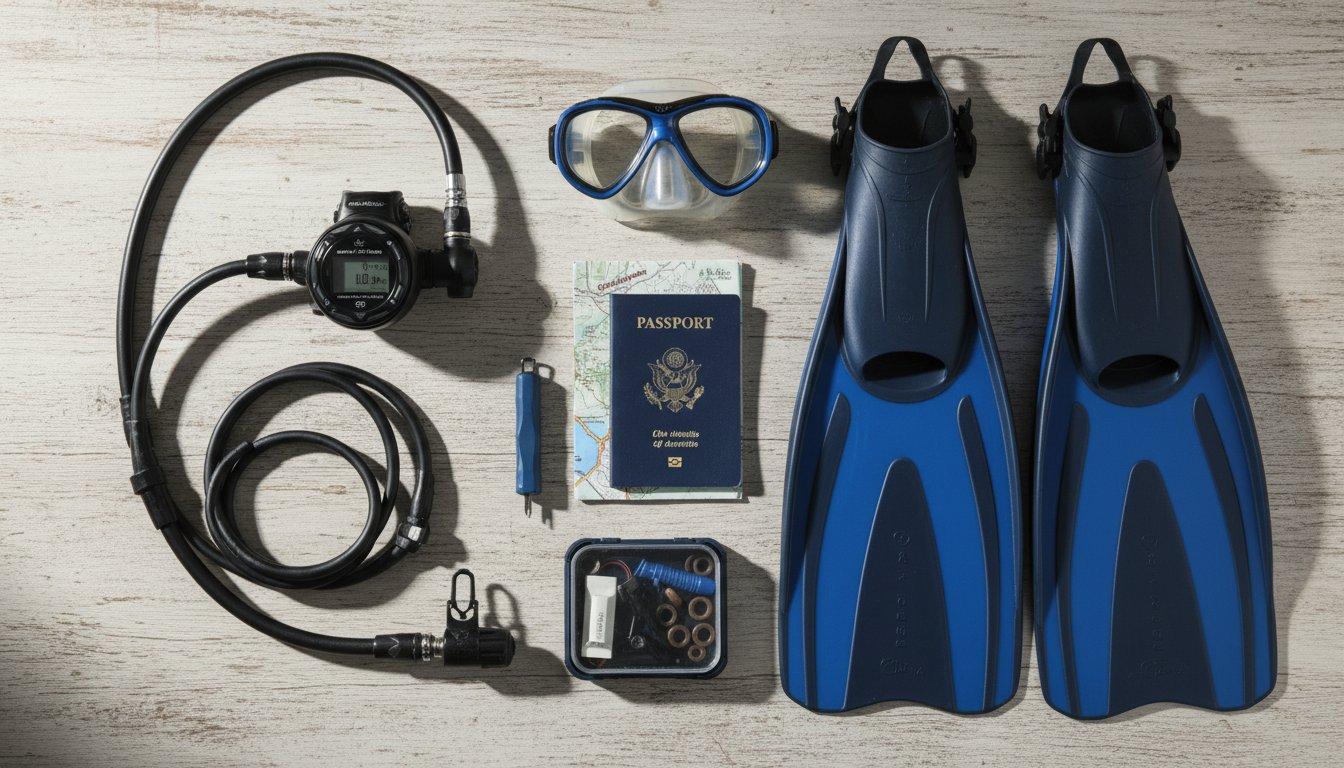
| Core gear | Mask (and spare, if you are hard to fit) | Yes — bring it |
| Dive computer | Yes — bring it | |
| Fins and booties | Bring if you have them | |
| BCD | Judgement call | |
| Regulator and octopus | Judgement call | |
| Safety | Surface marker buoy and spool | Recommended |
| Whistle or audible signal | Recommended | |
| Line cutter (not a knife) | Optional; knives are prohibited | |
| Dive light | Only for night dives and swim-throughs | |
| Sun and skin | Mineral reef-safe sunscreen (zinc or titanium) | Required |
| Long-sleeve rash guard | Better than sunscreen | |
| Wide-brim hat, polarised sunglasses | Yes | |
| Money | Pesos in cash, small notes | Essential |
| Comfort | Save-a-dive kit | Yes |
| Dry bag, quick-dry towel | Yes | |
| Seasickness tablets | Bring even if you never need them | |
| Mask defog | Small and cheap |
Two items on that list carry a hard rule rather than a preference — sunscreen and gloves. Both are covered in detail further down, and both are set out in full in the Cozumel diving regulations guide.
What Wetsuit Do You Need For Cozumel?
Cozumel's water is warm and its annual swing is small — about 7°F between the coolest and warmest months. Divers regularly arrive with 5mm suits and dive them once. The table below is drawn from the island's month-by-month conditions data.
| Months | Water temperature | What most divers wear |
|---|---|---|
| December–February | 78–79°F / 26°C | 3mm full suit |
| March–April | 79–80°F / 26–27°C | 3mm full suit |
| May | 81°F / 27°C | 3mm shorty |
| June–September | 83–85°F / 28–29°C | Shorty, skin or rash guard |
| October | 84°F / 29°C | Shorty |
| November | 81°F / 27°C | 3mm shorty |
Three things shift this. Repetitive diving cools you cumulatively, so a fourth dive on day five feels colder than the first dive on day one. Long, slow drift dives with almost no finning generate no body heat. And the current itself is a windchill of sorts. If you are diving four or five days straight in January, a 3mm full suit rather than a shorty is the safer call. If you genuinely feel the cold, a vest or thin hood adds warmth for almost no packed volume — and it is the correct answer to being cold, because gloves are not an option here.
Should You Bring Your Own Gear Or Rent It In Cozumel?
Rental gear is cheap, plentiful and generally well maintained on this island, which changes the maths. A full set runs roughly US$25–40 per day, or US$175–280 for a week — real money, but less than a second checked bag on several routes plus the risk of your kit going missing. The rental price guide breaks down per-item rates, and the rent-versus-bring comparison works through the break-even point.
| Item | Verdict | Why |
|---|---|---|
| Mask | Bring | Fit is personal and a leaking mask ruins every dive. Tiny and light |
| Dive computer | Bring | You know its settings and alarm behaviour, and it holds your nitrogen loading across the week. Rental costs US$10–18 a day and is rarely bundled |
| Fins | Bring if you have them | Bulky but light. Rental fins are perfectly adequate for drift diving, where fins do little work |
| Booties | Bring | Cheap, light, and rental booties are the item people most dislike sharing |
| Wetsuit | Judgement call | A 3mm shorty packs down small. Rental suits are thin and plentiful here |
| BCD | Rent for most people | Heaviest single item. Rental BCDs are unremarkable but fine |
| Regulator | Judgement call | Bring it if you dive often enough to trust yours and service it; rent if this is a once-a-year trip |
| SMB and spool | Bring | Small, and rarely offered as a rental item |
| Tanks and weights | Never bring | Always included |
| Camera and housing | Bring | Nobody rents you their housing. Pack spare batteries and cards |
The rule of thumb that holds up: bring what touches your face, what tracks your safety, and what nobody will rent you. Rent the heavy, bulky, generic items. If you are still weighing up a computer purchase before the trip, the dive computer buying guide compares options at each level.
What Goes In A Save-A-Dive Kit?
Gear does not fail dramatically. It fails in small, stupid, trip-ending ways — a perished mask strap, a snapped fin buckle, a flat computer battery on the morning of your best dive. A save-a-dive kit is a sandwich bag of spares that costs almost nothing and weighs almost nothing.
| Spare | Fixes | Priority |
|---|---|---|
| Mask strap (or a neoprene slap strap) | The single most common failure | Essential |
| Fin straps and buckles | Second most common; buckles crack in UV | Essential |
| Tank O-rings, assorted | A leaking tank valve at the mooring | Essential |
| Cable ties, several sizes | Universal field repair | Essential |
| Regulator mouthpiece and a zip tie | Bite-through, which happens without warning | Recommended |
| Computer and transmitter batteries | Only if yours is user-replaceable — check first | Recommended |
| Silicone grease, small tube | O-rings and camera housing seals | Recommended |
| Multi-tool with hex keys | Hose and buckle adjustments | Optional |
| Neoprene cement | Wetsuit tears | Optional |
| Defog, or baby shampoo decanted | Cheaper and better than most commercial products — see the mask fogging guide | Recommended |
If you rent everything, you still want the mask strap and the defog. If you bring your own kit, take the whole list.
Reef-Safe Sunscreen: What Is Actually Required
This is a rule, not a suggestion. CONANP's published visitor rules for Parque Nacional Arrecifes de Cozumel include a plain instruction not to use sunscreen inside the park, and operators enforce it as a ban on chemical formulations. Oxybenzone and octinoxate are the two filters named most often, and any sunscreen containing them will be turned away at the boat.
What passes: mineral filters only — non-nano zinc oxide or titanium dioxide, usually labelled "reef safe" or biodegradable. What does not: the majority of mainstream drugstore sunscreens, sprays and most "sport" formulations. Check the active-ingredients panel rather than the marketing claim on the front, because "reef friendly" is not a regulated term.
The better answer is to not rely on sunscreen at all. A long-sleeve rash guard covers the area sunscreen is worst at protecting and puts nothing in the water, which is why it appears twice on the checklist above. If you do use mineral sunscreen, apply it at least 20 to 30 minutes before entering the water so it has bonded to skin. Buying it on the island is possible but limited and expensive; bring it from home. More on diving here without leaving a mark is in the eco-friendly diving guide.
What Not To Bring: Gloves, Knives And Pointers
CONANP's rules for the park prohibit the use of gloves, knives and pointers (varillas) by recreational divers, alongside touching the reef, feeding wildlife and anchoring. The reasoning behind the glove ban is behavioural rather than ecological in itself: a diver with bare hands does not reach out and grab coral. Working dive professionals can register to carry gloves and knives; there is no equivalent route for a visiting recreational diver.
Practically, this means:
- Gloves stay at the hotel. Do not bring them for warmth — bring a thicker suit or a vest instead.
- Leave the dive knife at home. A small line cutter is a reasonable safety compromise on entanglement risk, but check with your operator before the boat, because policies vary and the park rule names knives explicitly.
- No pointers, no muck sticks, no reef hooks. All of them are ways of touching the reef.
- Nothing leaves with you. Shells, coral rubble and anything else you might pocket are covered by the collecting ban, and protected species are covered by federal law.
Good buoyancy is what replaces all of this equipment. No-touch diving is the operating standard on these reefs, not an aspiration, and if your trim is rusty a refresher is a better use of money than any piece of gear.
Anything you decide to leave at home can usually be sourced locally instead — rental sets, spares and servicing are all available on the island.
Do You Need To Bring An SMB To Cozumel?
Cozumel is a drift diving destination and almost all diving here is done from a live boat — the captain stays under power, tracks the group and collects everyone where they surface. The guide carries and deploys a surface marker buoy on ascent, and on a normal dive that is what the boat is looking for.
Carrying your own is not universally required, and requirements differ between shops — ask yours. It is still worth packing, for one reason: the scenario an SMB solves is the one where you are no longer with the group. Surfacing alone in a channel with real current, with no marker, is a genuinely bad position, and an SMB with a spool is small, light and cheap insurance against it. If you have not deployed one from depth before, practise somewhere calmer than a wall dive. The drift diving guide covers the technique, and how strong the current actually gets explains why it matters here specifically.
How Much Cash To Bring, And In Which Currency
Bring pesos, in cash, in small denominations. Two things on a Cozumel dive trip are routinely cash-only.
| Cash item | Amount | Notes |
|---|---|---|
| Marine park fee | 225 MXN per person, per day | Set by CONANP in pesos; collected by your shop; a dated wristband is your proof |
| Crew tips | Budget separately, per day | Customary and almost always cash |
| Taxis and small shops | Small notes | Card acceptance is patchy away from the main strip |
The park fee applies to everyone entering the park, per person, per day — divers, snorkellers and non-diving companions riding along on the boat. Six days of diving means six days of fees, not one. Rates are revised periodically, usually with effect from 1 January, so confirm the current figure before you fly; the marine park fees guide carries a check date for exactly that reason. Paying in dollars is widely accepted but you will take a poor exchange rate on every transaction — the currency guide for divers covers where that costs you most, and the tipping etiquette guide covers customary amounts.
Carry-On Versus Checked: What Goes Where
Airline dive-gear allowances vary widely by carrier and by route, so check yours rather than trusting a number from a forum. What does not vary is which items you cannot afford to have arrive three days late.
| Carry-on | Checked |
|---|---|
| Regulator and octopus | BCD |
| Dive computer | Fins and booties |
| Mask | Wetsuit (use it as padding) |
| Certification card and passport | Rash guards and towels |
| Prescription medication | Save-a-dive kit and tools |
| Spare lithium batteries (required in cabin) | Liquids over 100ml, including defog |
| Camera body and housing | Line cutter, if you bring one |
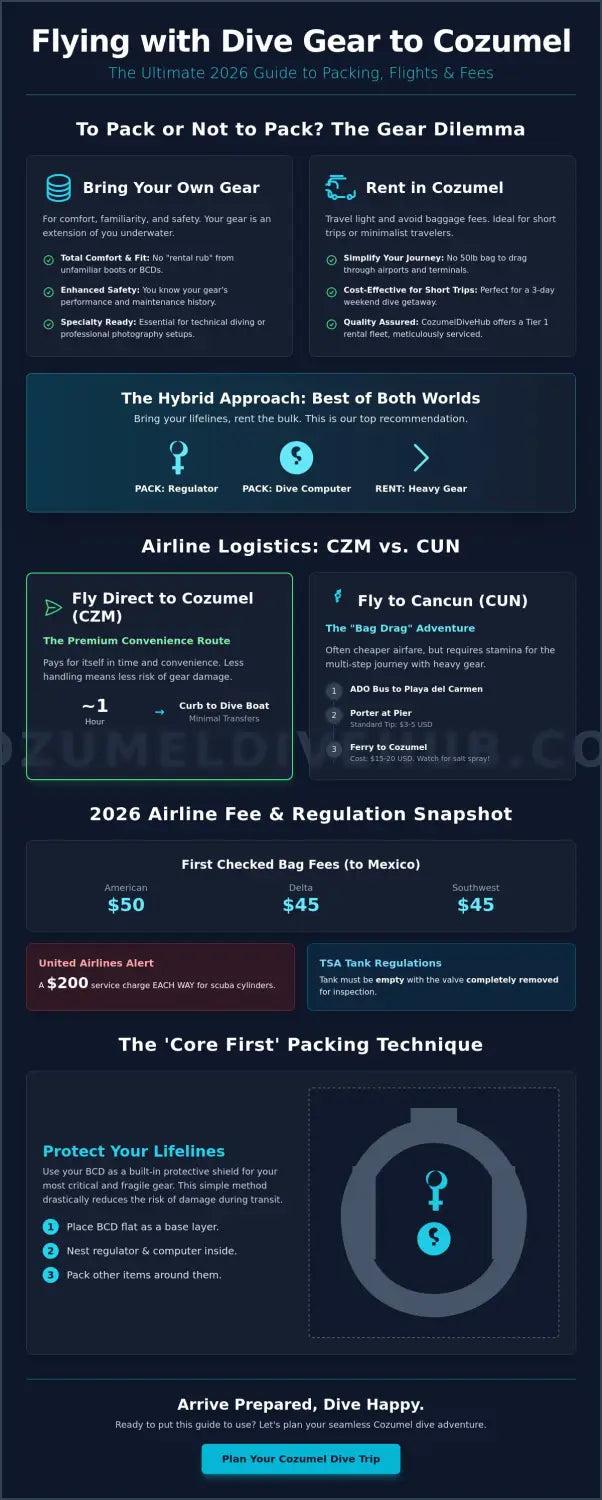
Spare lithium batteries — for dive lights, cameras and strobes — must travel in the cabin, not in checked baggage. That is an airline safety rule, not a dive rule, and it applies to loose spares in particular; tape the terminals or keep them in their cases. Wrapping your regulator inside a rolled wetsuit is free padding and saves buying a dedicated bag. Better still, pack the regulator and computer into the folded BCD in the middle of the case, so the softest items sit on the outside and take the handling.
Flying To Cozumel With A Dive Bag
Two decisions sit outside the packing list itself: how you get to the island, and what happens to the bag when you land.
Fly Into Cozumel Or Into Cancún?
Cozumel has its own airport, CZM, with direct services from several US hubs, and the distance from carousel to taxi to hotel is short. Cancún, CUN, is usually cheaper and has far more flights, but the onward leg is a shuttle or bus to Playa del Carmen followed by the passenger ferry across the channel. That is two extra handovers, a set of stairs and a boat, all with a bag that weighs thirty pounds or more.
The fare saving is real and so is the bag drag. Travelling with a full kit, the direct flight usually earns the premium. Travelling light and renting on the island, the Cancún routing costs you a few hours and very little else. Routing, timing and cost are compared in more detail in the guide to planning a Cozumel dive trip from the USA.
Can You Fly With A Scuba Tank?
Technically yes, practically no. Aviation security rules require a cylinder to be carried completely empty with the valve removed, so that the inside can be visually inspected, and carriers that accept them generally handle a tank as special sports equipment with a fee attached. Since tanks and weights are already included in every Cozumel boat price, there is nothing at all to gain. Leave the cylinder at home.
What Happens At Mexican Customs
Arriving passengers pass a customs check that selects bags for inspection at random: you press a button, a green light sends you straight through, a red light means your luggage is opened and looked at. It is routine and usually quick. Officers are looking for commercial quantities of new goods brought in for resale, not for a used dive kit, and equipment that plainly belongs to you and shows wear rarely prompts more than a question. Carrying professional-grade camera or video equipment attracts more attention than a regulator bag does.
Baggage allowances, sports-equipment policies and fees differ by carrier and by route and are revised often, so check your own airline's current published rules before you pack rather than relying on a figure from a forum.
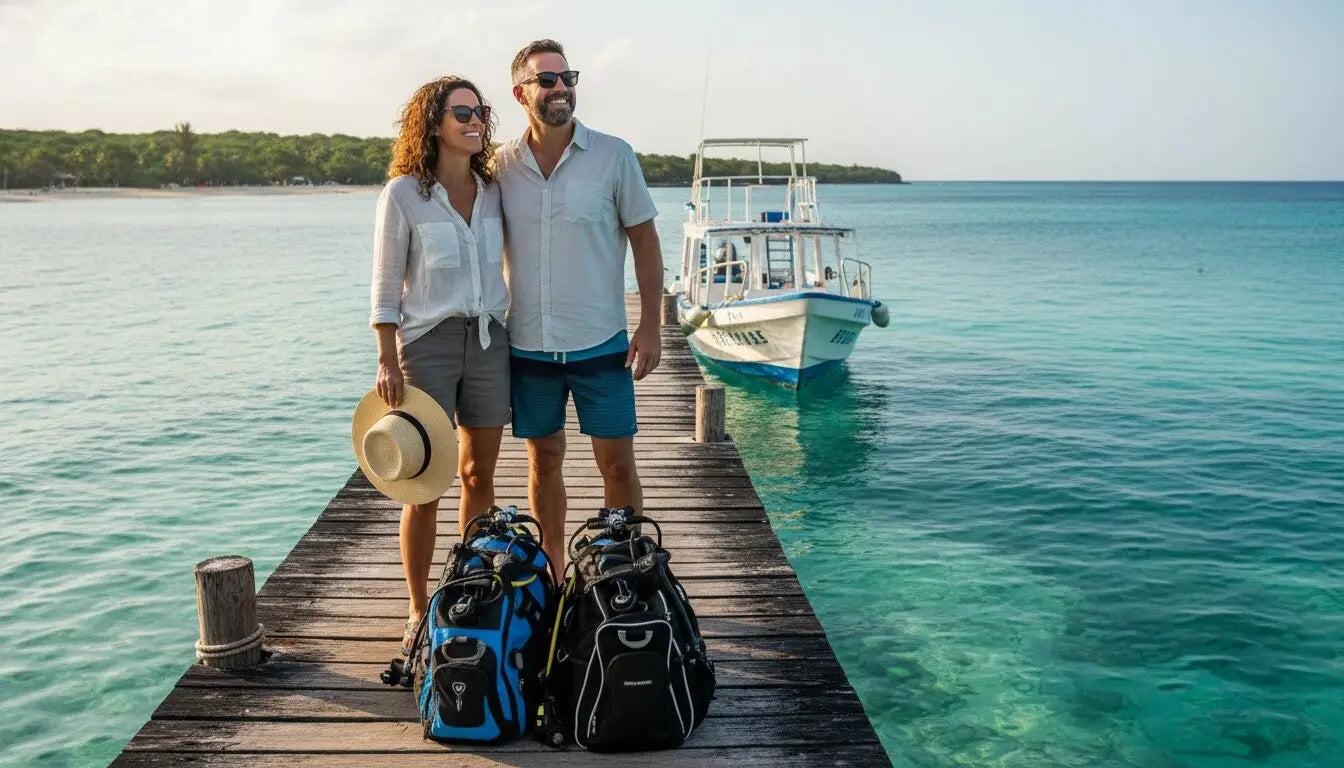
Two more scheduling items belong in the same planning bracket. Leave a proper surface interval before your flight home, covered in the flying after diving guide, and sort out your dive travel insurance before you leave rather than at the airport. Entry paperwork is covered in the passport and visa guide.
What To Pack For The Rest Of Cozumel
Topside, the island is relaxed to the point of indifference about clothing. Nothing on this list needs to be smart.
- Two swimsuits. One dries while you wear the other.
- Light, breathable clothes. Shorts, t-shirts, a sundress. Cotton and linen over synthetics in the humidity.
- One warm layer. For air-conditioned restaurants and breezy December evenings, not for the weather.
- Sandals plus one pair of closed walking shoes. For town, ruins or anywhere off the paved strip.
- Insect repellent. Dawn and dusk, especially near mangrove.
- Reusable water bottle and electrolytes. Diving dehydrates you more than you notice.
- Power bank and a waterproof phone pouch.
- A book for surface intervals. Cozumel's boat comfort varies and the gap between dives is usually an hour.
Mexico runs 127V at 60Hz on the same Type A and Type B sockets as the United States and Canada, so North American chargers need no adapter. Visitors from elsewhere should pack one.
Before You Pack, Plan The Diving
The packing list only makes sense once you know how many days you are diving, which season you are arriving in and which sites you are aiming at — those decide your wetsuit, your cash and whether renting beats flying with your kit. Work through the full trip planning checklist, then use the Cozumel trip planner to put the pieces in order.
Frequently Asked Questions
What thickness wetsuit do I need for diving in Cozumel?
Should I bring my own scuba gear to Cozumel or rent it there?
Is reef-safe sunscreen required in Cozumel?
Do I need to bring my own weights and tanks to Cozumel?
How much cash should I bring for diving in Cozumel?
Can I bring gloves for diving in Cozumel?
Should I bring a surface marker buoy for diving in Cozumel?
What should go in a save-a-dive kit for Cozumel?
What dive gear should go in my carry-on rather than checked luggage?
Do I need a dive light for diving in Cozumel?
Share This Article

Carmen Novelo
Carmen Novelo is a Cozumel native and an active scuba instructor and dive guide on the island. She has spent twelve years diving the Cozumel reef system, and writes about its dive sites, conditions and marine life for Cozumel Dive Hub.