Cozumel Shark Diving Guide: Species, Seasons, and Local Secrets (2026)
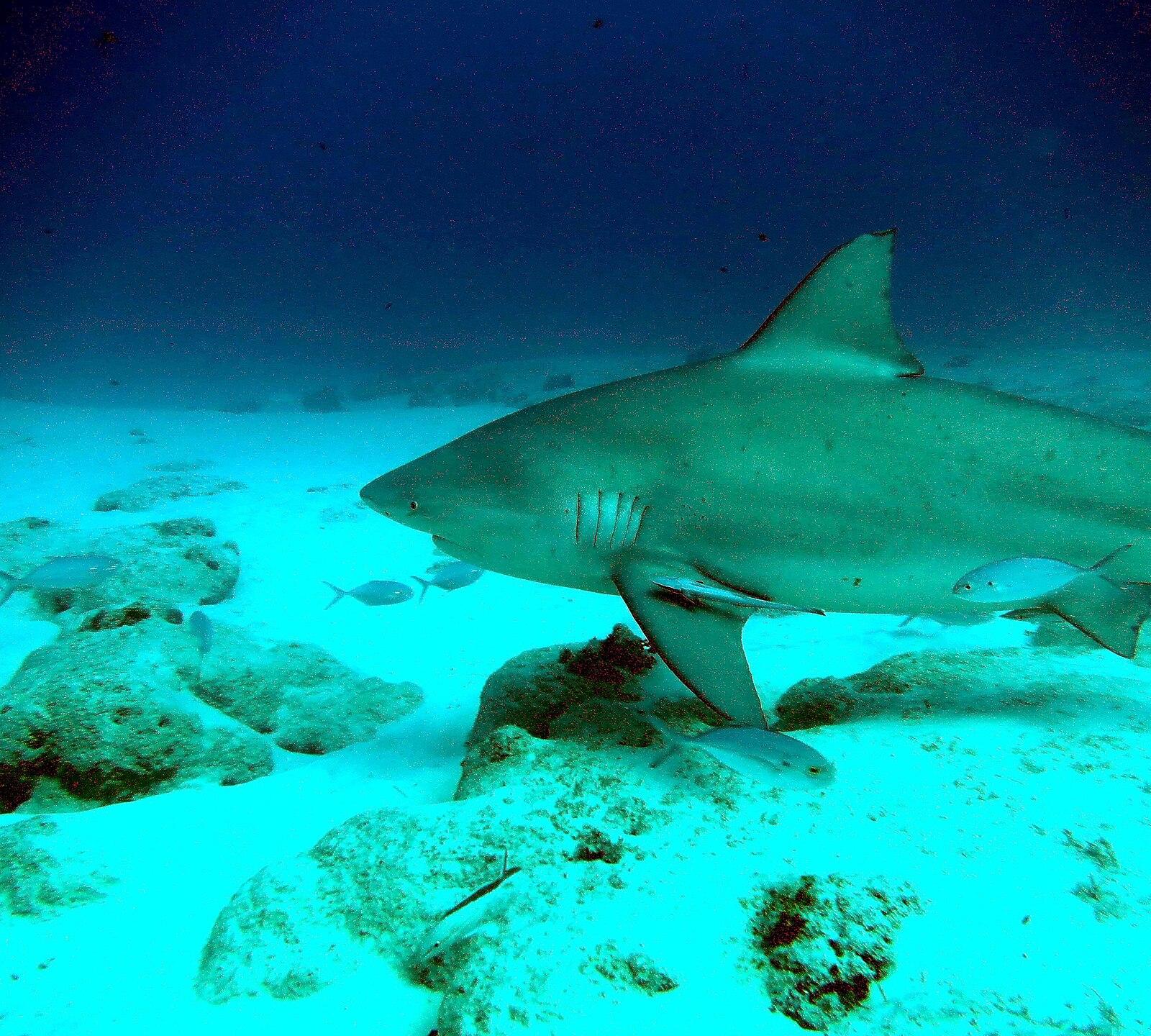
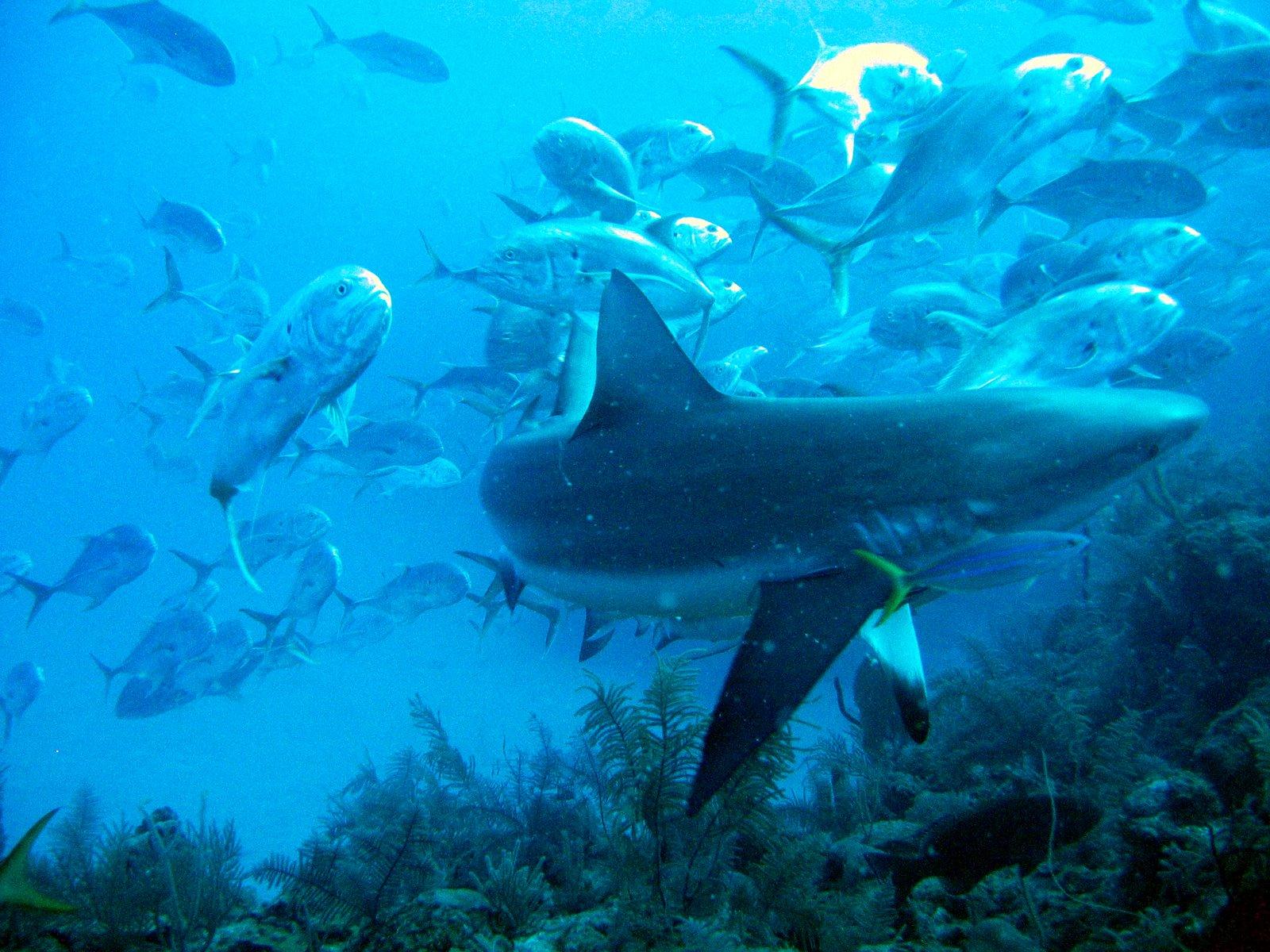
Cozumel is not a shark destination. The reefs hold resident nurse sharks, occasional Caribbean reef sharks on the deeper southern walls and rare hammerheads in the blue. Bull sharks are a mainland trip and whale sharks gather near Isla Mujeres.
Carmen Novelo · July 16, 2026 · 18 min read
Cozumel is not a shark destination, and that is the honest answer to almost every question people arrive with. The island's reefs hold a resident population of nurse sharks — bottom-dwelling, slow, and usually asleep under a ledge — plus occasional Caribbean reef sharks on the deeper southern walls and rare hammerhead sightings in the blue. The big-name species people associate with Mexico are somewhere else: bull sharks aggregate off Playa del Carmen on the mainland from November to March, and whale sharks gather near Isla Mujeres and Holbox in summer. Neither happens on Cozumel's reefs.
For divers hoping for a shark-heavy week, that is a disappointment worth knowing before you book. For everyone who arrived here because they typed something with the word "attack" in it, it is reassurance grounded in the actual record rather than in a dive shop's marketing. Both readings are legitimate, and this guide covers both.
Which Sharks Do Cozumel Divers Actually See?
| Species | How often | Where | What you will see |
|---|---|---|---|
| Nurse shark | Regularly, year-round | Under reef ledges and inside swim-throughs across the marine park | A motionless brown shark, often 1.5–2.5 m, resting on sand or wedged under coral |
| Caribbean reef shark | Occasional, not common | Deeper southern reefs and walls, including the Palancar system and Cedral | A single animal patrolling the drop-off, usually below 20 m, usually briefly |
| Hammerhead | Rare | Open blue water off the southern walls | A distant silhouette; a genuine event when it happens |
| Blacktip / silky | Very rare | Offshore, incidental | Passing encounters reported occasionally, not something to plan around |
| Bull shark | Not resident in Cozumel | Playa del Carmen, mainland, Nov–Mar | Requires a mainland day trip |
| Whale shark | Not resident in Cozumel | Isla Mujeres / Holbox, roughly mid-June to mid-September | Requires a long mainland journey, snorkel only |
The practical takeaway: on a typical week of two-tank days you might see nurse sharks on several dives and a reef shark on none. Divers who log a hundred Cozumel dives without a single reef shark are common. If sharks are the point of your trip, the reefs here are the wrong target — the marine life dive site guide sets more realistic expectations for what Cozumel is genuinely excellent at, which is turtles, rays, eels, splendid toadfish and enormous quantities of reef fish.
Has There Ever Been a Shark Attack in Cozumel?
This is the question the search data says most people are actually asking, so it deserves a direct answer with sources rather than a reassuring shrug.
The international record. The International Shark Attack File, maintained by the Florida Museum of Natural History, is the standard global reference. Its most recent yearly summary recorded 65 confirmed unprovoked shark bites worldwide, of which 9 were fatal. Mexico does not appear anywhere in that year's country breakdown. Mexico is not a country that generates shark-bite statistics, and the Mexican Caribbean is not a region that generates them either.
The regional record. Databases derived from the Global Shark Attack File list roughly fourteen recorded shark incidents for the entire state of Quintana Roo — a coastline running from Cancún to the Belize border — spread across more than sixty years, with four of those recorded as fatal. Most of the non-fatal entries are Cancún beach incidents. The state's reefs, which host hundreds of thousands of dives a year, contribute almost nothing to the list.
The Cozumel record specifically. Those databases contain two Cozumel entries, and they are separate events, both at Santa Rosa and both more than a quarter of a century old.
The first, on 11 June 1993, involved a diver on a night dive at Santa Rosa Shallows who did not surface. The autopsy recorded asphyxiation, and the remains carried trauma consistent with a large shark. This is the one entry that can reasonably be read as a genuine attack, and even here the sequence — whether the shark caused the death or found the diver afterwards — was never established.
The second, on 15 August 1997, involved two divers who disappeared at Santa Rosa while attempting an extreme-depth dive on air, far beyond recreational limits. One body was recovered showing shark trauma; the other was never found. The databases attribute the deaths to a tiger shark, but the long-standing reading among divers is that the damage was post-mortem scavenging following a deep-air accident at a depth where narcosis and oxygen toxicity make survival unlikely.
What that adds up to. Two recorded incidents in over sixty years, both involving night or extreme-depth profiles, and neither in the past twenty-five years. That is a genuinely low figure for a destination running hundreds of thousands of dives a year — but it is not zero, and this page is not going to round it down to zero. Sharks here are not a meaningful risk to a diver on a normal profile. That is a different statement from "it has never happened". If safety generally is your concern rather than sharks specifically, the Cozumel diving safety guide covers the things that actually do cause incidents here: current, depth, and diving beyond your certification.
Where Are Nurse Sharks Found on Cozumel's Reefs?
Nurse sharks are the shark you will actually meet. They are nocturnal feeders, which means daytime encounters are almost always with a sleeping animal — tucked under an overhang, wedged into a crevice, or lying flat on sand in the shade of a coral head. They are easy to swim past without noticing.
The sites where they turn up most reliably are the ones with structure to hide under:
- Palancar Caves and Palancar Gardens, where the coral formations create shaded overhangs
- Paso del Cedral, a lower-relief reef with ledges and heavy fish life
- Columbia Shallows and Colombia Deep, both of which list nurse sharks among their resident species
- Yucab Reef, a shallow site where a resting shark under a ledge is a common find
The behaviour rule is straightforward and non-negotiable inside the marine park: look, do not approach, do not photograph with a strobe pushed under the ledge, and never touch. Nurse sharks are placid until provoked, and essentially every recorded nurse shark bite worldwide has followed someone grabbing, cornering or sitting on one. No-touch diving is the whole of the law here.
Are Bull Sharks a Cozumel Dive?
No. Bull shark diving is a mainland activity, and the honest framing is that Cozumel operators sell it as a day trip rather than run it as a local dive.
The aggregation site sits offshore from Playa del Carmen, reached by ferry from Cozumel. The sharks are pregnant females that arrive to rest through the final months of gestation before pupping in coastal waters, and they leave when that is done. Published operator information puts the season at November through March, with December and January the peak, and the dive itself at roughly 24 to 27 metres on a sand bottom. Advanced Open Water or equivalent is the normal minimum, both for the depth and because current at the site can be significant. Baited and non-baited operations both exist, and that distinction is worth asking about — it changes the encounter and it is the part of the industry that draws the most criticism.
Realistically, from Cozumel this is a full day: a ferry crossing of about 45 minutes each way, plus the dive, plus surface intervals. Read the bull shark season guide and the bull shark day trip listing before committing a day to it.
Can You Scuba Dive With Whale Sharks From Cozumel?
No — for two separate reasons, and both matter.
They are not near Cozumel. The Caribbean aggregation forms off Isla Mujeres and Holbox, at the northern tip of the Yucatán Peninsula. From Cozumel that means a ferry to Playa del Carmen, ground transport north, and a boat out to the feeding grounds. It is a very long day.
Scuba is prohibited. Mexican regulation restricts whale shark encounters to snorkelling at the surface, with a maximum of two swimmers plus one guide in the water at a time, mandatory life jackets, no touching, no sunscreen of any kind on many permitted operations, and boat capacity limits inside the protected zone. Tanks are not permitted. The season is set annually by CONANP and runs roughly mid-June to mid-September, with July and August the peak.
The full logistics, costs and honest downsides — including how rough the crossing can be — are covered in the Cozumel whale shark season guide and the whale shark tour listing.
Cozumel Shark Sighting Calendar
| Period | Cozumel reefs | Mainland and offshore trips |
|---|---|---|
| Nov–Feb | Nurse sharks year-round; eagle ray season overlaps; occasional nortes close the port | Bull shark season at Playa del Carmen, peak Dec–Jan |
| Mar–May | Nurse sharks; calm conditions and strong visibility | Bull shark season tails off through March |
| Jun–Aug | Nurse sharks; warmest water of the year | Whale shark season, Isla Mujeres and Holbox, peak Jul–Aug |
| Sep–Oct | Nurse sharks; hurricane season, most weather disruption | Whale shark season ends mid-September |
Nothing in the Cozumel column changes much by month. That is the point: shark sightings here are not seasonal, because the resident species does not migrate. The conditions by month guide covers what actually does change through the year.
Which Sharks Are Not in Cozumel?
Worth stating plainly, because the question comes up constantly:
- Great whites. Absent. They are a cool-temperate and subtropical species; the Caribbean is outside their range. There is no white shark diving anywhere in the Mexican Caribbean.
- Tiger sharks. Extremely rare in these waters and not a species divers encounter on Cozumel reefs.
- Oceanic whitetips. Deep offshore, not a reef animal, and not part of Cozumel diving.
- Bull sharks on the reef. They exist in the region but they are a mainland winter aggregation, not Cozumel residents.
How Should You Behave If a Shark Appears?
Stay where you are, keep your buoyancy stable, keep your hands in, and let the animal decide. Do not chase it, do not swim toward it, do not attempt to position for a photograph by closing distance. A reef shark that is approached leaves; a nurse shark that is cornered is the one scenario in which a bite becomes plausible.
On a drift dive the practical constraint is that you are moving anyway — the encounter lasts as long as the current allows, which is usually seconds. Trying to fight the current to stay with an animal is both futile and a good way to separate yourself from the group. The marine park regulations and the reef conservation guide cover the wider behavioural standard that applies to everything on these reefs, not just sharks.
Planning a Trip Around Sharks
If you want sharks specifically, build the trip around the mainland: base yourself on Cozumel for the reef diving, and add a bull shark day in winter or a whale shark day in summer as a separate excursion. If you want reef diving and would be pleased to see a shark, Cozumel delivers that without any planning at all — the nurse sharks are there whether or not you look for them.
Either way, start with plan your Cozumel dive trip for timing, certification and logistics. The dive site index lists depth and skill level for every reef, the dive center directory covers operators, and the wider shark encounter guide goes further into species identification. For non-diving days, explore Cozumel covers what else the island offers.
Frequently Asked Questions
Are there sharks in Cozumel?
Have there been shark attacks in Cozumel?
How dangerous is shark diving in Cozumel?
Can you dive with bull sharks from Cozumel?
Why do bull sharks gather off Playa del Carmen?
Can you scuba dive with whale sharks in Mexico?
Are whale sharks found near Cozumel?
Are there great white sharks in Cozumel?
Where are nurse sharks most often seen in Cozumel?
What should you do if you see a shark while diving?
Share This Article

Carmen Novelo
Carmen Novelo is a Cozumel native and an active scuba instructor and dive guide on the island. She has spent twelve years diving the Cozumel reef system, and writes about its dive sites, conditions and marine life for Cozumel Dive Hub.