Cozumel Bull Shark Season 2026: The Ultimate Guide to Epic Encounters
Bull sharks do not live on Cozumel's reefs. They aggregate off Playa del Carmen on the mainland, roughly November through March, in 20 to 27 metres of water, so bull shark season costs you a ferry and a full dive day.
Carmen Novelo · May 10, 2026 · 17 min read
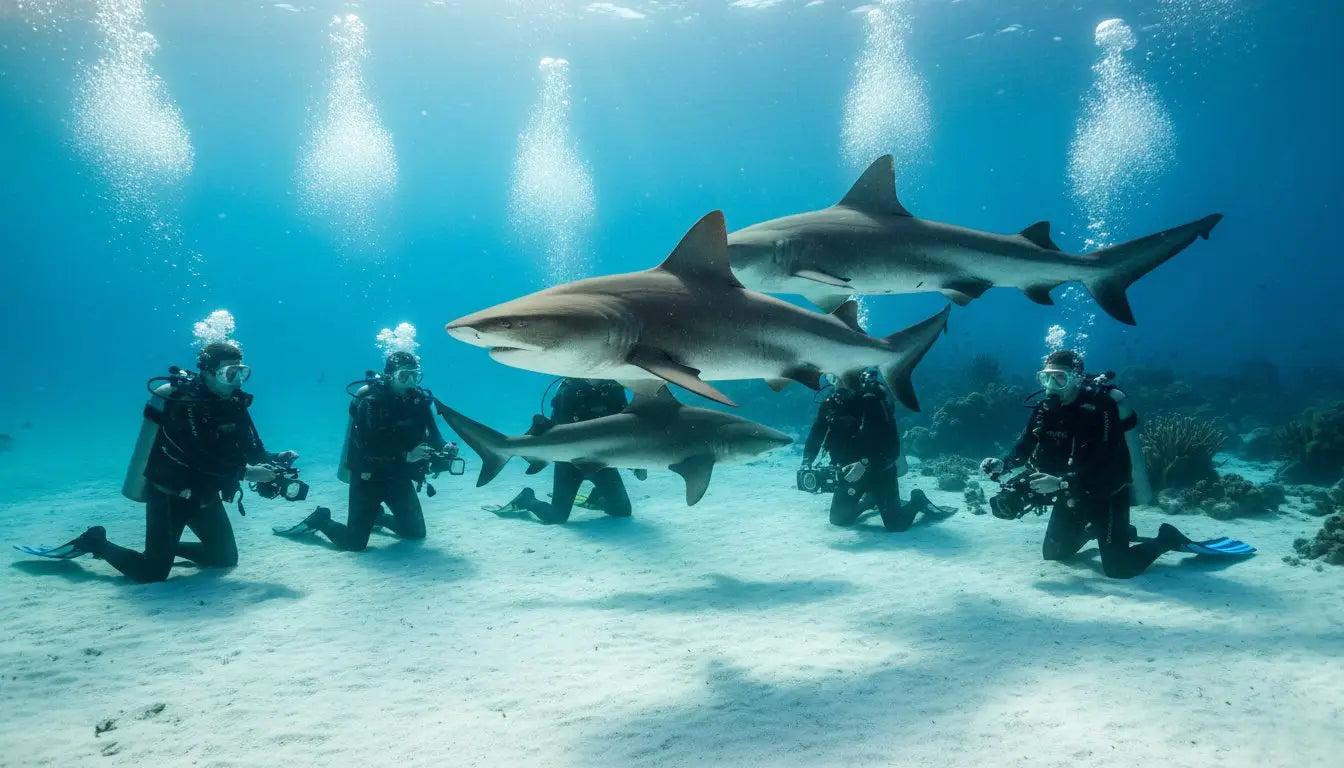
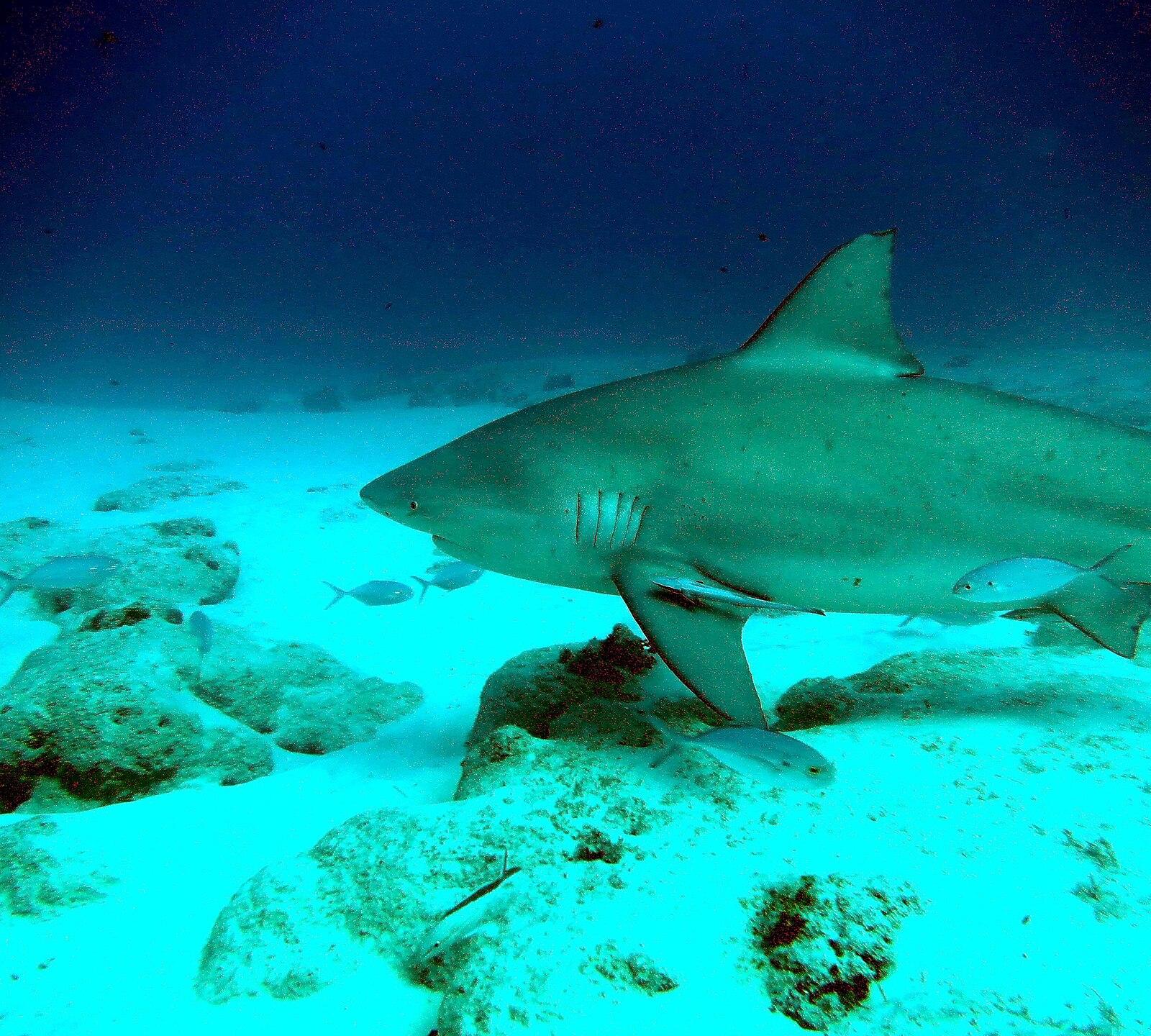
Bull sharks do not live on Cozumel's reefs. They aggregate off Playa del Carmen, on the mainland, roughly November through March, on a sand flat a few minutes offshore in about 20 to 27 metres (65 to 90 feet) of water. The animals are overwhelmingly pregnant females. They come for conditions on that stretch of coast, not for anything on the island.
That geography is the most important fact on this page, because it changes what the dive costs you. Doing it from Cozumel means a ferry to Playa del Carmen, two dives with a mainland operator, and a ferry back. It is a full day. If you have five dive days on Cozumel, this takes one of them, plus roughly ninety minutes of ferry time you are not spending underwater.
It is a genuinely spectacular dive, and many divers rate it the highlight of the trip. But it is worth booking with the trade-off in front of you rather than discovering it at the pier at six in the morning.
Where The Dive Actually Happens
The aggregation site sits offshore from Playa del Carmen, commonly called Shark Point, and it is a flat sand bottom rather than reef. Divers descend, settle on the sand, and stay put. There is no wall, no swim-through, nothing of the topography that makes Cozumel diving what it is. The attraction is the animals.
This matters because the marketing often blurs it. A dive center on Cozumel can absolutely arrange the trip for you, and many do, but the sharks are a mainland species aggregation and the dive is a mainland dive. Nobody is going to show you a bull shark on Santa Rosa Wall or Palancar Caves. Cozumel's own shark encounters are a different and much quieter proposition, mostly nurse sharks and the occasional passing reef shark, covered in the Cozumel shark diving guide and in Are There Sharks in Cozumel Dive Sites.
When The Season Runs
Operators and published accounts consistently give the window as November to March, with the strongest reports clustering from December through February. Several long-running Playa operators narrow their own peak to mid-November through mid-February, and January comes up more often than any other single month. Sightings are not guaranteed in any month, and arrival and departure dates shift year to year.
| Month | Reported Shark Activity | Cozumel Conditions That Week | Worth Planning Around |
|---|---|---|---|
| October | Occasional early arrivals; unreliable | Excellent, warm, calm | No |
| November | Season opens; numbers building, variable | First nortes possible | Yes, with low expectations |
| December | Sightings become consistent | Norte season underway | Yes |
| January | Most commonly named as peak | Highest chance of blown-out days | Yes, keep a spare day |
| February | Still strong; peak continues | Nortes continue | Yes |
| March | Females departing; numbers thin | Conditions improving | Tail end only |
| April to September | Absent | Prime Cozumel diving | No |
One local wrinkle: the same winter months that bring the sharks also bring the nortes, the north winds that shut Cozumel's boat traffic down for a day or two at a time. That is not a reason to avoid winter, and Cozumel diving in January explains why the season has real compensations, including eagle rays. It does mean that if a norte cancels a day and you have also committed a day to the mainland, your diving week gets short quickly.
What The Day Actually Costs In Time
The ferry between Cozumel and Playa del Carmen runs roughly every hour or so from about 6am to about 11pm, takes around 45 minutes in normal conditions and longer in winter chop, and costs somewhere around 350 to 380 pesos each way plus a port fee. Two operators run the route. Check current times the day before, because winter weather does cause cancellations.
A typical shark day looks something like this. Times vary by operator and are approximate.
| Time | What Is Happening |
|---|---|
| 05:45 | Up, gear bag packed, walk or taxi to the Cozumel ferry pier |
| 06:30 to 07:15 | Crossing to Playa del Carmen |
| 07:30 | Meet the mainland operator, paperwork, briefing, gear fitting |
| 08:30 to 11:30 | Two dives, with a surface interval between them |
| 12:00 | Debrief, lunch, gear rinse |
| 13:30 to 15:30 | Ferry back, unpack, done for the day |
Nine to ten hours door to door for two dives on sand. On Cozumel, the same nine hours would typically buy you a two-tank morning on the reefs and a relaxed afternoon, or a two-tank plus an afternoon single. Some island shops package the whole day for you — Best Dive Cozumel, which runs bull shark trips alongside its NAUI training is one — but the day is still the day. That is the honest arithmetic, and it is the part an operator's booking page tends to leave out.
There is also a no-diving-day consideration on the far end. Flying after diving requires a surface interval, so the shark trip is generally a poor fit for your last full day if you fly early.
Baited Or Unbaited: The Contested Part
This is the question divers argue about, and the honest answer is that both versions exist and the operator you book determines which one you get.
The Manual of Good Practices that governs the activity recognises two permitted modalities, usually translated as attraction and observation. In the attraction version, a designated feeder in a chainmail suit carries bait and hand-feeds pieces of fish while divers stay in a line on the sand. In the observation version there is no bait at all: the group settles on the bottom and waits for sharks to pass on their own.
Operators take public and opposing positions on this. Some advertise no-feeding dives explicitly as an ethical stance and describe seeing four or five sharks on a typical dive without any attraction. Others run attraction dives and argue that controlled feeding is what makes the encounter close, reliable and safe to supervise. Both are legal.
The criticisms of feeding are worth knowing before you choose. Critics argue that repeated provisioning conditions the animals, risks their associating divers with food, and concentrates them predictably at a known location. Bull sharks are not a protected species in Mexico, unlike white sharks, whale sharks and basking sharks, which makes that last point non-trivial. The counter-argument from the Playa side is economic and scientific: the dive industry there supports a large number of local families, generates more income than fishing the same animals, and has underwritten photo-identification, satellite tagging and ultrasound work on the aggregating females.
You do not have to resolve that debate. You do have to ask the question when you book, because the answer changes the dive you are buying.
The Rules That Apply
The site falls inside the Reserva de la Biosfera Caribe Mexicano, a federal protected area. A Manual of Good Practices for bull shark diving was developed in 2014 by dive centers, scientists, civil society groups and authorities, and it was subsequently folded into the reserve's management programme, which is what gives it legal force rather than leaving it as a voluntary code. Operators need authorisation to run the dives, and reported operational limits include small recreational groups, capped bottom time, restricted bait quantity and dedicated safety personnel in chainmail.
Treat those specific numbers as what operators and reporting describe rather than as a guarantee you can verify from the boat. A separate seasonal fishing closure applies from 1 May to 30 June, which does not overlap the diving season.
Note that Cozumel's own marine park fee does not cover the mainland site. If your dive week includes both, budget for the Cozumel park fee on your island days and whatever the Playa operator charges separately. The 2026 marine park fee guide covers the island side.
Whether You Have The Diving For It
Most Playa operators ask for Advanced Open Water or an equivalent rating, and the reason is straightforward rather than dramatic. The site sits around 24 metres, which puts you well into the depth band where no-decompression limits tighten and air consumption climbs. Bottom time is short, and a diver who burns gas quickly will end the dive before the group does.
What matters more than the card is composure. You are asked to settle on the sand, stay in position and stay still, sometimes in current, while large animals move close by. That is a buoyancy and self-control test more than a skills test. Divers who are comfortable holding a stable position, breathing slowly and not reacting are the ones who enjoy it. Divers with fewer than about thirty logged dives, or who have not dived in a year, generally get more from a few reef days first. If you are working toward the rating, the Advanced Open Water in Cozumel guide covers the route.
Standard guidance from operators includes dark, full-length exposure protection, no shiny jewellery or trailing metal, staying with the group, and following the briefing exactly. None of this is because the sharks are hostile. It is because predictable divers make an interaction that a guide can manage.
What You Give Up That Day
This is the part worth weighing honestly. A Cozumel dive day in high season typically means a two-tank morning drifting the reefs in the current the island is famous for, which is a different sport entirely from kneeling on sand. Trading one for the shark trip means one fewer day of drift diving on sites like Punta Sur, Paso del Cedral or Colombia Shallows.
Rough guidance by trip length:
- Three or four dive days. Probably skip it. The reefs are why you came, and losing a quarter of your diving to a mainland day trip is a lot, especially with nortes in play.
- Five to six dive days. It works, if you place it early in the week so a weather cancellation still leaves you a fallback slot.
- Seven or more dive days. Easy call. Take the day.
If you want a mainland day but are not sold on the sharks, cenote diving is the other classic ferry trip and involves the same time cost, so it is a choice between them rather than a case for both.
Practical Notes
Expect the two-tank shark trip itself to run in the region of 170 to 275 US dollars depending on operator and departure point, on top of the ferry and any gear rental. Water sits in the mid to high seventies Fahrenheit in winter, and a 5mm suit in a dark colour is the common recommendation, both for warmth on a stationary dive and because dark kit is what operators ask for.
Book the shark day well ahead for December and January. Confirm the modality, attraction or observation, in writing before you pay. Ask what happens if the ferry is cancelled, since that is a real winter risk and refund policies vary. And ask whether the price includes gear, since the reason many divers rent on the mainland is simply to avoid hauling a full kit bag onto a ferry twice in one day.
For deeper background on the excursion itself, the bull shark diving overview covers the encounter in more detail, and the dive centers directory lists Cozumel shops, several of which coordinate the mainland trip. If the current-heavy Cozumel side is new to you, how strong is the current in Cozumel and the drift diving guide are the useful starting points.
Making The Call
Bull shark season is real, it is seasonal, and it is worth doing once if you have the days and the diving to spend on it. What it is not is a Cozumel dive. Treat it as a mainland excursion that happens to be reachable from the island, price the ferry and the lost reef day into the decision, decide where you stand on baiting before you book, and go in with the composure the dive asks for.
Ready to build the week around it? Start with Plan Your Cozumel Dive Trip and slot the mainland day where a weather cancellation will not cost you the whole thing.
Frequently Asked Questions
When is bull shark season in the Cozumel area?
Where does the bull shark dive actually take place?
Can you see bull sharks from Cozumel itself?
Are the bull shark dives baited or unbaited?
How deep is the bull shark dive?
What certification do you need to dive with bull sharks?
Is bull shark diving safe?
Is bull shark diving regulated in Mexico?
How much does a bull shark dive from Cozumel cost?
Is it worth giving up a Cozumel dive day for the sharks?
Share This Article

Carmen Novelo
Carmen Novelo is a Cozumel native and an active scuba instructor and dive guide on the island. She has spent twelve years diving the Cozumel reef system, and writes about its dive sites, conditions and marine life for Cozumel Dive Hub.