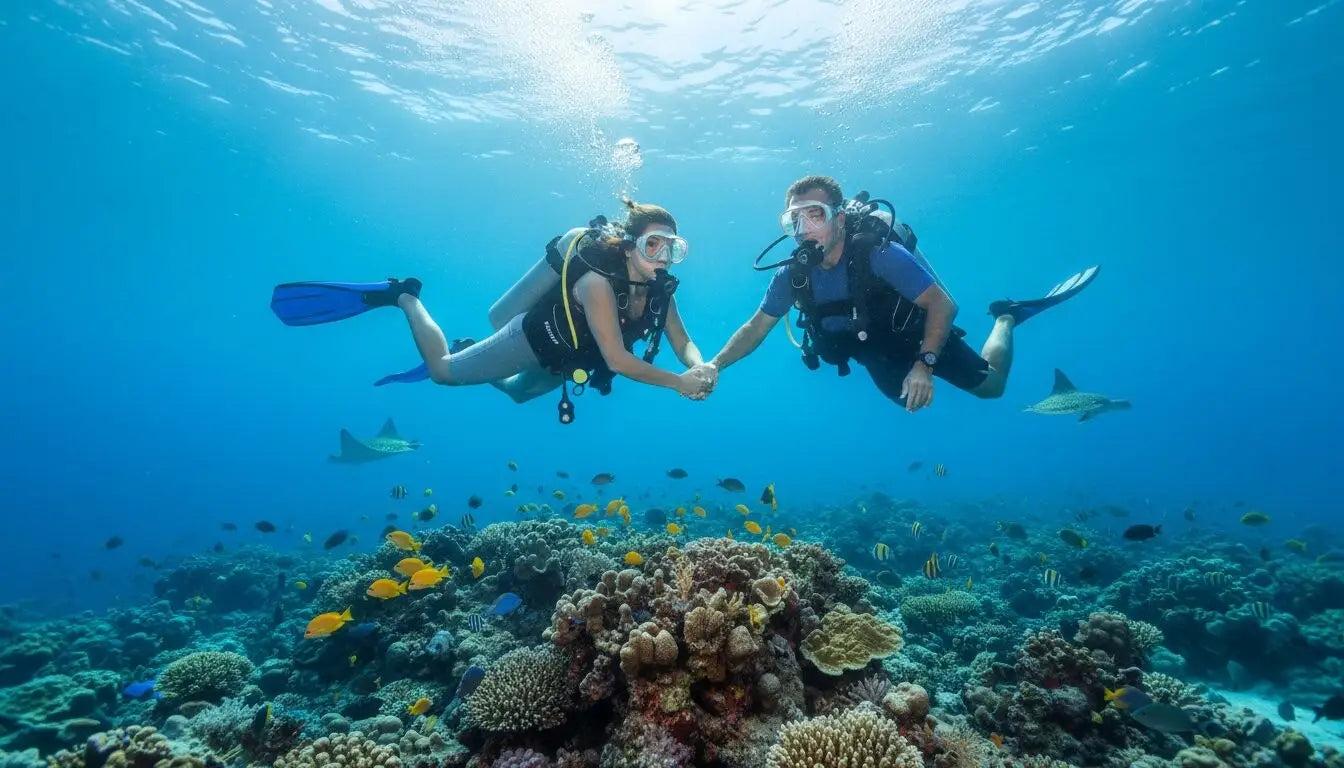
Nervous About Diving? Read This Before Cozumel
Being nervous before a first dive is normal, and almost everyone is, including people who go on to dive for thirty years. What helps is working out which fear you actually have, because generic reassurance fixes none of them.
Carmen Novelo · April 13, 2026 · 3 min read
Being nervous before a first dive is completely normal. Almost everyone is, including plenty of people who go on to dive for the next thirty years.
What helps is knowing which fear you actually have, because they have different solutions and generic reassurance fixes none of them.
The four common fears
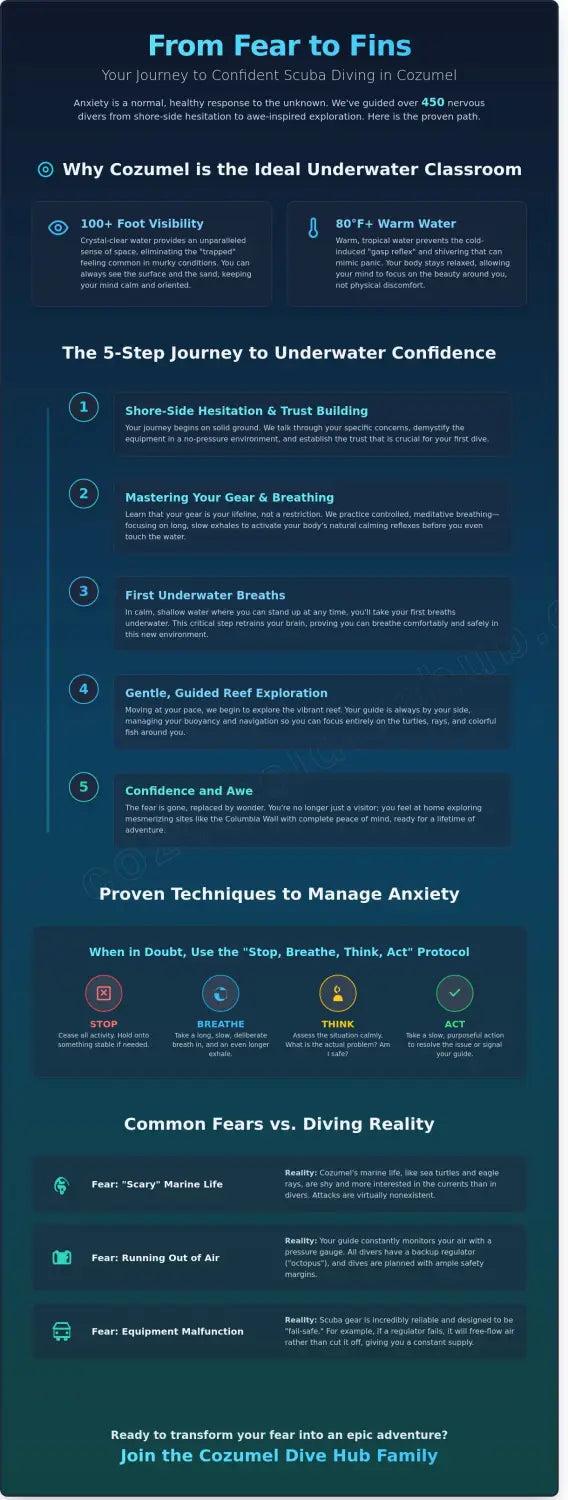
Not being able to breathe. By far the most common one, and it’s also the one that disappears fastest. The regulator just gives you air when you inhale — you breathe normally through it. About ninety seconds into your first descent you’ll have forgotten you were worried. A quick pool session beforehand turns this from a real fear into a non-issue.
Running out of air. You won’t. Your gauge tells you exactly what’s left, your guide will check it constantly, and you come up with plenty in reserve. Recreational dives end on time or on the first person’s air — never on empty. Ask your guide to check your pressure often on the early dives; it builds the habit and the confidence at the same time.
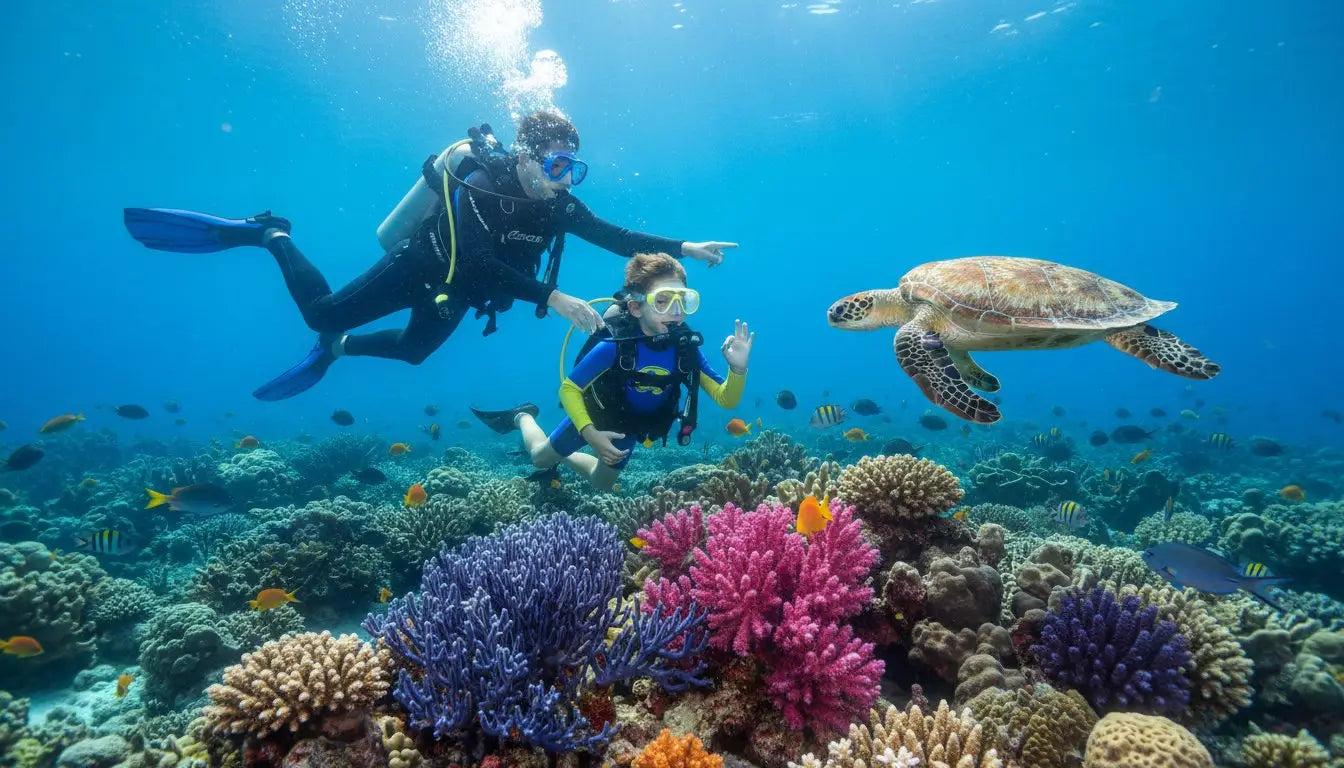
Something in the water. Cozumel’s realistic list is reef fish, turtles, rays and nurse sharks dozing under ledges. The International Shark Attack File records no fatal shark attack here. Reading what actually lives on the reefs usually settles this one, because the reality is a lot less dramatic than the imagination.
Not being in control. This is the real one for most people, and it is the hardest to talk someone out of. What helps is small, structured exposure: a pool session, then a shallow shore dive, then a boat dive. Each step proves the last fear wrong.
What actually helps
Just say it when you book. "I’m a bit nervous" is genuinely the most useful thing you can tell an operator. A good one will put you in a small group, pair you with a patient guide and adjust the plan. If they brush it off, that’s the wrong shop — find another.
Get a private guide for the first dive. It’s about $100–200 extra depending on the operator, and it buys you someone whose only job is you. For a nervous diver it’s probably the best money you’ll spend on the whole trip. Most dive centers will arrange it, some of the independent instructors on the island work this way as standard, and a shop built entirely around 1:1 private guiding, Different Diving with Laura, does not run group dives at all.
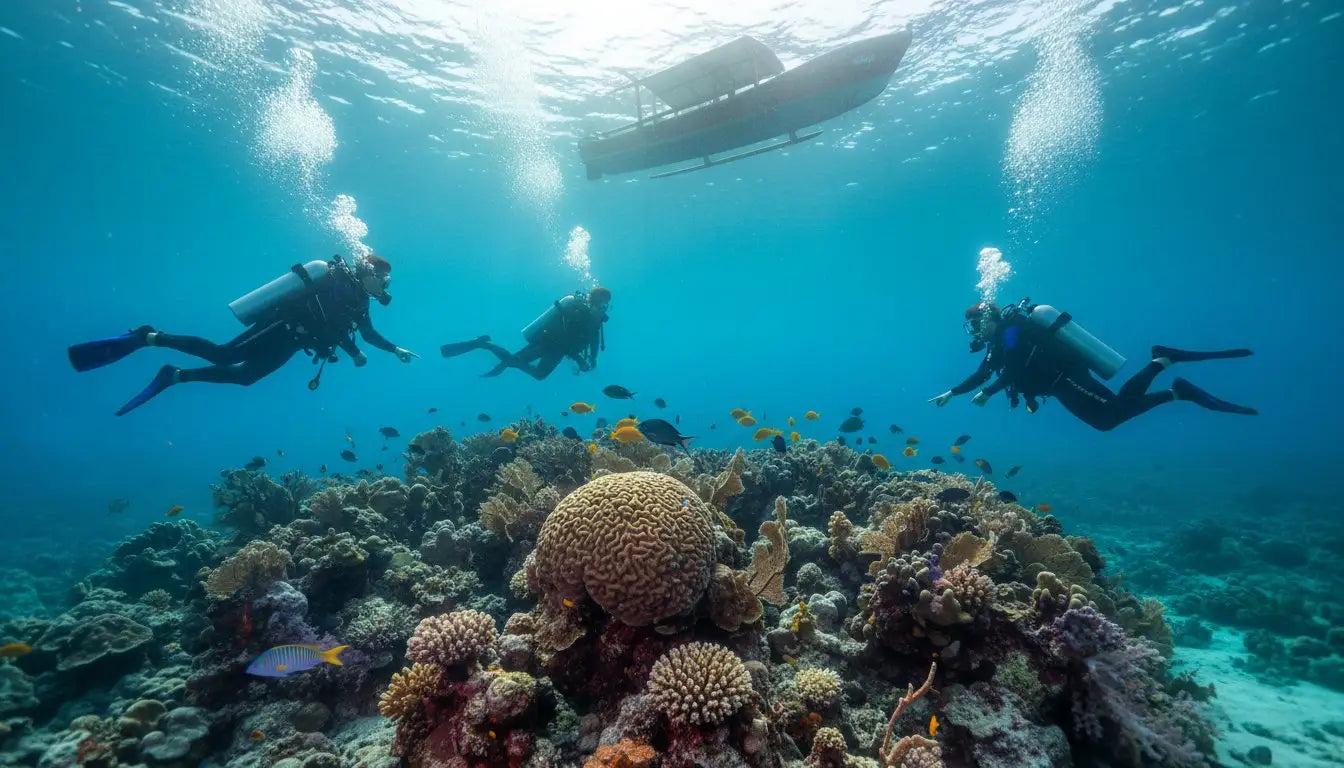
Start shallow. Paradise sits around 30–50 ft and Chankanaab 30–55 ft — both sheltered and calm. There’s no reason at all for a first dive to be deep.
Go early. Morning seas are calmer and boats are quieter. A rough surface interval makes everything worse.
Skip the alcohol the night before. Dehydration makes you breathe harder and feel worse, and it is indistinguishable from anxiety at depth.
Rent nothing that fits badly. A leaking mask or a wrong-size BCD creates task loading exactly when you do not need it. Say something at the shop, not on the boat.
Why Cozumel is a forgiving place to be nervous
Warm water, so there’s no cold on top of the nerves. Visibility usually well over 30 m, so the place feels open rather than closed in. Shallow, sheltered mid-island sites with mild current. And guides who run beginner dives every single day.
The drift diving takes one dive to get used to — and once it clicks, most nervous divers find it reduces anxiety, because you are not working. The beginner guide covers what a first dive actually looks like.
When to stop and come back
Ear pain that will not clear. Never push it. Signal, ascend a metre, try again. If it still will not go, end the dive. Barotrauma will end your week, not just your dive.
Genuine panic. Signal, hold your guide’s arm, ascend together. There is no shame in it and every experienced diver has seen it.
A shop that won’t slow down. Get off the boat. There are dozens of operators on this island — find one that listens.
Frequently Asked Questions
Is it normal to be scared of scuba diving?
What if I panic underwater?
Can I dive if I am claustrophobic?
How do I get over the fear of running out of air?
Should I tell my dive guide I am nervous?
Is a private guide worth it for a nervous diver?
Which Cozumel dive sites are best for a nervous diver?
Does the current in Cozumel make it worse for nervous divers?
Share This Article
Carmen Novelo
Carmen Novelo is a Cozumel native and an active scuba instructor and dive guide on the island. She has spent twelve years diving the Cozumel reef system, and writes about its dive sites, conditions and marine life for Cozumel Dive Hub.