Best Scuba Diving in Mexico: How Cozumel Compares
Mexico has three separate dive countries inside one set of borders. A comparison of Cozumel, Socorro, the cenotes, Cabo Pulmo and more, built only on CONANP and training-agency facts.
Luisa Carmona · September 20, 2026
Mexico has three separate dive countries inside one set of borders, and most guides to "the best scuba diving in Mexico" quietly pretend it has one. The Caribbean side gives you warm water, drift diving along a reef system that runs the length of the coast, and the flooded limestone caves behind it. The Pacific side, eleven hours of flying and a different ocean away, gives you giant mantas, humpbacks and hammerheads, and asks for a liveaboard and an advanced certification to see them. The Gulf coast is a third thing again, barely written about in English. Which one is "best" depends entirely on what you are certified to do, what month you can travel, and how much of your trip you are willing to spend getting to the water.
This is a comparison rather than a ranking. Every figure below that carries a rule, a fee or a season comes from Mexico's federal protected-areas agency, CONANP, or from the training agency that sets the standard, and is dated. Where a number is only ever quoted by tour operators, we have left it out rather than repeat it. That turns out to matter more than usual here, because one of Mexico's most-searched dive experiences has been illegal for three years and the guides still list it.
Key Takeaways
- Cozumel is the most accessible serious diving in the country: warm water year-round, roughly 300 diveable days, and a marine park fee of 225 pesos per person per day.
- Isla Guadalupe great white cage diving is permanently closed. The ban took effect on 10 January 2023 and no reopening mechanism exists. Anyone selling it is selling something they cannot legally deliver.
- Socorro is Mexico's world-class big-animal destination and it is liveaboard-only, November to May, advanced divers, roughly 300 to 430 US dollars a day before park fees.
- The cenotes are not an add-on. Cavern diving has its own certification, its own depth ceiling and its own distance-from-daylight limit. Cave diving is a different qualification again.
- Park fees vary by a factor of eight. Cabo Pulmo costs 125 pesos a day, Cozumel 225, Banco Chinchorro 750.
- If you have limited time and a standard Open Water card, the Caribbean side is the answer. If you have two weeks, the certification and the budget, the Pacific is where Mexico stops competing with the Caribbean and starts competing with Galápagos.

The Honest Shortlist
Mexico has somewhere between thirty and fifty destinations that appear on lists like this one. Most of them are a single reef with a dive shop attached. These are the ones that genuinely change what your trip looks like.
Cozumel — the default, and defensibly so
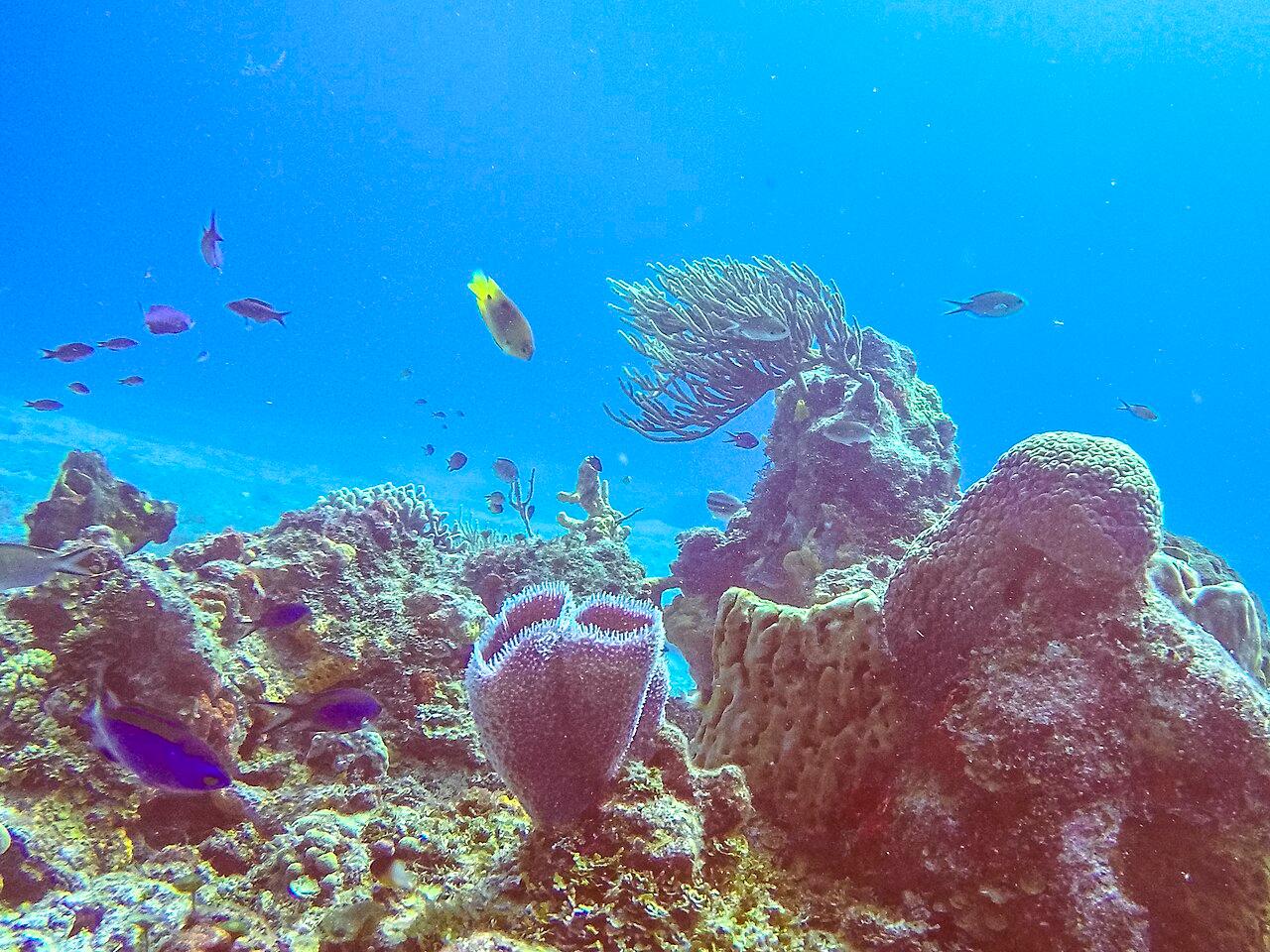
Cozumel sits inside Parque Nacional Arrecifes de Cozumel, which runs from kilometre 6 of the southern coastal road round to Punta Chiqueros on the east side. Entry is 225 pesos per person per day, the park is open 06:00 to 22:00 daily, and everyone diving inside it must use CONANP-authorised boats and guides. Seniors, disabled visitors and children under twelve enter free; students pay 25 percent; Mexican nationals pay half with ID. The rules are short and enforced: stay a metre and a half off the reef, no anchoring, no touching or feeding, no sunscreen, no fishing.
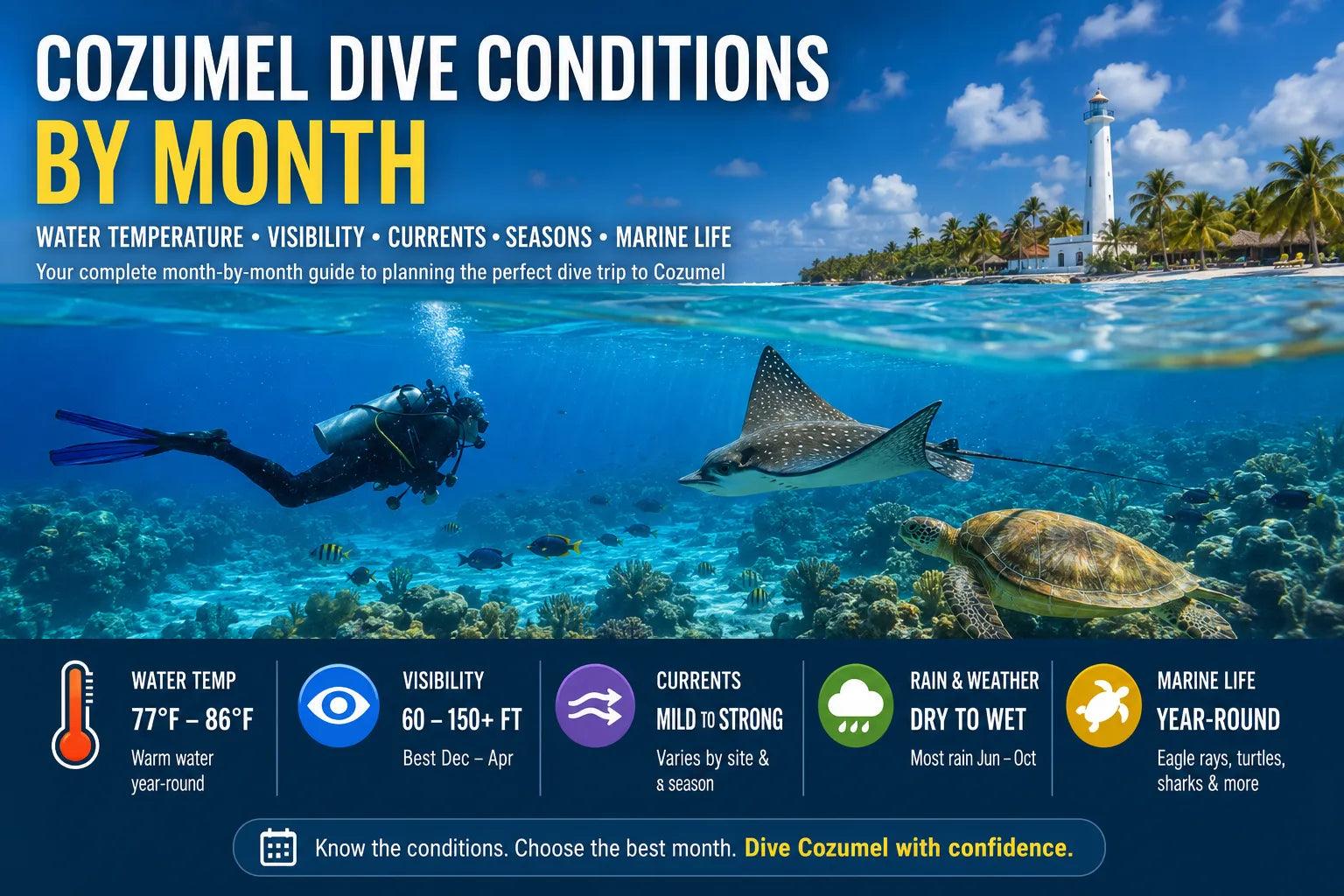
Water sits between 78 and 82 degrees Fahrenheit all year, cooling only slightly from September through December, which is why the island dives roughly 300 days a year. The diving is drift diving — the current does the work and you fly. PADI describes the island's drifts as generally easy, with the caveat that during seasonal transitions the current gets strong enough to be advanced-only. That is the honest version: Cozumel is beginner-friendly most of the time and occasionally isn't, and the difference shows up on a specific morning at a specific site rather than in a specific month.
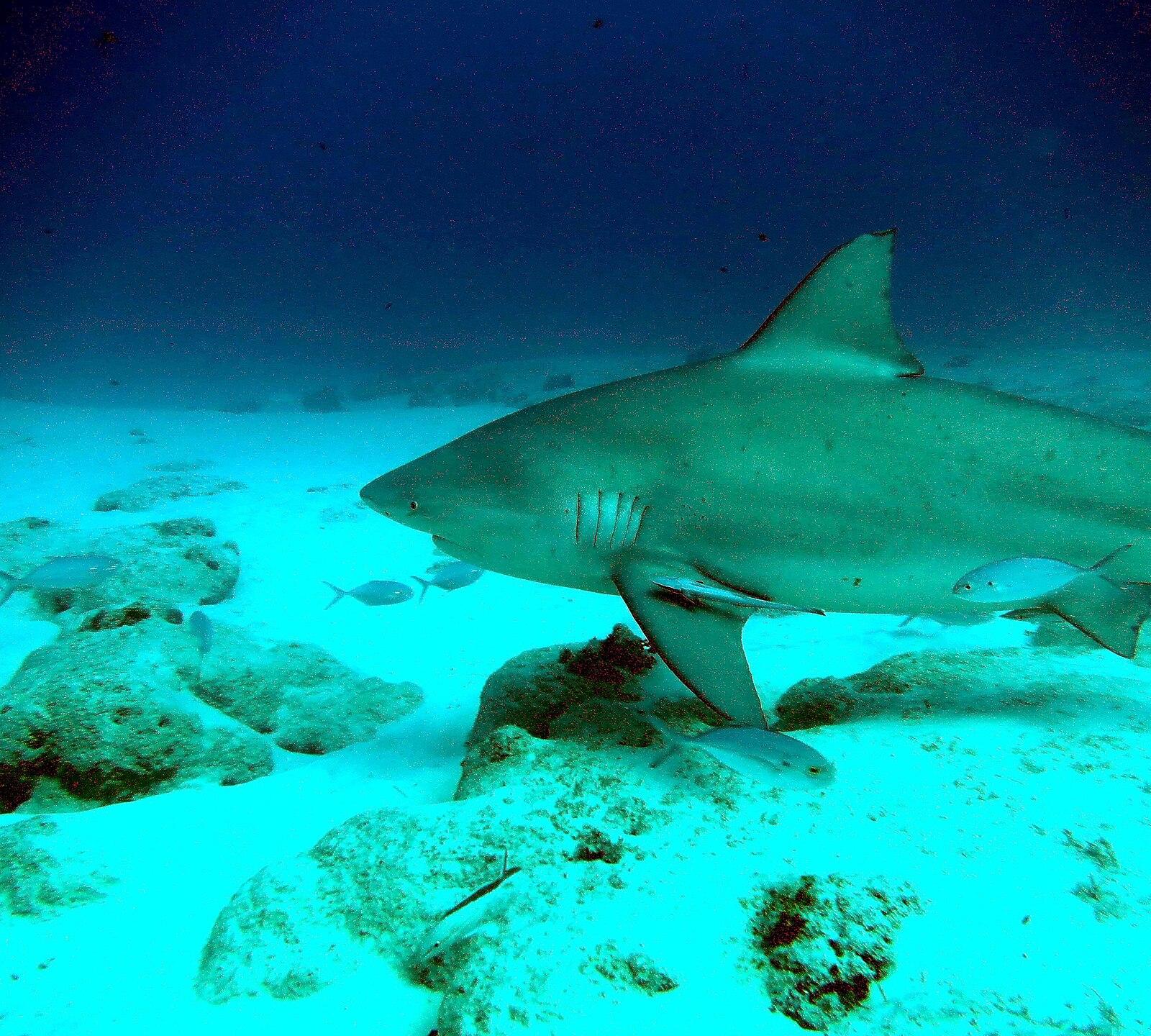
Eagle rays, turtles and nurse sharks are the everyday sightings. Bull sharks appear from November to March — though, as on the mainland, that is a seasonal encounter rather than a reef dive. If you are weighing months, our month-by-month conditions guide covers water temperature, visibility and current across the year, and the complete guide to scuba diving in Cozumel covers the reefs, the operators and the costs together.
What Cozumel is not is a big-animal destination. Nobody comes here for mantas or hammerheads. What it has instead is consistency, a short flight, and the ability to put an Open Water diver on a world-class wall on the first morning.
Riviera Maya cenotes — the one that needs a different card
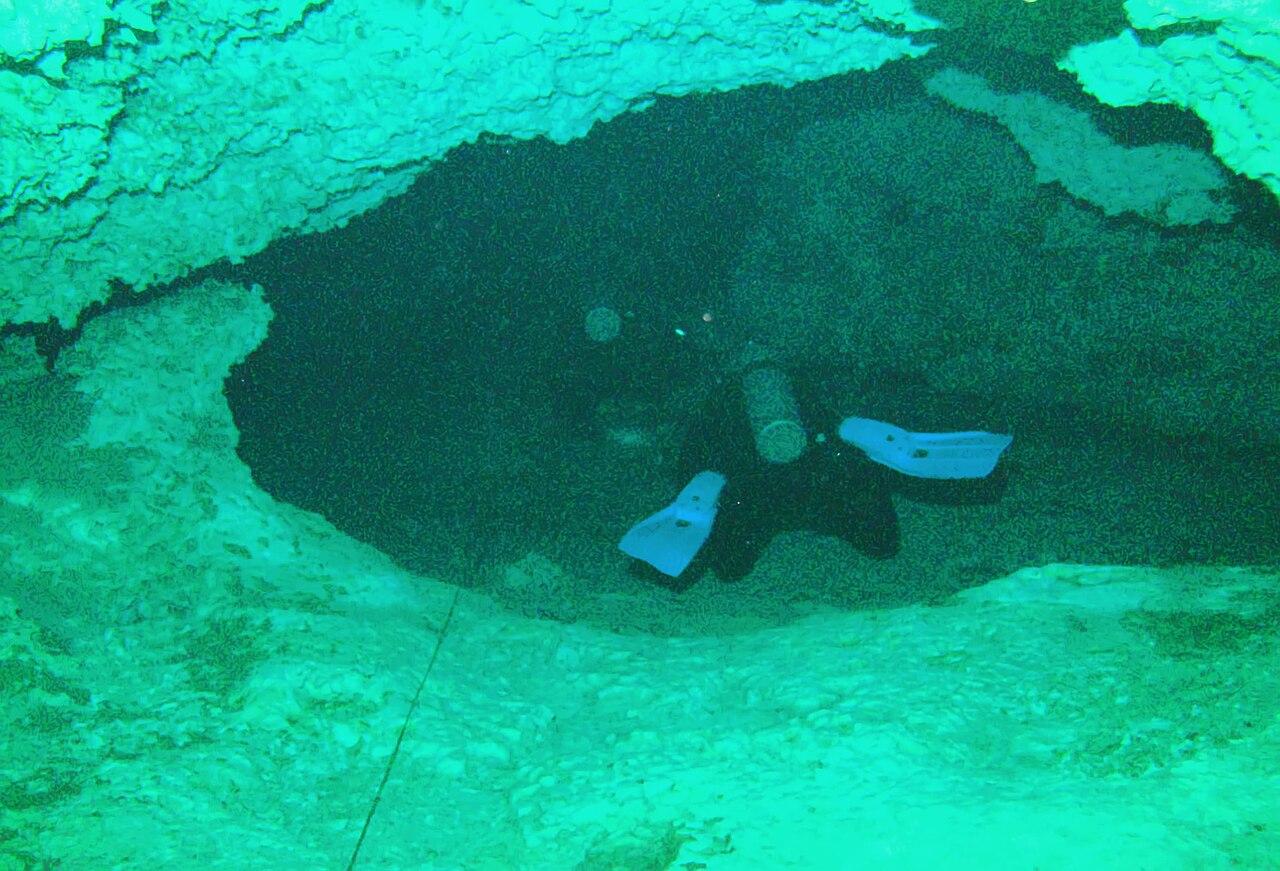
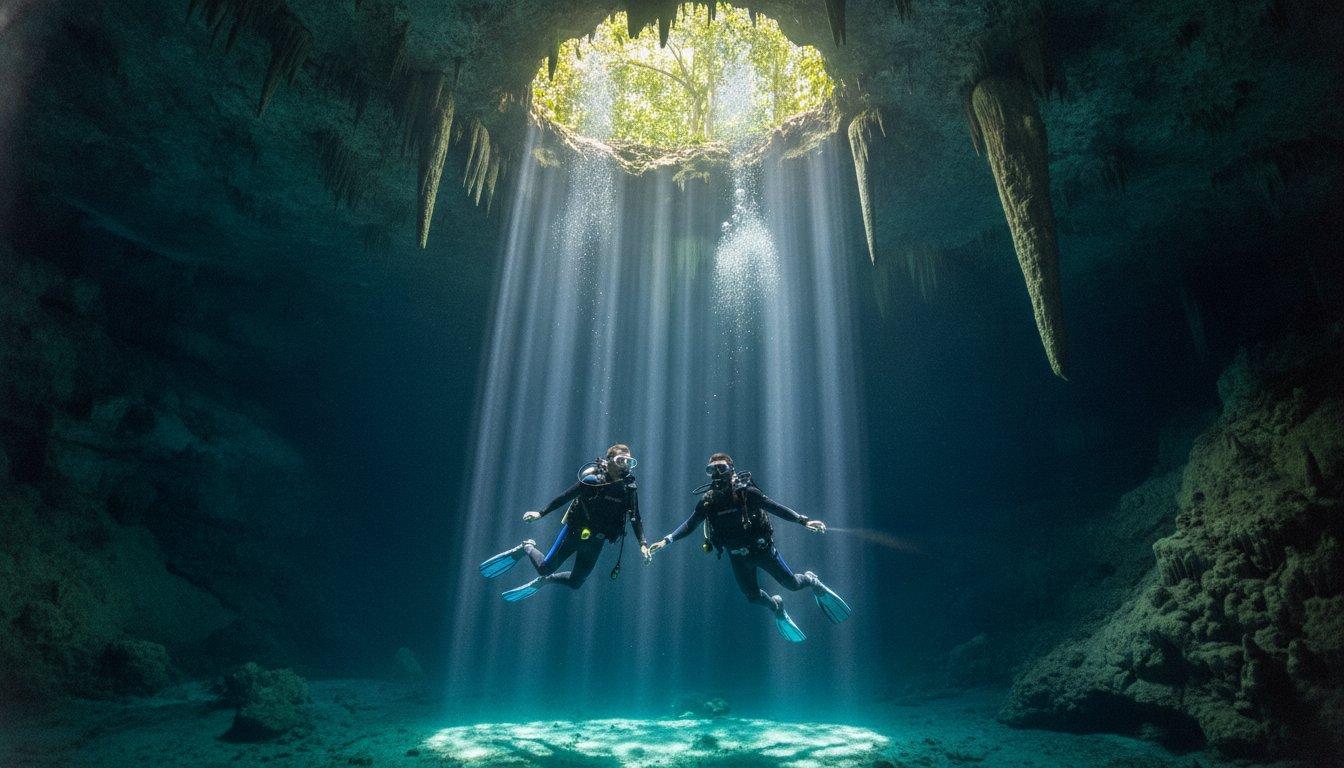
The flooded cave systems behind Tulum and Playa del Carmen are, in fairness, the most genuinely unusual diving in Mexico. Fresh water at a year-round average of 28°C, dropping to 25°C in winter, with visibility measured in the order of 100 metres rather than feet. No current, no surge, no weather.
The part that gets glossed over everywhere else is the certification. A "cenote dive" sold to an Open Water diver is a cavern dive, and cavern diving is a formal qualification with hard limits:
- PADI Cavern Diver requires Advanced Open Water and a minimum age of 18. Maximum training depth is 21 metres (70 feet). Maximum linear distance from the surface — vertical and horizontal combined — is 40 metres (130 feet). You stay in the natural-light zone with the exit in direct sight, penetration dives require visibility better than 12 metres, and the ratio drops to two students per instructor.
- TDI Cavern Diver requires 25 logged dives, allows a maximum linear penetration of 61 metres (200 feet) from the surface, and mandates a continuous guideline and the rule of thirds.
Full cave diving — beyond daylight, beyond those distances — is a separate and considerably longer path. If a shop offers to take you past the light zone on an Open Water card, that is the moment to get off the boat. Divers based on Cozumel can reach the systems as a day trip; our cenote diving from Cozumel guide covers the ferry timing and what the day actually involves, and the cenote day-trip overview covers operators and pricing.
Bull sharks breed off Playa del Carmen from November to March, which is a mainland boat dive rather than a cenote, and a genuinely different experience from anything on the reef. Our bull shark season guide covers the window and what the dive asks of you.
Socorro — the one worth rearranging a year for
The Revillagigedo Archipelago sits roughly 24 to 30 hours' sailing southwest of the Baja peninsula. There is no other way to get there. Access is liveaboard-only, departing Cabo San Lucas or San José del Cabo, and the season runs November to May, with most operators avoiding the eastern Pacific hurricane months of July through October. A typical trip is eight to ten days with five to seven days actually diving.
Water runs about 28°C in November, drops to 21°C in February, and recovers to 25°C by May — a far wider swing than anything on the Caribbean side, and cold enough in midwinter that a 5mm suit is the floor rather than the option. Visibility ranges from 15 to 50 metres depending on plankton and moon phase.
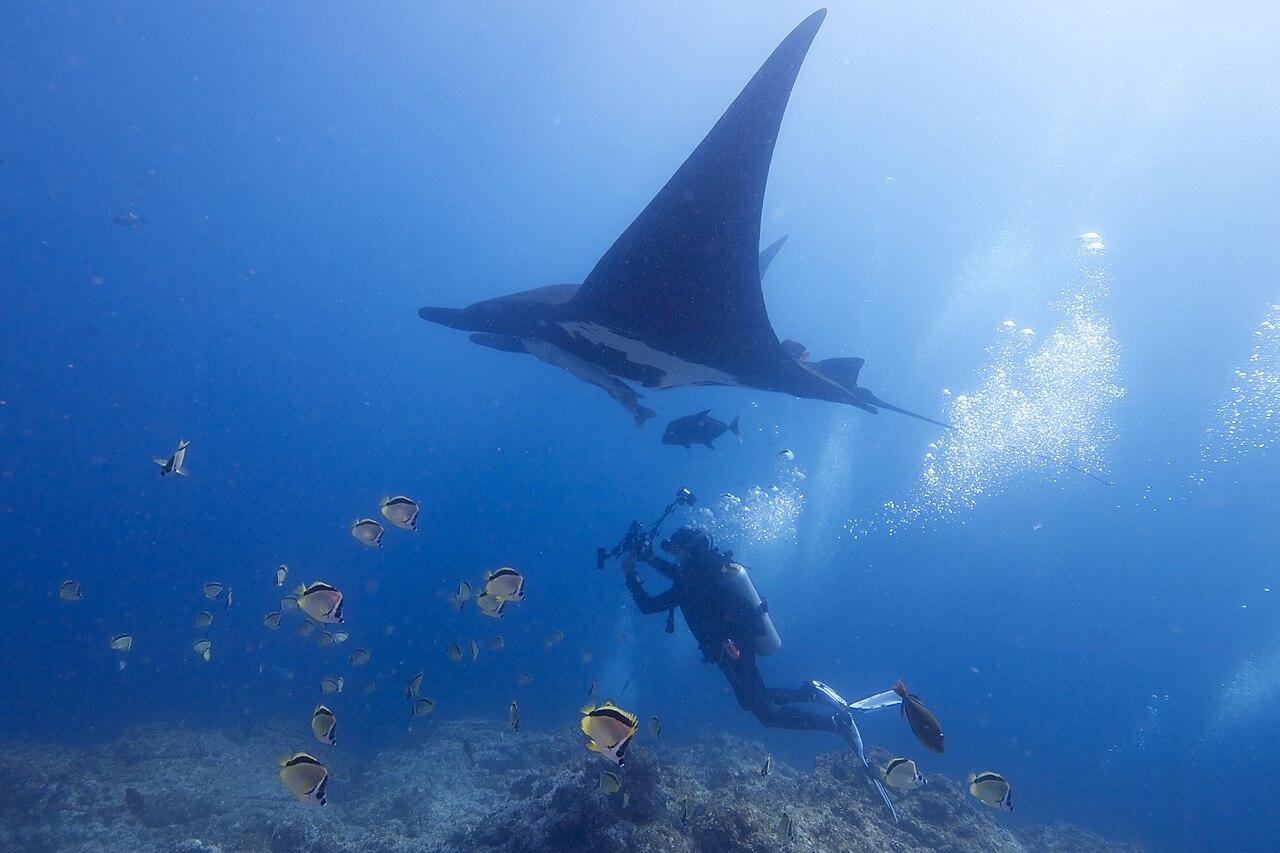
This is not a beginner destination and operators do not pretend otherwise. PADI states plainly that the currents make Socorro suitable for advanced divers only, and most liveaboards require Advanced Open Water plus 50 logged dives. What you get for that is giant Pacific mantas with wingspans reaching seven metres, humpbacks breeding from January to April, bottlenose dolphins from January to March, hammerheads, and silky and Galápagos sharks year-round.
Budget accordingly. Aggregated liveaboard pricing runs roughly 1,900 to 6,700 US dollars per trip, or 296 to 429 dollars a day, and the CONANP park fee is charged per person per diving day on top — published figures currently sit around 3,700 pesos per diving day, and operators list it as subject to change. Diving is confined to four marine polygons around San Benedicto, Roca Partida, Socorro and Clarión totalling just over 40,000 hectares; the core research zone is closed to visitors, jet skis are banned outright, and touching, chasing or riding marine animals is prohibited.
La Paz and the Sea of Cortez — the underrated one
Water runs 23 to 28°C from October through May, which is the window that matters: that is when visibility peaks, the sea is calmest, and the migratory species are around. Whale sharks and manta rays are there from October through April. Sea lions, rays, turtles and schooling tropical fish are year-round. Unlike Socorro, PADI rates La Paz as suitable for both beginners and experienced divers, which makes it the only Pacific-side destination on this list that a newly certified diver can reasonably plan around.
One caution we will not paper over: the sea lion colony at Los Islotes is widely described online as closing for a pupping season in the summer months. We could not verify those dates from CONANP's own published guidance, so we are not going to state them. Confirm the current closure with your operator before you book a trip built around the sea lions.
Cabo Pulmo — the cheapest park fee and the best conservation story
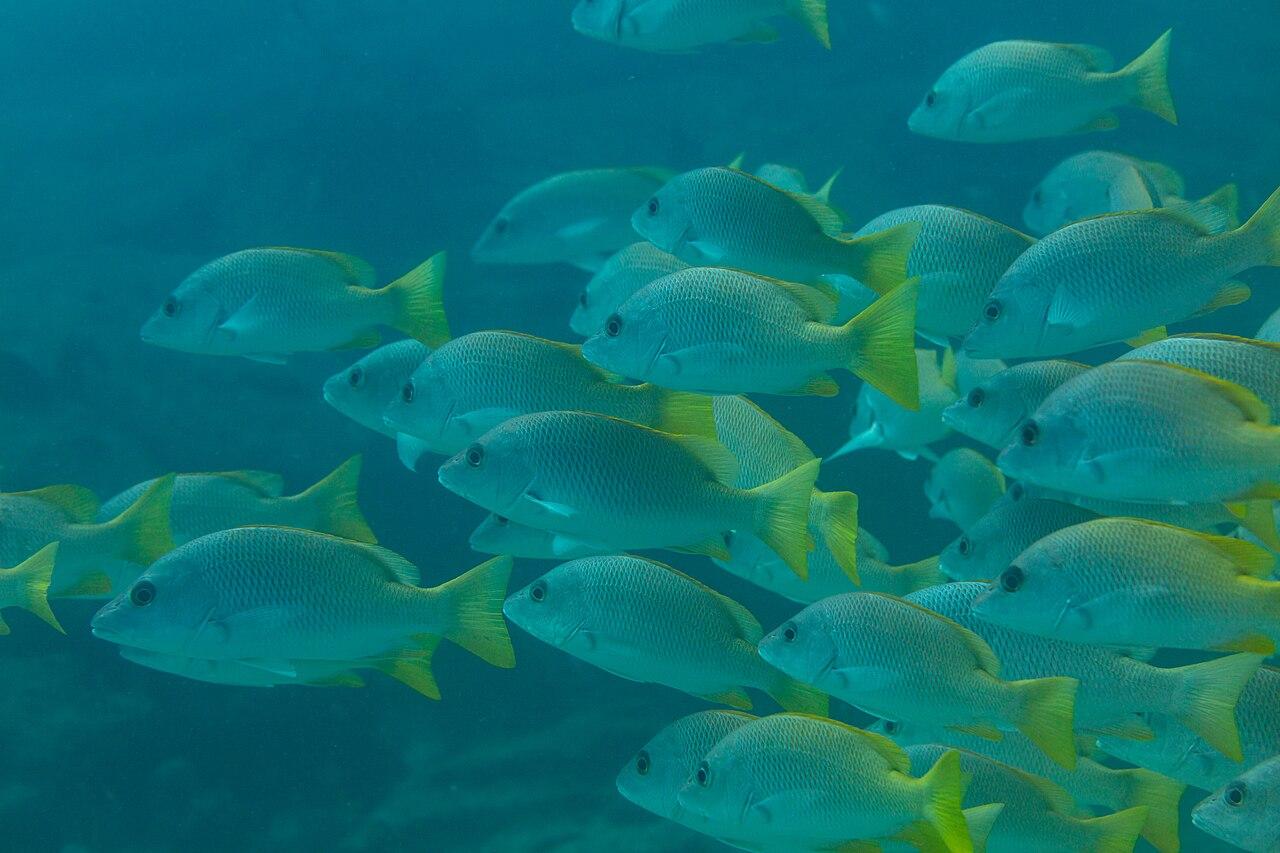
Parque Nacional Cabo Pulmo in Baja California Sur charges 125 pesos per person per day, open 08:00 to 18:00, and CONANP describes the whole year as recommendable rather than naming a season. Five species of sea turtle, bottlenose dolphins, orcas and humpbacks are on the list, on a reef system CONANP calls the only one of its kind nationally or internationally.
Getting there is the catch: it is car-only, with no public transport. Around 98 kilometres from San José del Cabo, 167 from La Paz, and the nearest town, La Ribera, is 26.6 kilometres from the park entrance. That is a rental car and a plan, not a taxi.
Banco Chinchorro — the expensive one
Forty kilometres out to sea from Mahahual, Banco Chinchorro charges 750 pesos per person per day — the highest reef park fee we verified anywhere in Mexico, and 3.3 times Cozumel's. Access is only through authorised operators, hours are 09:00 to 18:00, and the best months are February to May. CONANP notes it is the only protected area in the Mexican Caribbean free of white syndrome, which is the coral disease that has hit reefs across the region hard.
Isla Mujeres — whale sharks, and a museum
The whale shark aggregation off the northern Yucatán sits inside a fully marine biosphere reserve about 40 kilometres from Isla Mujeres. Entry is 225 pesos per person per day, hours are 07:00 to 18:00, the recommended months are April through September, and you must use an authorised provider. Reef-safe sunscreen only; no drones, no feeding, no shell collecting.
The critical detail, and the one that disappoints people who booked expecting otherwise: whale shark encounters here are snorkel-only. Not a scuba dive. Tours run around six hours. Our whale shark season guide covers the window and how the day works from a Cozumel base.
Isla Mujeres also holds MUSA, the underwater sculpture museum, with over 500 life-size works across three galleries. Published museum prices run 115 to 157 US dollars for certified dives and 58 dollars for the Punta Nizuc snorkel. PADI rates it as suitable for all levels.
Veracruz — the one nobody writes about
Parque Nacional Sistema Arrecifal Veracruzano covers 52,238 hectares and 28 reef features, decreed in 1992 and recategorised in 2000. Over 33 coral species, more than 1,400 recorded organisms, and a UNESCO biosphere designation. Entry is 95 pesos per person per day, access is via authorised boat operators only, and the best months are May through August.
We are not going to quote you a visibility figure for Veracruz. Gulf coast visibility is the number competing guides invent most freely, and CONANP does not publish one.
The Thing Every Other Guide Still Gets Wrong
Search volume for great white cage diving at Isla Guadalupe remains substantial. The activity has not been legal since 10 January 2023.
The sequence: CONANP suspended tourism at the island in May 2022, SEMARNAT extended the suspension through the end of that year, and the renewed five-year management programme for the Isla Guadalupe Biosphere Reserve made it permanent from 10 January 2023. The programme's wording is explicit — white shark observation may not be carried out in the reserve for tourist purposes, in order to avoid altering the sharks' habitat. The ban covers film and television production as well as recreational diving, and the Mexican Navy was tasked with enforcement. No reopening mechanism was written into the programme. The precedent operators point to is Cedros Island, closed for over twenty-five years.
We found no evidence of any amendment, pilot permit scheme or successful challenge since. If you are offered a Guadalupe cage trip, ask to see the federal permit before any money moves. If you want a shark encounter in Mexico that is legal and seasonal, the bull sharks off Playa del Carmen from November to March are the realistic answer.
How Mexico's Marine Park Fees Actually Compare
Park fees are the one cost that is set federally, published, and identical whichever operator you book. They are a reasonable proxy for how tightly a site is managed.
| Protected area | Fee per person per day | Best months | Access |
|---|---|---|---|
| Veracruz Reef System | MXN 95 | May–August | Authorised boat operators only |
| Cabo Pulmo | MXN 125 | Year-round | Car only, no public transport |
| Arrecifes de Cozumel | MXN 225 | Year-round | CONANP-authorised boats and guides |
| Whale Shark Reserve (Isla Mujeres) | MXN 225 | April–September | Authorised providers; snorkel only |
| Banco Chinchorro | MXN 750 | February–May | Authorised operators, 40 km offshore |
| Revillagigedo (Socorro) | ~MXN 3,700 per diving day | November–May | Liveaboard only, 24–30 hr crossing |
Fees are CONANP's published rates. The Revillagigedo figure is charged per diving day and operators list it as subject to change — confirm it with your liveaboard before you budget.
Across every one of these, Mexican nationals and foreign residents pay half with ID, students pay 25 percent, and seniors, disabled visitors and children under twelve enter free. Cozumel's daily fee in particular is covered in detail in our marine park fees guide, and the full cost breakdown puts it alongside tanks, boats and gear.
Matching the Destination to the Diver
Newly certified, one week, first trip abroad. Cozumel. Short flight, warm water, drift diving that a guide can manage for you, and a dive centre on every block. Read the beginner's guide to diving Cozumel before you book, and the drift diving guide so the current is not a surprise.
Experienced, want big animals, have two weeks and real budget. Socorro, November to May. Nothing else in Mexico is in the same category, and it is worth the crossing.
Want something genuinely different without a new certification. The Riviera Maya cavern dives, with the Cavern qualification if you plan to do more than one. Or La Paz between October and April, which is the only Pacific option here that welcomes a newer diver.
Travelling with non-divers. Cozumel or Isla Mujeres. Both have enough above water to keep a non-diving partner occupied, and both offer snorkeling good enough to be the point rather than the consolation — our Cozumel snorkeling guide covers the latter.
Going in August or September. The Caribbean side, and buy insurance that covers weather cancellation. Socorro's season is closed, Baja is hot and choppy, and the Atlantic hurricane window is open — which on Cozumel usually costs a day rather than a trip.
Our Recommendation
For most divers planning a first or second trip to Mexico, Cozumel is the right answer, and not by default. It is the only destination on this list that combines year-round warm water, roughly 300 diveable days, a wall system that satisfies experienced divers, and conditions a guide can hand to a newly certified one — reachable on a direct flight with a marine park fee of 225 pesos a day. The cenotes sit 45 minutes away by ferry, which means the single most unusual thing about diving in Mexico is available as a day trip rather than a second holiday.
Socorro is better diving. It is also eleven days, three to six thousand dollars, an advanced card and fifty logged dives, and it exists for a diver who has already decided that big animals are what they travel for. Plan it as the trip after this one.
The one thing we would ask you to carry away regardless of where you book: verify the season and the permit status yourself before you pay. Mexico's protected-area rules change by federal decree and the travel guides take years to catch up — as three years of pages still selling Guadalupe cage dives demonstrate.
When you have a destination in mind, our Cozumel dive sites guide covers the reefs in detail, the dive centre listing shows who runs small groups, and the course listing covers certification on the island if you want to arrive qualified for more.
Frequently Asked Questions
Is Mexico good for scuba diving?
Yes, and unusually varied for a single country. The Caribbean side offers warm-water reef and drift diving year-round plus the world's most extensive flooded cave systems; the Pacific side offers giant mantas, humpbacks and sharks on liveaboard trips to Socorro and the Sea of Cortez. Water temperatures on the Caribbean coast stay between 78 and 82 degrees Fahrenheit all year, and Cozumel alone dives roughly 300 days out of 365.
Is diving better in Cancun or Cozumel?
Cozumel, for diving specifically. Cozumel sits on the Mesoamerican Reef with deep walls, consistent drift diving and a national marine park charging 225 pesos per person per day. Cancun's diving is shallower and its standout site is MUSA, the underwater sculpture museum off Isla Mujeres, which is excellent but is an installation rather than a reef. Cancun has more to do above water; Cozumel has better diving below it.
Can you still cage dive with great white sharks in Mexico?
No. Great white cage diving at Isla Guadalupe has been prohibited since 10 January 2023, when the renewed management programme for the Isla Guadalupe Biosphere Reserve made a temporary suspension permanent. The ban covers recreational diving and film production, the Navy enforces it, and no reopening mechanism exists. Any operator still selling it cannot legally deliver it.
Which Mexican dive destination is best for beginners?
Cozumel, followed by La Paz. Cozumel's drifts are generally rated easy, the water is warm year-round, and guides manage the current for you — though at seasonal transitions conditions can turn advanced-only on a given day. La Paz is the only Pacific-side destination that PADI rates as suitable for beginners as well as experienced divers. Socorro is explicitly advanced-only and most operators require 50 logged dives.
Do you need a special certification to dive the cenotes?
For anything beyond a guided cavern dive, yes. PADI Cavern Diver requires Advanced Open Water and a minimum age of 18, caps training depth at 21 metres and limits you to 40 metres of combined vertical and horizontal distance from the surface, always within sight of the exit. TDI's equivalent requires 25 logged dives and allows 61 metres of penetration. Full cave diving beyond the daylight zone is a separate qualification. An operator offering to take an Open Water diver past the light zone is outside standards.
How much are Mexico's marine park fees?
They range from 95 pesos per person per day at the Veracruz Reef System to 750 at Banco Chinchorro. Cabo Pulmo is 125, Cozumel and the Whale Shark Biosphere Reserve are 225 each, and Revillagigedo charges per diving day at a figure currently published around 3,700 pesos. Mexican nationals and foreign residents pay half with ID, students 25 percent, and seniors, disabled visitors and children under twelve enter free.
When is the best time to dive in Mexico?
It depends which coast. The Caribbean side dives all year, with hurricane season running 1 June to 30 November and highest risk from August to October. Socorro runs November to May only. La Paz and the Sea of Cortez are best October to May, when visibility peaks and whale sharks and mantas are present. Banco Chinchorro is best February to May, and the Veracruz reefs May to August.
Can you dive Socorro without a liveaboard?
No. The Revillagigedo Archipelago is reachable only by liveaboard from Cabo San Lucas or San José del Cabo, and the crossing takes 24 to 30 hours each way. There is no airstrip open to tourism and no day-boat access. Trips run eight to ten days with five to seven diving days, and diving is confined to four designated marine zones around San Benedicto, Roca Partida, Socorro and Clarión.

.jpg)

,_Cabo_Pulmo,_Baja_California,_M%C3%A9xico,_2024-12-19,_DD_40.jpg)