Best Cozumel Dive Accommodations for Every Diver (2026)
Find the best Cozumel dive accommodations by diver type. Dive resorts, boutique hotels, and group villas—see which fits your 2026 trip for effortless
Luisa Carmona · August 26, 2026
For divers planning their next underwater escape, the right Cozumel dive accommodations can make all the difference—offering the quickest boat rides to world-famous reefs and the comfort you crave between dives. Whether you're after a dive resort next to your favorite reef or a boutique stay that partners seamlessly with top shops, Cozumel is loaded with options tailored to every diver type and budget.
After years guiding here, I've seen how much smoother a dive holiday runs when your accommodation matches your diving style. Close proximity to marinas, quality onsite gear rinse/dry facilities, and staff who "get" the dive schedule make your days much easier. From family-friendly resorts to laid-back diver lodges, here's how to choose Cozumel stays that align with the best dive experiences in 2026.
Key Takeaways
- Stay near the main dive piers or marinas for the quickest access to morning boats.
- Diver-focused resorts make gearing up and rinsing down easy, especially for multiple dive days.
- We recommend large resorts for families, mid-range hotels for social divers, and boutique stays for private or small group trips.
- Partnering with a reputable shop ensures smooth gear handling and transfers.
- Book early for peak season (late fall through spring) as top accommodations fill quickly with divers.
Types of Cozumel Dive Accommodations
Resort-Style Dive Hotels
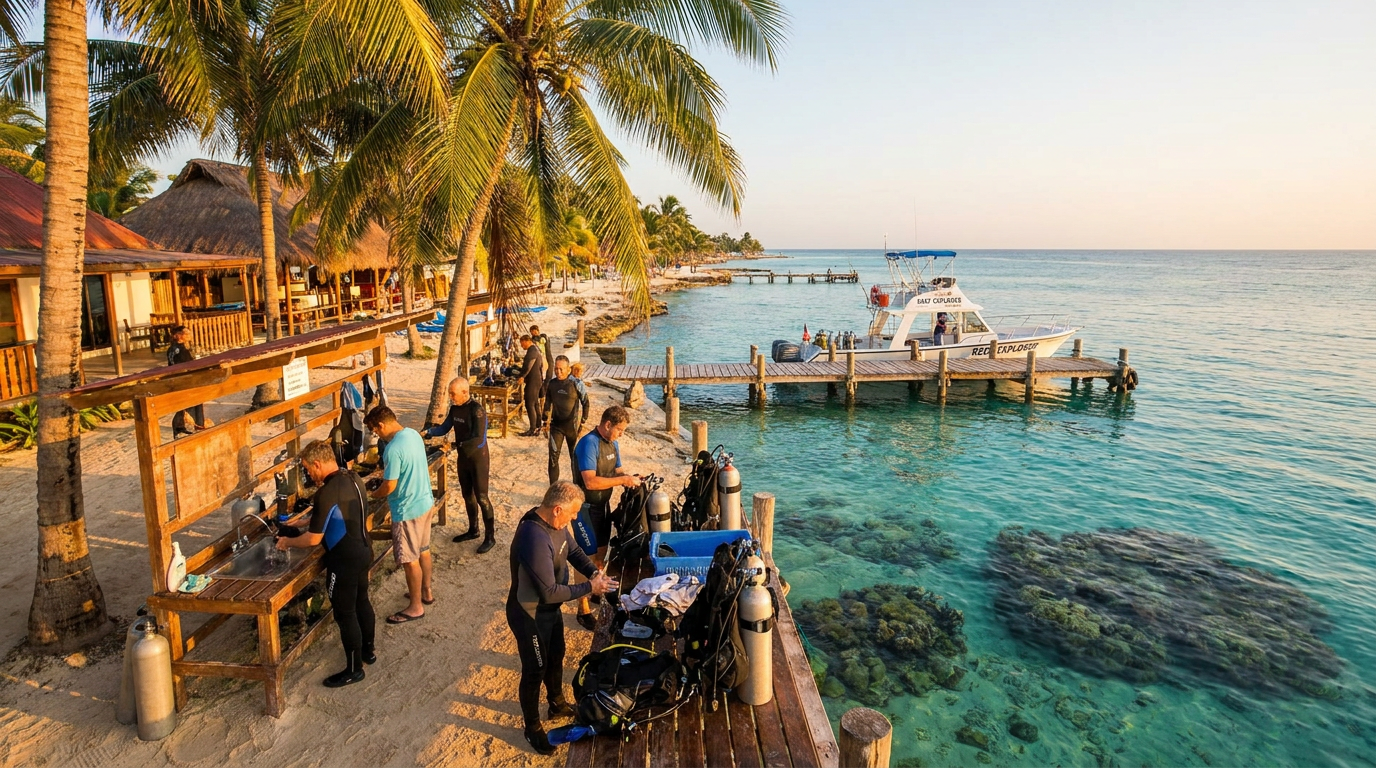
Resort dive hotels offer the most convenient stay for divers who want it all in one place: docks, rinse stations, on-site shops, pools, restaurants, and social spaces. Many resorts are within a short van ride—or even walking distance—to the main reefs along the southern coast.
Here, you can often find all-inclusive options, which are popular for groups and families who prefer to have their meals, boat dives, and even some gear rental sorted ahead of time. These bigger properties appeal to travelers who value amenities just as much as easy diving logistics. For many divers, the ability to walk from room to dock without fussing over daily transport is a game-changer. You’ll also find activities for non-divers, excellent kids’ programs, on-site entertainment, and spa services—all within arm’s reach.
One of the notable advantages in these resorts is the dedicated dive staff who know the rhythm of a diver’s day. Morning coffee and early breakfast are often timed to boat departures, while boxed lunches and post-dive snacks make back-to-back dive days a breeze. Some resorts build their pools with dive training in mind, with gradual entries ideal for learning or practicing new skills on your days off from boat diving.
Social divers will find communal lounges, evening events, and plenty of meetup spaces to compare dive logs and swap stories. If you’re mixing diving with downtime, expansive resort amenities like fitness centers, yoga classes, and hammocks by the sea create a complete vacation atmosphere for everyone in your group.
Boutique Hotels and Villas
For those who value a quieter, more personal touch, boutique hotels or private villas can offer a welcoming home base. They typically provide personalized attention, and staff are often quick to help with dive shop scheduling, gear storage, and local dining tips. Many will coordinate your pickup with your chosen dive shop at the nearest pier.
Travelers who want a mix of diving and exploring town usually gravitate toward these smaller stays north or in San Miguel. The atmosphere is relaxed, and some of the most charming post-dive evenings can be found here. Stylish decor, locally-inspired furnishings, and family-owned service make these accommodations feel more like home. If you’re seeking local insight for an authentic restaurant or insight into island events, boutique staff are a gold mine of information.
In these settings, quiet courtyards and rooftop terraces often offer the perfect place to recap the day or download a camera’s memory card before heading out for dinner. Thoughtful extras like coolers for dive snacks, custom coffee orders, or in-room massages are just some of the little touches that set boutiques apart. For self-sufficient divers, private villas unlock full kitchens, space for gear setup, and private pools—a great base for longer dive stints or privacy-seeking groups.
Budget Guesthouses and Hostels
Not every diver wants a pool or ocean view—some are after value, especially solo divers or those planning long stays for multiple certifications. Budget guesthouses and well-run hostels, often in San Miguel, offer simple rooms, communal kitchens, and plenty of diver camaraderie. It's easy to meet new friends and find dive buddies, especially for travelers on a tighter budget or planning a series of courses or fun dives.
Hostels typically feature notice boards for buddy matching, post-dive barbecues, and relaxing social areas where wetsuits and regulators dry out alongside lively conversations. The informal vibe is perfect for chatting about recent sightings, sharing photos, and planning the next day’s dives together. Many hostels will help arrange dives with reliable local shops or provide group discounts to popular activities. If you love independence but still want to plug into the local dive community, these options hit the sweet spot.
Guesthouses, meanwhile, might offer more privacy with small en-suite rooms and cozy courtyards. Flexible arrival times and long-stay rates make them popular for divers tackling advanced courses, internships, or just soaking up a laid-back Cozumel lifestyle between dives.
Top Dive Accommodations Near Major Reefs
Southern Zone: Closest to Must-See Reefs
This area is the favorite of divers who want to wake up and roll right onto their morning dive boat. The southern hotel zone runs near prime dive sites like Chankanaab Reef and Palancar, meaning shorter boat rides and earlier returns. Larger dive resorts with private docks line this stretch, many working directly with shops like Aldora Divers or Agua Clara Diving for easy logistics.
If you’re joining advanced adventures, don’t miss easy access to sites like Barracuda Reef and deeper wall dives that many shops schedule out of the southern marinas. These southern stays are best for dedicated divers, advanced groups, and those minimizing non-dive logistics.
Staying in the southern zone often means your pickup time is just minutes before you’re on the boat, letting you enjoy a more leisurely breakfast. While the focus here is diving, you’ll still find comfortable lounges, oceanfront pools, and everything arranged with the diver’s routine in mind. Access to spacious rinse tanks, shaded gear drying areas, and knowledgeable front desk staff makes the difference when your schedule includes early departures or late returns from full-day dive excursions.
San Miguel and Mid-Island
Staying in or near San Miguel makes sense if you want nightlife, authentic eats, and a taste of local life in addition to easy diving. Dive shops are everywhere in town, often offering free hotel pickup for morning and afternoon dives. Plenty of affordable and mid-range hotels cater to divers with basics like gear storage and friendly help. After your dive, you’re steps from taquerias, bakeries, and Cozumel’s plazas.
If your group mixes divers and non-divers, central stays let everyone enjoy their own schedule. This is where you’ll also spot more small-group or private villa options, perfect for families or diving clubs.
San Miguel’s vibrant nightlife is a big plus for guests who love to unwind at sunset salsa bars, live music cafes, or the open-air waterfront. You won’t need to worry about taxi rides after a long day in the water—just stroll through palm-lined streets to find everything from fresh seafood to late-night tacos. For dive travelers who enjoy a blend of culture and underwater adventure, central Cozumel delivers both convenience and character.
Mid-island accommodation can also be a good fit if you want a quieter neighborhood with access to both the reefs and the bustle of town. These properties often offer lush garden settings, courtyards for drying gear, and quick routes to both dive docks and the attractions found uptown.
Dive Shop and Accommodation Partnerships
Why Booking Through Your Dive Shop Can Help
Most divers visiting Cozumel choose accommodations that recommend or partner with their chosen shop. This can mean special rates, pre-arranged pick-ups, or having staff coordinate your gear transport between dock and rinse room. Large shops like Aldora Divers or Agua Clara Diving have established relationships with many hotels and resorts.
This partnership saves time, streamlines your schedule, and keeps your gear safer and better cared for. If you’re pursuing a course, coordinated stays with easy access to classrooms and confined water pools make a big difference, especially during busy weeks.
The logistics can be especially helpful for groups or families juggling course schedules, fun dives, and non-diver excursions—your accommodation will often already know the drill, organizing wake-up calls, boxed breakfasts, and post-dive rinse times on your behalf.
Tip from a veteran: I always suggest confirming exactly where your shop will pick you up each dive day—it avoids early-morning stress and keeps you on time for your briefing.
Some shops even have mobile gear handling—meaning your rental kit and tanks are pre-loaded at your dock or villa, not left waiting on a van. This streamlining is key in busy seasons when centralized planning avoids missed dives or late departures. Don’t hesitate to ask your shop or host for introductions to preferred partners: locals know which combinations work for every diver type.
Family and Group-Friendly Dive Resorts
Large Resorts with Activities for All Ages
For divers traveling with non-divers or younger family, larger resorts offer pools, kids’ clubs, spas, and beaches so everyone enjoys their day—even when not diving. Many resorts are experienced with mixed groups and provide flexible dining, easy shore access, and shopping. Some also run their own dive operations, which simplifies the whole process.
Rooms often include mini-fridges, balconies for drying rashguards, and quick walks to the dock or swim-up rinse station. Youth intro programs and snorkeling excursions round out the experience for younger adventurers (children can try intro scuba from age 10 and up; see dive age guidance for details).
If part of your crew prefers lounging poolside while you head off for morning dives, these properties have the kind of options—multiple dining venues, beachfront sports, full-service spas, shopping arcades—that keep everyone happy. Social areas like game rooms and movie nights let families connect after a day of different activities. For some, having a non-diver babysit or join a snorkel outing while you dive means nobody has to compromise.
Special occasions—birthdays, reunions, anniversaries—are easy to celebrate at all-inclusive resorts with their on-site event planners. And if anyone wants to try diving for the first time, staff can arrange a spontaneous pool session or discover dive with little hassle.
Private Villas for Dive Clubs and Groups
Larger villas near the waterfront offer extra kitchen space, private pools, and sometimes even in-house chef options. These work especially well for small clubs or multi-family trips running a mix of fun dives and courses. Most villa managers or rental hosts can arrange dive shop pickup at or near your property.
This option gives you room to store gear, spread out between dives, and socialize privately after a long dive day. It’s also ideal for longer stays or anyone tackling a full certification pathway.
Private villas can feel like your personal dive lodge, with the flexibility to plan your group’s schedule around drift dives, night dives, and surface intervals filled with home-cooked meals or relaxing in shared gardens. Kitchens and large tables make planning easy—group breakfasts, packed post-dive lunches, and plenty of fridge space for hydration. Villas are often especially appreciated for week-long dive trips, annual club meets, or extended holidays that blend diving with day trips and cultural exploration.
If you’re investing in higher training or diving every day, the extra privacy and secure storage are a real bonus. Ask about on-site rinse tanks, shaded drying hooks, and whether airport pickups can be arranged alongside dive logistics. Some managers even know which shops offer group or returning guest perks—worth mentioning when you book.
What to Look For in Dive Accommodations
Essential Amenities
- Gear rinse tanks and secure drying areas
- Proximity to marina or free shop pickup
- A/C for drying clothing and gear
- Early breakfast or coffee before your first dive
- Reliable WiFi for checking tides & shop confirmation
Other nice-to-haves: locker space, beach entry for shore dives or snorkelers, pools for skills practice, and helpful front desk staff who know which taxi or van service to call for early departures.
For those spending several days diving, it’s worth double-checking if the rinse tanks are fresh-water and if gear is ever taken in at night for security. Having a safe space for camera housings, dry suit undergarments, and dive computers makes post-dive care simpler, especially during periods of unpredictable weather.
In high-humidity environments, a strong A/C, ceiling fan, or dedicated drying rack can help keep your gear in prime condition—and avoid the dreaded damp wetsuit on day two! For longer stays, ask about laundry services or if there’s a communal washing machine available.
Independent vs. Resort Stays
Independent hotels and rentals can give you more local flavor, but resorts make fitting multiple dive days into busy family or group travel much simpler. Your choice depends on the balance of diving, relaxation, and local life you want.
In my years guiding here, I always tell divers to check reviews for mentions of diver-friendly policies—not all hotels dry wetsuits equally, and some properties fully embrace the dive schedule.
Independent accommodations may offer more flexible check-in and late-night arrival options, handy if your flight is delayed. You’ll get to explore local cafes and bakeries, or return to a quiet courtyard after a day of bubble-blowing offshore. Resort guests may benefit from seamless gear handling, zero commute between their bed and the dive boat, and built-in social time with other divers in the bar or lounge. Think about your priorities: cozy and quiet? Lively and all-inclusive? There’s a sweet spot for every kind of diver.
Comparing Top Dive Shops with Partnered Accommodations
| Dive Shop | Best for | Who this isn't for |
|---|---|---|
| Aldora Divers | Advanced divers wanting multi-dive days and full service; stays near southern reefs or at boutique partners | Budget-conscious or solo travelers seeking hostel-style camaraderie |
| Agua Clara Diving Cozumel | Group trips, families, those preferring all-in-one resorts with easy logistics | Travelers seeking a quiet, private villa away from larger crowds |
| Alma Libre Dive Center | Divers wanting personal guidance and help arranging boutique hotel stays centrally | Large families or groups needing resort-level amenities and pools |
| Aqua Safari Dive Center | Travelers wanting mid-priced hotels near San Miguel for easy walking access | Those seeking private villas or southern zone convenience |
| Azul Divers | Pairs and solo divers looking for good value and flexible boutique hotel partners | Groups expecting onsite children’s programs or resort extras |
| Babieca Dive Center | Divers who want to stay at a hotel with its own on-site shop, dock, and gear care | Those wanting to experience a broader range of restaurants or nightlife outside of a resort |
Environmental Etiquette and Pre-Trip Checklist
Do's and Don'ts for Responsible Dive Stays
- Do use gear rinse tanks and showers provided—keep salt out of pools and hotel rooms.
- Do follow marine park rules during dives (see Cozumel National Marine Park for updates).
- Do tip dive and hotel staff for gear care—they work hard to keep everything running smoothly.
- Don't dry wetsuits on balcony railings unless permitted—ask where to hang gear.
- Don't collect coral, sand, or shells—leave everything for the next diver.
Wearing biodegradable reef-safe sunscreen and taking only photos, not souvenirs, keeps the marine environment healthy for all. Rinsing gear in assigned tanks instead of in-room showers protects both plumbing and marine ecosystems. Courteous divers also respect noise policies after hours—key in small properties where guests may rise early for next-day dives.
Pre-Trip Dive Accommodations Checklist
- Confirm daily dive pickup times/location with both your hotel and shop
- Pack a dedicated mesh bag for wet gear (double-bag for flights)
- Bring hangers or travel lines for drying wetsuits—these are rarely included
- Let your hotel know if you need early breakfast or a packed snack (for morning dives)
- Print or download emergency contacts and marine park info
Many divers benefit from having a laminated card of medical info, dive insurance details, and marine park permits handy in their travel wallet. Booking insurance (look into options like DAN or other reputable organizations) is a smart step, offering peace of mind if you need a doctor or miss a scheduled dive due to unforeseen circumstances.
If you’d like to contribute to Cozumel’s conservation, consider a day volunteering with a beach cleanup or supporting local marine research by joining awareness dives or taking a specialty conservation course. It’s a rewarding way to give back and deepen your connection to the island and its reefs.
Planning, Booking, and Getting the Most out of Your Dive Stay
Start by considering your must-haves—do you want to walk to the dock, or balance your dive days with exploring in town? Set your priorities for comfort, privacy, social scene, and how self-catered you’d like to be. Filter reviews and reach out to the accommodation with questions about their diver services, trusted shop partners, and typical guest routines. If you’re unsure, reach out to us—we know everyone on the island and can get you the best available deal, including offers the shops might not publicly promote.
When you’re ready to book, it’s time to provide your certification level, planned number of dives, equipment needs, and any specific medical or dietary needs. The more your hotel or villa knows about your dive agenda, the smoother your trip will be—especially if your shop or instructor is coordinating with your accommodation for early or late arrivals. Triple-check your confirmation emails for dive and pickup times, gear sizes, and emergency contacts.
Pack light but smart—bring your main gear if possible (mask, fins, computer, wetsuit, and a change of clothes for after diving). Spares like O-rings, antimosquito spray, and a microfiber towel make daily life easier. And don’t forget a cold-weather layer if you're visiting in winter months, when early mornings on the boat can be breezy.
On arrival, plan to spend a few minutes with the front desk or owner reviewing where to rinse and dry gear, how early breakfast is served, and if there’s a backup plan for rainy days. And always have a plan for the time between your last dive and your flight—Cozumel has everything from island jeep tours to Mayan ruins to fill that surface interval with adventure.
Diver Safety and Insurance
Safety is key when planning any dive trip, and Cozumel is no exception. Make sure your certifications and diving insurance are up-to-date (an organization like DAN is trusted by agencies and operators worldwide). Keep a printed or digital copy of your coverage and any relevant medical info on hand—some operators will request it during check-in or course registration. If you have any pre-existing condition, notify both your dive shop and accommodation upon arrival for smooth support should anything arise.
Before diving, be sure to go over the local emergency protocols with your dive operator. Inquire about the nearest medical facility with a recompression chamber. Cozumel’s shops are well-versed in safety standards, briefings, and local marine park requirements. If your diving spans multiple days, especially with advanced or technical profiles, maintaining surface intervals and tracking dive profiles goes a long way toward safe, worry-free fun. Ask your accommodation about first aid availability or where to find a local pharmacy if you need minor supplies during your trip.
Conservation and Community Support
Cozumel’s reefs are among the healthiest in the Caribbean thanks in part to local conservation rules and the efforts of visiting divers. Consider taking part in marine conservation programs available through many shops—options range from fish identification courses to coral restoration activities. Even if you’re not seeking a new certification, awareness briefings before dives are both informative and a great refresher on local etiquette.
Many accommodations support community efforts through recycling, reducing single-use plastics, and supporting local artisans. When choosing dive souvenirs or gifts, prioritize reusable water bottles, reef-safe sunscreen, and locally-made crafts—it all helps reduce environmental impact and supports the island’s vibrant culture. Participating in local events or supporting conservation dive courses, like the AWARE Shark and Ray Conservation Specialty Course, connects your holiday to a positive legacy for years to come.
Our Recommendation
- Families and mixed-interest groups: Larger southern zone resorts with built-in activities and direct shop partnerships
- Solo and budget divers: Guesthouses or boutique hotels in San Miguel with flexible shop pickups
- Experienced, advanced divers: Southern reef hotels and direct partnerships with advanced-focused shops
- Small dive clubs or multi-family trips: Private waterfront villas with gear storage, arranged for shop pickup
These recommendations reflect local reputation, diver feedback, and the best logistical fit—not paid placement. Choosing the right Cozumel dive accommodations sets you up for effortless dives near legendary reefs year-round.
Related on Cozumel Dive Hub
Courses:
More reading:
Trusted resources: PADI, SSI, and DAN (Divers Alert Network).